

Should Your Engine Be Hot Or Cold For An Oil Change?
The answer lies somewhere in the middle
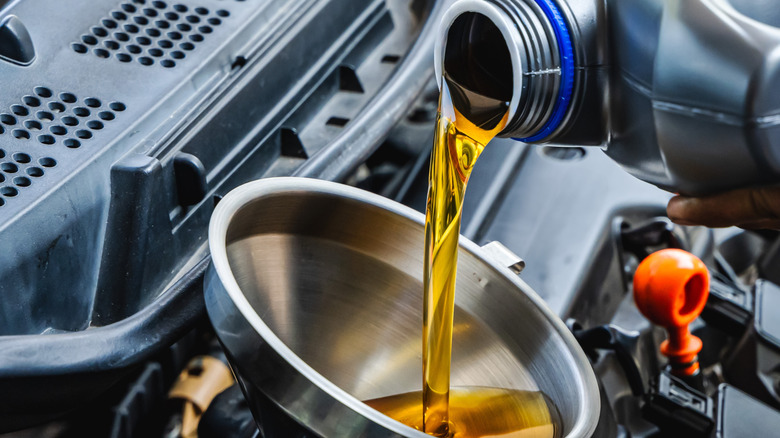
The answer is neither! But bear with me. A routine oil change is perhaps one of the most common maintenance tasks a car owner faces. Within that relatively mundane task, you'll find several questions, and the correct answers matter. How much oil do I use? What type of oil is best for my car? Do I really need to replace the oil filter? These are pretty standard questions. What folks may not think about is how hot or cold the oil in the engine should be when they do the work.
The reality is that it should be warm. Not hot, not cold. Hot Shot's Secret is an engine lubricant company. Regarding this question, its director of branding, Kyle Fischer, tells Diesel Army, "I actually reached out to our R&D guys to get their perspective and they unequivocally say that from a maintenance standpoint, always drain the engine oil when it's warm. There are several reasons why you want to do this. For starters, warm oil will drain quicker than oil that is not warm."
"Next, all the dirt and sediment you want to remove from the engine is suspended in the warm, circulated oil and not stuck in all the nooks and crannies throughout the engine. Finally, if you decide to drain the oil when it is cold, all the sediment can be "stuck" to the bottom of the pan and will not properly exit the pan while the oil is draining. Then, when you add the new oil, that remaining sediment will contaminate your fresh oil." It's worth noting that while Fischer is a PR person, his statements appear to be in line with other authoritative voices.
Experts agree
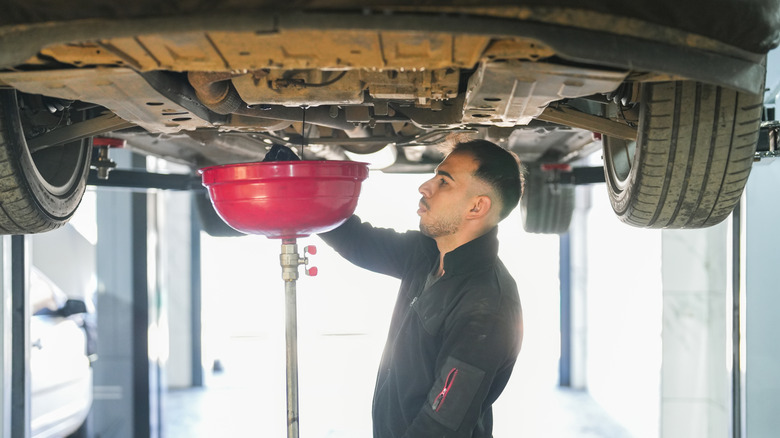
It's worth diving into other sources to see if they agree or not. LiquiMoly's head of media relations, Sina Ataei, has a similar answer. "It is generally recommended to change engine and transmission fluids when they are warm," says Sina.
"Warm fluids flow more easily, allowing for better drainage and more effective removal of contaminants. Additionally, warm fluids tend to suspend particles and debris more effectively, allowing them to be drained out with the old fluid. However, it's important to exercise caution when dealing with warm fluids to avoid burns. Make sure the vehicle has been turned off for a sufficient amount of time to cool down, or wear protective gloves and take necessary safety precautions."
Mopar has an entire guide on changing oil. After taking the time to recommend its own products and talk owners through the safety equipment needed, it offers a step-by-step process. The first thing it tells owners to do is to warm up the engine for 2-5 minutes. If it's already hot, Mopar says to let it cool for 20-30 minutes until it's simply warm. The reasoning here is clear. If an engine is hot, letting it cool helps ensure that the potential for dipstick splash burns is eliminated.