

Can-Am's X3 And Maverick R Made Me Rethink Buying An Off-Road Truck
After time behind the wheel, there is a case to be made for these side-by-sides
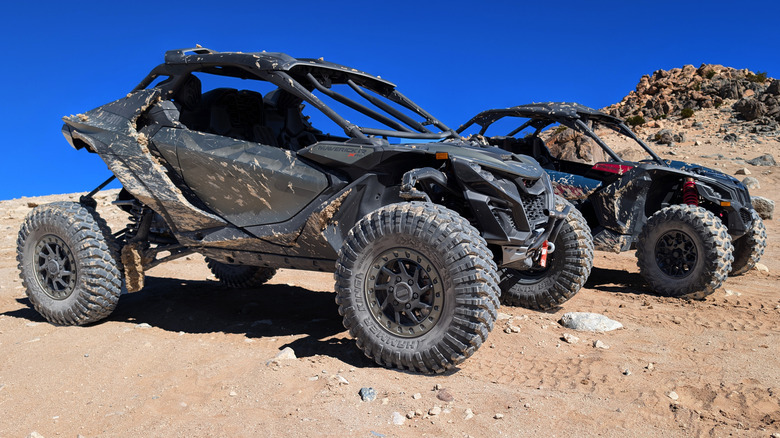
There's a strange tradeoff at the heart of owning a serious off-road truck or SUV, like the Raptor-powered Bronco Filson. People buy the tires, the suspension, the ground clearance, and other hardware to make the most of getting as far off-road as possible. Then, they might spend most of their time with those specialized components on smooth, flat pavement around town or at the local shopping center.
For the few who go off-road regularly, that can all make sense. A truck or SUV like that might tow, haul, carry the family, and take you camping without needing another vehicle. And no doubt, most buyers want them due simply to how cool they look. But when the goal is just to go have fun on difficult trails, I'm starting to think there's a better way.
Can-Am invited me to Johnson Valley, California, to drive its Maverick X3 RS and Maverick R. Both were immensely capable. One was considerably more enjoyable than the other. Neither was particularly good at keeping the weather out. And by the time I left, I was mentally putting one on a trailer behind my Ford Flex daily driver.
Can-Am provided travel to Palm Springs and accommodations to drive the Maverick XC RS and Maverick R. CarScoops' opinions are our own.
The wrong vehicle most of the time
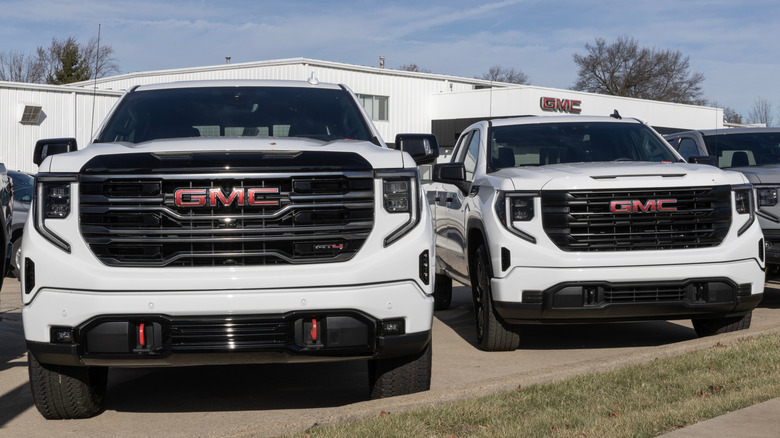
Before this trip, I had never driven a side-by-side. Motorcycles, yes. Four-wheelers, absolutely. E-bikes, sure. These vehicles always seemed interesting, but I hadn't experienced the appeal firsthand. Johnson Valley turned out to be a pretty persuasive introduction. It also happened to put more familiar vehicles in a different light. Think about trucks like a Toyota Tacoma Trailhunter and TRD Pro, GMC Sierra AT4X, or Ford Ranger Raptor. There's impressive engineering behind all of them, and some ride remarkably well considering what they can do.
Still, their priorities bring trade-offs. Aggressive tires, extra height, and specialized hardware follow you to work as faithfully as they follow you into the wilderness. How much of that hardware are you using as you trundle into the office for another 10-hour day? How often do you lightly exercise the most basic off-road equipment that sold the vehicle to you originally? Those questions are less painful to think about when you already own a comfortable daily driver capable of towing something like a side-by-side.
For example, my Ford Flex features AWD, a twin-turbocharged V6 with 355 horsepower, seating for six, and a car chassis that soaks up bumps without losing its responsiveness. It can tow up to 4,500 lbs and I never have to complain about loud tires, a high center of gravity making it feel like a drunken cow with a bad leg in a turn, or how poorly it brakes because it's close to three tons. The appeal goes beyond the drive to the trailhead. Once there, the vehicle getting battered around off-road wouldn't be the one I need for work on Monday. Breaking a Can-Am would be expensive and frustrating. It just wouldn't also leave me wondering how I'm getting around next week.
The X3 RS takes some getting used to
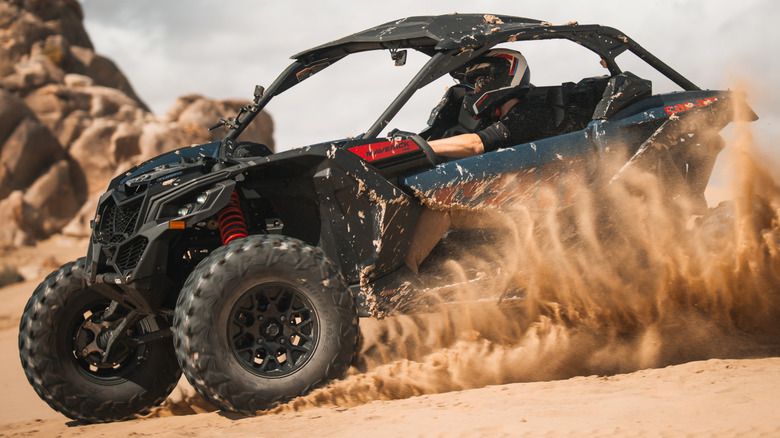
The Maverick X3 RS was my introduction, and initially, it felt fine. Capable, certainly. Shocking? Not really. Some of that was the adjustment involved in learning a different type of vehicle. Its continuously variable transmission was a big part of that process. In a conventional automatic, your ears get a familiar rhythm as the engine climbs through the revs and the transmission shifts.
The X3 doesn't do that. It can keep the engine spinning at speeds that initially feel higher than normal. All the while, it's loud and raspy while you wait for a shift that isn't coming. That took longer to get comfortable with than I expected. The noise makes the machine sound busy even when the chassis is handling the terrain effortlessly.
And that chassis does some excellent work. Sand, ruts, and uneven trails that would have me carefully managing the pace in an SUV passed beneath the X3 with nearly zero drama. The suspension kept the experience comfortable, and the vehicle felt willing to keep going long after my initial expectations had run out. Even one very muddy section that would've quickly sunk a heavy SUV or truck was little more than a messy annoyance.
Driver feedback
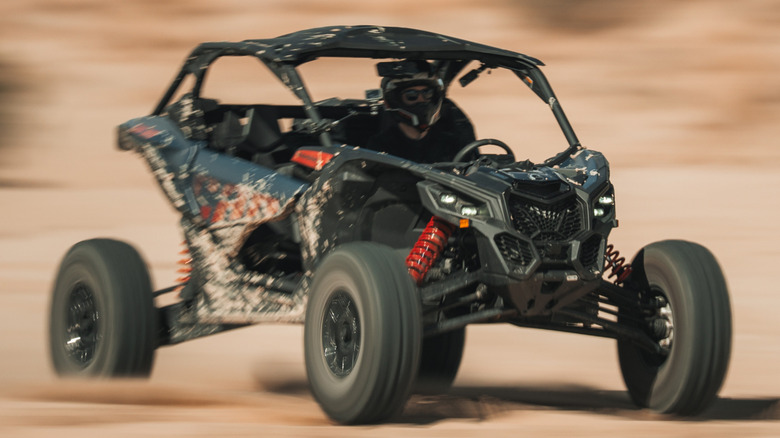
There's a useful degree of communication through the steering and accelerator, too. As I learned how the X3 RS responded, placing it on the trail became easier. So did judging how much throttle to use. The learning curve gradually gave way to the sort of confidence that lets you enjoy the scenery and driving rather than constantly second-guessing the machine. The three-cylinder 135-horsepower Rotax engine was more than adequate though again, the transmission did it no favors where sound plays a role.
That said, throttle response was good and throughout the day of testing, it never felt overheated or annoyed at the abuse we put it through. The adjustable dampers were another appealing part of the experience. A screwdriver and a brief stop were enough to make a damping adjustment. That doesn't mean you can transform the entire suspension with a few clicks, but being able to make a quick change and feel the result on the next stretch of trail is satisfying. It also makes the relationship between setup and behavior accessible.
You can experiment without turning every adjustment into a garage project. By the end of my time in the X3, the initial unfamiliarity had largely disappeared. I was enjoying the sand, getting comfortable with its responses, and understanding why people spend real money on these things. It felt quick when I asked for everything it had, and its capability was far beyond what that first, fairly understated impression suggested. Then I drove the Maverick R.
Maverick R makes its case quickly
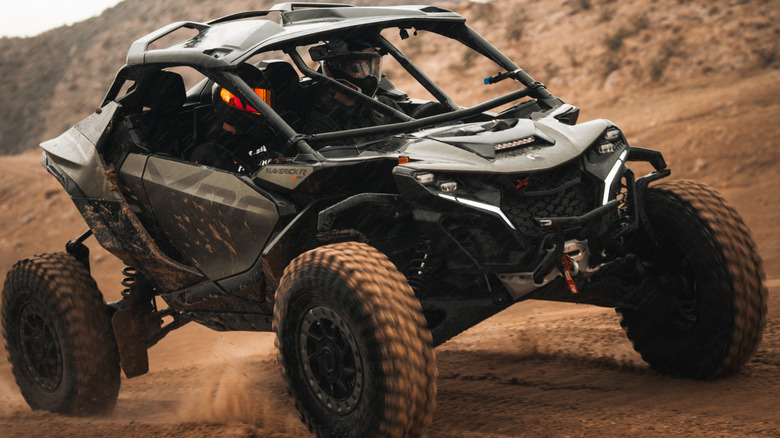
The R was a dramatic step up in every way over the X3. It was faster, more aggressive, and more enjoyable to drive. The power was immediately apparent, but the transmission helped make the difference feel larger than the increase in output. Can-Am pairs the Maverick R's 240-hp turbocharged three-cylinder engine with a seven-speed dual-clutch transmission. Drivers can leave it in automatic mode or shift via steering wheel paddles.
I found that the vehicle liked to stay higher in the rev range than seemed necessary, so I'd pull an extra cog into the mix across longer stretches of desert. The suspension also felt more sorted for our driving. I spent less time thinking about adjustment and more time appreciating how readily it dealt with the ground ahead. It just felt more sophisticated, but the drive was so supple that it started to feel almost boring.
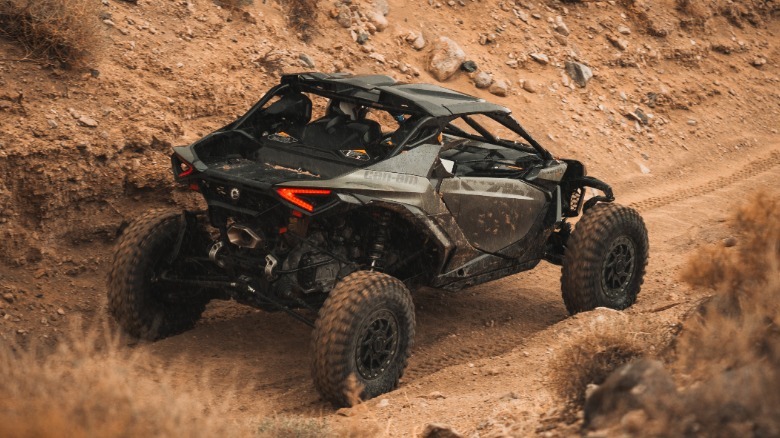
We were miles into the desert, crossing uneven ground, dealing with loose surfaces and off-camber turns, and the Maverick R made it all feel routine. Terrain that seemed to demand a bigger response from the vehicle simply didn't. The suspension absorbed it, the power was there when requested, and I wasn't constantly bracing for the next impact. There was plenty to pay attention to, but the R had enough capability that our route often felt comfortably within its abilities.
I found myself wanting a more demanding test — like rock crawling — to see where that composure would fade. Of all the places to try it, Johnson Valley is the place, but that was not on the agenda. That said, I have little doubt that this particular Can-Am could out-rock-crawl most SUVs and trucks on sale today.
The weather and reality
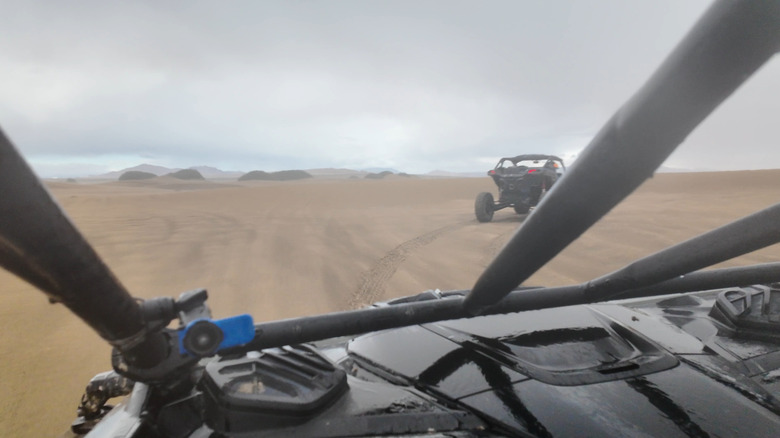
When we test cars, trucks, and SUVs, the weather almost never matters too much beyond getting great photos. In a side-by-side, weather is a major factor. Comfortable seats, great suspension tuning, and a capable powertrain only go so far when you're getting drenched in a mid-day desert thunderstorm. What you can't see in the photo above is how my entire body was absolutely soaked at this moment.
Early in my Maverick R drive, it became cold, windy, and rainy. That was when I developed a strong appreciation for a very ordinary automotive feature: a windshield. The vehicle I drove didn't have one. Nor did it have side windows to close against the weather. A bit of material between my face and the rain would have improved the experience dramatically. When the wind and cold joined in, the open cabin became a much less charming place to sit.
 Stephen Rivers
That alone is a big limitation if you prefer your off-roading with the climate control set to automatic. A side-by-side requires you to plan around exposure in a way most vehicles never do. Then, there's the reality of owning one. Where is the side-by-side going to live? Where is the trailer you need for it going to stay? Loading, securing, unloading, and cleaning it all take time and effort. The trailer itself will also need maintenance.
In other words, keeping the daily driver away from the trail doesn't absolve one of the chores that owning an off-road vehicle creates. You have to want this experience enough to arrange your weekends around it. If your version of off-roading is an occasional gravel road on the way to a campsite, this is perhaps too elaborate a solution.
The professional connection
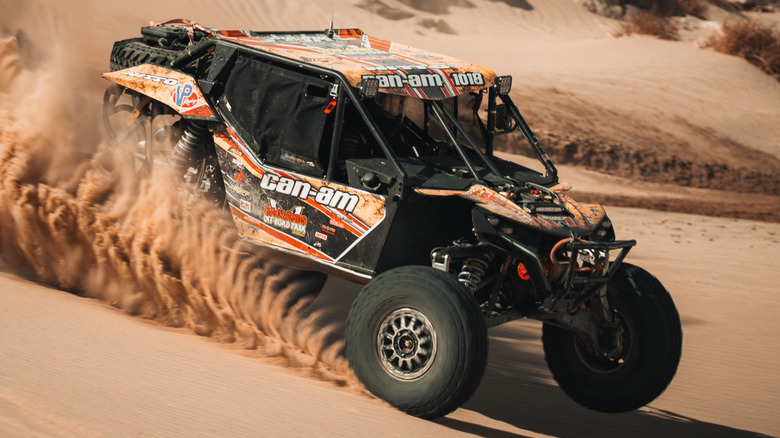
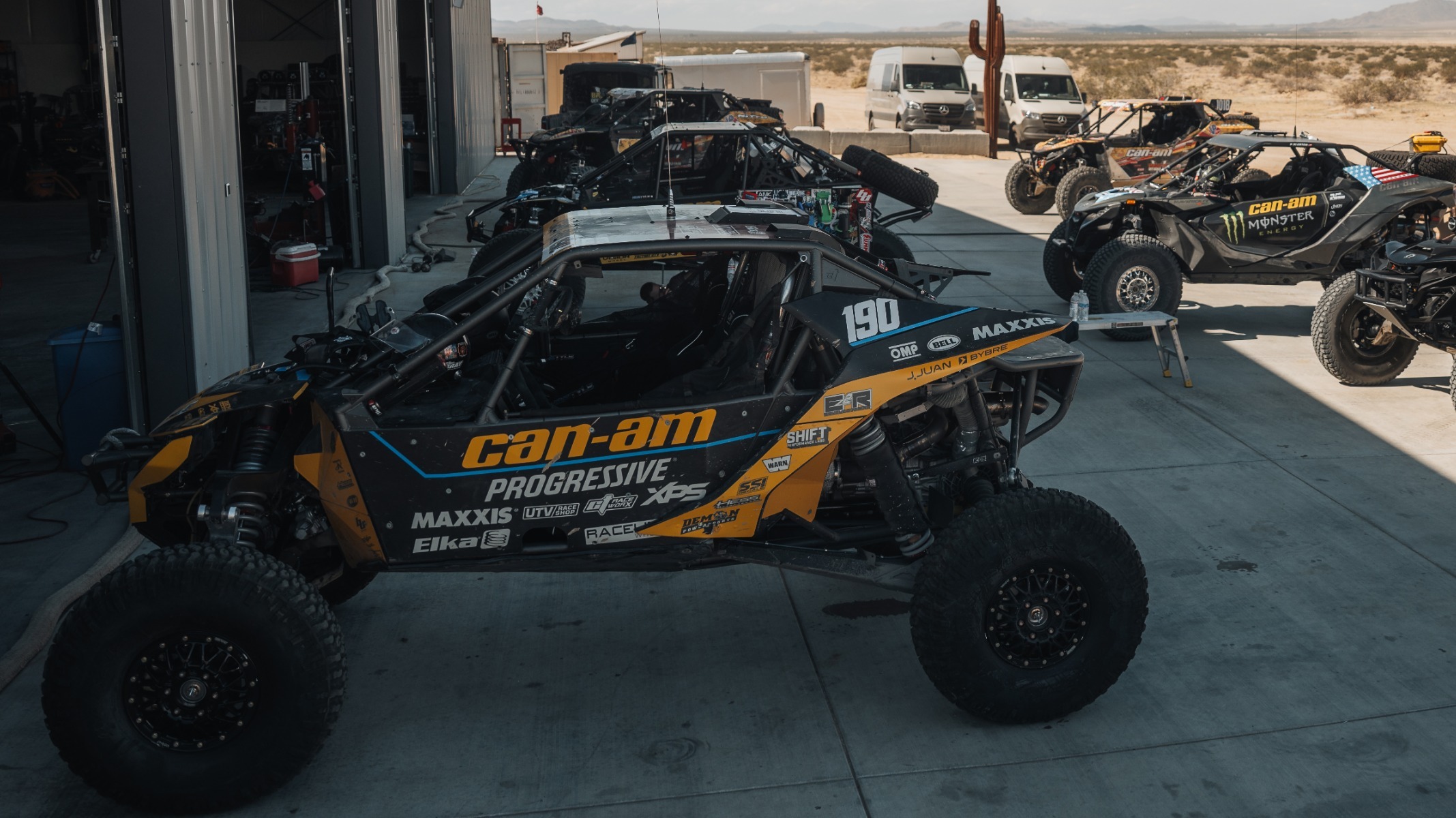
For as annoying as the weather was, spending time with the entire pro Can-Am race team was a more than adequate trade-off. The entire staff was staying on-site in Johnson Valley, and watching their process helped explain how customers end up with such capable machines. Throughout the day, drivers would head out, come back, compare notes, and work through what they found with everyone on site. They'd modify suspension settings to change vehicle behavior through specific sections of trail.
They'd examine data, adjust hardware, and then go back out for more practice and information gathering. The collaborative effort stood out because this isn't a fully backed factory team. A lot of these guys are akin to gentleman drivers, paying their own way to race and getting provisional help from Can-Am along the way. Concentrating these drivers in one place allows everyone on the team to benefit, and those learnings trickle down to what everyday customers buy.
An expensive toy
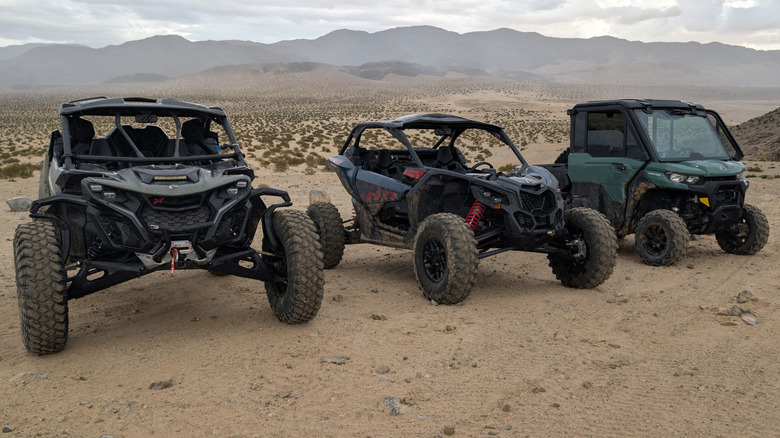
Let's be real about these Can-Ams. They're toys for folks who can afford to drop quality used-car money on such a thing. The X3 starts at $19,999 and the Maverick R from $39,699, before transport and preparation. Those are entry prices, not the prices of our particular test vehicles. Add the equipment you want and the means to move it, and this becomes a substantial recreational purchase. Sure, you could look at the used side-by-side market, but there's a concern there too.
Used cars may be driven mildly. Most hours of a side-by-side's life are anything but mild. So just understand going in that if you get one of these second-hand, it's a great idea to perform a pre-purchase inspection to ensure it's ready for the trail for years to come. In short, there's no universal financial victory here. A truck or SUV can serve several purposes, and plenty of people have good reasons to want one vehicle that handles the drive to the trail and the trail itself. An enclosed cabin also starts looking awfully sensible when rain arrives in the desert.
But I came away much more interested in owning a side-by-side than I expected. The X3 was approachable once I learned its habits, comfortable over the terrain we covered, and plenty of fun. The Maverick R added the performance, transmission, and composure that would make it my choice if the budget allowed. For someone who already likes their daily driver and wants to spend weekends tackling serious terrain, that's a compelling proposition. Keep the comfortable road vehicle. Put the specialized machine on a trailer. You'll have a better experience everywhere.