

Genesis Targets 640 Miles With EREV SUV That Could Beat Scout To Market
As pure EV demand cools, Genesis is betting on gas-assisted extended-range luxury EVs to help eliminate charger worries and range anxiety.
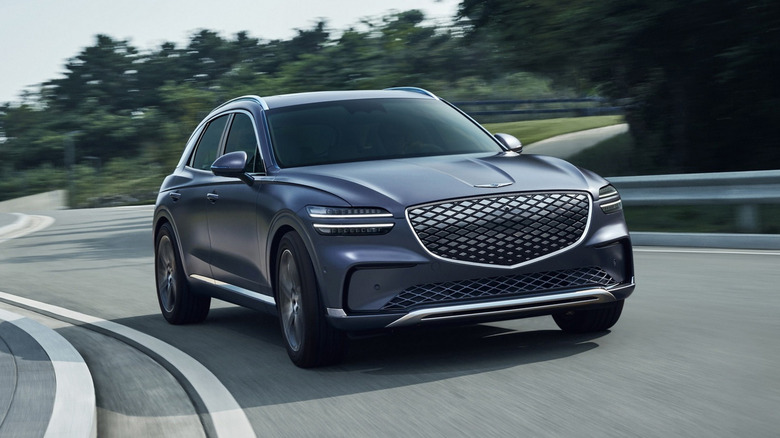
Two factors have slowed the popularity of electric vehicles among U.S. buyers: charging and range. Genesis hopes to end both of those concerns starting with a new extended-range EV (EREV) that, if it stays on track, will beat Scout Motors to market. Hyundai's latest product roadmap places this new Genesis EREV SUV firmly in the first half of 2027, and the automaker teased some of the details about this vehicle during a roundtable discussion at the LA Auto Show that CarScoops was a part of.
There are plenty of unanswered questions about what it'll be, what it'll look like, and how much it'll cost, but one thing is clear, Genesis is aiming for a total driving range of 640 miles. While we wait for a firm U.S. delivery date, Ash Corson, product planning boss at Genesis gave us some info to stew on. Let's take a look at what we do know about the EREV that could launch well before Scout gets on the road.
What we know
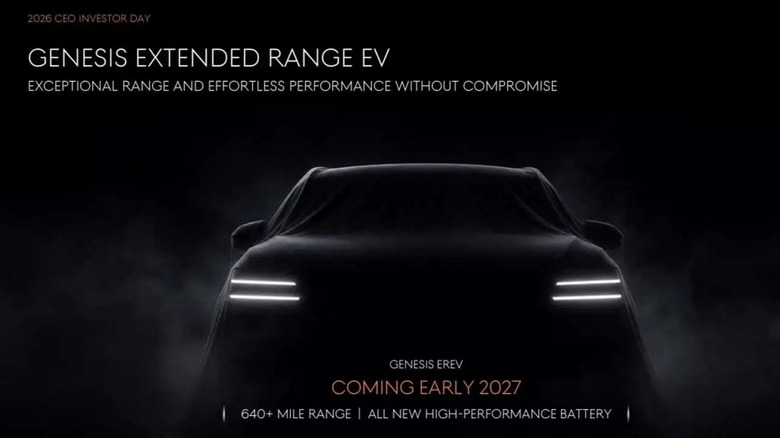
Both Genesis and Hyundai are planning EREV launches in early 2027. For Hyundai, we know that'll come in the form of the Santa Fe, and it will be part of the company's plant expansion in Alabama. Genesis hasn't revealed the name of its upcoming EREV but did tease it with the photo above. There's no way to be completely certain, but that sure looks like the GV70 to us. The brand made clear in the past that it was open to possibly pursuing a GV90 EREV, but we expect it to launch next year as an EV only. Importantly, Genesis mentioned a D-segment SUV as an EREV product, which could be GV70 or GV80.
Hyundai has openly said that its EREV platform will use less than half the battery capacity of a comparable EV. Despite that smaller pack size, it's targeting more than 640 miles of total range. The brand says it'll pull that off thanks in part to new in-house-developed battery cells that can evidently provide all the output necessary to match the performance of comparable EVs.
According to Corson, the benefits of an EREV make it more accessible to people who want an EV but don't necessarily have the home charging access or short daily commutes that traditional battery-electric vehicles more practical. "Some people have a garage, and it's great because they can charge an EV there. It's a wonderful experience," he said, and added. "A lot of people don't. Some people live in more rural areas where you have longer distances between refueling, whether that's charging or gas. So, I think providing the customer a choice of what powertrain makes sense for them is really key."
What's an EREV?
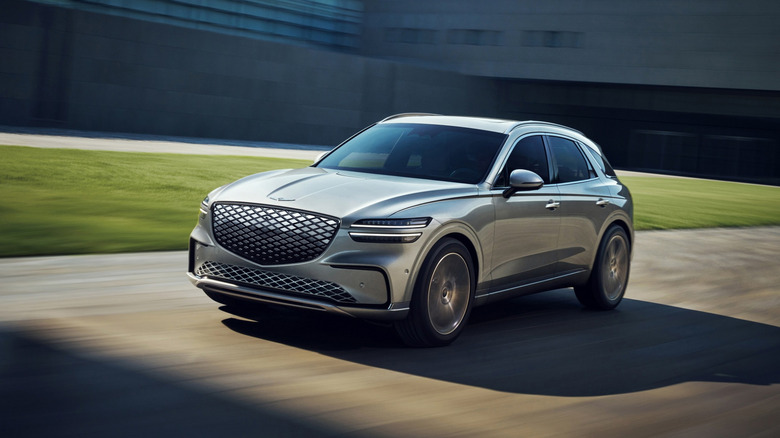
The basic platform here is very straightforward. An extended-range EV is an EV at heart. Owners can charge it like any other EV, whether that's at home or at a public charging station. The distinction is that an EREV platform also incorporates a gas-burning engine that kicks on to, you guessed it, extend the vehicle's range. Its sole job is to charge the battery, so the gas engine doesn't actually drive the wheels — it's basically an on-board generator.
That's key because it effectively ends the concern of charging station availability and charging speed. For those who can charge conveniently at home or work or elsewhere, they can run around with zero fuel in the tank and run in pure EV mode all the time. For those who might not have that ability, they can fill the gas tank and know that it'll charge the battery as they're driving. Both groups also benefit because long road trips become no big deal since a quick fuel stop is all they need to keep going.