

Scout Wants To Build 90 Workshops And Retail Outlets Across The Country
The plan is still to sell direct to consumer
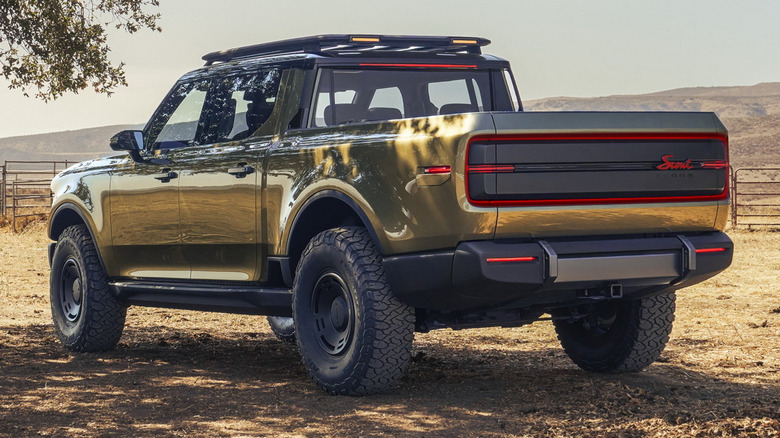
Two years after the Volkswagen Group revived the Scout name as a new brand with a battery-electric and EREV pickup and SUV, more details have started to emerge about how the brand will sell its models and how it'll keep them on the roads. Building a $2 billion factory in Blythewood, South Carolina, is just one step, and Scout will need to make other smart investments if it wants to establish itself as a serious automotive player.
Scout is skirting traditional franchised dealerships and will sell the Terra pickup and Traveler SUV directly to consumers. This has sparked fierce rebukes from the National Automobile Dealers Association and triggered lawsuits, yet the company is remaining steadfast in its strategy. Key to Scout's approach will be 18 key metro areas in the U.S. where it'll establish retail stores. These sites, known as connection centers, will be around 1,500–3,000 square feet, and some will be in malls. They will offer demo drives, merchandise, and brand and product details.
Following these initial retail outlets will be what Scout calls "the backbone" of its network, consisting of 90 workshops across the U.S. and Canada. On average, these sprawling 35,000-square-foot sites will include large service centers. Roughly 80% of the floor space will be dedicated to maintaining and servicing Scout vehicles, while the remaining space will offer demo drives, sales consultations, displays, accessories, and merchandise. Automotive News understands many of these workshops will be located on the West and East Coasts, as well as in the Southeast and the Midwest.
Workshops, retail spaces, and an experience center
During a recent village board meeting in Vernon Hills, Illinois, Scout showed a rendering of one of these workshops. It has been proposed to fill what used to be a gym and reuse the existing 20,000 square-foot building. An additional 11,000 square feet of space will be added.
Major markets for the brand, including Los Angeles, Dallas, Philadelphia, and New York, aren't just going to get one of these workshops. In fact, Scout will establish at least three in each of them, while in some, there could be as many as seven workshops. It's a hugely ambitious plan but an extremely important one if Scout wants to be taken seriously. Designing, developing, manufacturing, and selling cars are all crucial, but car companies also need to offer after-sales support, spare parts, and servicing. Without these, many car buyers would simply opt for a vehicle from an established brand, like Ford or Jeep.
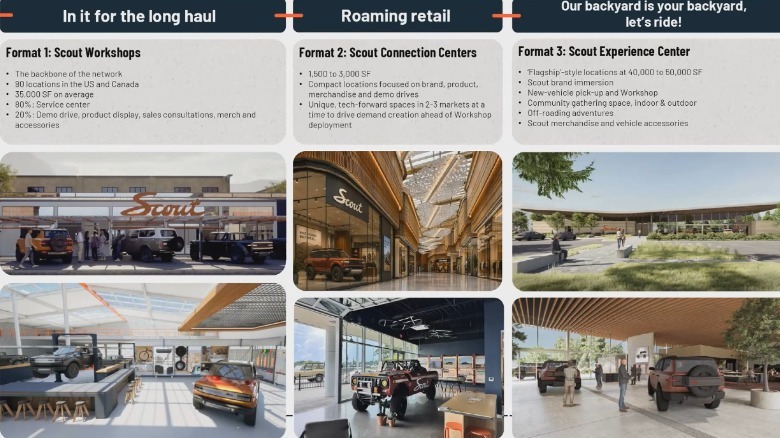 Vernon Hills/YouTube
Scout Motors is also planning several 'flagship-style locations' of up to 50,000 square feet and starting with a Scout Experience Center in South Carolina. This site will include a workshop, support new-vehicle deliveries, and allow customers to enjoy certain off-roading adventures.
As we toured Scout's South Carolina factory earlier this month, CEO Scott Keogh revealed the firm has secured 212,000 reservations for the Traveler and Terra. However, these reservations only required shoppers to pay a fully refundable $100, and official orders have yet to begin. Scout plans to start delivering cars to customers in 2028. If it can achieve its lofty goals, the brand could give legacy rivals a real headache.
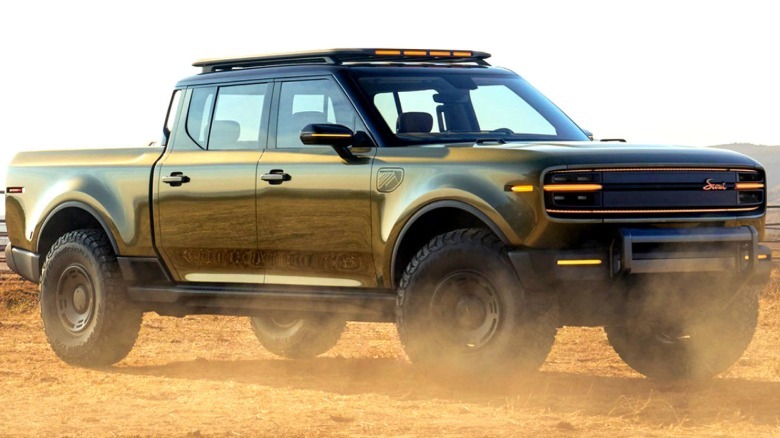 Scout Motors