









- The gas-powered BMW 3-Series uses the outgoing model’s CLAR platform.
- BMW has only announced the 330, 330 xDrive, and M350 xDrive models at this stage.
- US sales of the three 3-Series variants will start in the first quarter of 2027.
For more than 50 years, the 3-Series has been the heart of the BMW family, long serving as a benchmark in its segment and combining all of what we love from the German brand. While SUVs have largely taken over the automotive industry over the past decade, the 3-Series lives on into its eighth generation, and this is it.
BMW unveiled the related, all-electric i3 six months ago, but only now has it unveiled the combustion model. As we suspected, and as teasers and spy shots showed, the regular 3-Series looks very similar to the i3. In fact, it may appear identical to the untrained eye, but BMW has made some subtle tweaks to differentiate the siblings.
Read: The New BMW M350 xDrive Has 443 HP And A Drift Mode That Makes It RWD
The gas-powered 3-Series has first been previewed with the new M350 xDrive, replacing the old M340i xDrive. Its front end is mostly the same as the i3, complete with the same daytime running lights and kidney grilles, although they have been darkened and appear slightly wider. As this version has an engine that needs to be cooled, the lower bumper and air intakes are also slightly more prominent.
Compared to the i3, the hood of the normal 3-Series is slightly longer and sits lower. While the door skins appear largely identical, the shape of the rear side windows has also been tweaked. As you’d imagine, the iconic Hofmeister kink is still there. This being a sporty version, the M350 includes black wing mirrors, unique badging, and a bold rear end with darkened LED taillights, a diffuser, and quad tailpipes.
Old Platform, New Looks
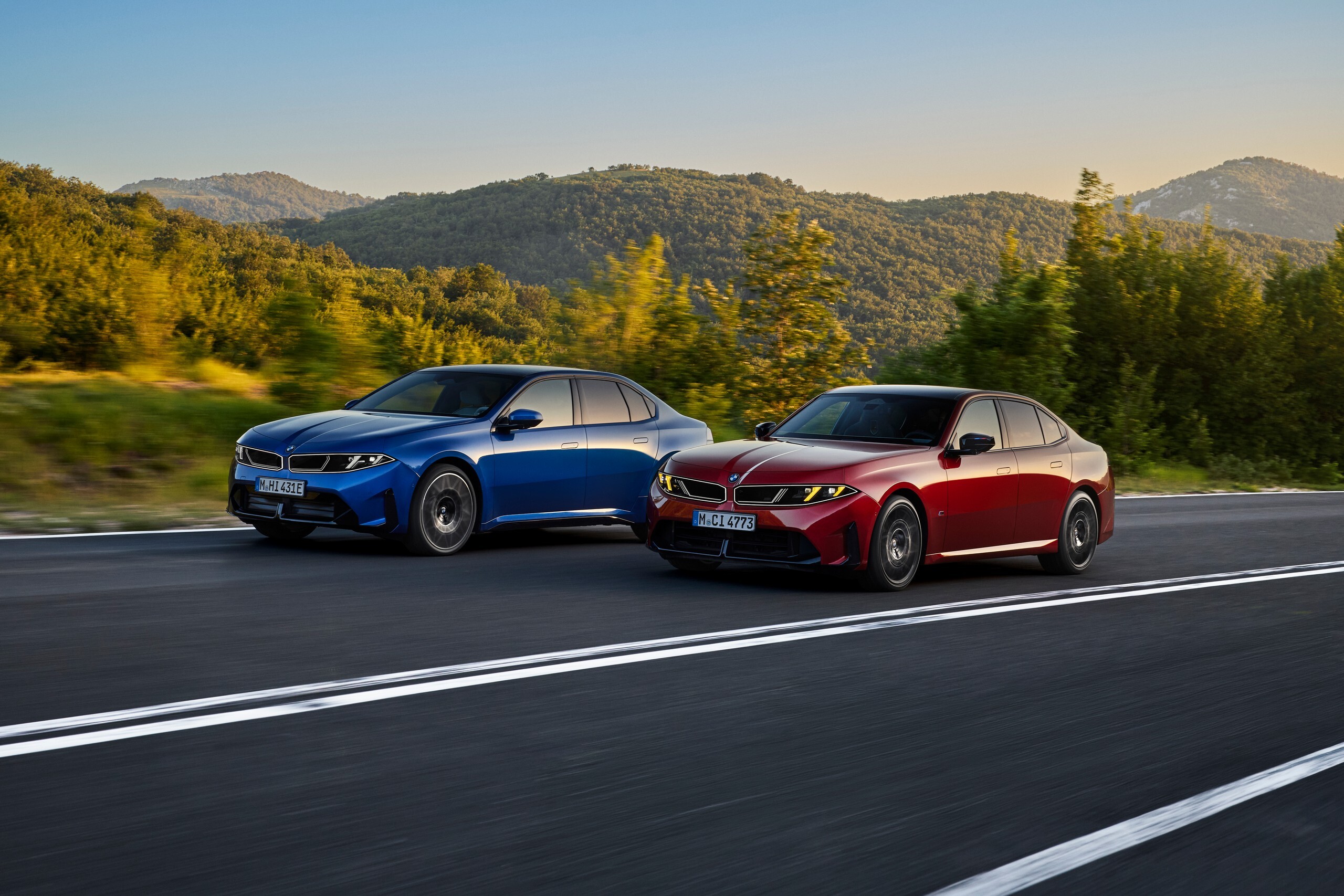
The gas-powered 3-Series appears slightly longer and wider in these photos, but that’s not actually the case. The 330, 330 xDrive, and M350 xDrive models confirmed so far are all 187.2 inches (4,754 mm) long, 72.8 inches (1,849 mm) wide, and sit 57.3 inches (1,455 mm) tall. By comparison, the i3 50 xDrive is 187.4 inches (4,759 mm) long, 73.4 inches (1,864 mm) wide, and 58.3 inches (1,480 mm) tall. The reason behind these differences is simple. The 3-Series uses an updated version of the outgoing model’s CLAR architecture, while the i3 is based on BMW’s brand-new Neue Klasse platform.
While the 3-Series architecture may be old, it gets the full suite of interior upgrades enjoyed by BMW’s Neue Klasse-based EVs. This means there’s the same odd steering wheel with large touchpad controllers and paddle shifters. There’s also the now-familiar slanted 17.9-inch infotainment display and the Panoramic iDrive system, working alongside an optional 3D head-up display.
A Cabin From The Future
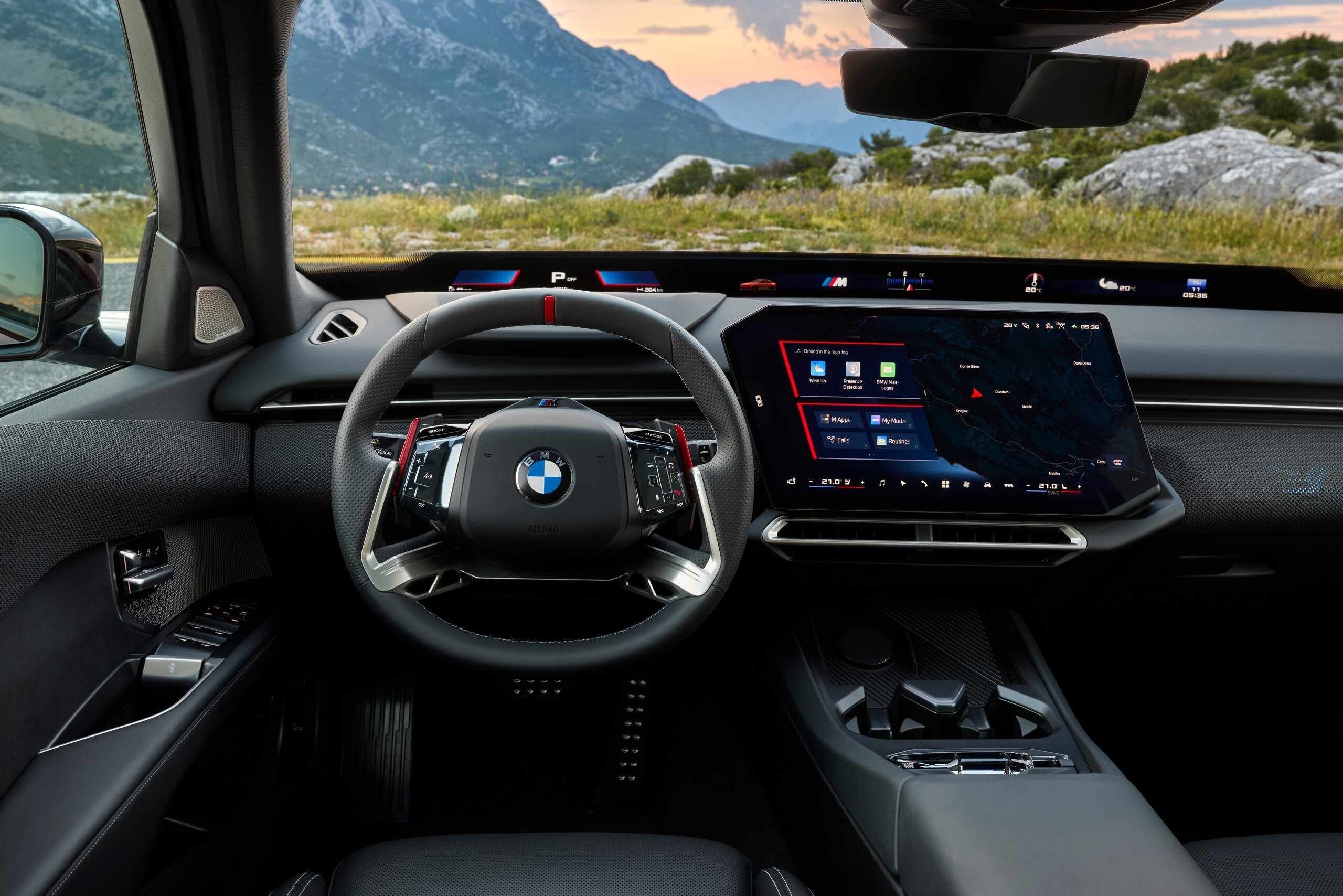
Radical changes have also been made to the car’s dashboard with new materials, fabric, and lighting, not dissimilar to what you’ll find in some current Mini models. New seats also come standard, although the regular ones don’t include backrest-width adjustment or lumbar support, so shoppers will need to upgrade to the optional multifunction seats for that. The M350 xDrive is fitted with special M Sport seats with larger bolsters.
From now until the new M3 arrives, the M350 xDrive will sit at the top of the ICE-powered 3-Series family. It rocks a 3.0-liter turbocharged inline-six with 48-volt mild-hybrid technology, delivering 437 hp and 428 lb-ft (580 Nm) of torque. When combined with a familiar 8-speed Steptronic transmission and all-wheel drive, this model runs to 60 mph (96 km/h) in just 3.9 seconds and through to a 130-mph (209 km/h) top speed, or 155 mph (250 km/h) when equipped with sport tires. Including a one-foot rollout, the 0-60 mph time falls to 3.6 seconds.
BMW has also confirmed details for the 330 and 330 xDrive models. They share the same 2.0-liter turbocharged four-cylinder with 255 hp between 4,700 and 6,500 rpm and 295 lb-ft (400 Nm) of torque. While the top speeds of this duo match the M350, they need 5.9 seconds to reach 60 mph.


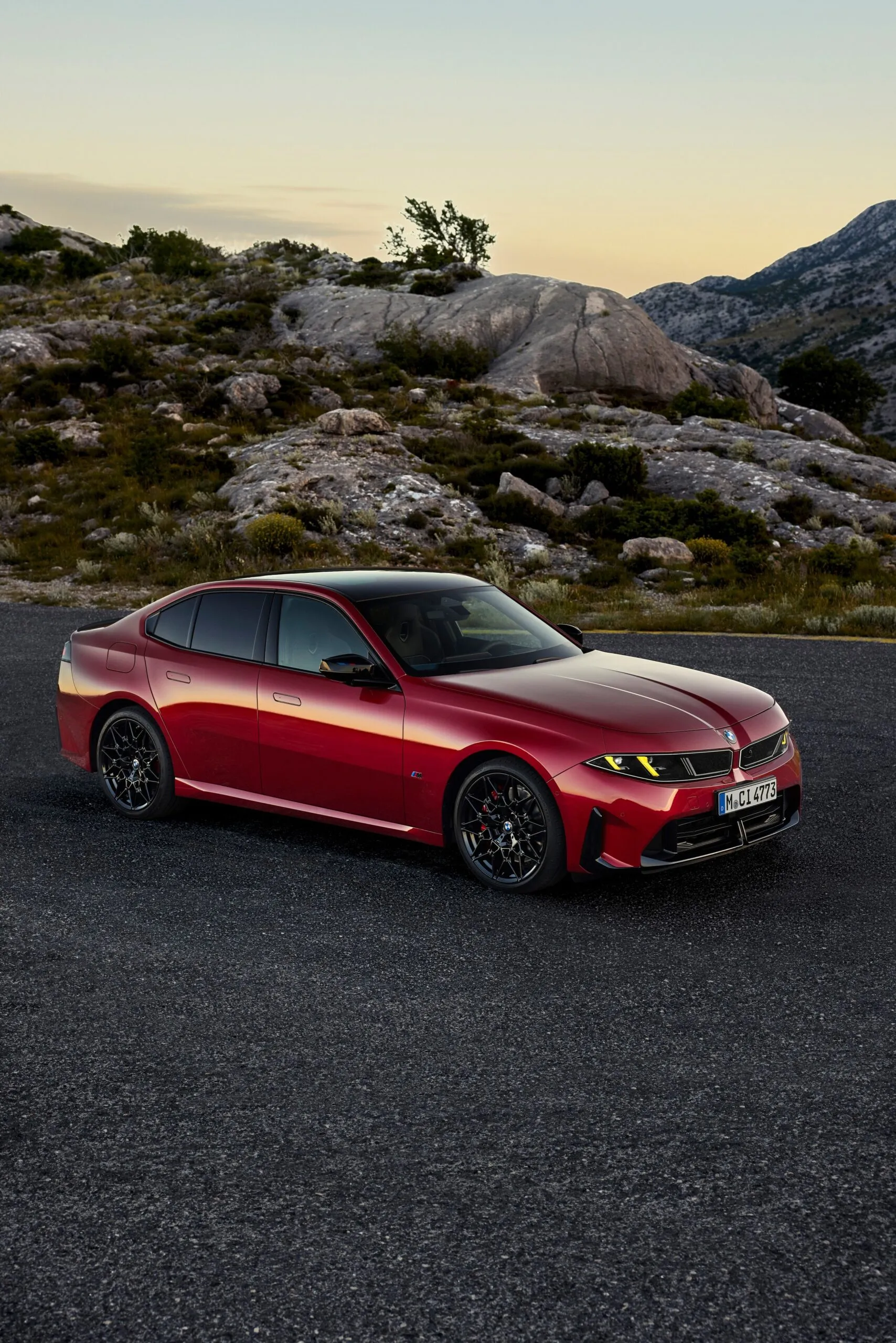


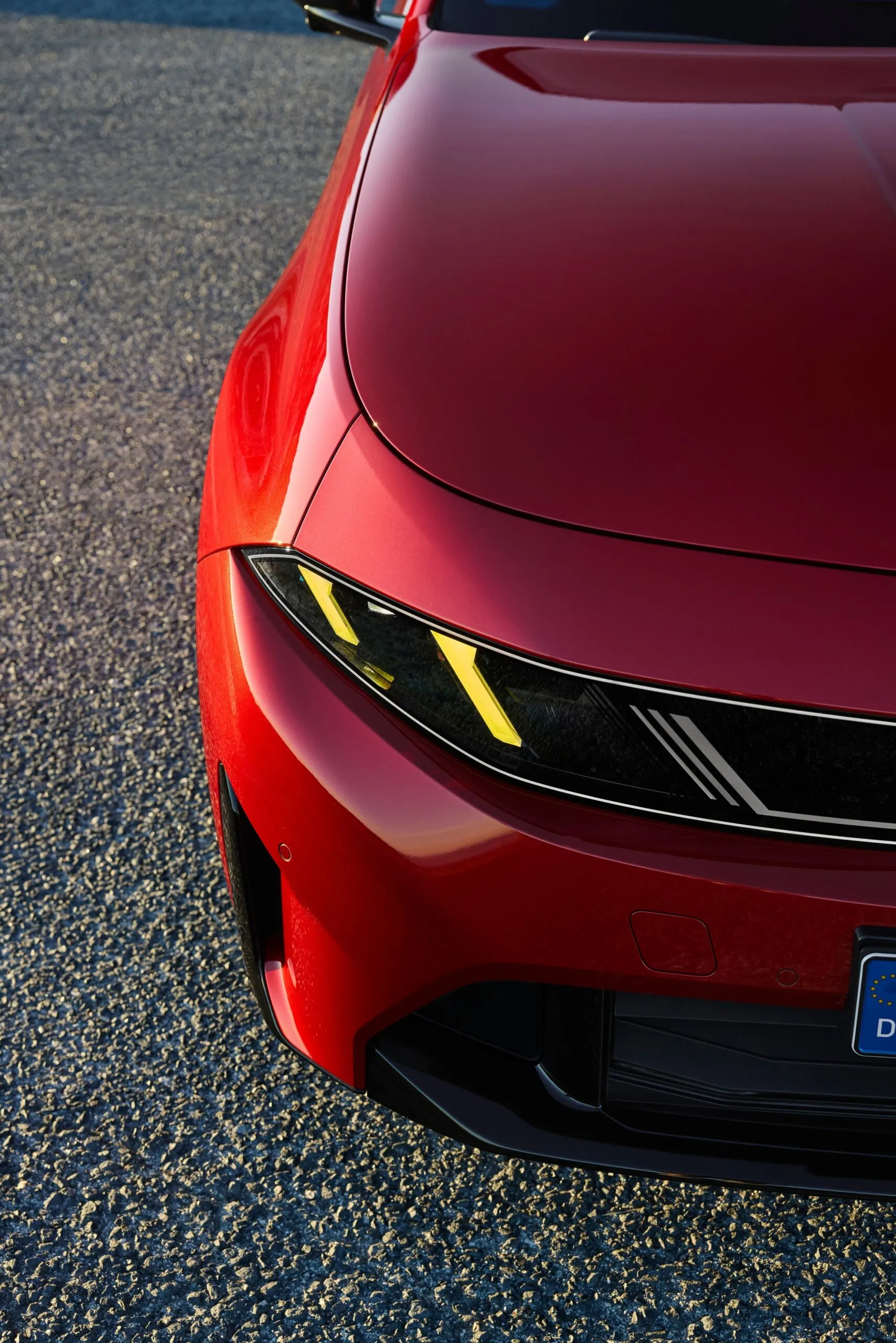



BMW M350 xDrive
While the platform of the 2027 3-Series isn’t new, BMW says extensive chassis modifications have been made. At the front, it includes a double-joint spring-strut front axle, wider front and rear tracks, and new wheel and tire combinations. Standard models are offered with adaptive suspension or adaptive M suspension, the latter of which comes standard on the M350 xDrive.
Arguably the most intriguing feature of the M350 is Drift Moment. It has a silly name, but it’s very serious. In this mode, the sedan turns into a rear-wheel drive monster. For whatever reason, this mode will only become available at an undisclosed time next year and will be rolled out through a software update.
In terms of safety, the 3-Series includes Level 2 driver-assistance systems and what BMW calls Symbiotic Drive. This system allows the driver to easily provide turning, acceleration, and braking inputs without the L2 system disengaging, as is common in many cars.
BMW hasn’t announced US pricing details for the new 3-Series, but has confirmed sales of the 330, 330x, and M350 xDrive will start in the first quarter of 2027.