Tesla Settles Its Autopilot Fire Truck Case Right Before A Jury Could Weigh In
A fatal Tesla crash raised questions about both Autopilot and driver attention, but a settlement means a jury won't decide the case
- Tesla has settled a lawsuit stemming from a fatal 2023 Autopilot crash.
- The Model S struck a fire truck blocking lanes with its emergency lights activated.
- Data reportedly showed the driver maintained steering-wheel contact before the collision.
Tesla won't have to face a jury over another fatal crash involving Autopilot. The automaker has reached a settlement with the family of Genesis Giovanni Mendoza Martinez, who died after his 2014 Model S slammed into a fire truck in California in 2023. The agreement came less than two months before the case was scheduled to go to trial on October 26. Terms haven't been disclosed.
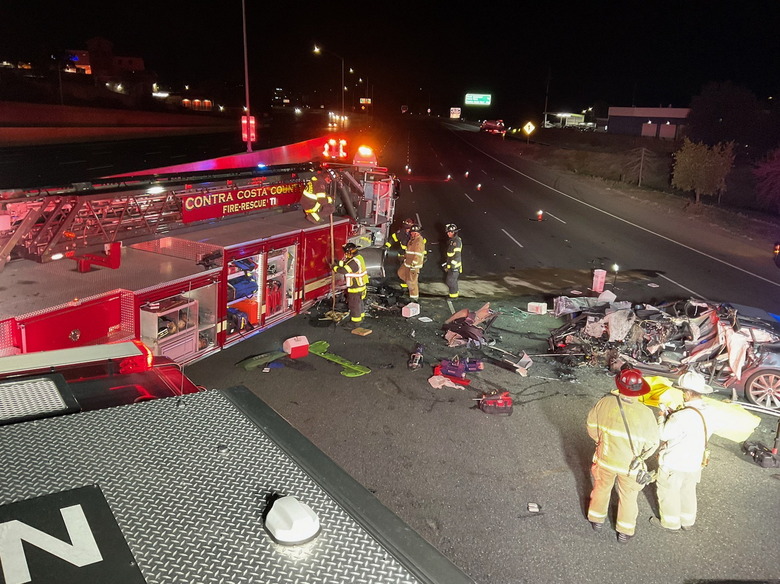
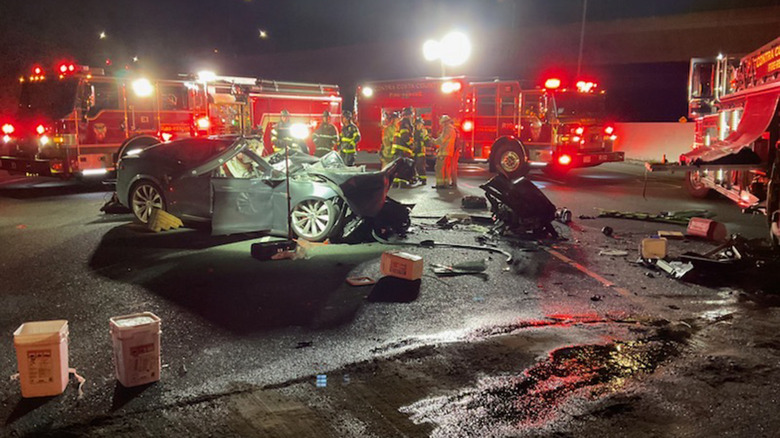
We've been following this case since the crash happened and then again when the Mendoza family sued Tesla in 2024. The crash happened at around 4 a.m. on February 18, 2023, while Martinez was traveling on Interstate 680 with his brother Caleb in the passenger seat. Emergency crews were dealing with another collision, and a ladder truck was positioned diagonally across the highway to block traffic.
Read: Tesla's Autopilot Under Fire Again After Motorcyclist Killed In Fatal Crash
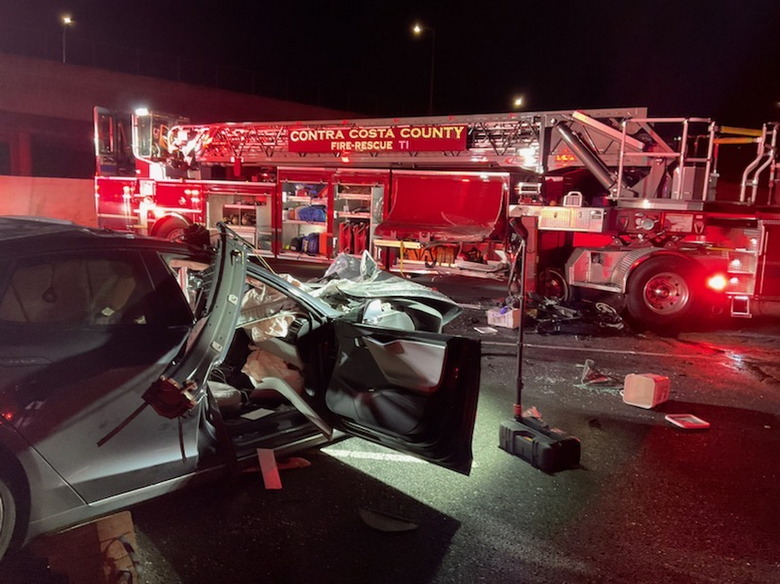
That truck wasn't alone. Other emergency vehicles were also at the scene with their warning lights flashing. Martinez's Model S, with Autopilot engaged, struck the truck. Martinez, 31, was killed, while his brother suffered serious injuries. This is where things get uncomfortable for Tesla, but also raise questions about Martinez's actions before impact.
According to the family's lawsuit and the resulting settlement first brought to light by Law360, Autopilot had been active for roughly 12 minutes before the crash. Vehicle data reportedly indicated that Martinez generally maintained contact with the steering wheel during that period.
That doesn't necessarily mean he was paying attention. A hand on the wheel isn't the same thing as eyes on the road, and drivers remain responsible for controlling vehicles using Level 2 assistance systems. Courts have found that to be true several times in the past. It's worth noting that we also haven't found credible evidence suggesting Martinez was intoxicated.
Still, a large fire truck was sitting across the highway with emergency lights flashing, yet neither the driver nor Tesla's technology managed to stop the Model S before impact. To that end, the family argued that the automaker misrepresented what Autopilot could do and that it was defective.
Tesla attempted to dismiss those claims, but U.S. District Judge Vince Chhabria allowed the family's misrepresentation claims to continue. More notably, he found that the "Autopilot" name itself was "plausibly misleading." Tesla has consistently maintained that Autopilot is a driver-assistance system, not autonomous-driving technology, and requires drivers to remain attentive and prepared to take control.
Now a jury won't get to decide where responsibility ultimately fell. That's perhaps the most interesting part of the settlement. When a driver-assistance system and the human supervising it both fail to react to something as conspicuous as a flashing fire truck blocking the highway, how much blame belongs to each? Let us know your thoughts down below in the comments.