


- We checked the Nissan Pixo and Renault Twingo twins up close.
- Pixelated Japanese styling can’t match Renault’s retro charm.
- Both share an 81 hp electric motor and a 27.5 kWh battery pack.
The race for affordable urban EVs in Europe has entered high gear, with local automakers trying their best to compete with Chinese imports. Renault revisited the Twingo’s winning formula with its latest A-Segment hatchback, which spawned the closely-related Nissan Pixo and the new Dacia Spring EV.
In addition to the common chassis, battery, and powertrain, the Renault and the Nissan share most of their exterior and interior components. The Dacia is more clearly differentiated. During a recent visit to the Athens Motor Show in Greece, I got the chance to check out the French and Japanese twins up close, examining the efforts of the respective design teams to set them apart.
More: Nissan’s New Entry-Level EV Pixelates The Renault Twingo
Before we dive deep into the differences, it is important to acknowledge that the iconic styling of the Renault Twingo E-Tech effectively made a potential rebadging kind of pointless. For this reason, the Nissan Pixo introduces a bunch of redesigned body panels, trying to mask the inevitable similarities.
Pixelated VS Frog-eyed Face
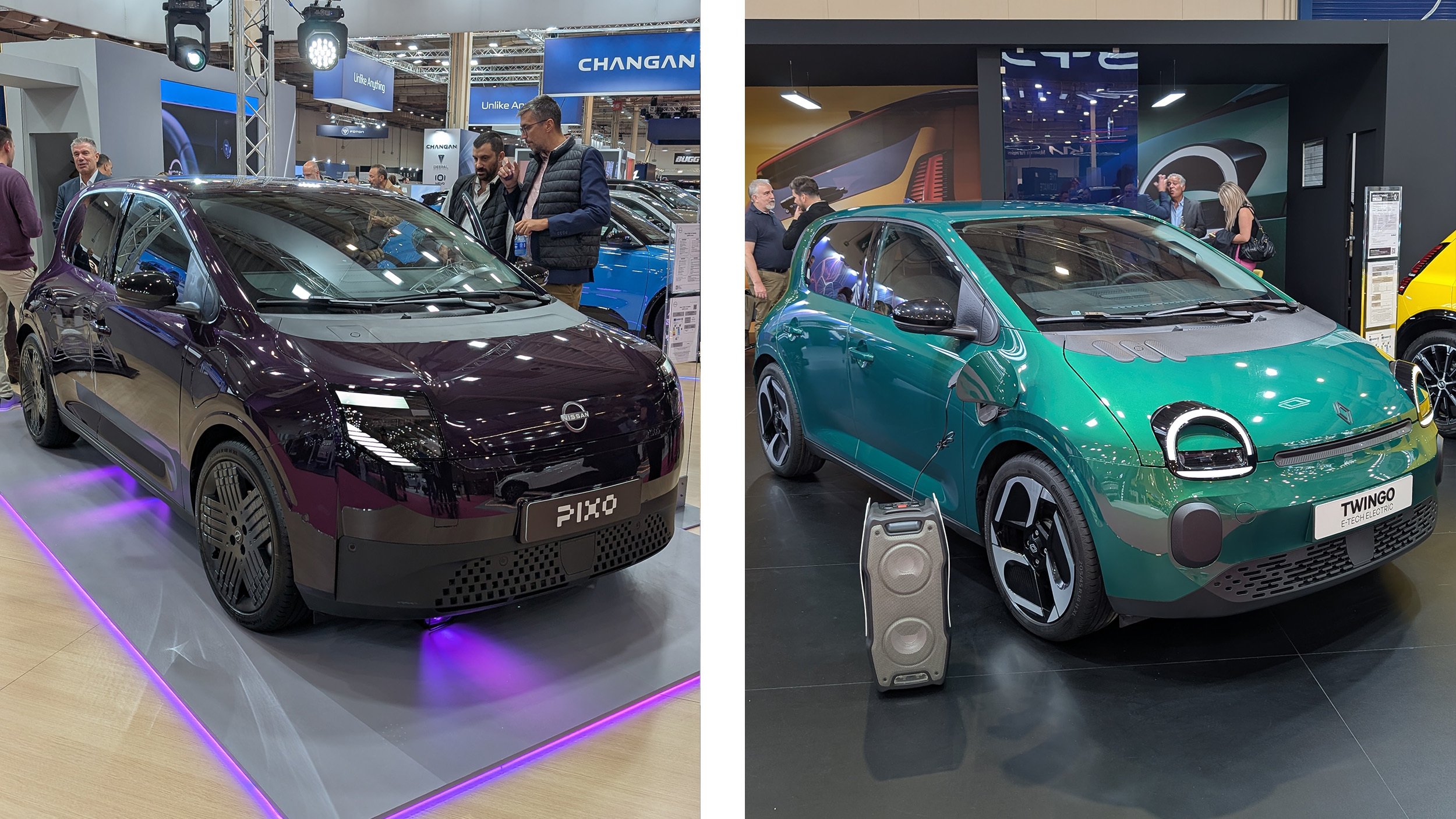
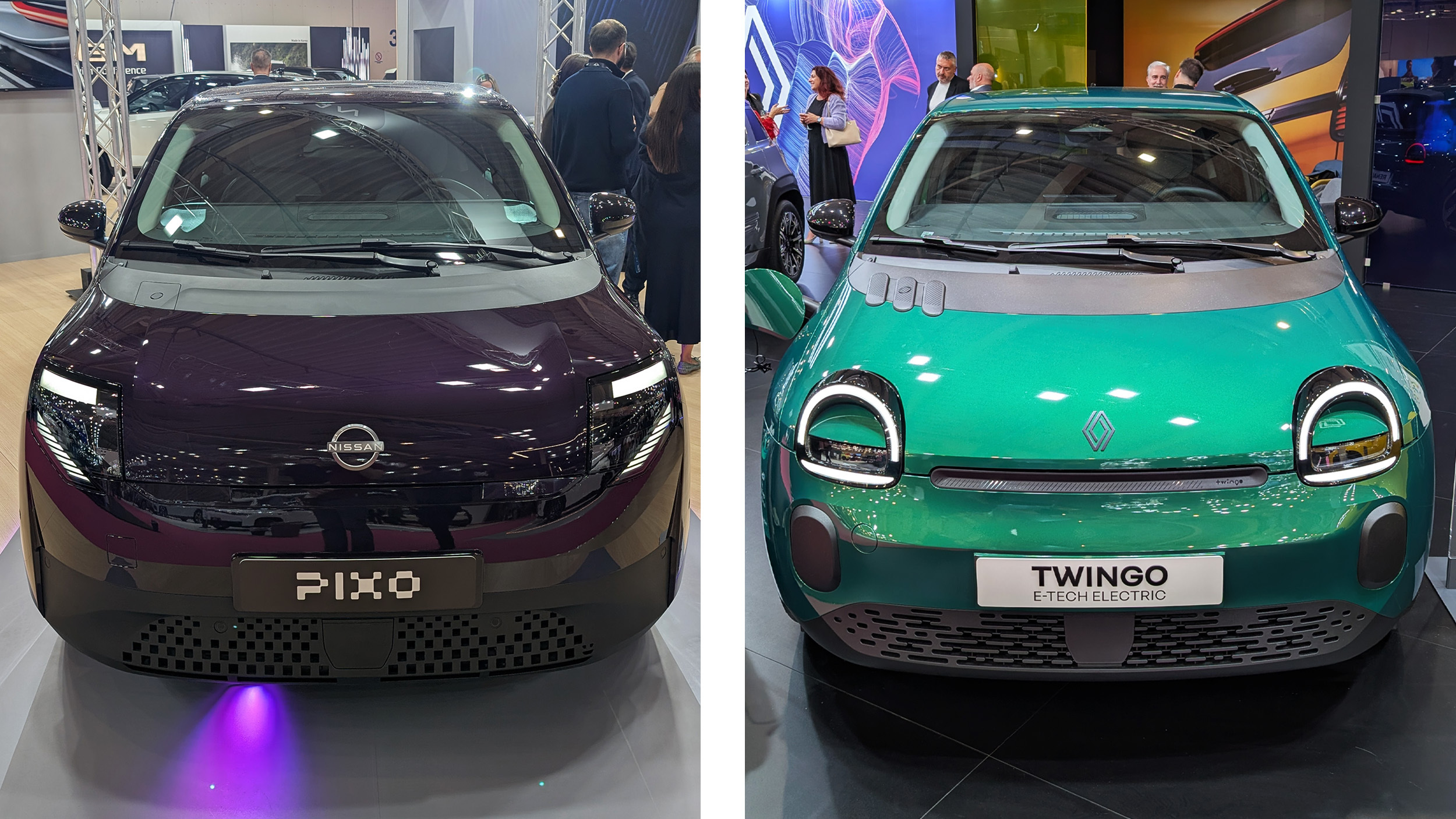
The first thing Nissan did was to swap the frog-eyed happy-to-meet-you face of the Twingo for a more upright nose. This required new moldings for the bumper, hood, and front fenders. Still, the most notable feature is the squared-off headlights with pixelated LED graphics flanking the grille-less nose. It also has rectangular plastic cladding around the lower bumper intake and a simple access cover on the hood instead of the Twingo’s triple-slot design.
Review: Stellantis Gave Citroen C3 And Fiat Grande Panda The Same Bones, But Not The Same Soul
The profile is shared between the two models, with the exception of the alloy wheels, which measure up to 18 inches in the flagship trims. Nissan has also promised to offer special colors, including the pictured Wonder Purple shade. The restyled bumpers account for the slight size difference, with the Nissan measuring 3,796 mm (149.4 in) or 7 mm (0.3 in) longer than the Renault.
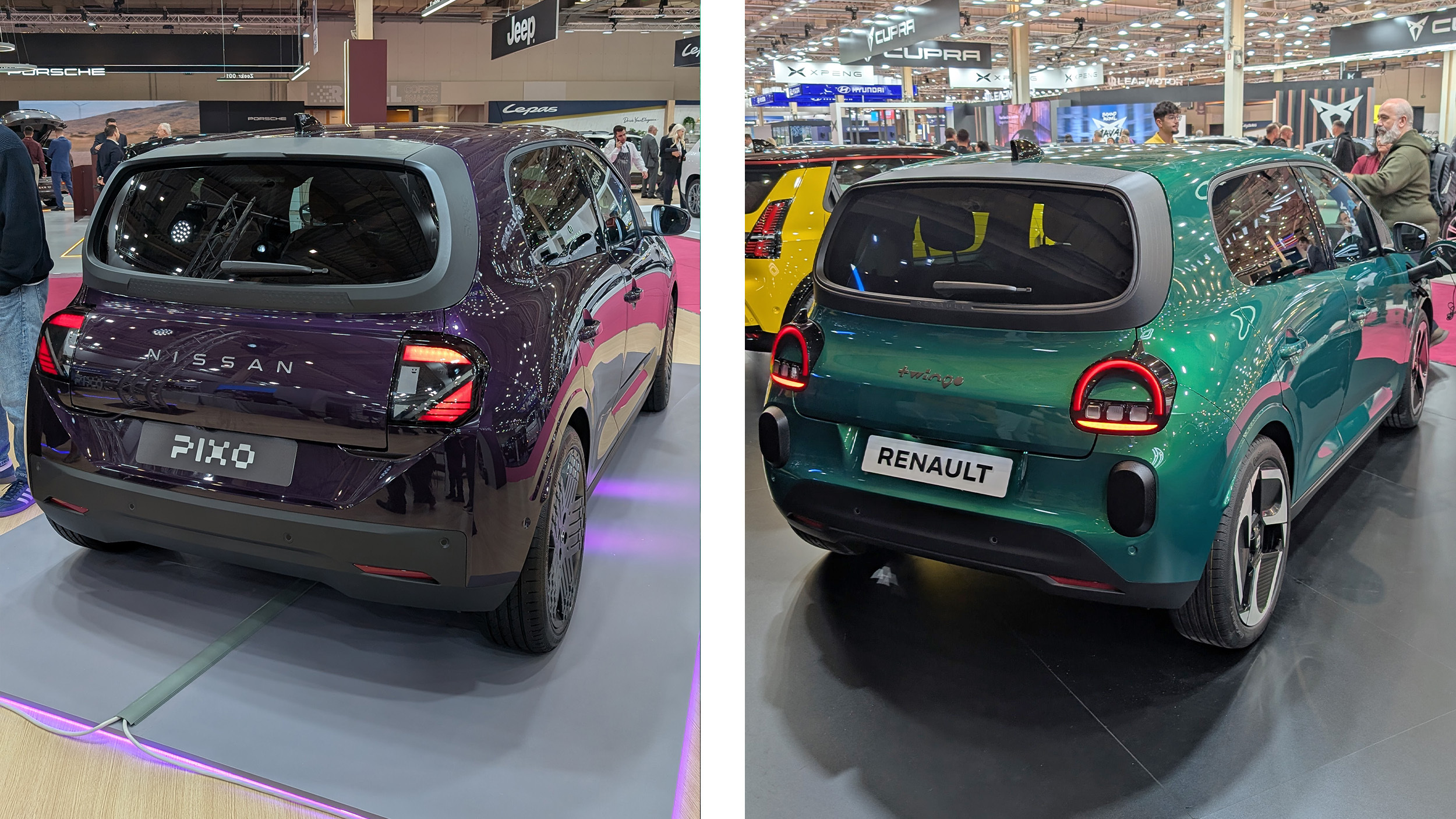
At the back, the rebadging is more obvious despite Nissan’s best efforts and clever references to the K12 generation of the Nissan Micra from 2002. The Twingo’s unique rear glass is hard to ignore, though the plastic garnish around it is different, with textured details and Pixo lettering printed on the side.
More: Are We Entering A New Era Of Badge Engineering?
The squared-off taillights mirror the styling language of the headlights, while integrating a smiley face into their clusters. Those are joined by a Nissan-specific tailgate and rear bumper. The latter lacks the bumper guards of the Twingo, sporting a sculpted license plate holder and simpler cladding.
Identical And Spacious Interior
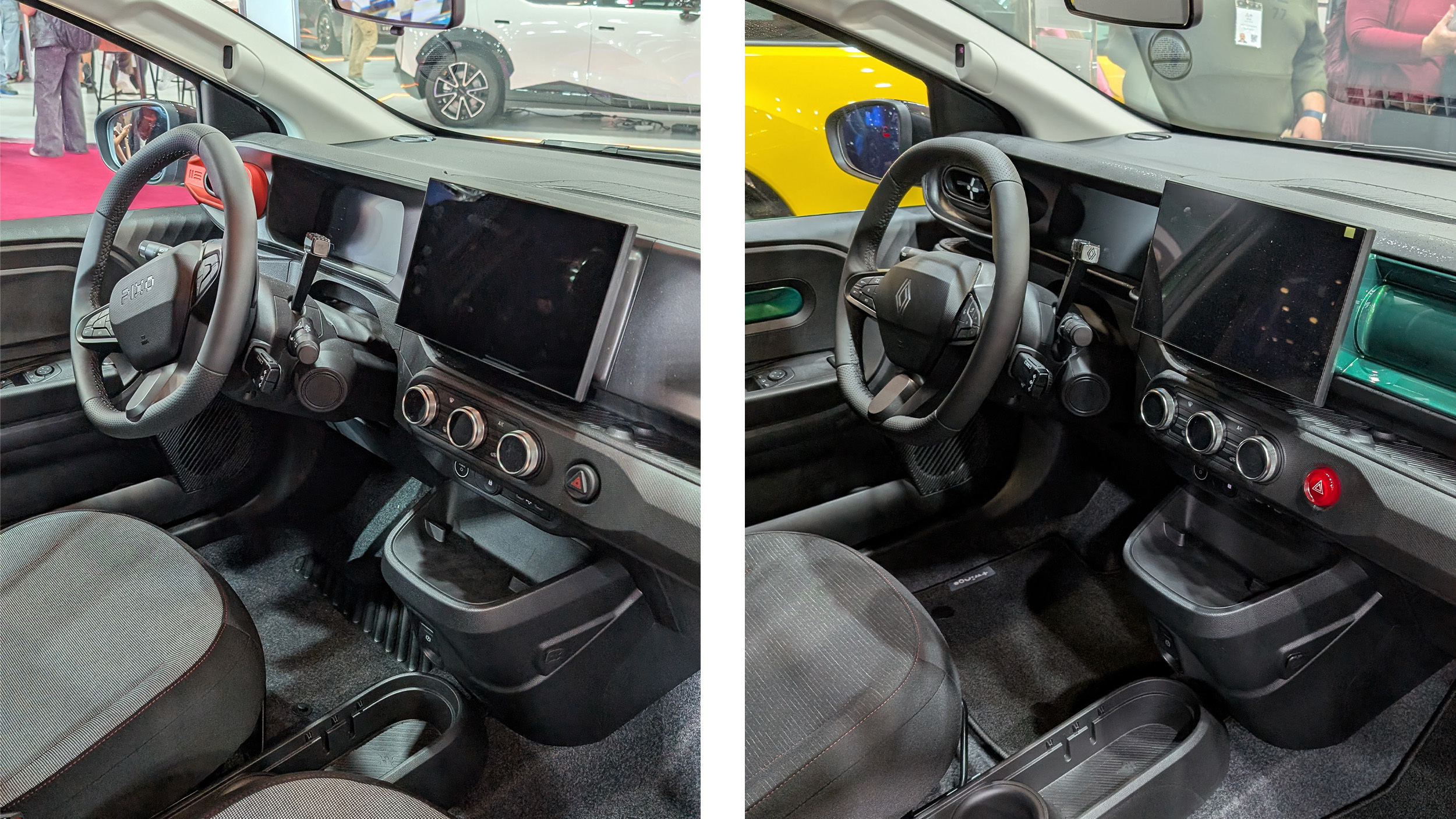
The interior is largely the same, with differences being limited to certain trim pieces and Easter Eggs. Both EVs have a 7-inch digital instrument cluster and a 10-inch infotainment display with Google built-in. They also share all of the physical controls, switches, stalks, and storage solutions. Still, the Twingo has more colorful accents on the door cards and the dashboard, with the Pixo focusing on the garnish around the climate vents.
More: New Dacia Spring EV Flees From China And Pays The Price
Despite their compact footprint, the models have spacious interiors thanks to their 2,492 mm (98.1 in) wheelbase and the packaging of the EV-dedicated AmpR Small architecture. I was impressed by the ample legroom aided by the rear seats that slide by 170 mm (6.7 in), while being able to recline and fold.
The official cargo capacity rating is up to 360 lt (12.7 cubic feet) in the Renault and up to 356 lt (12.6 cubic feet) in the Nissan. Furthermore, the models have 19 lt (0.7 cubic feet) and 18 lt (0.6 cubic feet) of in-cabin storage, respectively.
Specs, Price, And Rivals
Both models share the same 81 hp (60 kW / 82 PS) front-mounted electric motor and a 27.5 kWh Lithium Iron Phosphate (LFP) battery pack offering 161 miles (259 km) of WLTP range and 50 kW DC charging capability.
More: Nissan’s Smallest Hatch Is Back And It’s Unrecognizable
While Nissan has yet to announce pricing for the Pixo, we can only assume it will be pretty close to its French twin following the example of the larger Renault 5 E-Tech and Nissan Micra siblings. The Renault Twingo E-Tech currently starts from €19,490 ($21,900) in Greece, but the entry figure can drop to €14,990 ($16,800) when you account for the €3,000 ($3,400) state subsidy and the €1,500 ($1,700) scrappage bonus.
The Nissan Pixo and the Renault Twingo E-Tech are manufactured at the Novo Mesto plant in Slovenia, alongside the new Dacia Spring EV. The urban hatchbacks were designed for European and UK markets, targeting budget-friendly rivals such as the Leapmotor T03, the BYD Dolphin Surf, as well as the upcoming VW ID. Up! and Kia EV1. Another threat for the EV siblings is the future Citroen 2CV revival, which is expected to be even cheaper thanks to complying with Europe’s upcoming e-car regulations.