

Is Your Engine Safe After Mixing Synthetic And Regular Oil?
One or the other is best, but can you mix them in a pinch?

Thousands of drivers across the world put the wrong fuel into their car each year, usually dropping gasoline into a diesel car's tank. When this happens, the car can't be driven until the whole fuel system has been flushed. What about mixing engine oils, though? Is it safe to drive your car after mixing synthetic and regular oil? The short answer is yes, your engine should be fine, though oil companies don't recommend mixing them.
Oil is arguably the most important fluid in any vehicle. Its job is to lubricate all of the moving components that would otherwise melt into a hot, seized mess when you drive down the road. Car engines have needed oil since Karl Benz built the first gasoline automobile more than a century ago.
Oil has changed a bit since then. Conventional multigrade mineral oils are the cheapest oils you'll come across today. Unlike the oils used in the early 20th century, multigrade oils are designed to work in both hot and cold conditions. However, they're prone to deterioration, which is why they need changing more frequently than newer-style oils.
Synthetic oils are far more sophisticated. They are designed with additives specifically to withstand oxidation and breakdown, meaning they can last 10,000 miles or more between changes. Some automakers allow 20,000-mile service intervals when synthetic oil is used. But synthetic oils are expensive, so semi-synthetic fluids were developed to strike a balance between cost and longevity. They are literally a blend of mineral and synthetic oils. Manufacturers wouldn't sell such a blend if it was going to kill your engine. But it also doesn't provide the maximum benefits of pure synthetic oil.
What happens when you mix different oils?
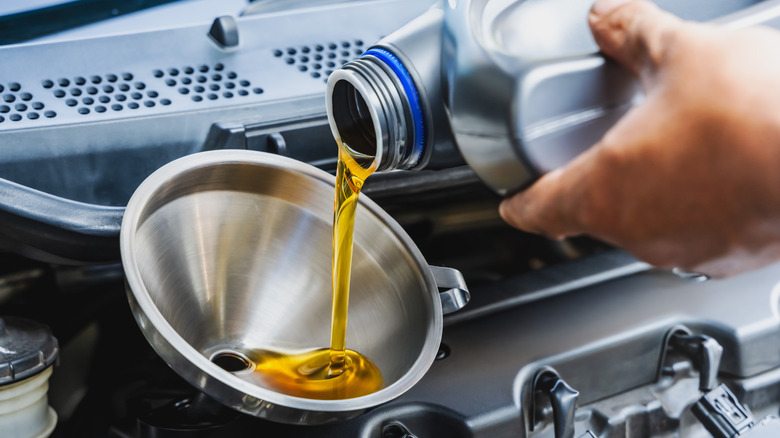
The good news is that topping up an engine with the wrong type of oil isn't disastrous. You don't need to immediately drop the oil and flush the entire engine. It's safe to start up your car and drive it.
"[Fully synthetic] Mobil 1 is fully compatible with conventional motor oils, semi-synthetic motor oils and other synthetic motor oils, should it be necessary to mix them," Mobil says on its website. On another page, Mobil also trashes a rumor that mixing synthetic and regular oil will form a gel that could harm an engine.
But Mobil doesn't recommend mixing oils, either. Topping off an engine running synthetic oil with a quart of cheap mineral oil dilutes the carefully blended mix of base oils and additives that provide the protection modern engines need. Although cheaper oils won't ruin your engine immediately, they're more likely to break down, leaving carbon and sludge deposits that can cause serious wear over time. Turbochargers run at very high speeds and are particularly sensitive to bad oil. This is why turbo engines need oil changes more often.
So what's the big takeaway? Don't panic if you've added the wrong type of oil. But your best bet is to order the right oil and get it changed, with a new filter, as soon as you can.