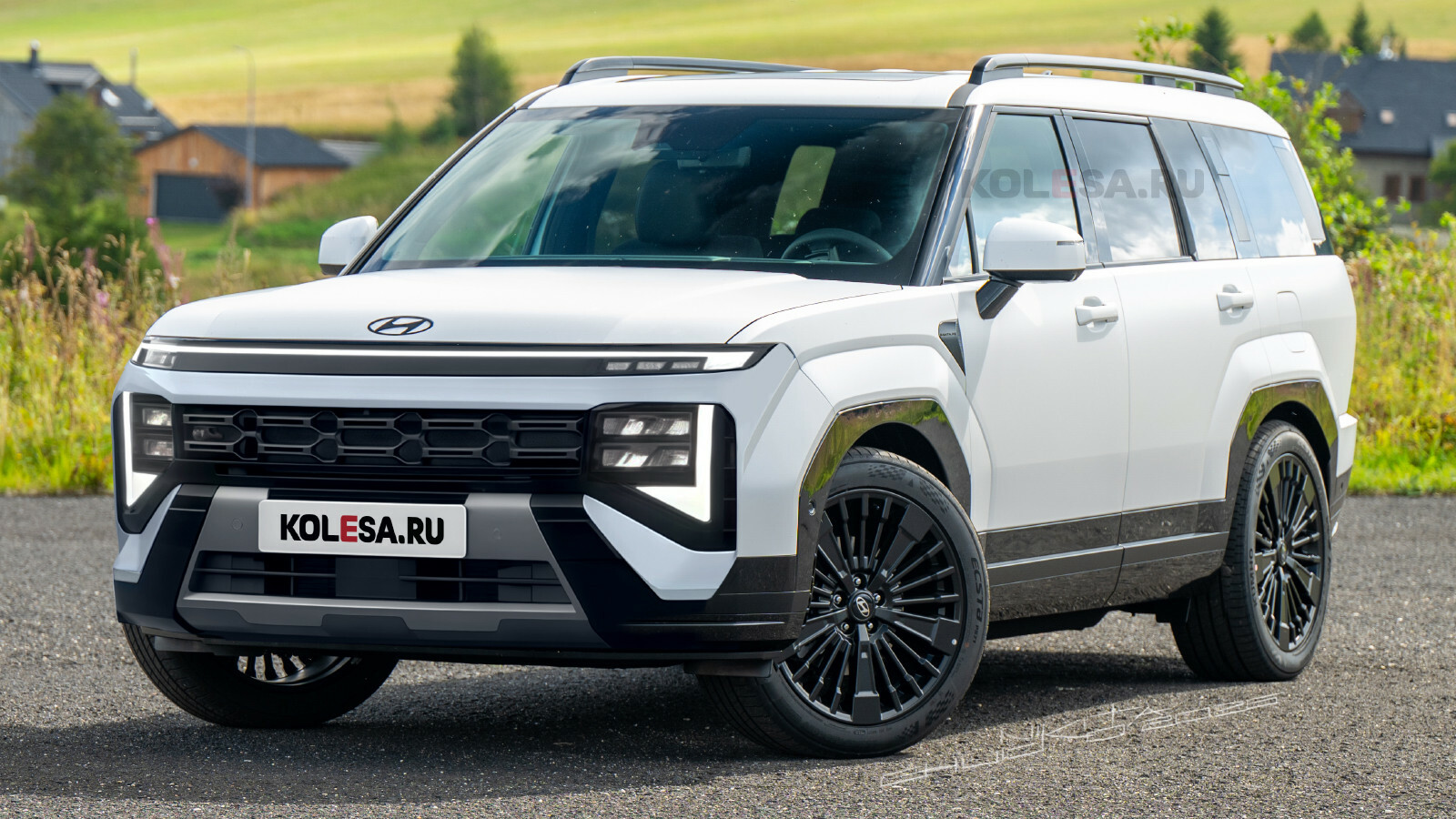
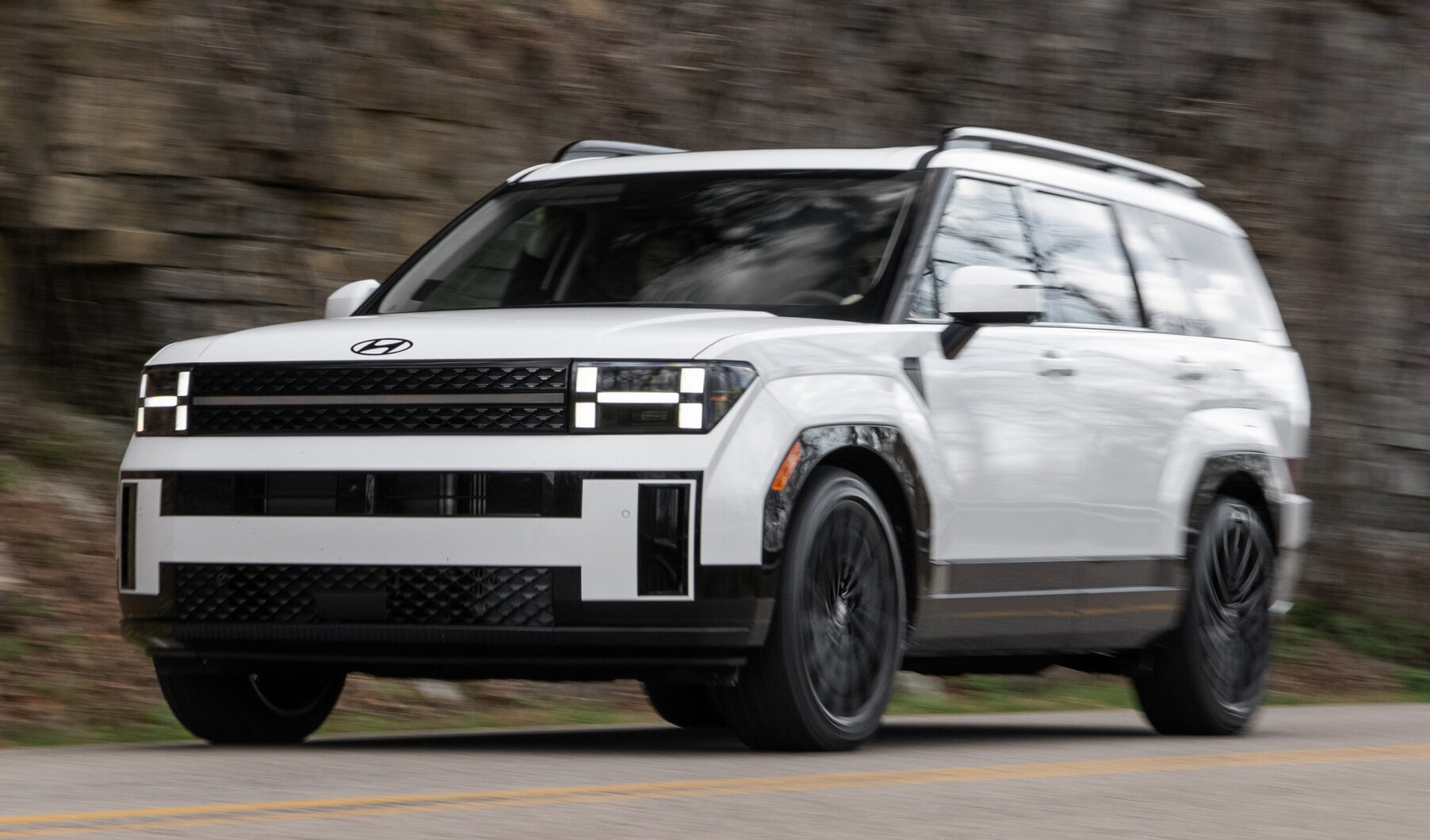
- Hyundai is preparing a facelifted Santa Fe for the 2027 model year.
- Rear design changes include more traditional vertical taillights.
- Powertrains are expected to carry over from the current model.
Hyundai is working on a facelift for the Santa Fe, and if it gets the details right, the update could give the popular SUV a real boost in appeal. Recent spy shots offer a glimpse of what’s coming, and the latest renderings have us feeling cautiously optimistic about what Hyundai might be planning.
Much of the controversy about the fifth-generation Santa Fe’s design relates to the rear end. In most cars, the headlights and taillights sit at roughly the same level. Not so with the current Santa Fe, where the taillights sit unusually low on the tailgate. The result is visually awkward and doesn’t quite match anything else in Hyundai’s stable.
Read: Hyundai Thinks Outside The Box For 2027 Santa Fe
That may be about to change. New renderings by Nikita Chuyko for Kolesa, based on recent spy shots, show the facelifted model with vertically stacked taillights, similar to those on the larger Palisade.
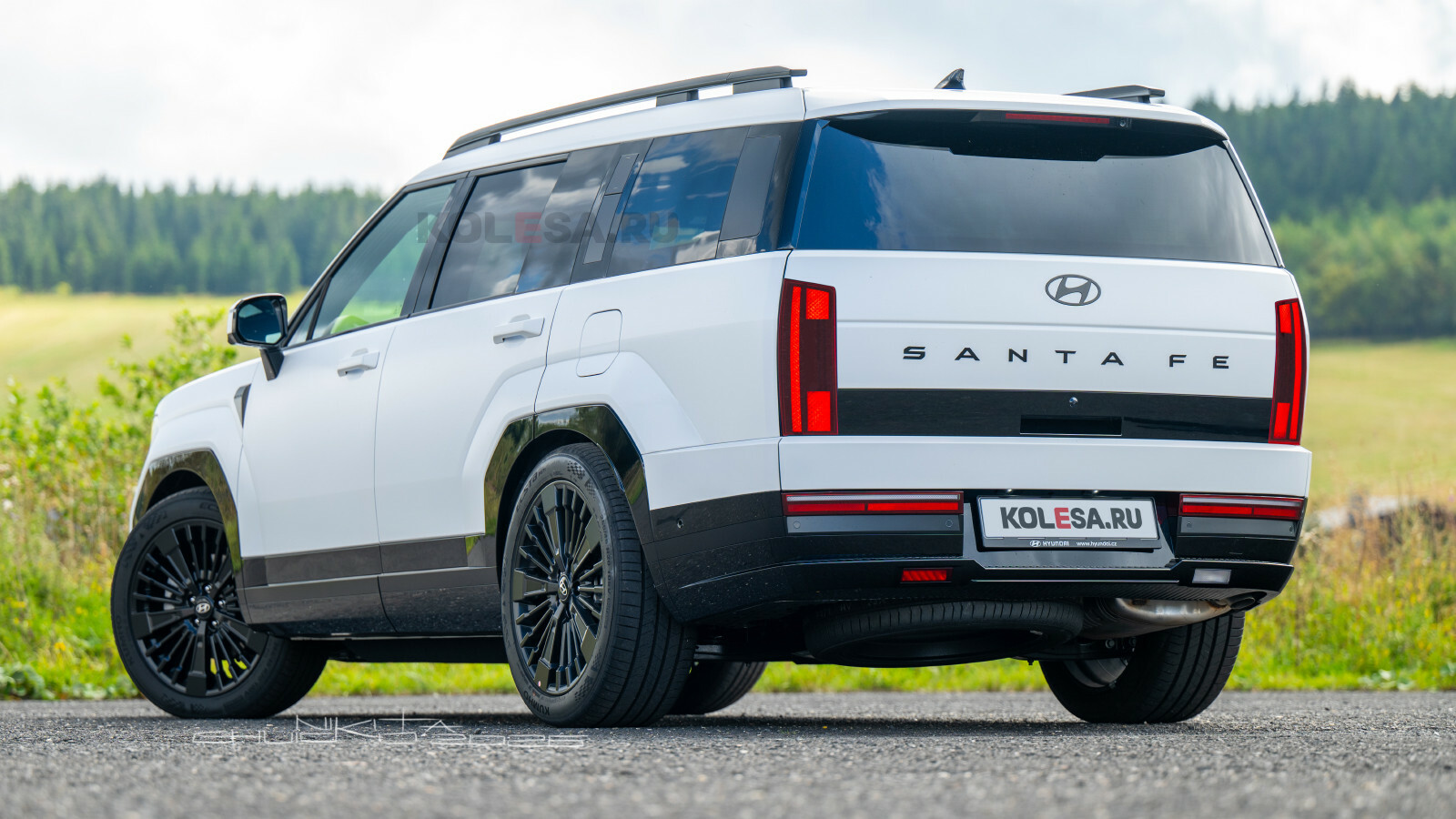
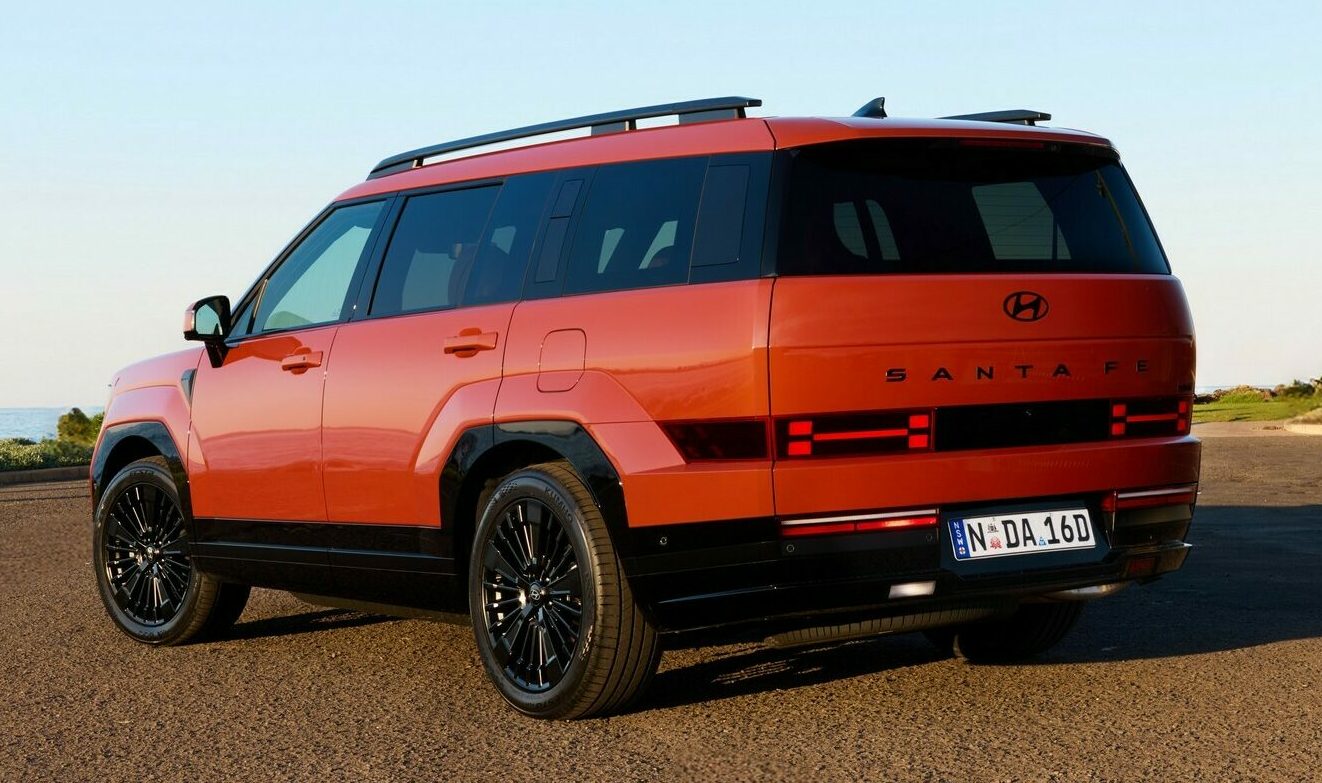
It’s a small tweak, but one that could make a surprisingly big difference in how the SUV looks. We think it gives the design a cleaner, more cohesive feel, and expect it to resonate with plenty of buyers.
Big upgrades could also be in the works for the Santa Fe’s front end, even though it isn’t in desperate need of an update quite like the rear.
Also: Hyundai’s New EV Looks Like It Wants To Be A Genesis When It Grows Up
As seen in recent prototypes, the new model appears to adopt a split headlight design. These renderings show it with a full-width LED light bar running across the top, along with angular DRLs framing the separate headlamp units lower on the fascia. The overall look draws some inspiration from the Palisade, but it comes across as a bit more restrained.



Baldauf
Beyond the new exterior design, little else is known about the facelifted Santa Fe. Some reports suggest it could be one of the first Hyundai models to adopt the company’s new Tesla-inspired Pleos Connect infotainment system running the Android Automotive operating system.
As for powertrains, Hyundai isn’t expected to overhaul the engine lineup. The current offerings will likely carry over, including the 2.5-liter turbocharged four-cylinder producing 277 hp and 311 lb-ft (421 Nm), and the hybrid 1.6-liter turbo four available in 231 hp and 271 hp (367 Nm) configurations.
The Santa Fe’s polarizing design hasn’t dented its popularity. Quite the opposite, in fact. Last year, Hyundai sold 142,404 units in the United States, marking a 20 percent increase over the previous year. That momentum sets the stage for this facelift to do more than just refine appearances.