

- Tesla says the first Cybercab has left the Texas line.
- Musk still targets a sub-$30,000 version by 2027.
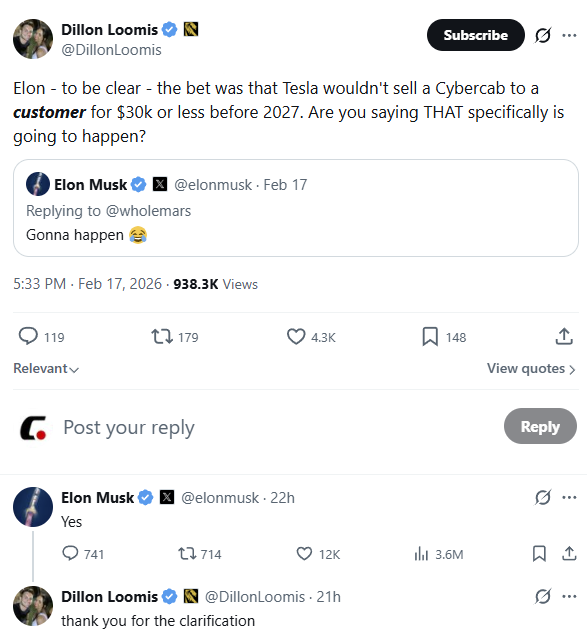
- Milestone revived MKBHD’s viral head-shaving bet.
Don’t look now, but Tesla might actually be on schedule, if not slightly ahead, at least for now, with its Cybercab program. The automaker says the first production example rolled off the line on Tuesday, more than a month earlier than Elon Musk previously suggested. Its CEO also confirmed pricing.
Read: Tesla Spent Big On Cybercab Branding, Now Someone Else Owns It
Of course, plenty of hurdles remain if Tesla plans to sell one before the end of the decade. And yes, at least one major YouTuber could end up shaving his head if Musk’s team pulls it off.
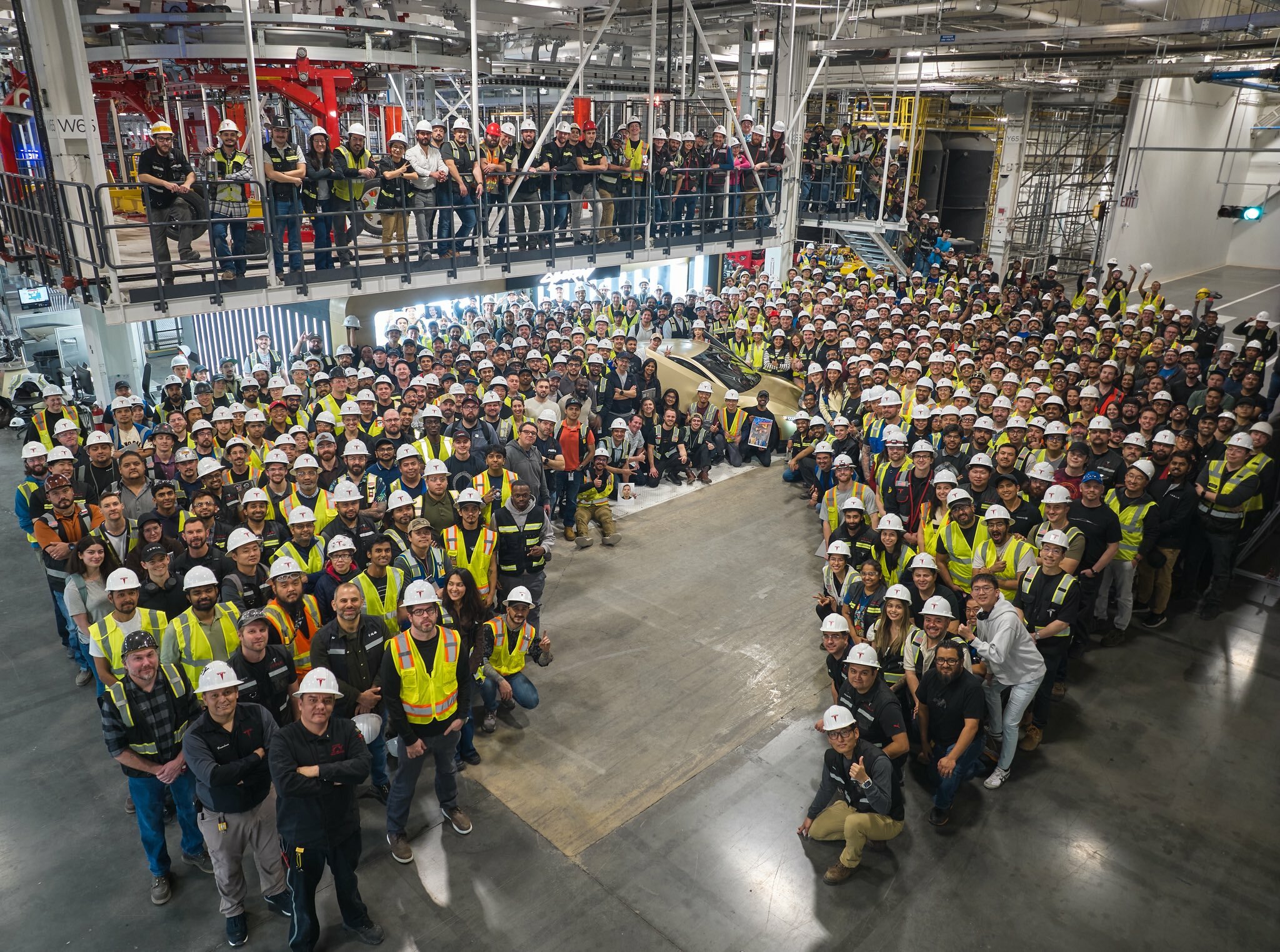
Tesla posted a photo on February 17 showing the team at Gigafactory Texas surrounding the first production Cybercab. While there’s still no clear timetable for full-scale production, Musk previously indicated that manufacturing wouldn’t even begin until April. I double-checked my calendar, and it still says February.
Importantly, this is almost certainly a pilot build and not a car destined for a customer. That said, it’s a significant step forward for a brand often associated with shifting timelines.
Public Bets And Pricing
That reputation likely played a role in Marques Brownlee (MKBHD) saying in 2024 that if Tesla launched the car before 2027 at a price below $30,000, he’d shave his head on camera.
After Tesla announced the milestone, meme versions of a bald MKBHD quickly spread across X. Musk joined in, replying “Gonna happen 😂” to one such post. In a separate exchange, he also confirmed that Tesla still plans to sell a consumer version of the Cybercab before 2027 for “$30,000 or less”.
Hurdles Ahead
That all sounds promising, but Tesla has to do more than simply build the car. The Cybercab is meant to be the brand’s first true autonomous vehicle sold without a steering wheel or pedals. Since unveiling it, however, Tesla has hinted that those controls could return if regulations require them.
And that’s where the real challenge begins. Federal vehicle safety standards assume a human driver is present, and insurance frameworks do too. The NHTSA may need to grant exemptions for certain rules, while individual states could impose their own restrictions on autonomous vehicles operating on public roads.
In other words, building the Cybercab might prove easier than getting it legally approved. Whether Tesla can clear those hurdles before 2027 remains an open question.