

- 2027 Chrysler Pacifica gets a mild facelift after nearly a decade on sale.
- New front-end styling and interior tweaks are the big highlights on offer.
- Chrysler keeps the minivan’s biggest strengths, but rivals have moved ahead.
Nine years is an eternity in the auto industry. In that time, rivals have gone hybrid-only, added giant screens, introduced hands-free driving tech, and in some cases launched entirely new generations. Chrysler, meanwhile, has responded to the Pacifica’s advancing age with what amounts to a light facelift.
More: First Look Inside The 2027 Chrysler Pacifica Shows Cabin Missed The Memo
The 2027 Chrysler Pacifica is being pitched as the future face of the brand, which is a little concerning because this “redesign” barely changes a minivan that first arrived for 2017 and last received a meaningful refresh in 2021.
Yes, there’s a new front end, but only Select, Limited, and Pinnacle trims get it. The entry-level LX, formerly known as the Voyager, keeps the old nose entirely, meaning Chrysler will sell two different-looking Pacificas side-by-side.



The updated front fascia adds vertical LED headlights, a glowing Chrysler badge, and an illuminated grille with what the company calls “piano key” lighting. Limited and Pinnacle models even get a little welcome animation when you walk up. It’s a nice feature, but it’s also the type of thing we’ve seen from other automakers for nearly a decade.
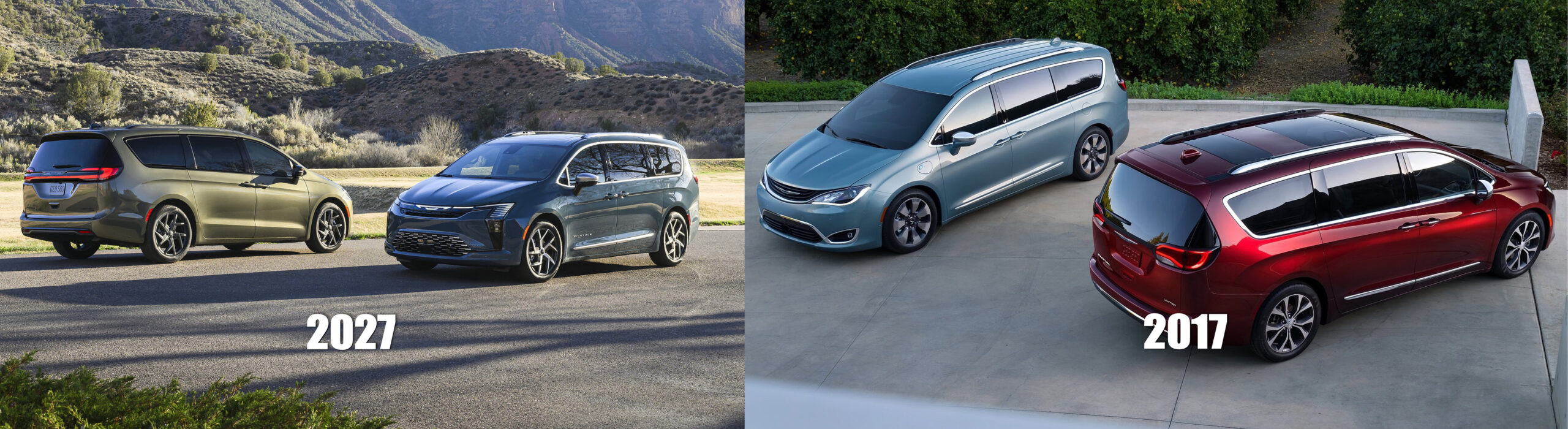
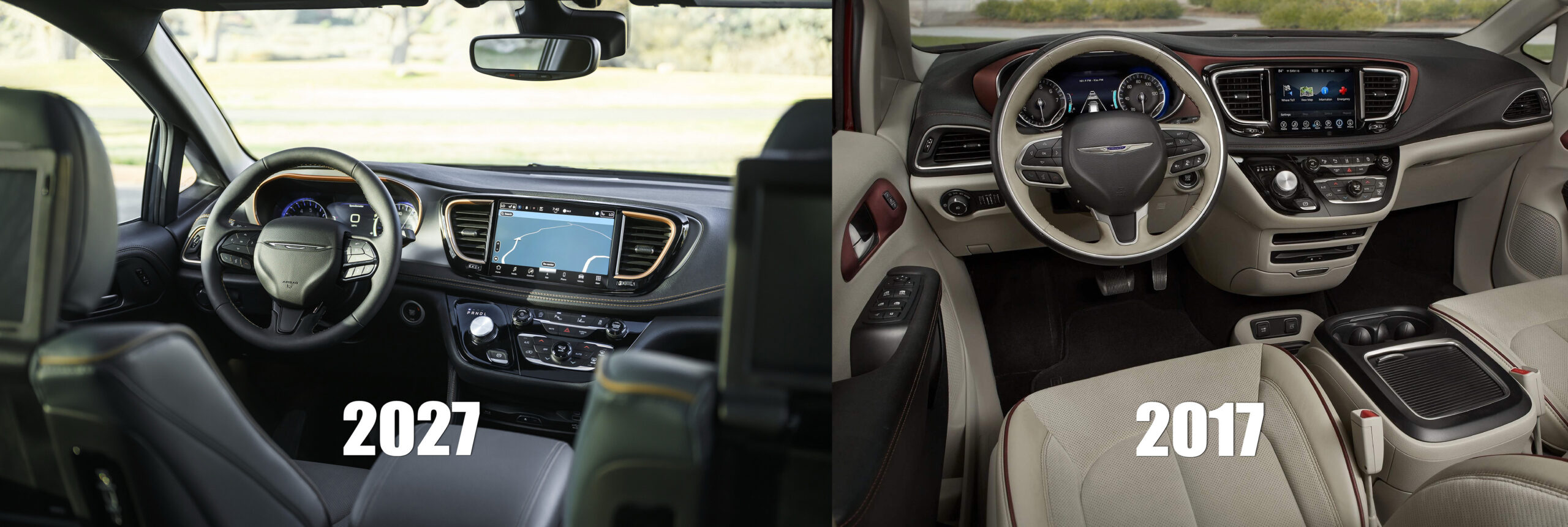
Beyond the nose, very little has changed. The Pacifica’s profile is virtually identical; the rear only gets a lightly revised light bar, and the cabin looks almost untouched. Chrysler touts a new steering-wheel badge (I wish we were joking), fresh trim, and an exclusive Blue Agave interior on the range-topping Pinnacle. But the dashboard, center stack, switchgear, and overall layout are effectively carried over from the 2021 refresh. Put simply, this still looks and feels a lot like a 2017 minivan inside.
To be fair, the Pacifica still has some genuine advantages. It remains the only minivan with both second-row Stow ’n Go seats and available all-wheel drive, a combination that continues to be legitimately useful. The 3.6-liter V6 still produces a respectable 287 hp (214 kW) and 262 lb-ft (355 Nm), and Chrysler has added a few thoughtful features, including a height-adjustable power liftgate, a blind-spot camera view, and more flexible packaging for the rear-seat entertainment and family tech options.
But here’s the problem: those strengths are no longer enough to make the Pacifica feel class-leading. The Toyota Sienna offers standard hybrid power and far better fuel economy. The Kia Carnival feels dramatically more modern inside and out, while the updated Honda Odyssey at least looks fresher and offers one of the best interiors in the segment.


Chrysler deserves credit for keeping the Pacifica’s best ideas alive. Stow ’n Go remains brilliant, the Pinnacle is still impressively plush, and there are enough updates here to keep the van competitive for another couple of years. But if this is truly meant to preview the future of Chrysler, the brand seems less like it’s leading the way and more like it’s sleepwalking through another product cycle.
This would all be somewhat understandable at a brand with plenty of models and lots going on, perhaps during a big push toward electrification. Sadly, that’s not what’s going on at Chrysler. It’s a brand with, let’s count together, exactly one vehicle on offer. It’s just a bit underwhelming to see that after ten years of production, plenty of floppy concepts, and promises of more coming soon, this is the result.