


- Traffic deaths fell 4.3% during the first quarter of 2026.
- Fatality rate reached its lowest first-quarter level since 2014.
- Bicyclist deaths remain a troubling exception to the broader trend.
For years, America’s roads seemed to be moving in the wrong direction, with traffic fatalities surging during the pandemic and remaining stubbornly high afterward. That trend continues to reverse, however, as new federal data shows the country’s safest start to a year in more than a decade. Not everyone is sharing in the gains, though.
Read: The Average New Truck Hood Can Floor Anyone Under 5-Foot-6, Which Is Half The Country
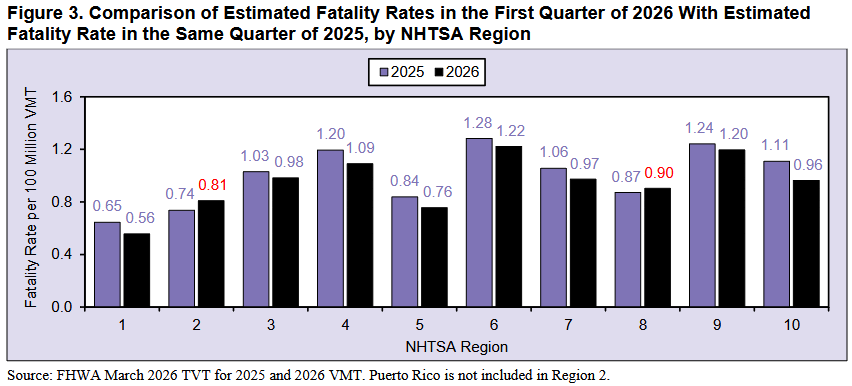
According to new preliminary estimates from the NHTSA, approximately 7,770 people died in traffic crashes during the first quarter of 2026, down 4.3 percent from the same period a year earlier. The fatality rate also dropped to 0.99 deaths per 100 million vehicle miles traveled, the lowest first-quarter figure since 2014 and just shy of the all-time quarterly record of 0.98.
A Decade-Best Trend Takes Hold
The latest figures build on an encouraging trend that began after traffic deaths peaked during the pandemic. NHTSA says full-year fatalities in 2025 fell to their lowest level since 2019, while the annual fatality rate of 1.10 deaths per 100 million vehicle miles traveled was the second-lowest ever recorded. If the current pace continues, 2026 would mark the fifth consecutive year of declining roadway deaths.
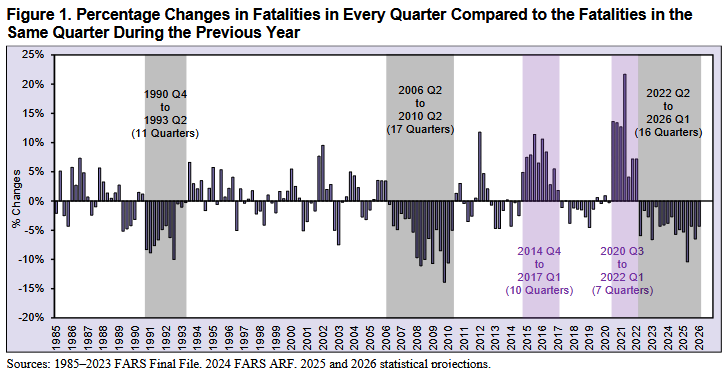
The pandemic years represented a dramatic departure from long-term progress. Traffic deaths climbed 10.8 percent in 2021 to 43,230, the highest annual total since 2005, as emptier roads, reduced traffic enforcement, and increases in speeding and impaired driving combined to produce a sharp rise in fatal crashes.
Cyclists Are Still Losing Ground

Despite the positive overall trend, one category continues to move in the opposite direction. Bicyclist fatalities rose 4 percent in 2025 to 1,148 deaths, remaining near the highest levels seen in more than four decades. The early 2026 report does not provide a breakdown for pedestrians, cyclists, motorcyclists, or vehicle occupants, so it’s not yet clear whether vulnerable road users are also benefiting from the overall decline this year.
Beyond the human toll, the financial impact is sincerely gigantic. A previous NHTSA study estimated that crashes cost taxpayers roughly $30 billion annually and society $340 billion in direct costs. When lost quality of life is included, the total economic burden rises to approximately $1.37 trillion.