


CONS ›› Slow, lacks soul, expensive
Legacy carmakers continue to draw on their histories to evoke nostalgia among buyers, reviving long-forgotten nameplates and launching new models they hope will appeal to enthusiasts. Honda has done just this, first bringing back the Integra name for a North American sedan and planning to release a new RSX, before ultimately canceling that model.
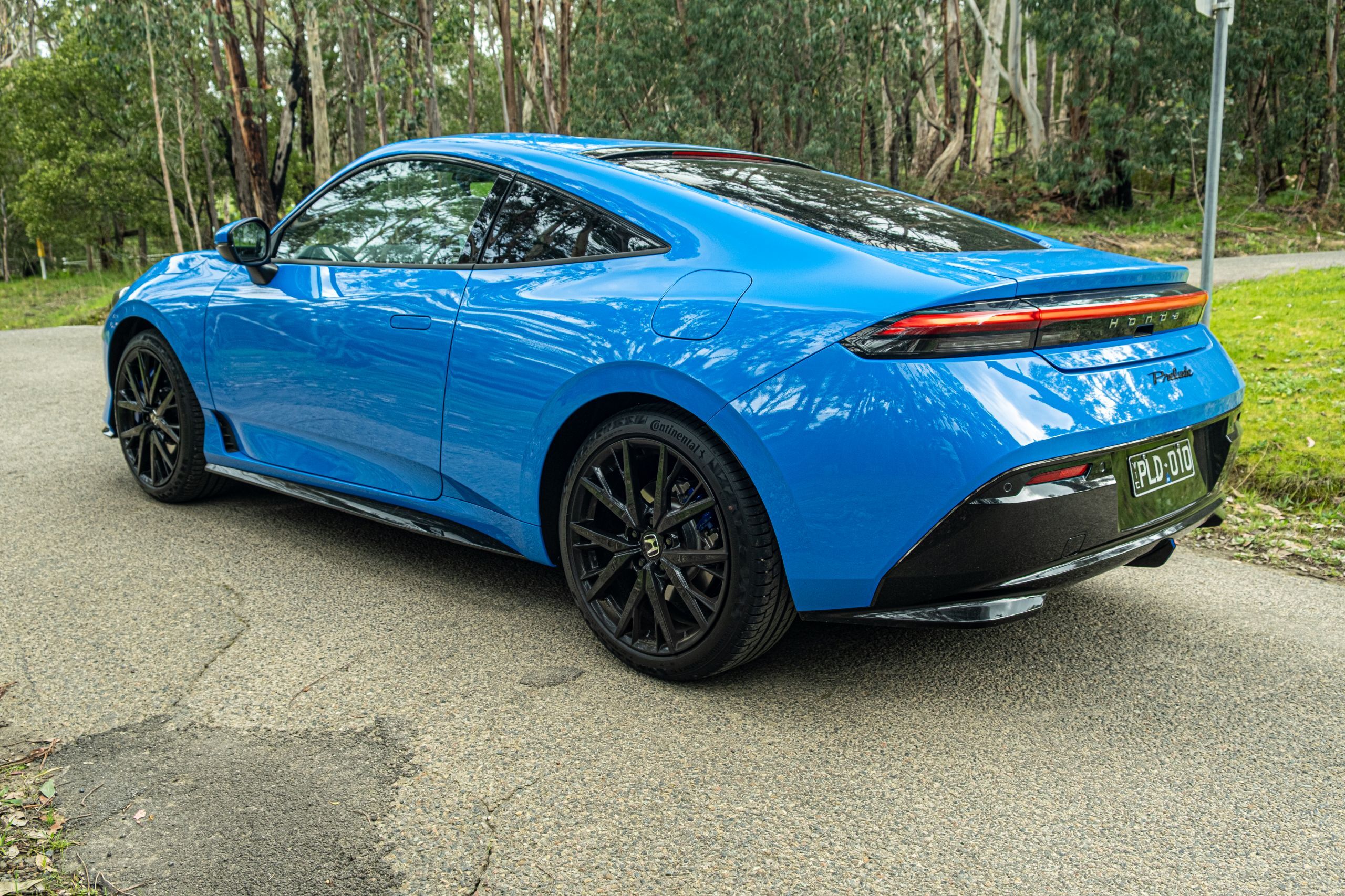
Honda’s most recent model brought back from the dead is the Prelude. Launching 25 years after the original was phased out, the new one is proving controversial but has so far defied many expectations, selling in solid numbers roughly in line with Honda’s hopes.
Read: Honda’s 2027 Prelude Gets A New $39K Limited Edition, But Only In Japan For Now
Heading into a recent week-long test of the Prelude, I have to admit I had low expectations. After all, it doesn’t have any more power than a Prelude from 2001. However, after living with Honda’s latest coupe, I was pleasantly surprised to find a fun, engaging, and comfortable car that works just as well as a daily as it does for weekend enjoyment.
QUICK FACTS



Photos Brad Anderson/Carscoops
Most of the criticism centered around the 2026 Prelude is the fact that it borrows its powertrain from the Civic Hybrid, rather than having a screaming naturally aspirated four-cylinder like its predecessors, nor the turbo’d four used in the current Civic Type R. Honda perhaps shot itself in the foot when it designed the new Prelude to look as exotic as it does, as many expect it to have an equally exotic engine.
The car uses a 2.0-liter naturally aspirated four-cylinder with 104 kW (139 hp) and 186 Nm of torque, and an electric motor with 135 kW (181 hp) and 315 Nm (232 lb-ft), making for a combined 149 kW (200 hp). For perspective, a 1999 Prelude had up to 149 kW (200 hp), though it was admittedly down on torque at around 211 Nm (156 lb-ft).
As with other Honda hybrids, the Prelude uses a so-called ‘e-CVT’, which isn’t a CVT but feels similar. A key addition to this coupe is Honda’s new S+ Shift system. Designed to mimic the feel of an eight-speed automatic transmission, it’s meant to add a bit of extra fun to the driving experience.
Type R Tech


Photos Brad Anderson/Carscoops
But it’s not the powertrain or the odd transmission that’s supposed to be the heart of the Prelude’s appeal. Instead, it’s the use of vital chassis parts like the dual-axis front suspension and adaptive dampers from the all-conquering Civic Type R.
All of this does come at a cost. In Australia, the Prelude is sold in a single configuration starting at AU$65,000 (US$46,600), while in the US, it starts at US$43,195, including destination fees. Although the Aussie price may seem high, it sits neatly between the Civic Hybrid Hatchback, starting at AU$49,900 (US$35,800), and the Civic Type R, which recently rose to AU$85,000 (US$61,000).
A Sleek But Generic Interior


Photos Brad Anderson/Carscoops
The exterior of the Prelude is unlike any other Honda model, but the cabin is not so unique, borrowing plenty of its parts from the brand’s broader range.
It uses a familiar Honda steering wheel but has a flat bottom with two gloss-black lower spokes. There’s also a standard 10.2-inch digital instrument cluster and a 9-inch infotainment display with Google Built-in, as well as wireless Apple CarPlay and Android Auto, just as you’d expect.
The air vents feature a lovely honeycomb mesh design, while the shifting mechanism uses the same buttons as vehicles including the Civic and CR-V, which we’re not big fans of. The Prelude’s large S+ button is exclusive to the model and enables the shifts.
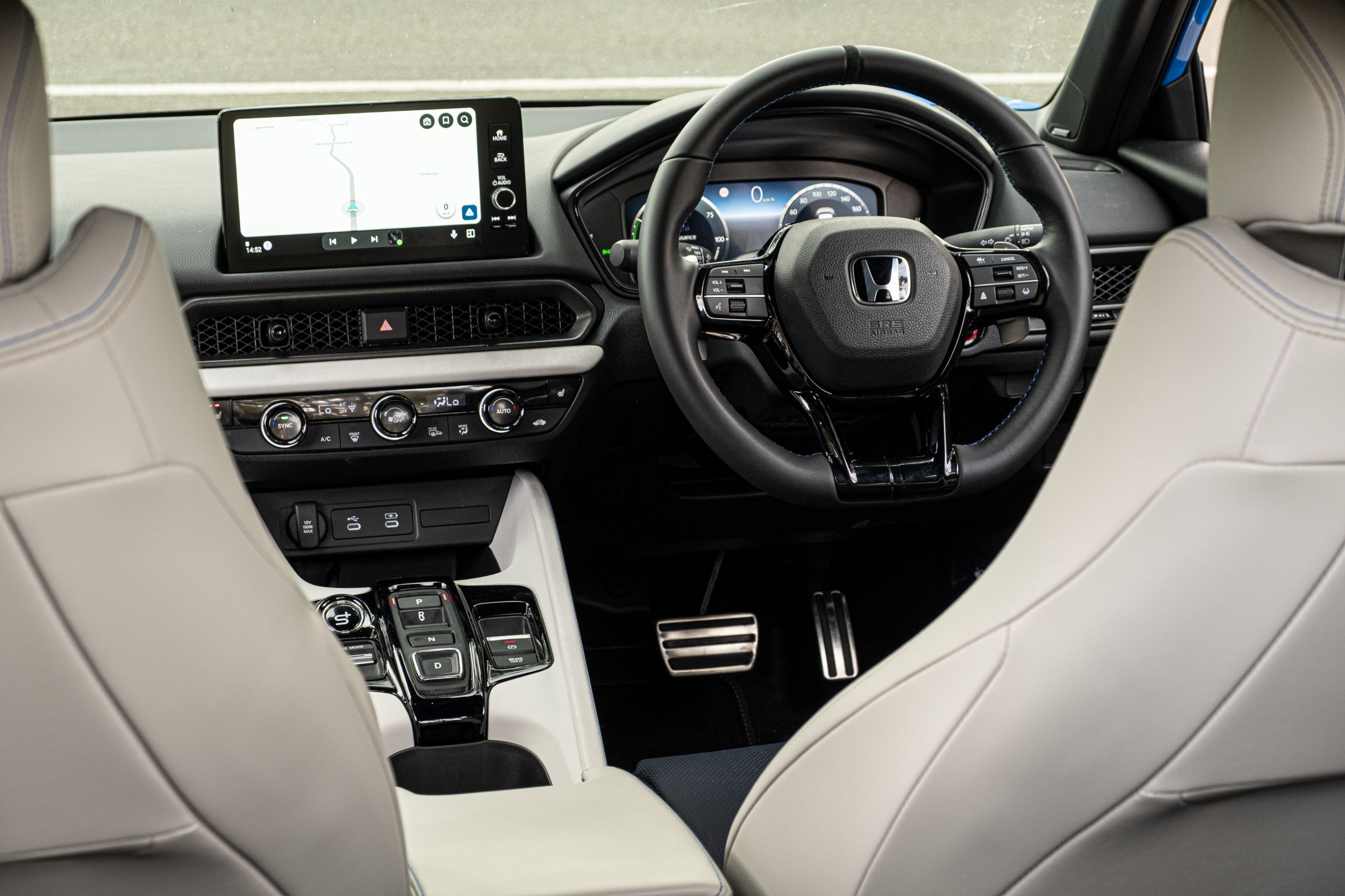
The cabin’s highlight is no doubt the white suede-like material across the center console and dashboard, complete with orange and blue contrast stitching. The front seats are nicely designed, offering plenty of comfort and decent support for the driver and passenger without feeling too hardcore. While the Prelude sits low, I had no issue fitting my 6’2” frame behind the wheel and still had plenty of headroom.
Like other Honda models, the software used for the central screen and the cluster is pretty basic, so I relied on Android Auto during my time with it.
As for the rear seats, well, they are completely useless for adults or teenagers, and would only work for small children, so the Prelude is very much a 2+2. They’re also trimmed in with what looks like a very cheap material and finished in black, which weirdly contrasts with the front seats. The lack of a rear parcel shelf is also a little strange. As the Prelude is very much a Coupe, cargo space is also limited, capped at just 264 liters.
A Great Sports Tourer


Photos Brad Anderson/Carscoops
The Honda Prelude should not be viewed as a front-wheel-drive alternative to a Toyota GR 86, Subaru BRZ, or Mazda MX-5, although those are certainly its nearest rivals. Those three are proper sports cars, whereas the Prelude feels more like a sports tourer, which is quite a significant departure from its predecessors.
The first thing that strikes you from behind the wheel is the overall comfort. Honda could easily have fallen into the trap of giving the Prelude a stiff chassis to compensate for the relative lack of power. Instead, using the Civic Type R as its base keeps the Prelude compliant and handling like a dream.
Steering feel is great, although not quite as good as the Type R’s and not providing quite the same level of communication. Outright grip also doesn’t match the Type R, largely because the Prelude has much smaller 235-section tires than the Civic’s 265-section tires and lacks a limited-slip differential. Don’t for a second think the Prelude pushes into understeer, however, as the front tires lock into the pavement at all but the highest of speeds.
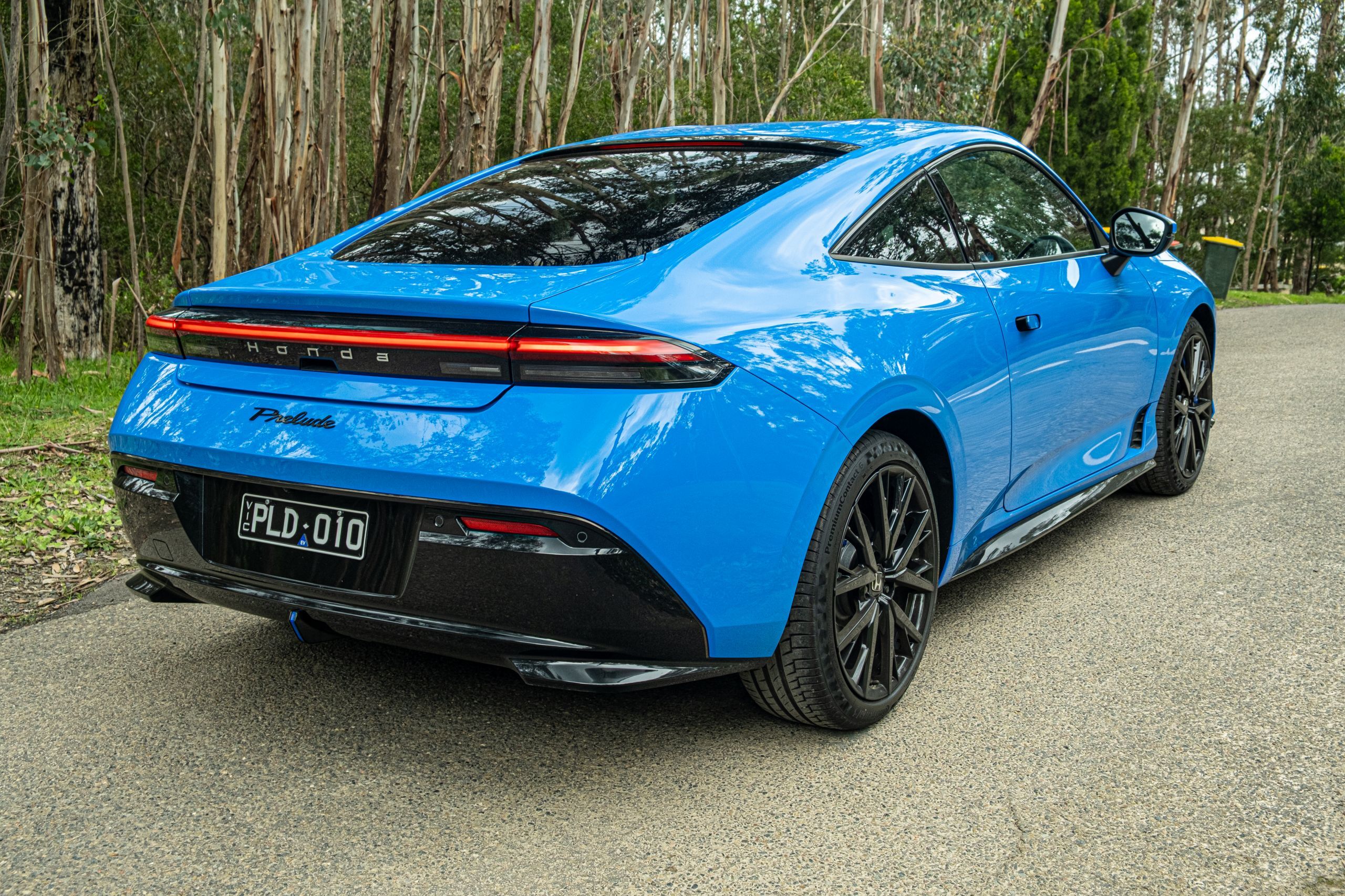
There’s a little bit of body roll, fitting given that Honda has been eager to maximize comfort in the Prelude. The handling feels beautifully neutral most of the time, and the Prelude is seriously fun to hustle down or along a mountain road. It’s not quite as exhilarating to drive up a twisty road.
Read: Honda Can Build A Prelude Type R With A Turbo And A Manual, But It Won’t
A lot was said about the Prelude’s straight-line performance when it first launched, with early tests indicating it could take upwards of 9 seconds to hit 100 km/h (62 mph). In our tests, it was much quicker, although it definitely doesn’t pull like most modern sports cars.
Using a GPS timer, we recorded several 0-100 km/h (0-62 mph) runs at 7.0 seconds flat in Sport mode, with the S+ Shift system disabled. With the shifts enabled, times increased to 8.1 seconds. Rolling performance is also quite poor, as the Prelude takes more than 7 seconds to accelerate from 60 to 120 km/h (37 – 75 mph).


Photos Brad Anderson/Carscoops
The Prelude absolutely does not thrill when you hit the throttle. Instead, it’s very much a momentum car. Get up to a comfortable speed on a nice road, and the prodigious handling allows you to take corners at an impressive clip. The Prelude uses the same four-piston front brake calipers as the Civic Type R, now painted bright blue, so it stops exceptionally well, too.
What about the S+ Shift system? Much was said about this setup when it was first announced, with it copping plenty of flak for being fake. I found it does a decent job of mimicking the feel of a normal torque converter, and it adds a little something to the experience. When enabled, it also pumps out some artificial sounds through the speakers, though they don’t sound good and are just like the most basic four-cylinder you can imagine.
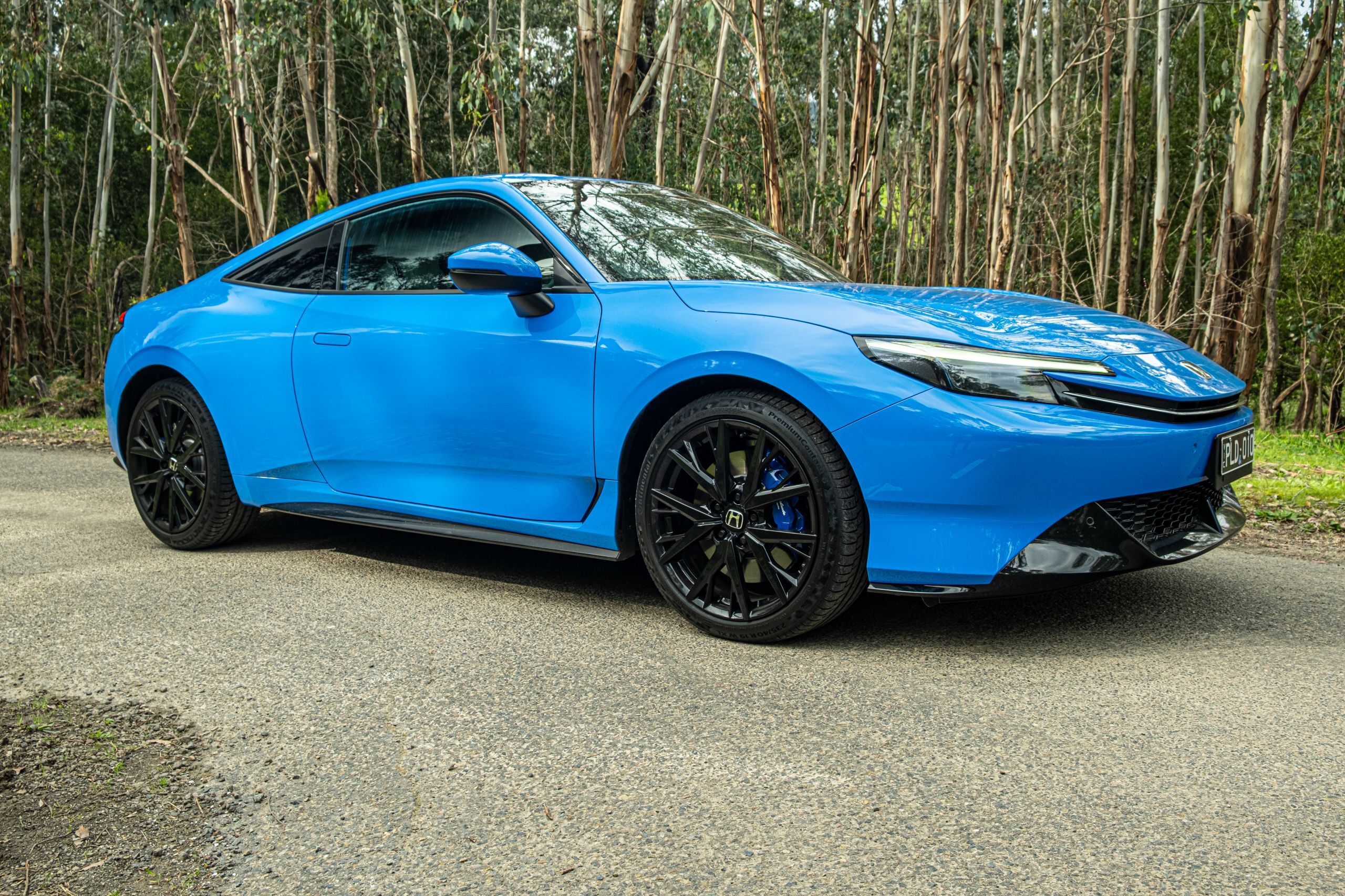
Perhaps the Prelude’s overall usability and comfort are its highlights. Sports cars are all too often compromised, so they can’t be taken on long journeys or used every day. The Prelude absolutely can be. Luggage space is compromised, but for customers who only need a little bit of space, perhaps for some small bags, there’s little to stop the car from being driven across countries.
Review: The Honda Civic Type R Nails Everything Except The One Thing It Shouldn’t Miss
A positive of the car’s relative lack of performance is efficiency. Honda says it averages just 4.3 l/100 km (54.7 US mpg) over the combined cycle, although I never saw fuel economy dip into the 4s. I averaged 6.4 l/100 km (36.7 US mpg) over my time with the Prelude, which, for a car that looks like this, is good, and will keep running costs down.
Verdict
My first experience in a Honda Prelude came in 2012, riding as a passenger in my friend’s fourth-generation model, fitted with a high-revving H22 2.0-liter naturally aspirated four-cylinder with VTEC. The engine alone made the Prelude loads of fun. In the new Prelude, the engine and transmission take a back seat to the chassis.
It’s great that Honda revived the Prelude, adding a little bit of spice into what has become a rather stale line-up. It will not appeal to track-day enthusiasts or hardcore driving fans, but it does hold plenty of appeal for those who don’t need to drive at crazy speeds yet still want to have fun behind the wheel.
At this stage, it feels as though Honda is just getting started with the Prelude, and we’d be shocked if a full-blown Type R wasn’t added to the range, hopefully with the Civic Type R’s engine. For now, the Prelude is good, but it could be a legitimate great with a more exciting powertrain.