












- Honda may shift 90 percent of its US-market vehicle sales to American factories.
- The HR-V, CR-V, and Civic could all could move from Canada to US assembly lines.
- Around 70 percent of Honda’s US sales already come from American-built vehicles.
As global trade tensions heat up, automakers are scrambling to rewrite their playbooks. The evolving tariff war is forcing car companies to make fast, high-stakes decisions about where and how they build vehicles. Just about every major manufacturer is weighing its next move, and Honda, it seems, has a plan of its own, one that leans heavily into building cars where it sells them.
More: Mitsubishi Freezes All Vehicle Deliveries To US Dealers
Some automakers are halting exports altogether, while others are quietly raising prices. According to a new report, Honda may go in a different direction by significantly expanding its US production footprint. The goal: shield itself from tariffs by building nearly everything it sells in America, right here in America.
The US market makes up around 40 percent of all of Honda’s sales. That’s approximately 1.42 million cars every year. Of that figure, roughly 70 percent are already made in the USA, including vehicles like the Accord, Pilot, Odyssey, and Ridgeline. To that end, it’s already avoiding the biggest new tariffs on those US-made cars, at least when it comes to local content since foreign parts in those vehicles are still subject to tariffs, but it reportedly wants to save even more.
Shifting North American Production
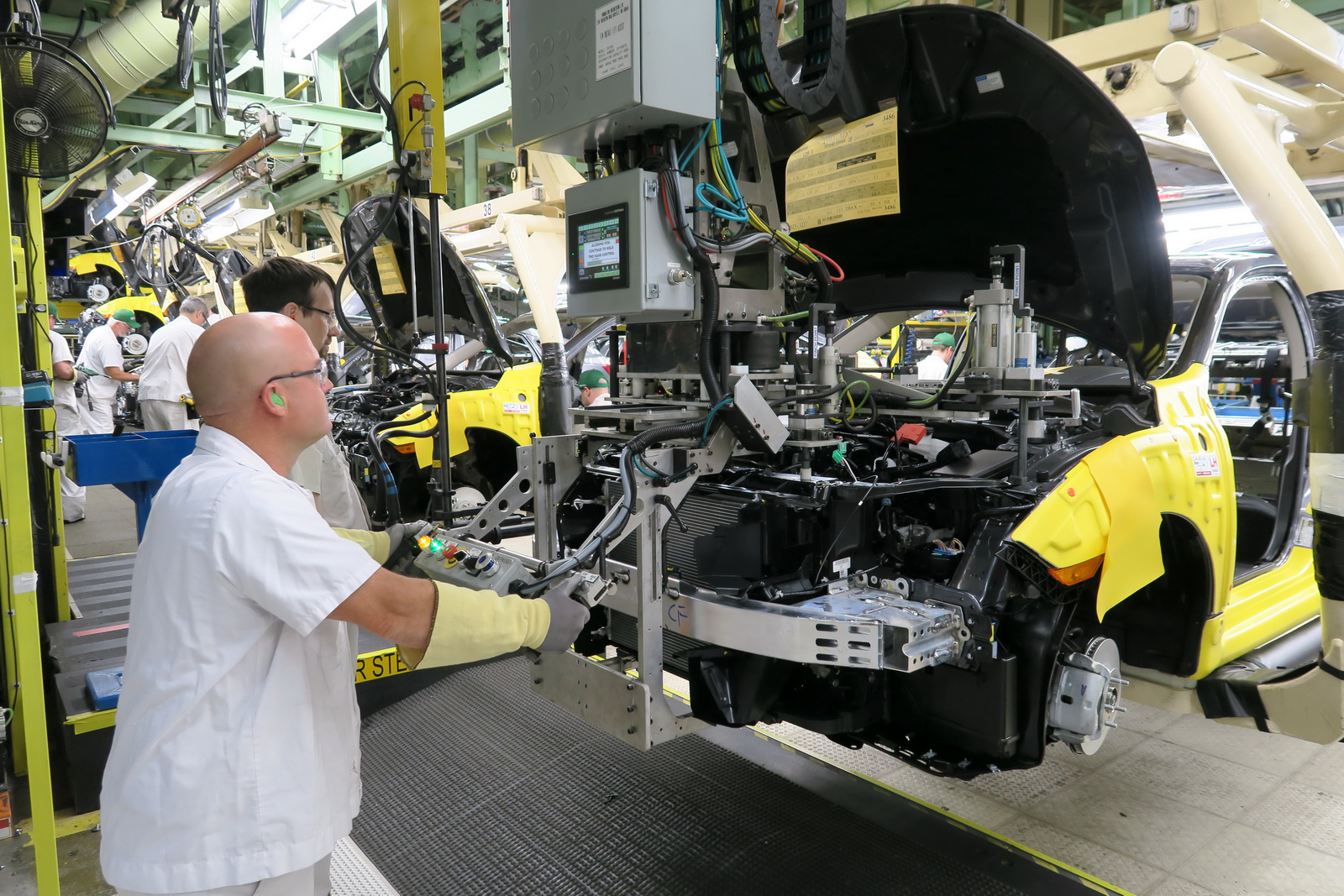
To do so, it could shift up to 90 percent of production for US-destined cars to the USA within the next few years, according to Nikkei Asia. The journal believes it’ll move production of the Civic sedan and CR-V from Canada to the USA. The HR-V will end production in Mexico and move to the US as well. Honda will also go from a two-shift system to a three-shift system and hire more workers to increase production.
Notably, this doesn’t mean that production in Canada or Mexico would necessarily slow down. For one thing, Canada has announced tariffs against US-built cars, so Honda could keep up production for the local population in each country.
All of this comes at a time when other automakers are strategizing about how they’ll handle the tariff war. Hyundai and Nissan are also considering adding more US-based production. Audi and Jaguar Land Rover are halting US exports altogether, while others, like Mitsubishi, freezing shipments to US dealers for the time being. To that end, Honda appears poised to take advantage of its US production better than many of its rivals.
Update: Honda Canada issued a statement in response to the report, and while it did not comment on the increase in US production, it clarified that its manufacturing facility in Alliston, Ontario will continue to operate at full capacity for the foreseeable future. The statement follows:
“This was not an announcement by Honda and we cannot comment on the specifics of this morning’s headlines. However, we can confirm that our Canadian manufacturing facility in Alliston, Ontario, will operate at full capacity for the foreseeable future and no changes are being considered at this time. We constantly study options for future contingency planning and utilize short-term production shift strategies when required, to mitigate negative impacts on our business.
As the second largest auto manufacturer in Canada by volume in 2024, approximately 69% of all Honda vehicles sold in Canada are built in Canada, and 99% of vehicles sold here are sourced from North American facilities. This long-standing North American flexible and local manufacturing approach allows us to quickly adapt to various market conditions across the region, including making coordinated production shifts to specific models built at each facility, bound for various regions and potentially new markets, depending on customer demand. Canadian production will remain at full capacity thanks to domestic sales, which are up 9% in the first quarter of this year, led by the Canadian-built Honda Civic, Canada’s top-selling passenger car in 2024, and the Honda CR-V, the best-selling hybrid in Canada in 2024.“
