- Mitsubishi Electric has created a new drunk driver detection system.
- It combines driver cameras, vehicle data, and AI onboard systems.
- If it flags intoxication, it could make “vehicle-control interventions.”
Driver monitoring cameras are typically associated with semi-autonomous vehicles, but Mitsubishi Electric envisions using them to detect drunk drivers. This would be done with the assistance of AI and vehicle data.
While the supplier said surprisingly little about the technology, images from the driver monitoring system would be used to check your pulse rate and facial expressions. The latter, particularly eye movements, can help to detect drowsiness or people under the influence.
More: Anti-Drunk Driving Systems To Be Required In New Cars In America
This dual approach promises to increase the system’s effectiveness as Mitsubishi explained, “even if alcohol-induced facial changes are subtle, variations in pulse rate caused by drinking can be used to detect intoxication with high accuracy.”
What Exactly Is It Watching?
On the other side of the equation, the system will monitor driving inputs such as acceleration, braking, and steering. It presumably looks for sudden, sharp inputs which could be a signal for distraction or drunkenness.
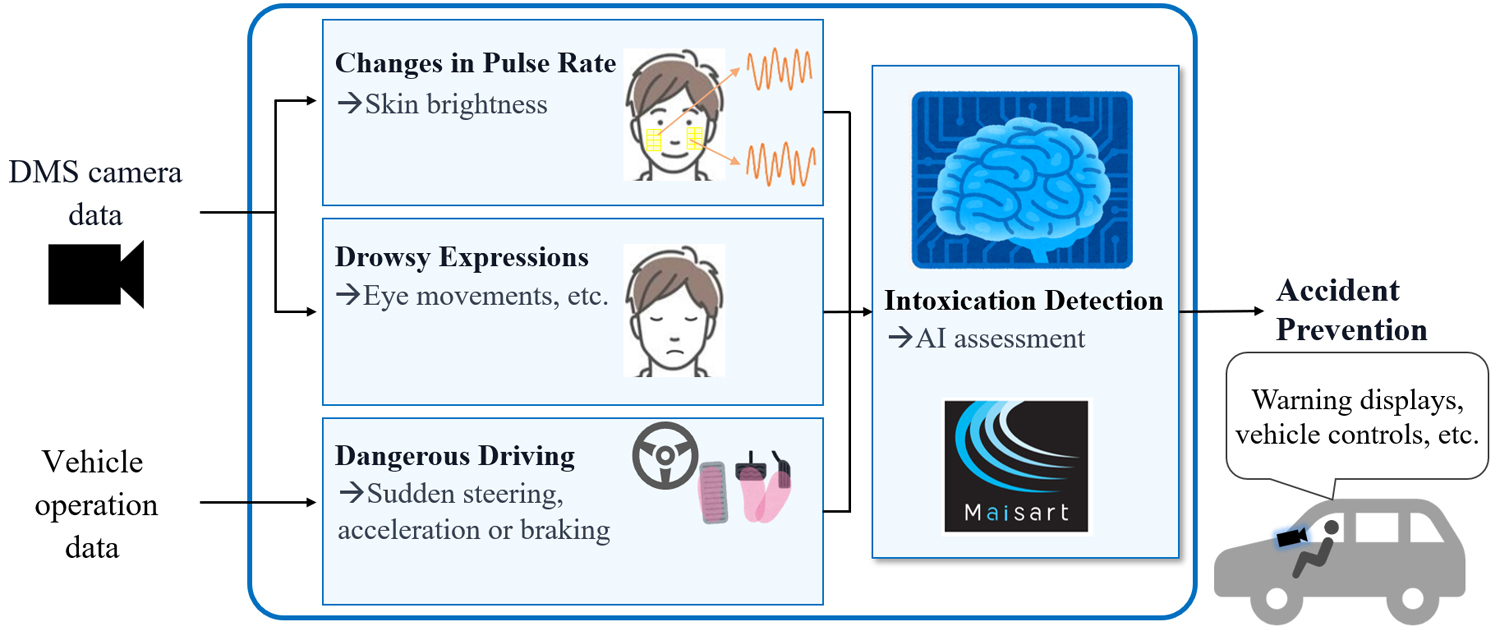
All of this information is then fed into the “intoxication detection” system, which uses Maisart AI to detect drunk drivers. What happens next is the big question, but Mitsubishi Electric said the system would provide “driver alerts and vehicle-control interventions, as needed, to help prevent alcohol-related accidents.”
That’s pretty vague and it raises questions about whether the vehicle of the future could bring itself to a halt and potentially call authorities on its owner.
While it’s not hard to envision that scenario, the company said the system was “verified for compliance with European and U.S. regulatory and assessment frameworks, aiming to help reduce traffic accidents caused by drunk driving.”
While a number of questions remain, Mitsubishi Electric suggested the technology could be installed in vehicles as early as next year.