- British Skoda fans voted to add Dragon Skin paint.
- Octavia buyers can order it for £855 in the UK.
- Last year, Skoda added two more bright paint options.
Choosing a bright, expressive paint color on a mainstream car is no longer as simple as it once was. As many automakers streamline their palettes to cut costs, vivid hues are quietly disappearing from order sheets. In the UK, however, Skoda is pushing in the opposite direction, introducing a new color to mark the Octavia’s 30th anniversary.
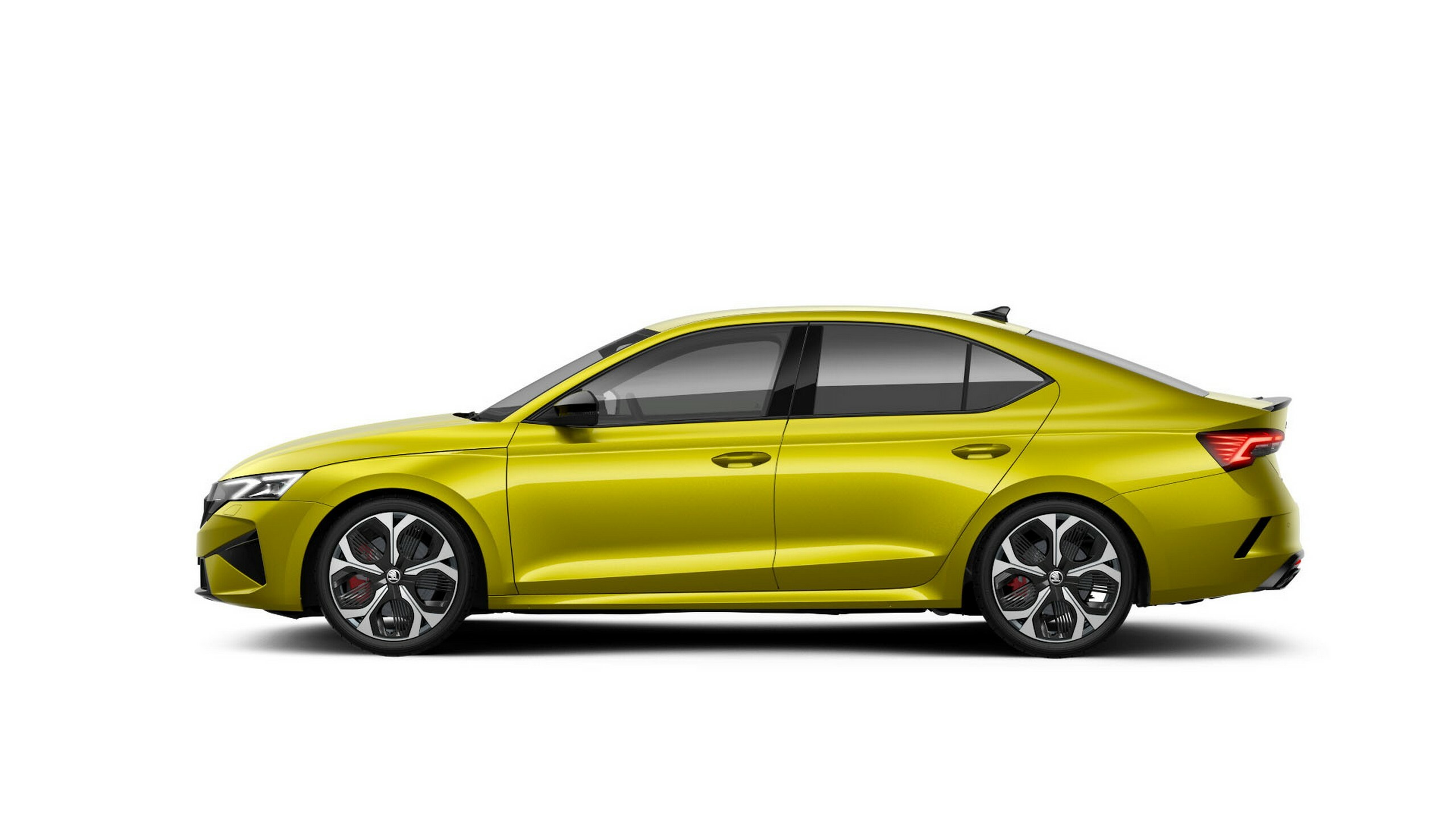
The shade is called Dragon Skin. Skoda let fans decide via Instagram, Facebook, and LinkedIn, where it faced off against Storm Blue and Tangerine Orange to become the brand’s newest finish. Orders open on March 4, and the color will be offered as a £855 ($1,152) option.
Read: Skoda’s Smallest EV Has One Big-Car Surprise
Importantly, Dragon Skin will be limited to three versions of the Octavia. It will be available on the hatch and estate variants of the Octavia vRS, along with 130 examples of the Octavia Sportline scheduled for later this year.
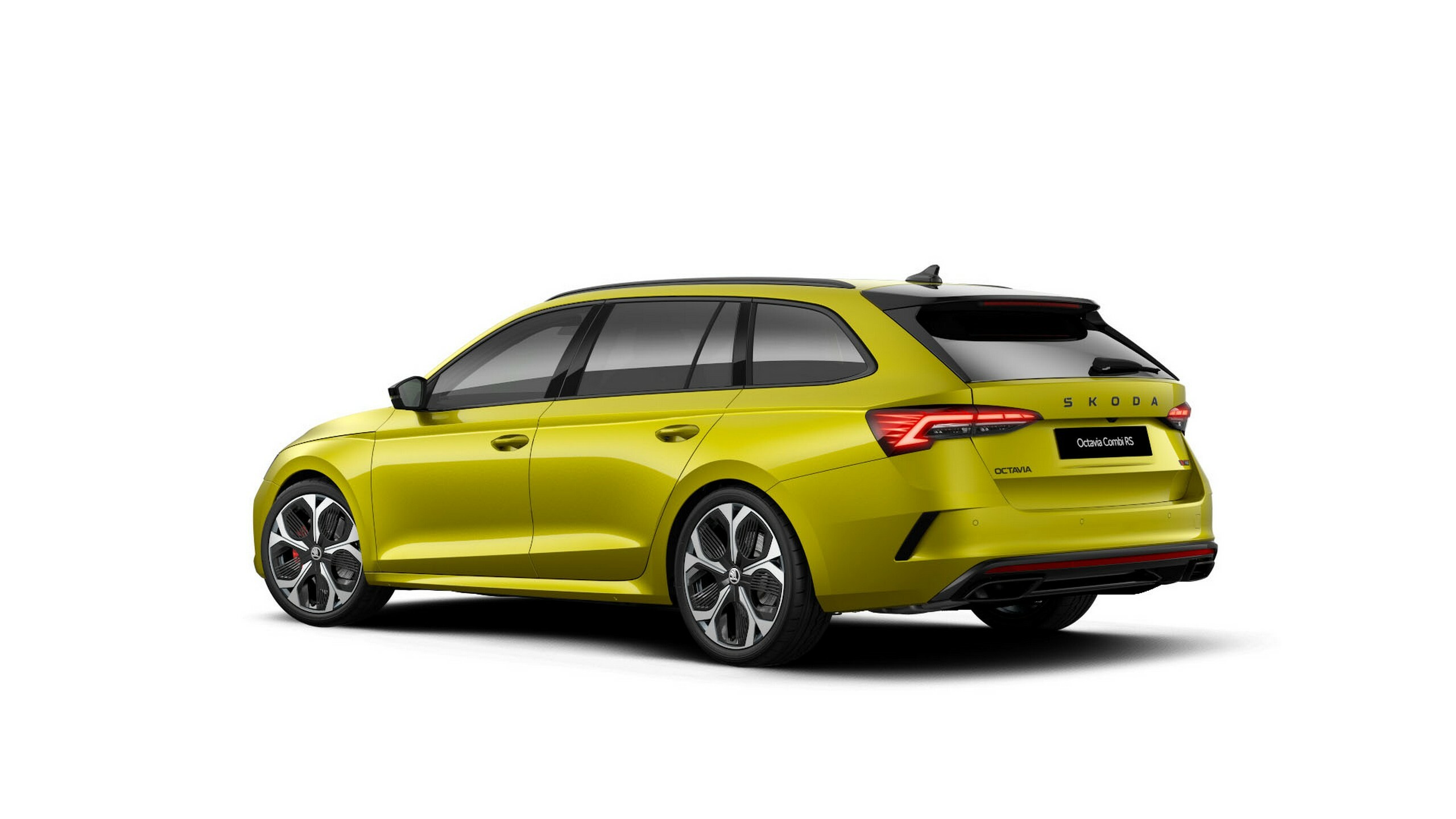
The new Dragon Skin color joins Waterworld Green and Space Violet that were added to the range last year after being voted on by fans of the brand. In photos, the new color looks like an intriguing mix between yellow and green, although we’re sure it’ll look even more flamboyant in real life.
Many Skoda buyers really like bright colors. In 2023, the brand revealed that blue was its most popular color in the UK, accounting for 30 percent of all new cars sold, beating out grey at 26 percent, black at 17 percent, and white at 12 percent.
Skoda Buyers Love Manuals, Too
It’s not just with its bright colors that Skoda bucks some industry trends. Last year, sales data showed that a large share of Skoda buyers still opt for manual transmissions over automatics. In the case of the Fabia, 69 percent of examples sold in 2024 had a manual.
The Octavia also posted a notable figure, with 20 percent of buyers selecting the manual option, an unusually high share for a car in this segment. Manuals accounted for 45 percent of Scala sales and 35 percent of Kamiq sales as well.