- Ceer has unveiled a pair of electric models with up to 1,111 hp.
- The Exobot has the longest windshield of any production car.
- The EVs will initially launch in First Edition guise with 850 hp.
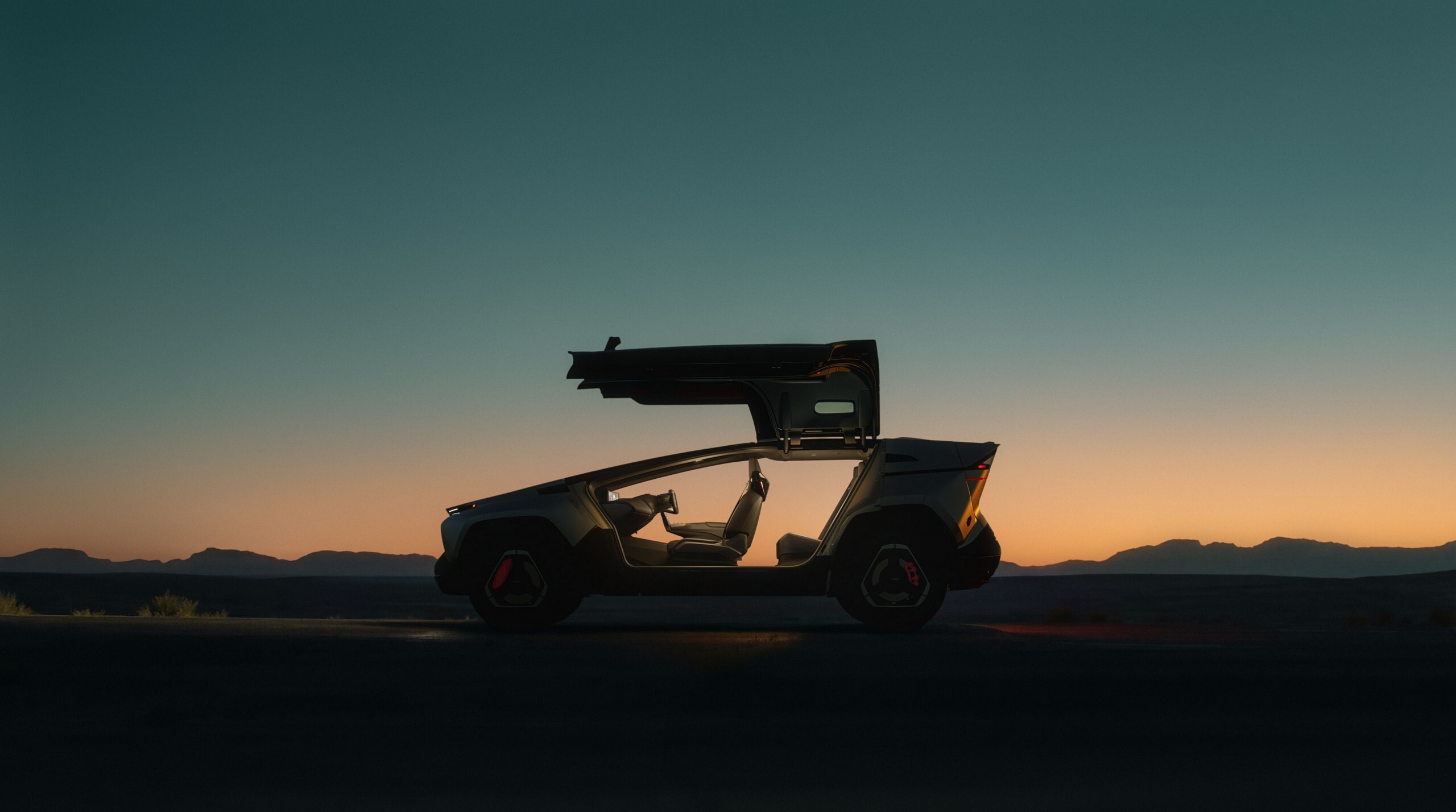
After several years of promises and testing, Saudi Arabia’s homegrown Ceer brand has unveiled a pair of radical EVs that look more like concept cars than real-life, production models. However, they are very real and will be manufactured at a dedicated plant in King Abdullah Economic City.
The new model is dubbed Exobot and will be sold in sedan and SUV configurations. We’ve seen plenty of bold EVs premiere from newly established companies in recent years, and often, they never see the light of day. While it’d be easy to assume the same could happen here, Saudi Arabia certainly has the funds to ensure Ceer’s models do hit local roads, although convincing locals to buy them may prove challenging.
Read: This Wedge-Shaped EV Is The Strangest SUV You’ll See This Year
Both the sedan and SUV stand out from other production cars thanks to steeply raked, almost perfectly flat, windshields which stretch seamlessly into the hood. According to Ceer, the Exobot has the largest windshield ever fitted to a production car, measuring 94.4 inches (2.4 meters) in length. Both versions feature narrow headlights and daytime running lights, while the SUV also rocks a rugged-looking bumper.
Big Dimensions, Big Power



Ceer’s two EVs are also very big. The sedan is 207 inches (5.26 meters) long, 82.6 inches (2.1 meters) wide, and sits just 56.2 inches (1.43 meters) high, while the SUV is slightly shorter at 197.6 inches (5.02 meters), 82.6 inches (2.1 meters) wide, and 66.5 inches (1.69 meters) tall. Both have gullwing-style doors, or as Ceer describes them, Shahin Wing Doors, inspired by the Shahin falcon.
More: A Legendary Design House’s Final Masterpiece Has Resurfaced
Ceer hasn’t developed the Exobot alone. The brand was established as a joint venture with Foxconn and is understood to be using electric drive systems from BMW.
The Exobot uses three electric motors, combining to produce 1,111 hp and 1,106 lbs (1,500 Nm) of torque in the highest specification, allowing the sedan to hit 62 mph (100 km/h) in 2.1 seconds and a top speed of 155 mph (250 km/h). The SUV is a little slower, but can still reach 62 mph in 2.4 seconds and top out at 130 mph (210 km/h).


Initially, the Exobot will be sold in a limited-run First Edition guise. This model will produce 850 hp and 738 lb-ft (1,000 Nm), allowing the sedan to hit 62 mph in 2.6 seconds, while the SUV will require 2.9 seconds.
More: This Wedge-Shaped EV Is The Strangest SUV You’ll See This Year
Both versions will rock a 112 kWh battery, giving the sedan 416 miles (670 km) of range and the SUV a solid 348 miles (560 km) of range. Thanks to the 800-volt setup, charging from 10-80 percent will reportedly take less than 30 minutes.
Given all the glass used in the Exobot’s construction and the scorching temperatures in Saudi Arabia, one might expect the EVs to quickly turn into a sauna the moment the sun rises. Ceer says its solution is triple silver-coated glass and a powerful cooling system that can reduce cabin temperatures from 65°C (149°F) to 32°C (90°F) within 10 minutes.
What Else Is Coming?


Other key cabin features include a 48-inch screen across the top of the dashboard, a 10.4-inch central infotainment screen, and an 8-inch display for the rear passengers. There’s also a yoke-style steering wheel, an advanced AI-powered voice assistant, and support for over-the-air updates. Ceer is also promising hands-free self-driving with point-to-point navigation, although it hasn’t said where it’s sourcing its autonomous software and hardware features from.
Pricing details haven’t been confirmed. Ceer will follow up the Exobot with five other models between 2028 and 2030. Initially, the company was only going to build EVs, but it has since tweaked its plans to also include plug-in hybrids and pure combustion-powered models.