- The Cuorerosso has a hybrid version of the Giulia QV’s 2.9-liter twin-turbo V6.
- Alfa Romeo says the concept previews a new design language for the firm.
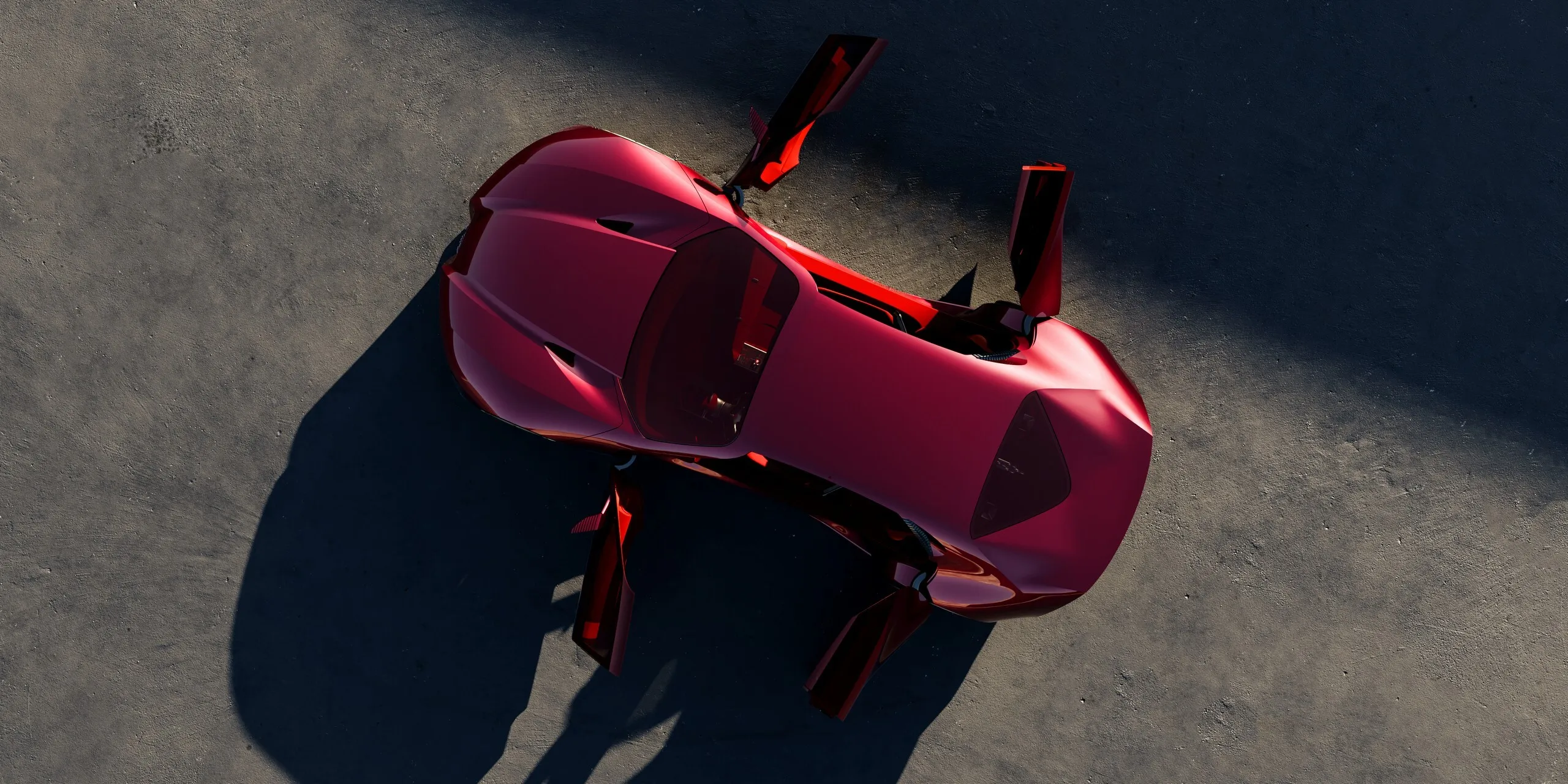
- The sleek 2+2 includes rear suicide doors and a modern yet retro interior.
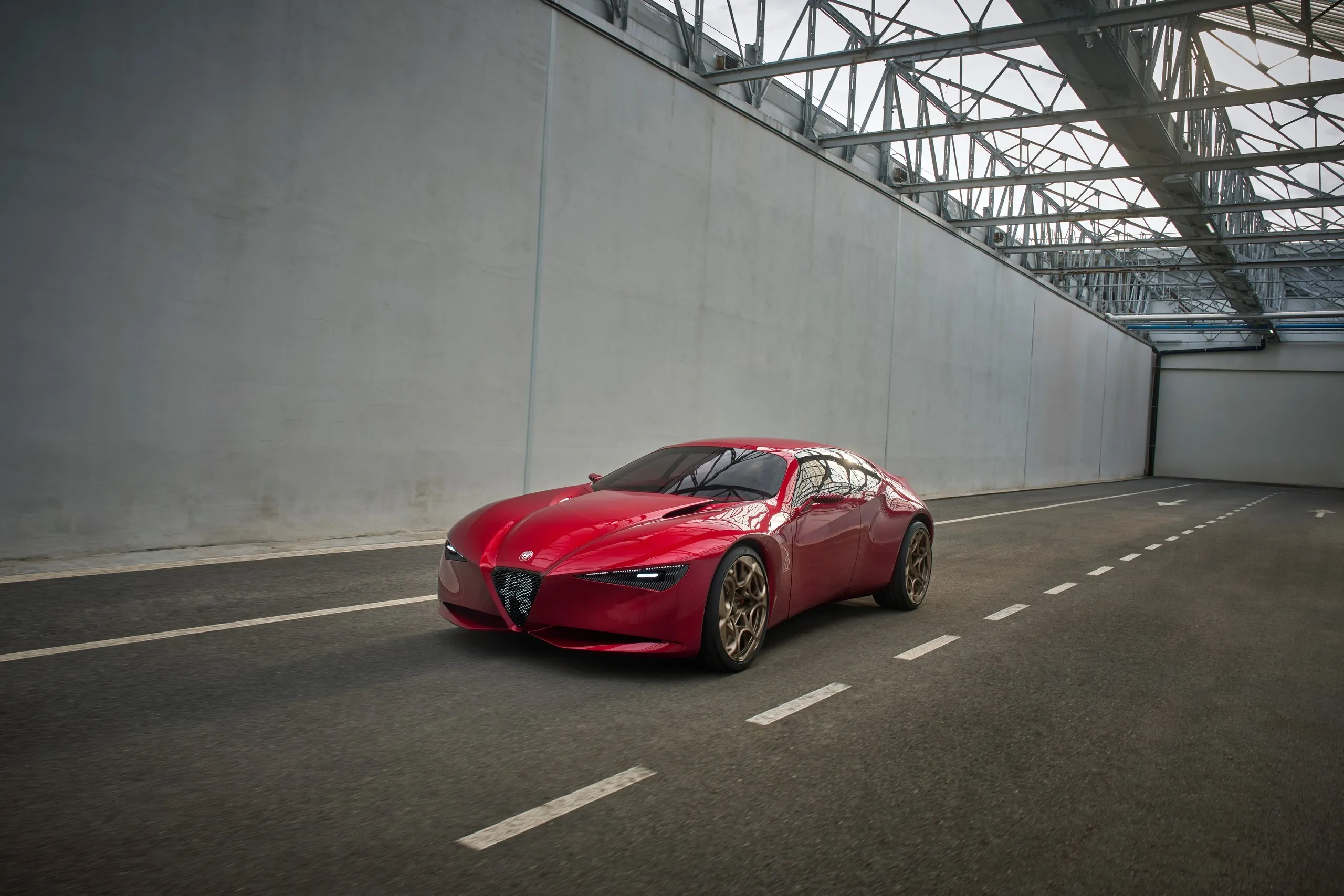
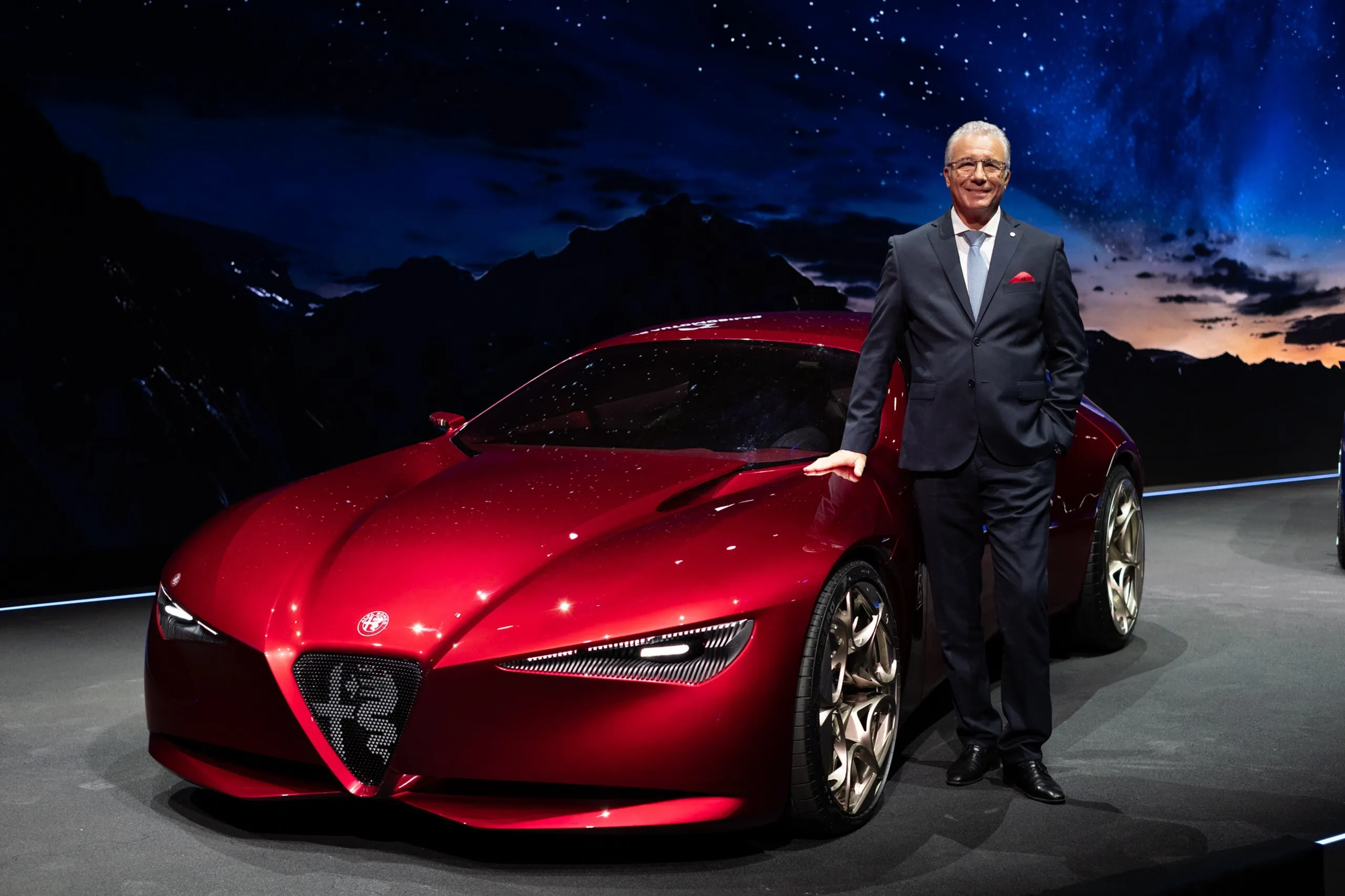
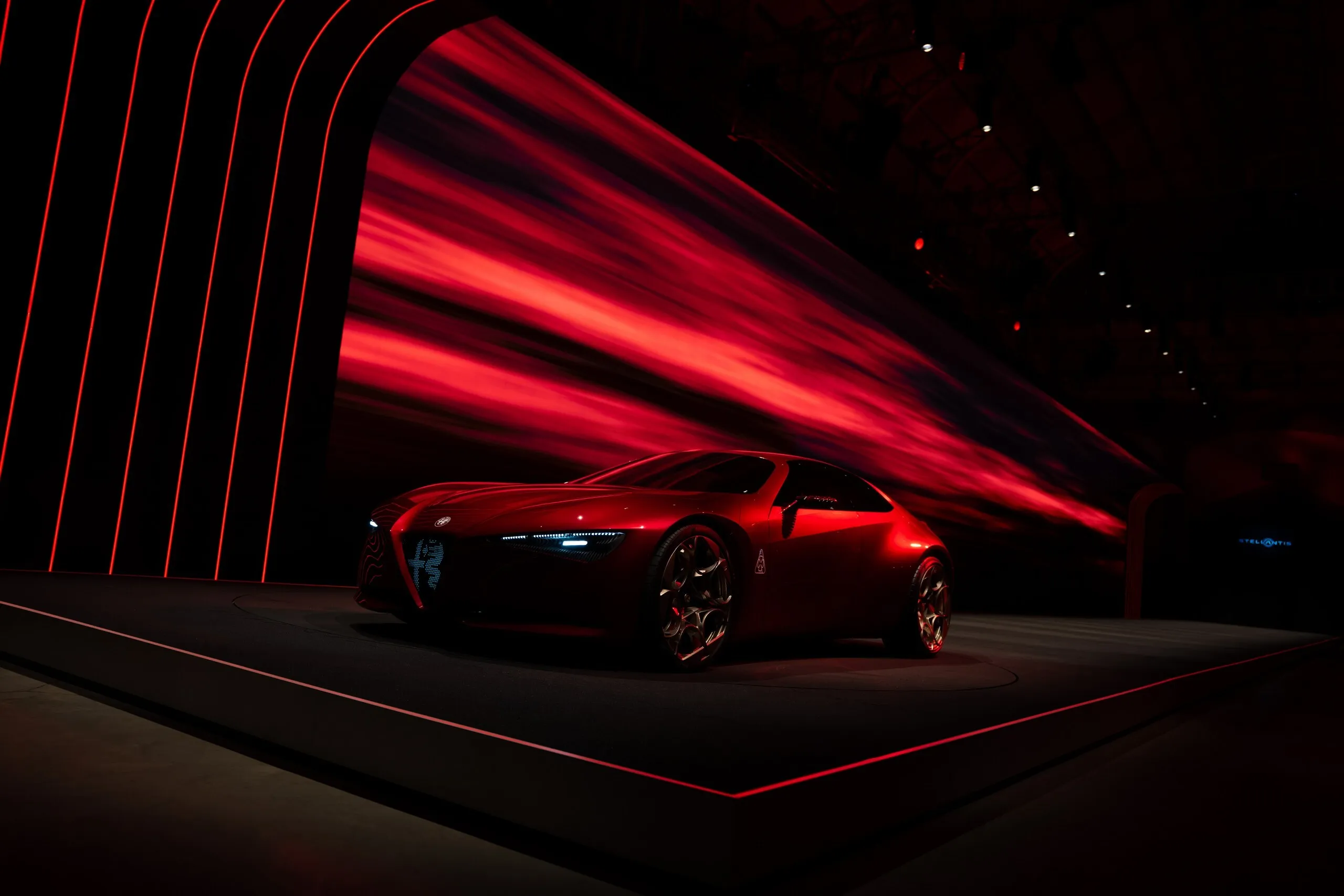
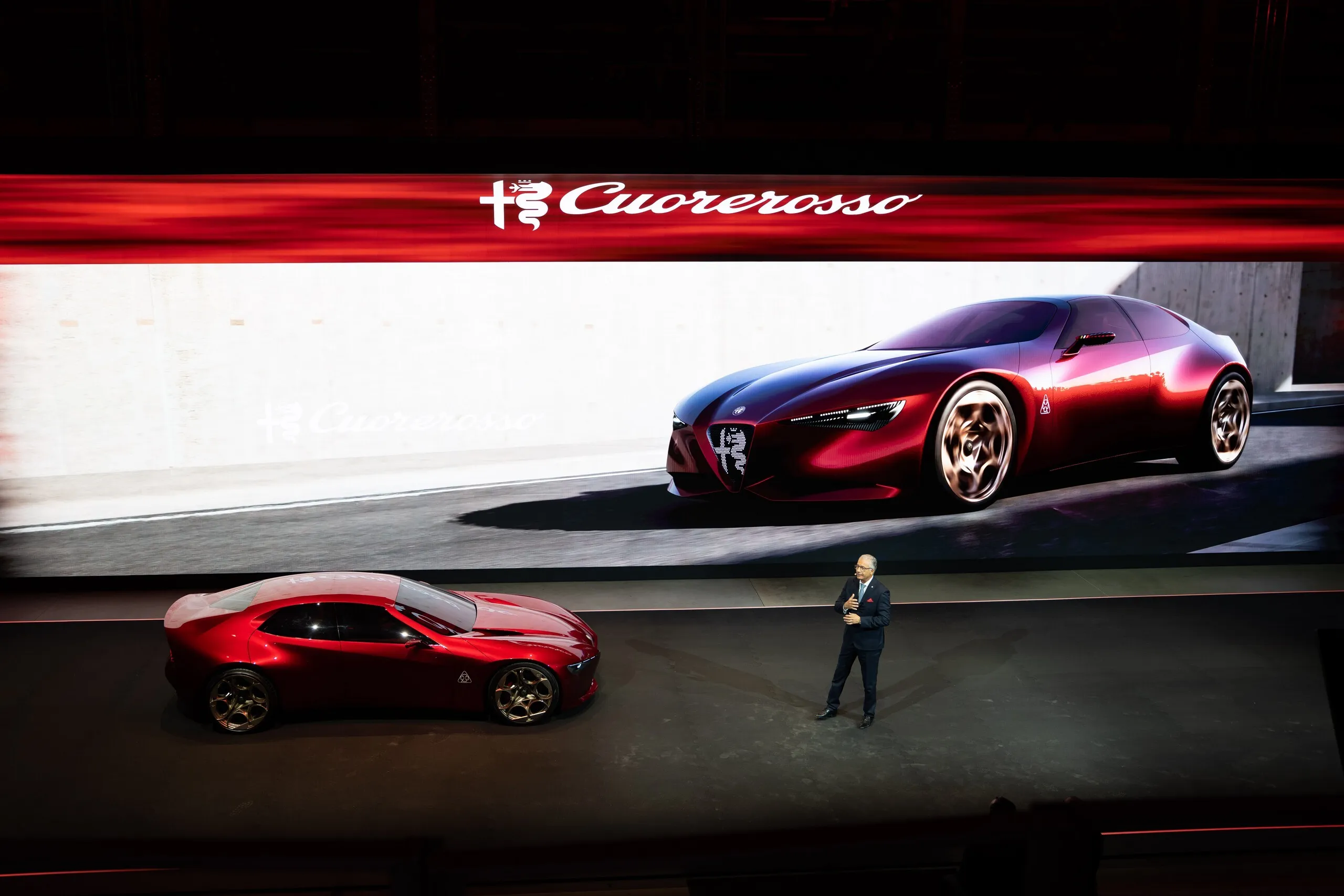
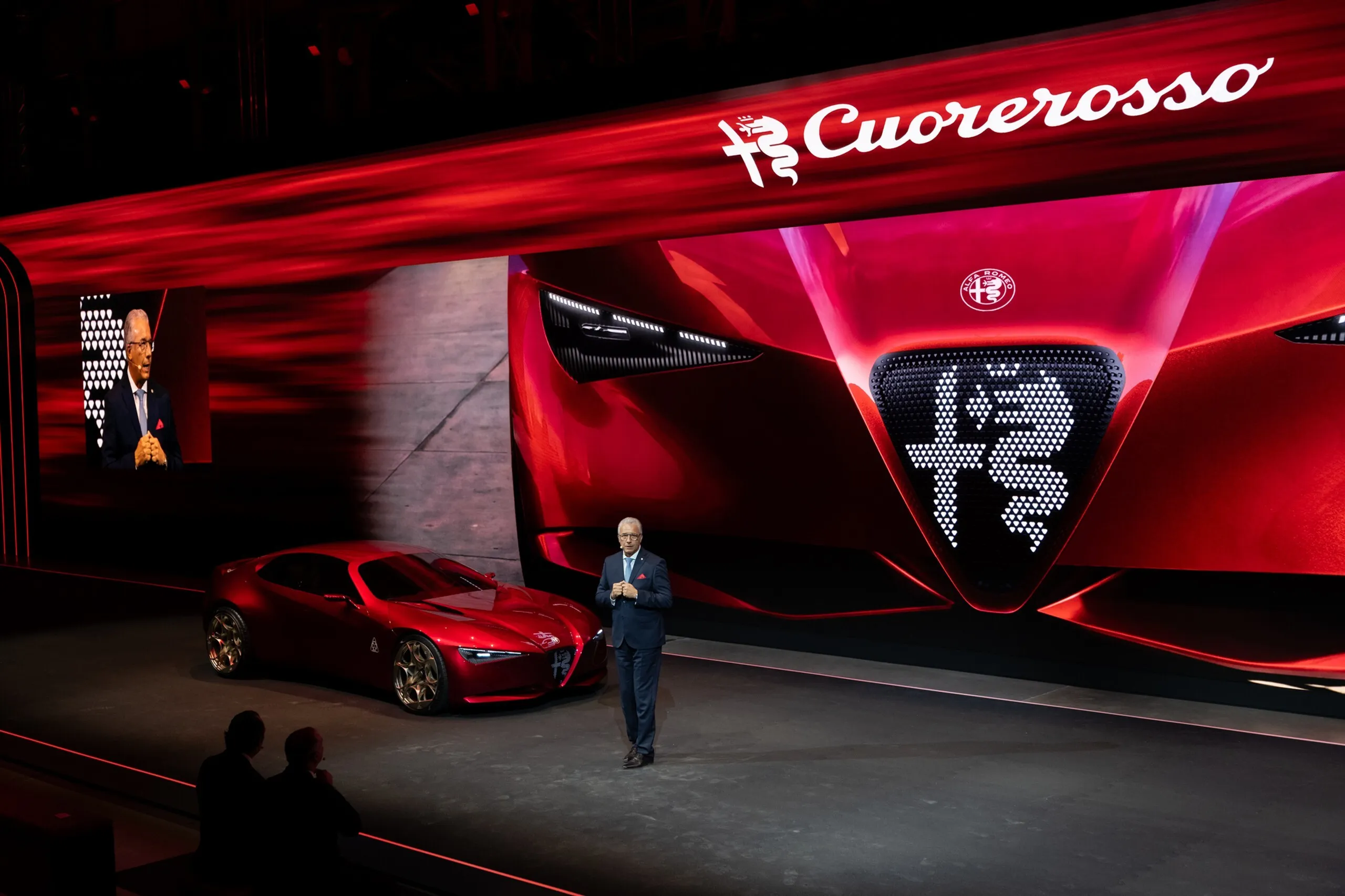
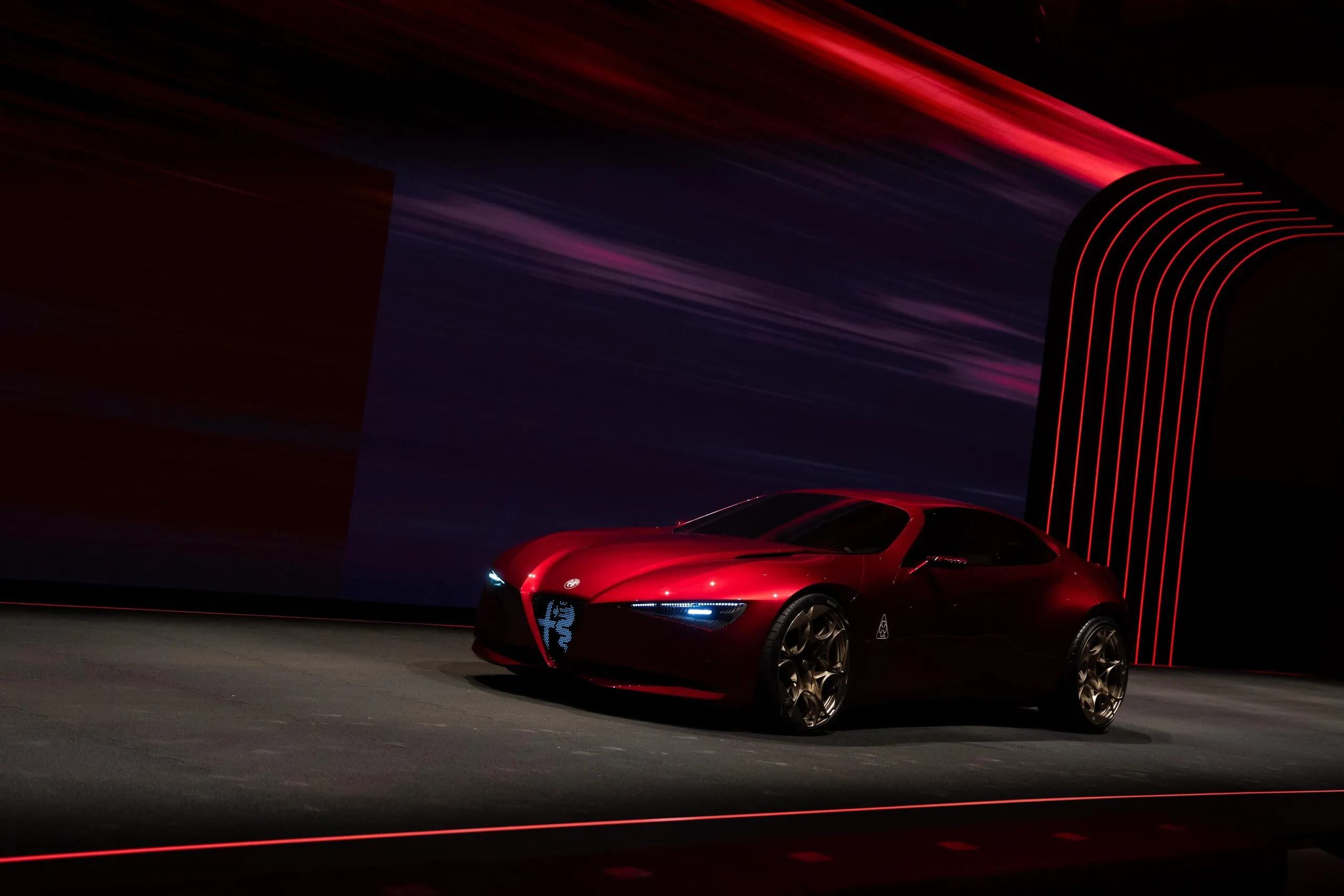
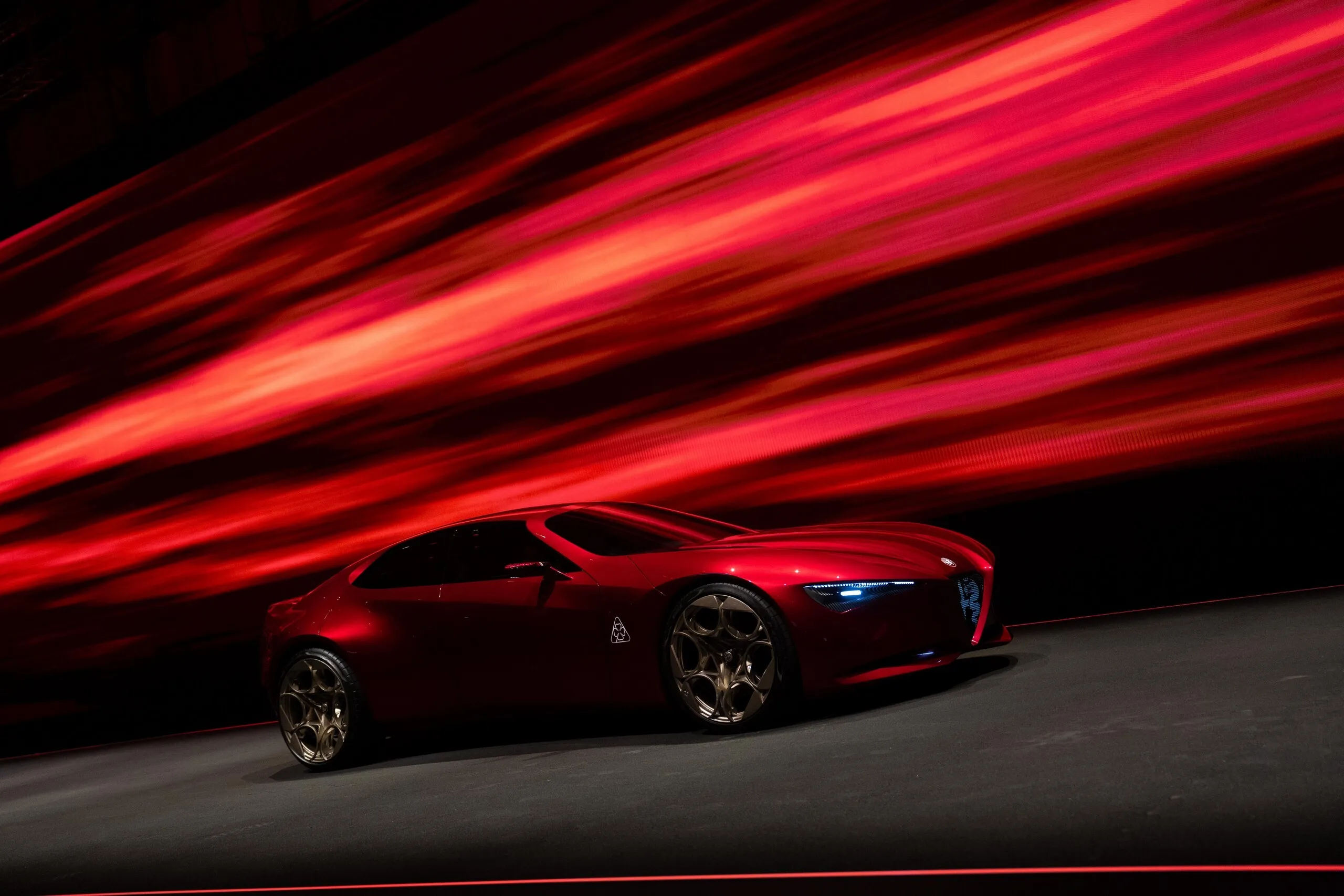
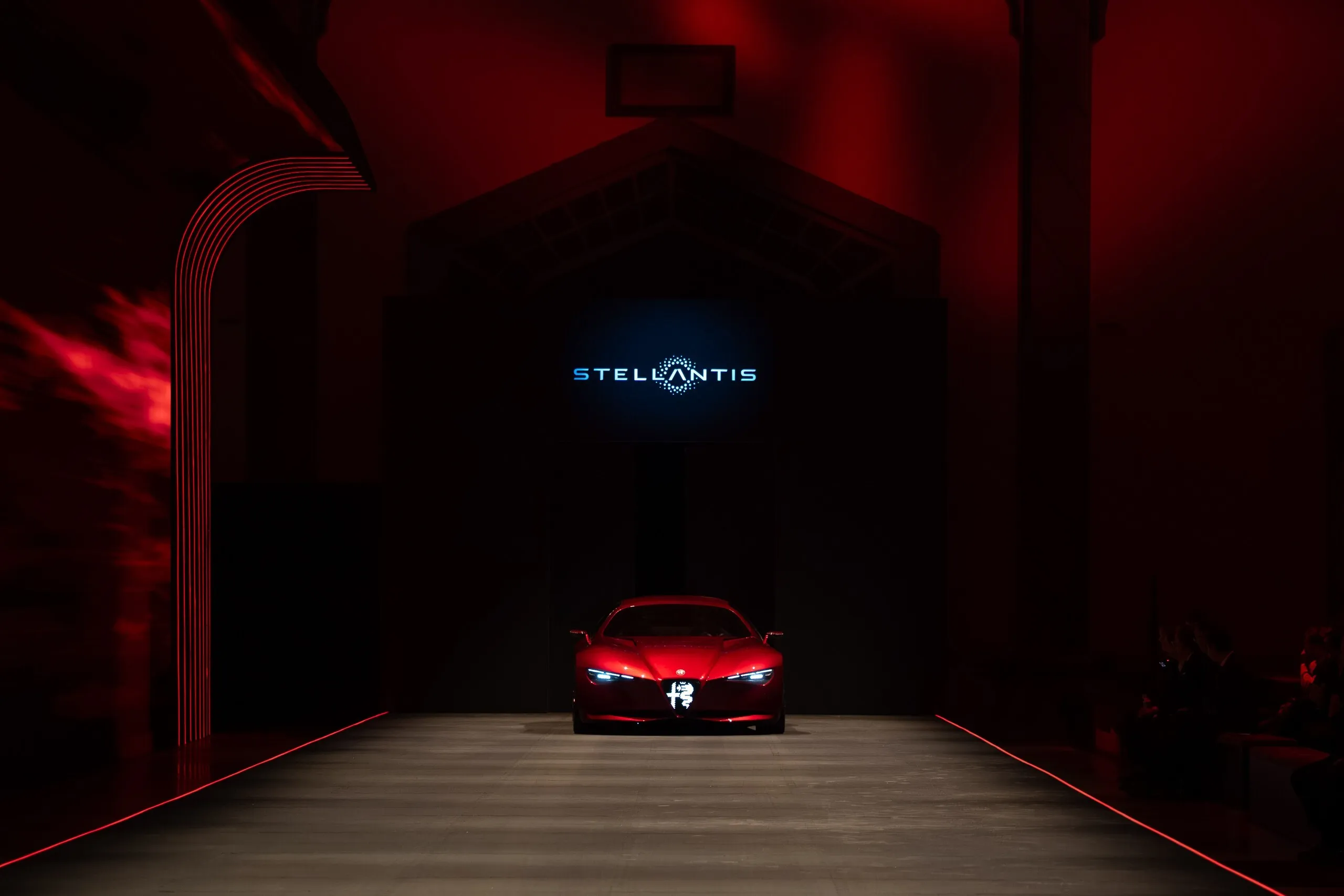
This is the Alfa Romeo Cuorerosso. It’s a wild new concept car that brings some excitement back to the Italian brand’s rather outdated and uninspired current family. Sadly, Alfa Romeo hasn’t said this concept will spawn a production model and, instead, says it previews its new Bellezza Necessaria design philosophy.
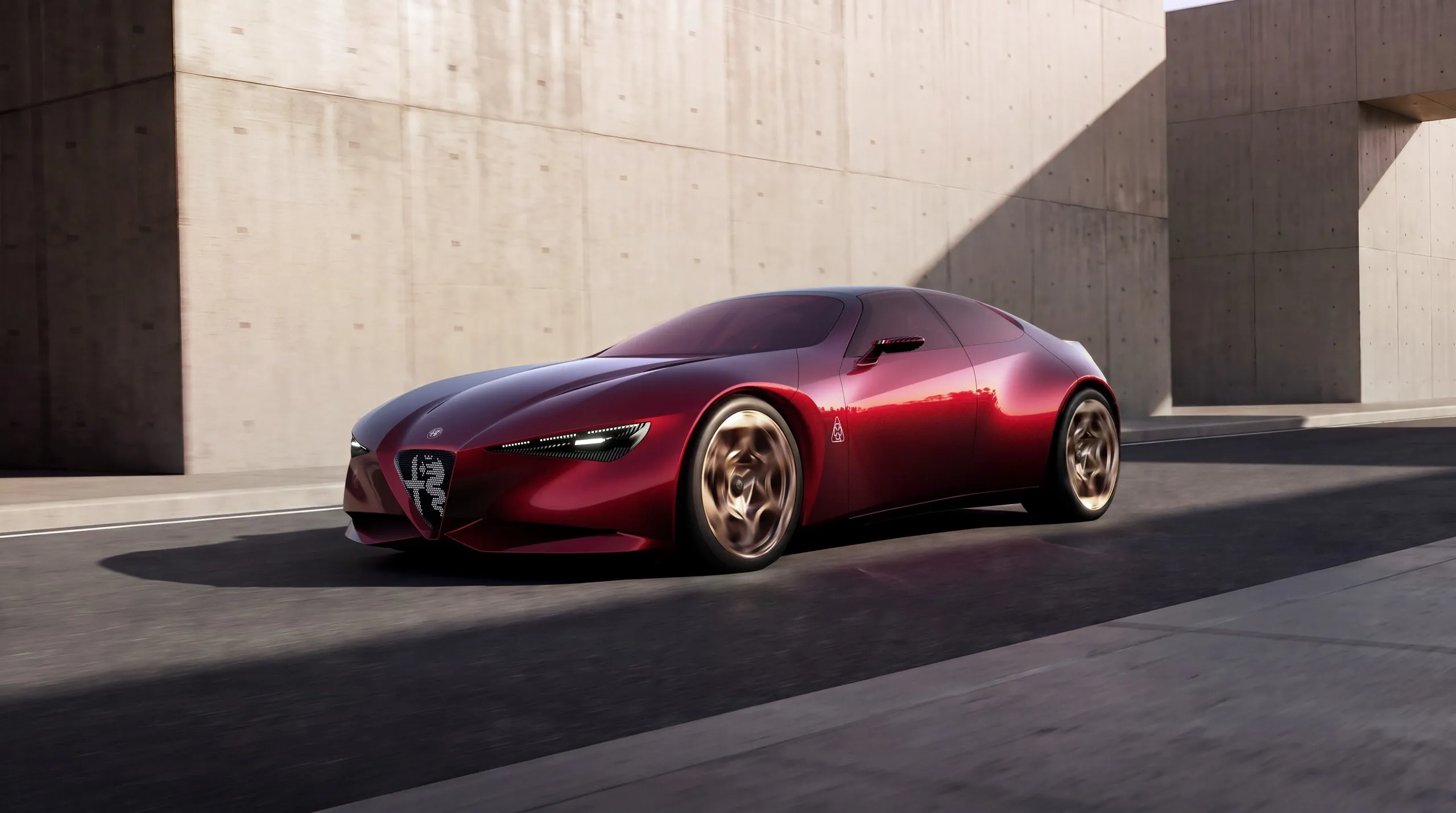
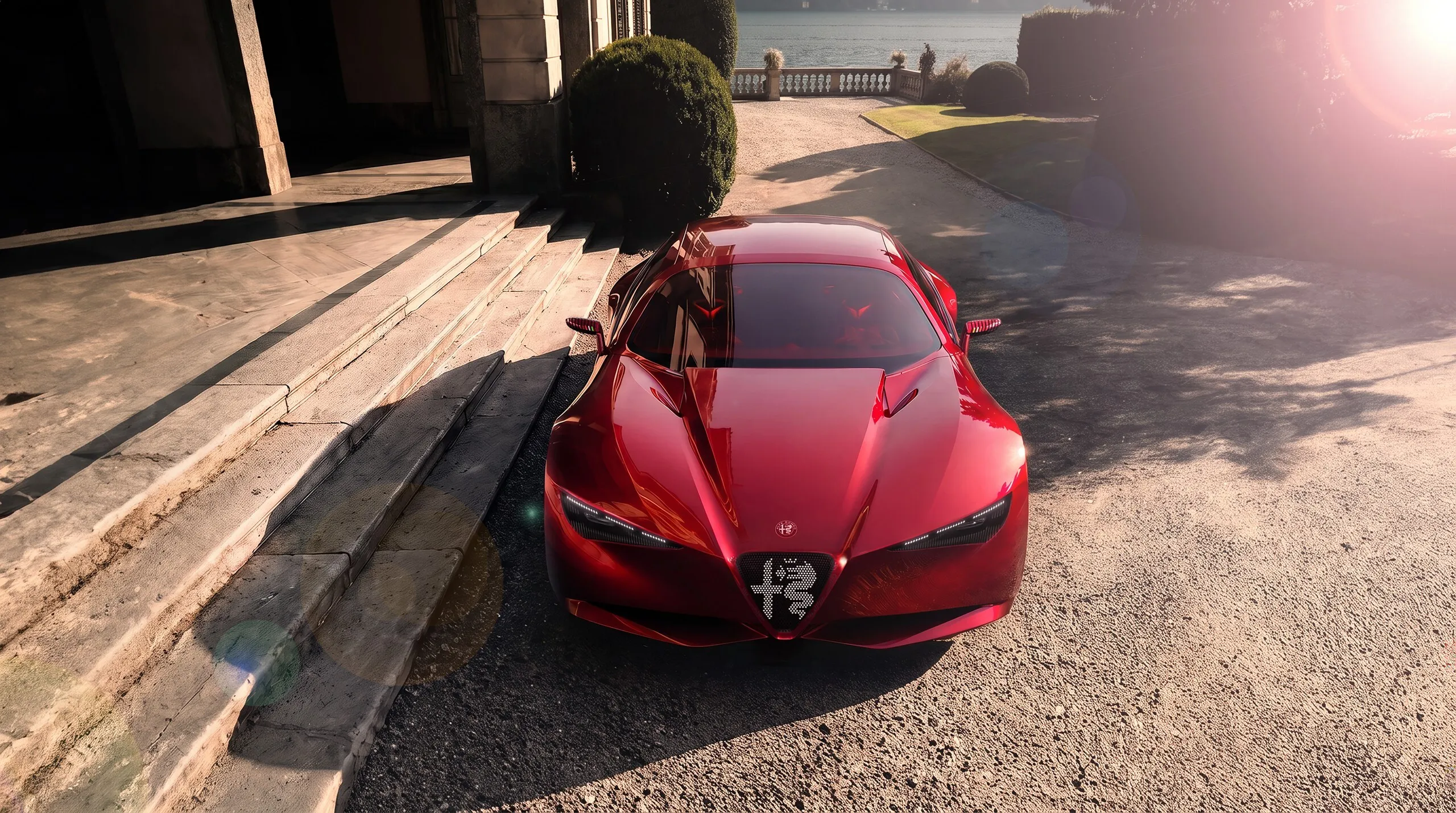
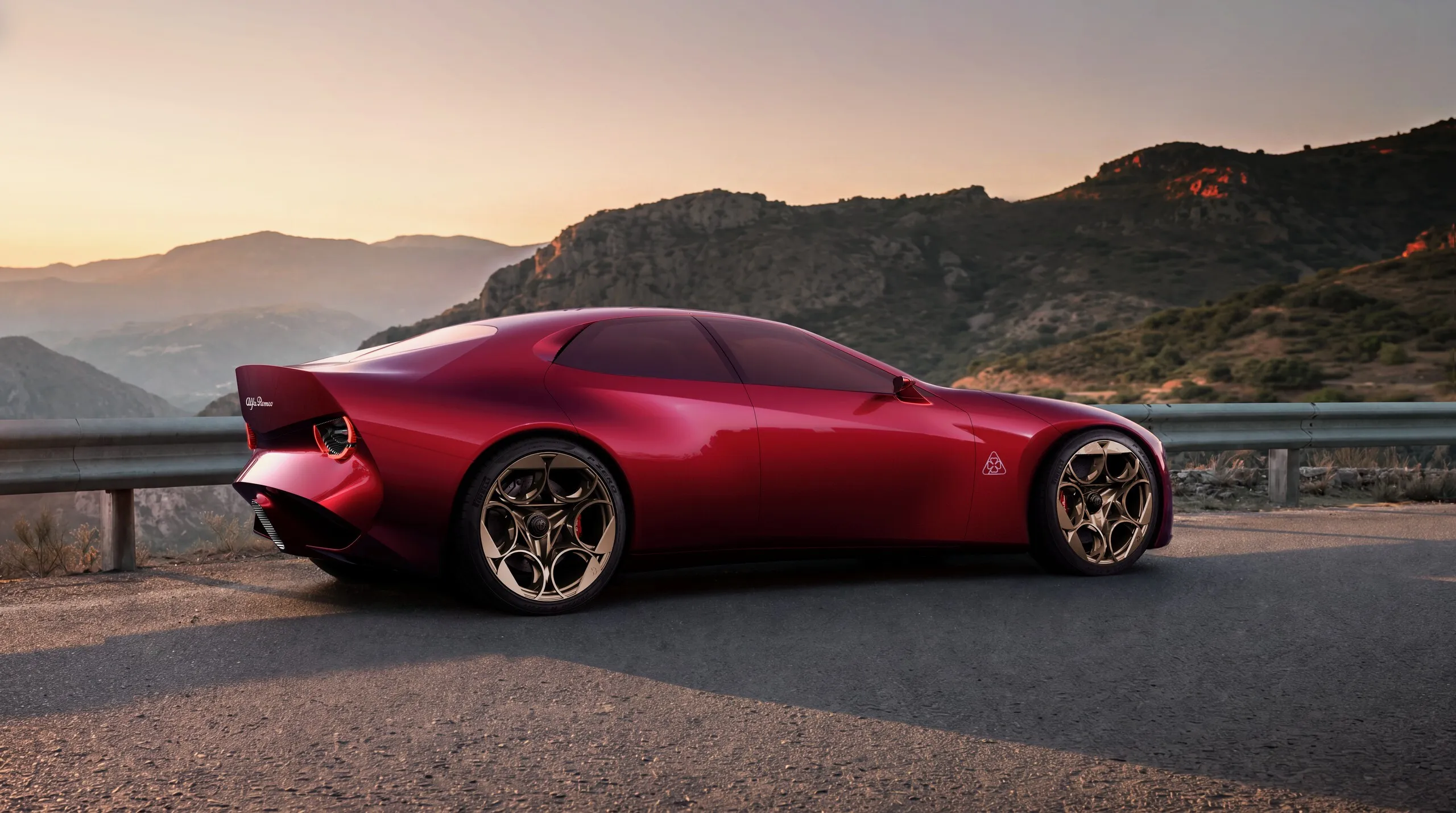
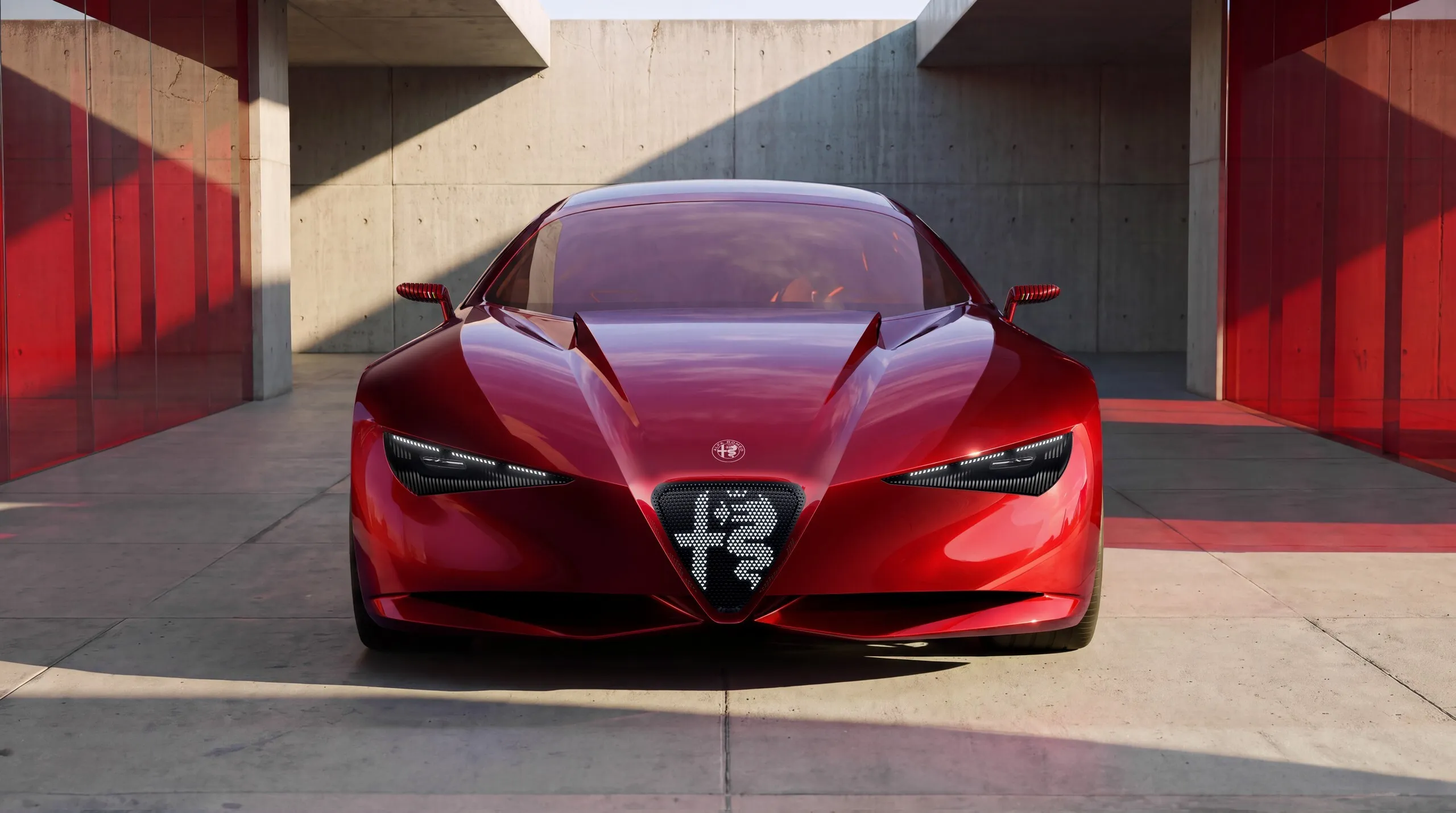
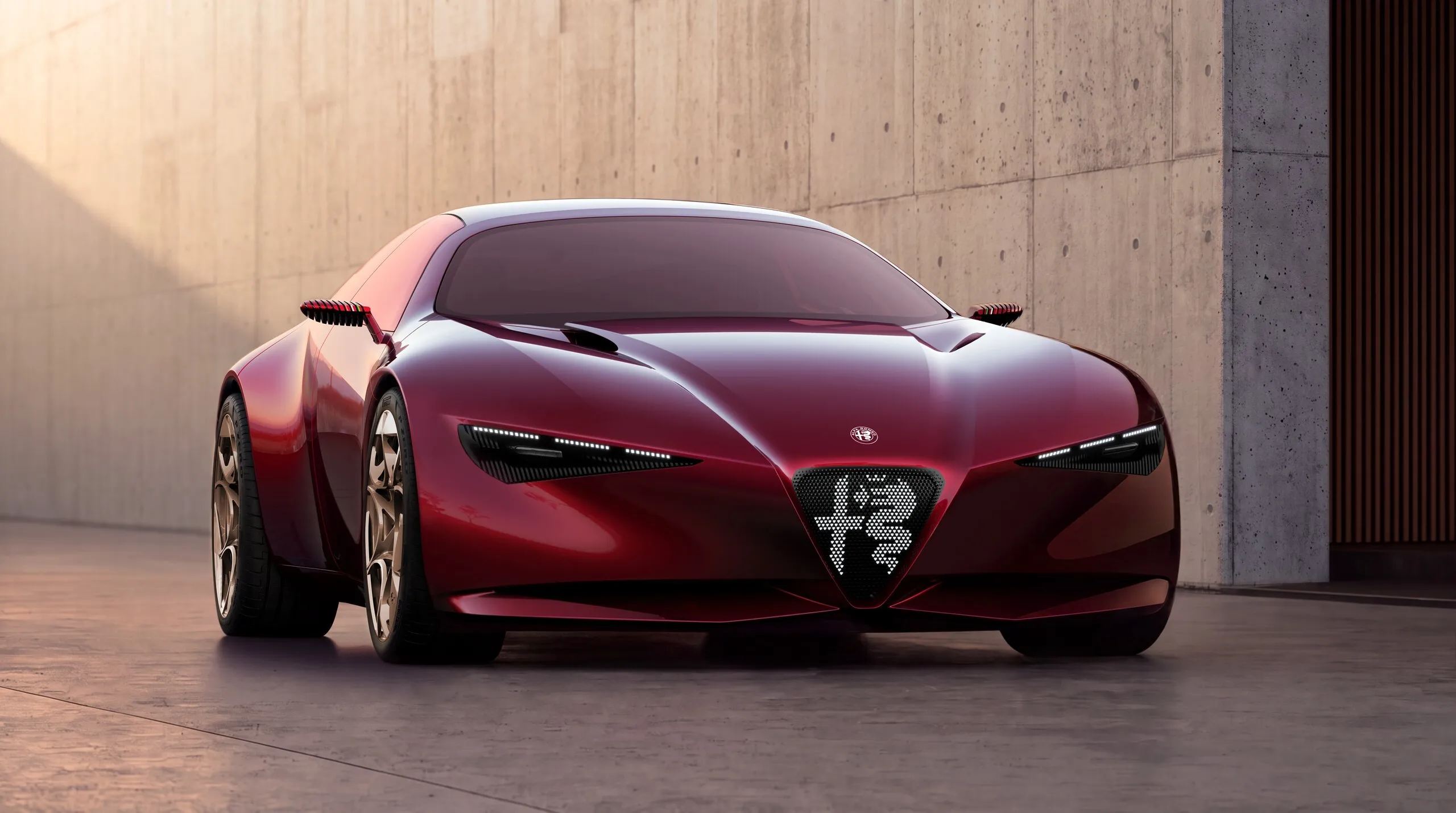
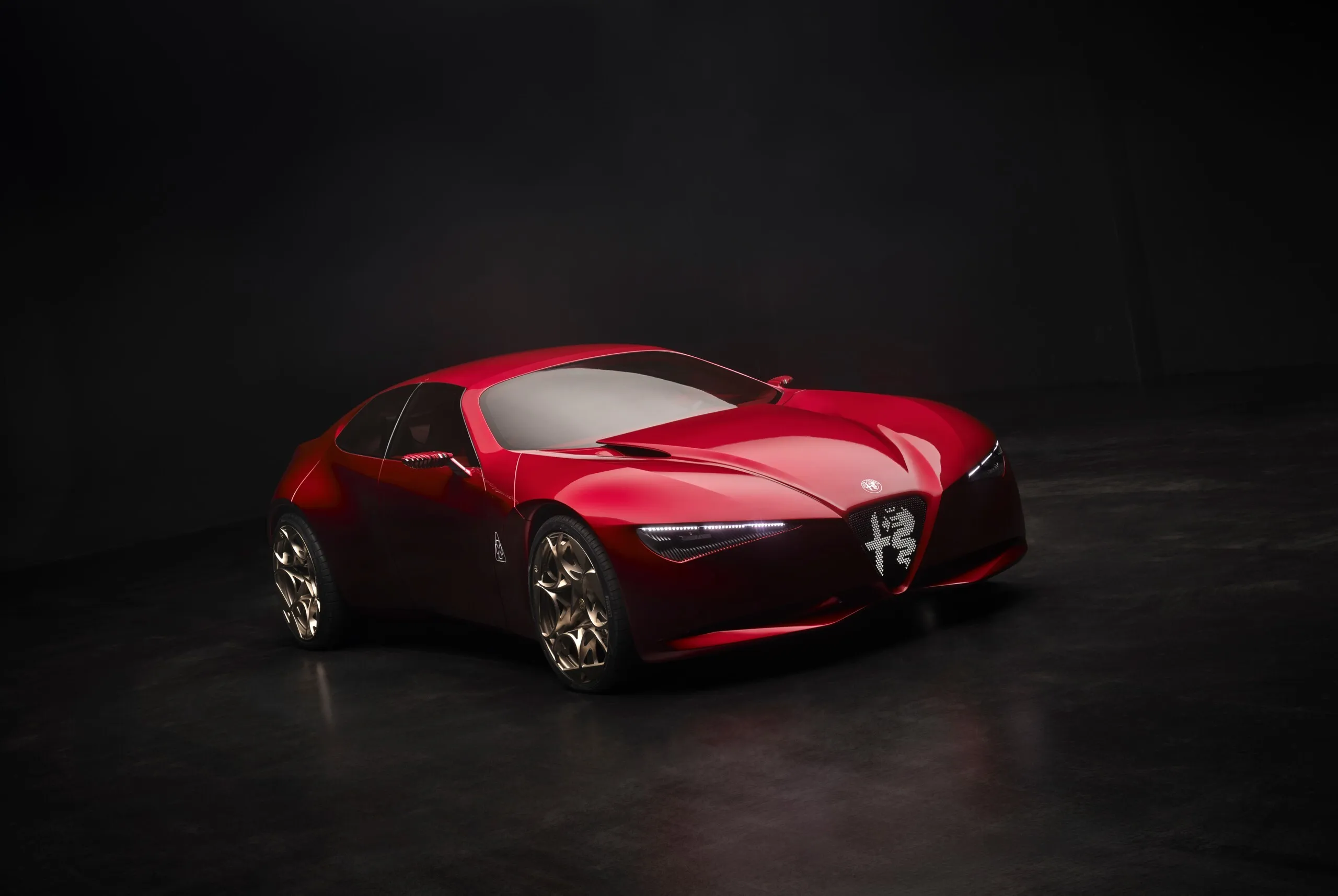
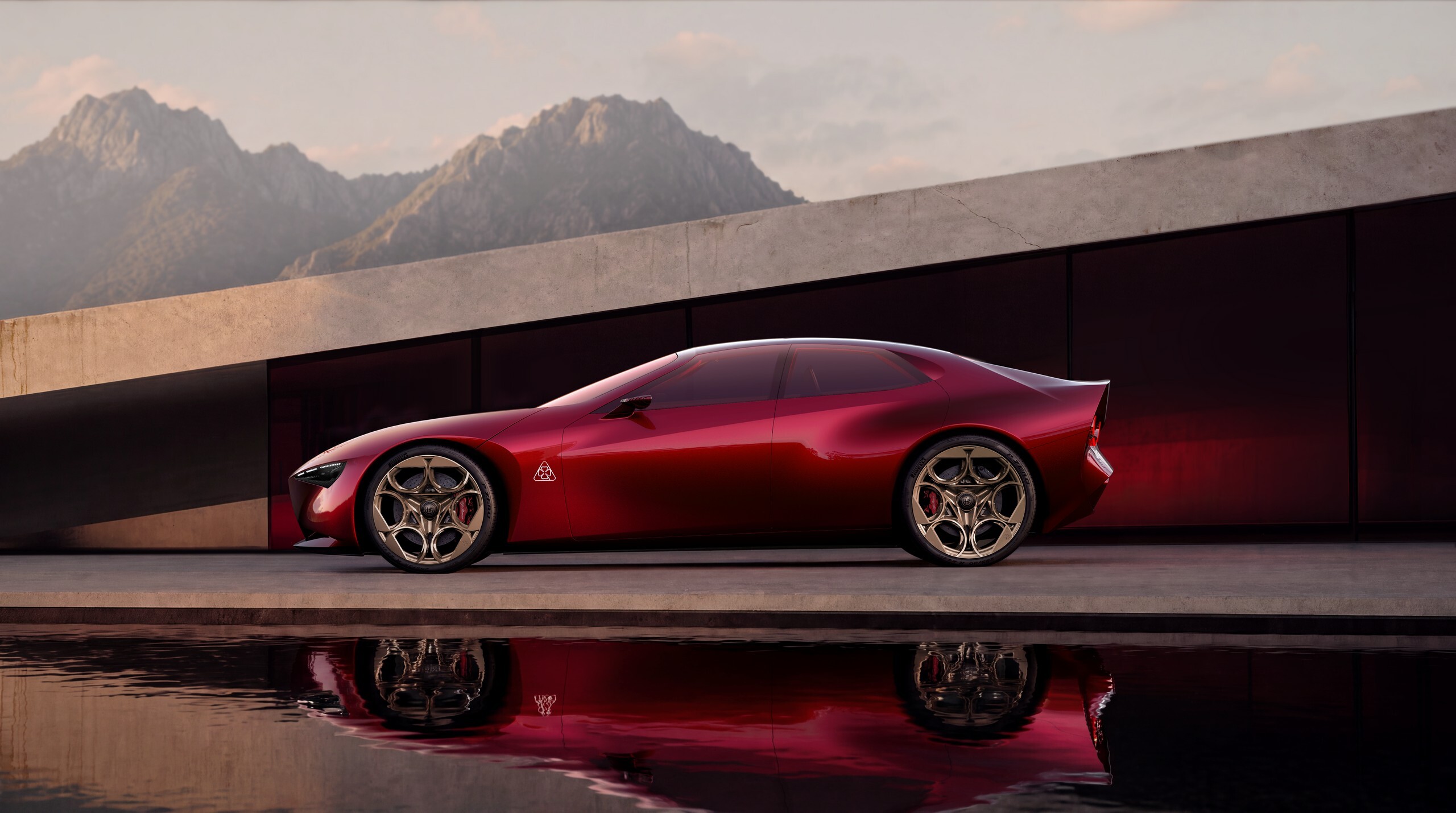
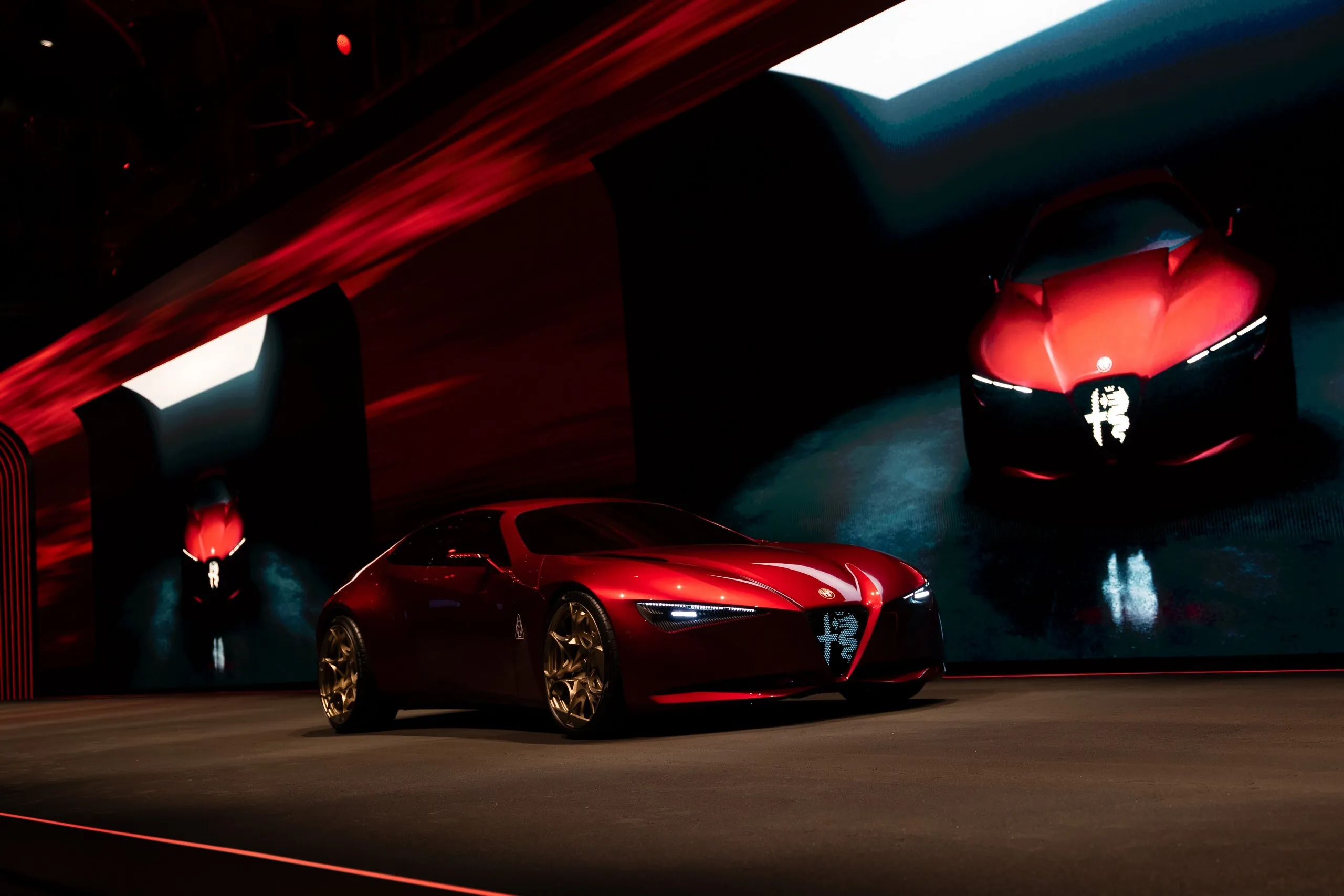
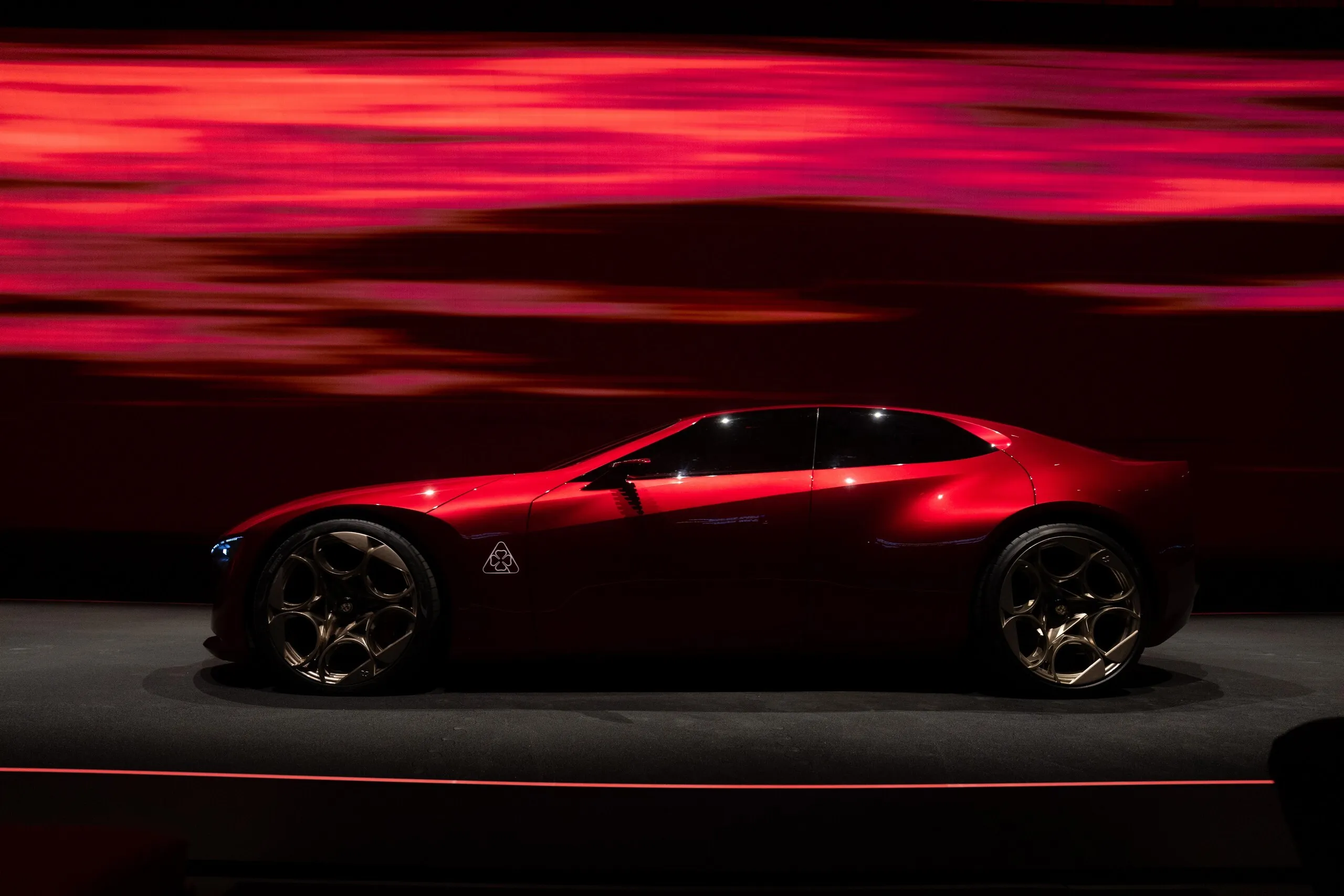
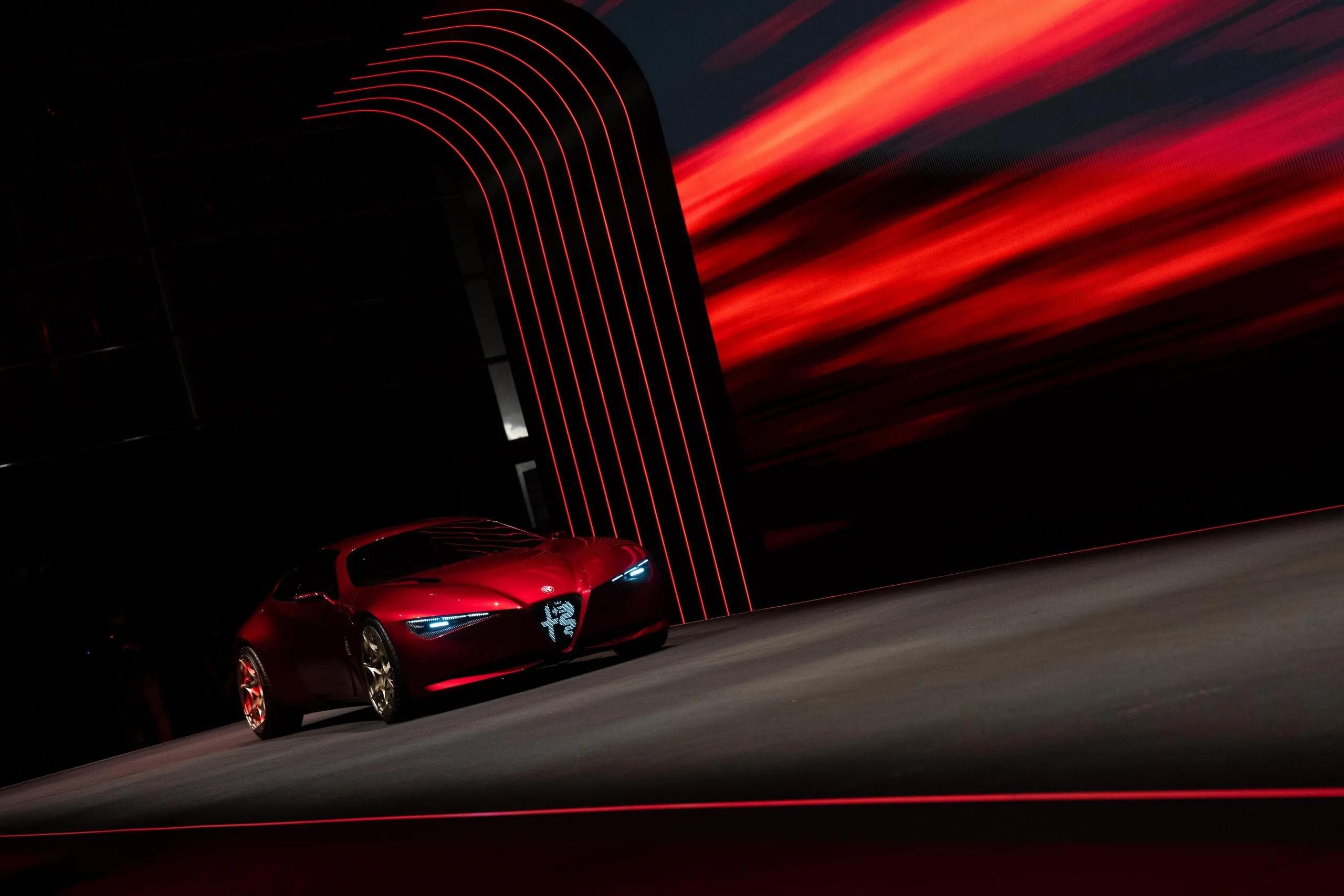
The sleek, seductive shape of the Cuorerosso resembles a two-door sports car, but it’s actually a four-door 2+2. Alfa Romeo says it combines elements of supercars and a traditional Gran Turismo, and we can see why. Like some of the industry’s most iconic GT cars, the concept has a long, low-slung hood, with bold character lines and a traditional Alfa Romeo grille.
Read: Alfa Romeo’s Changing The Junior Again, But This Time The Name Stays
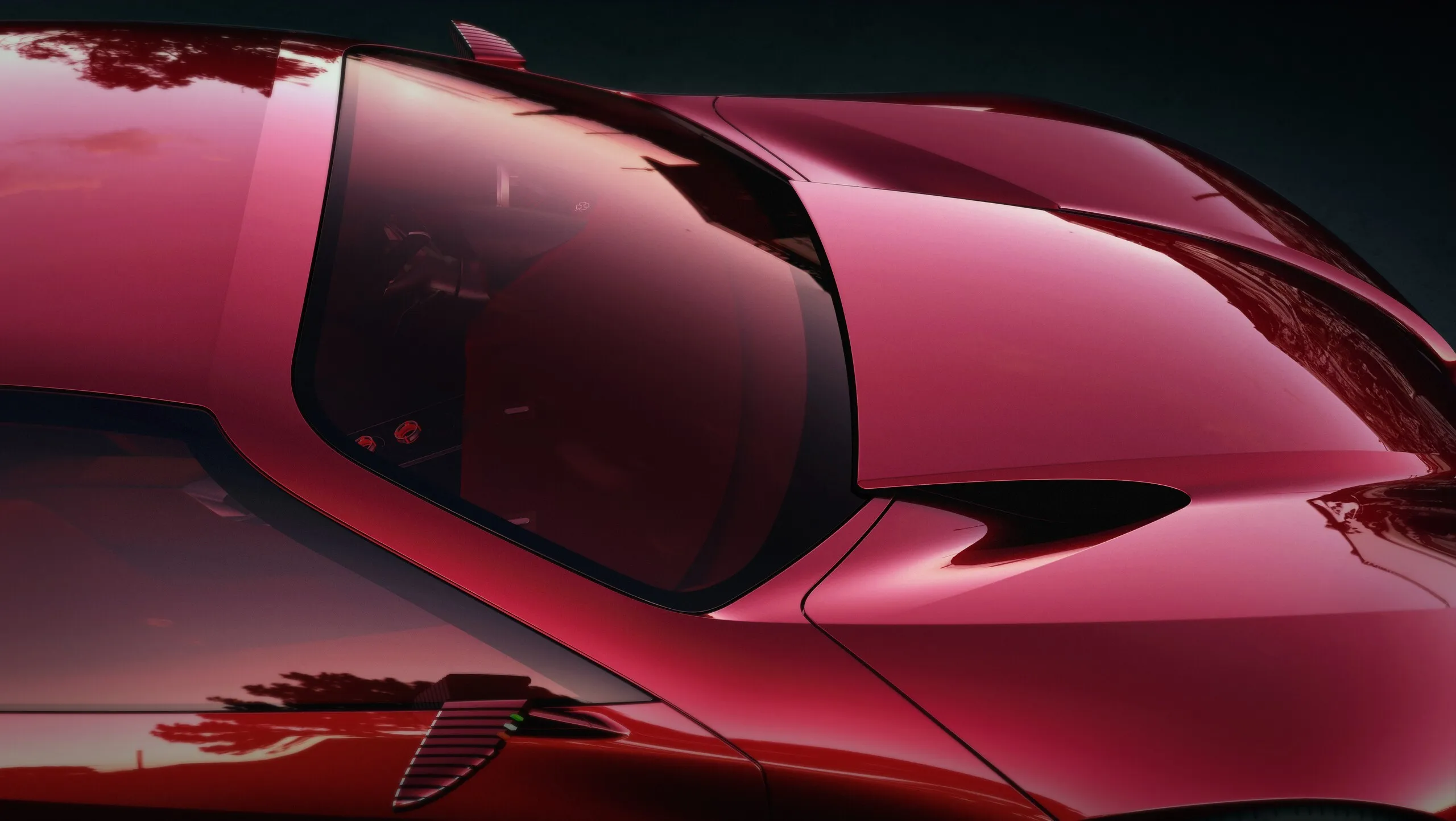
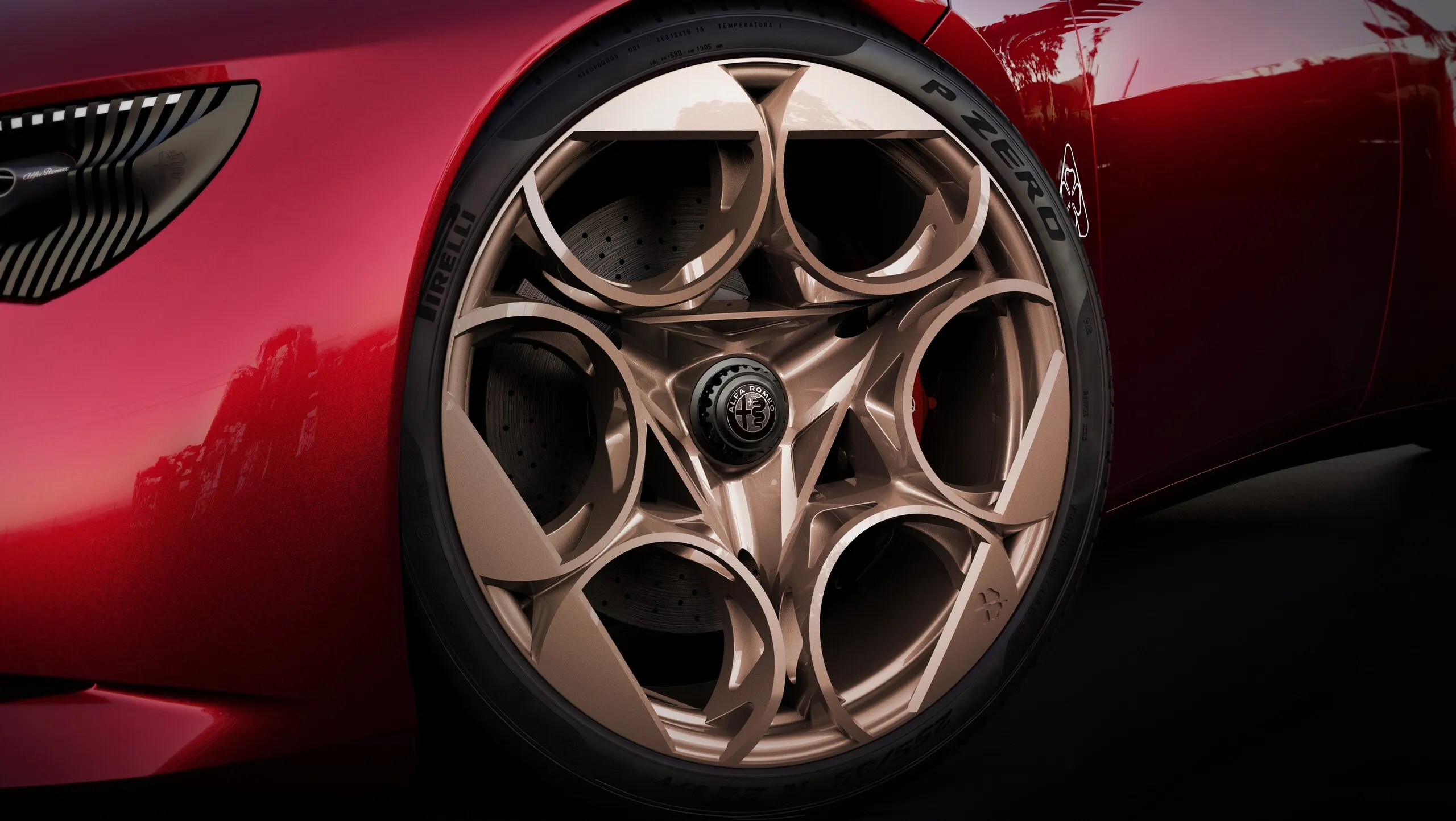
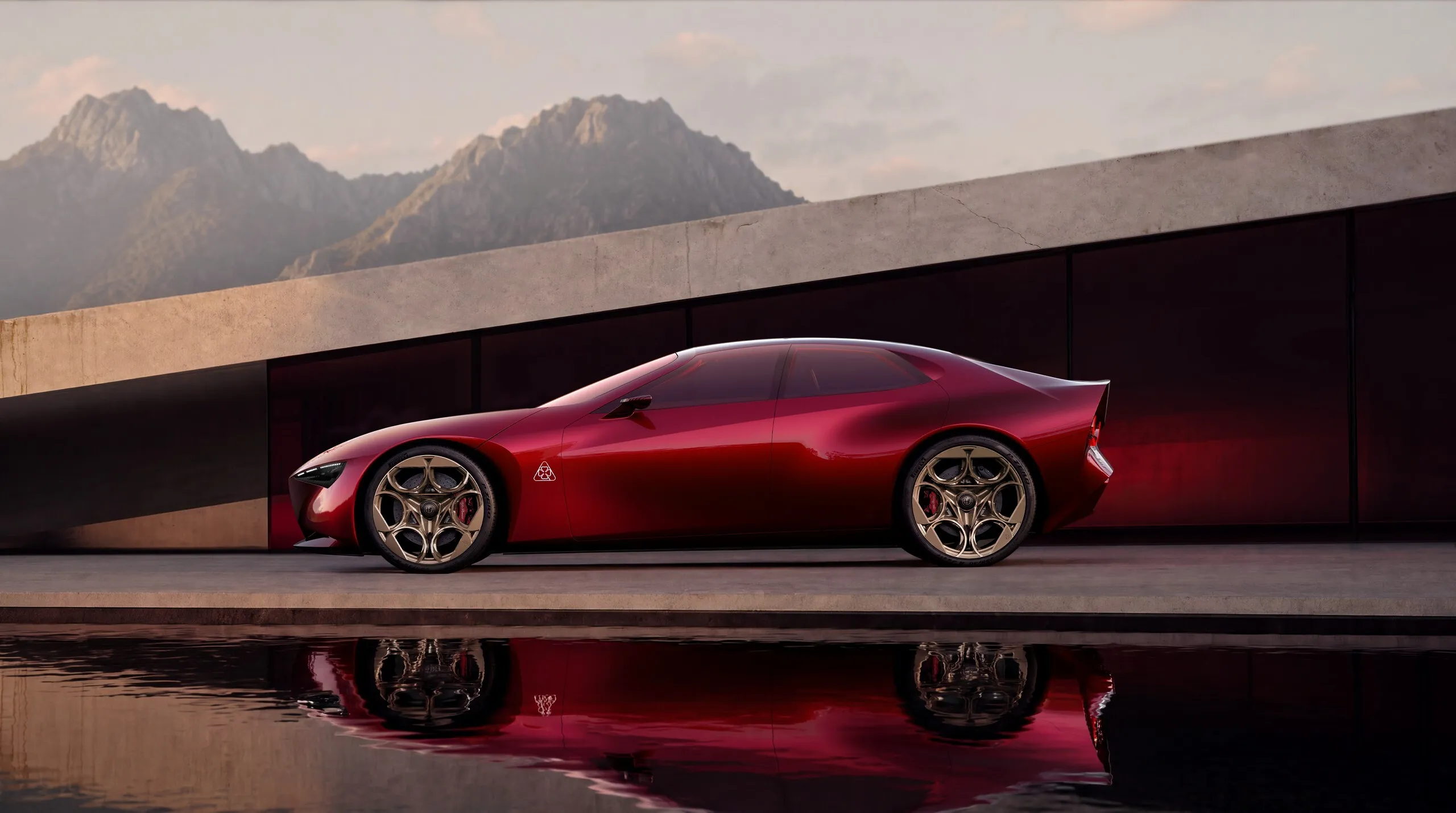
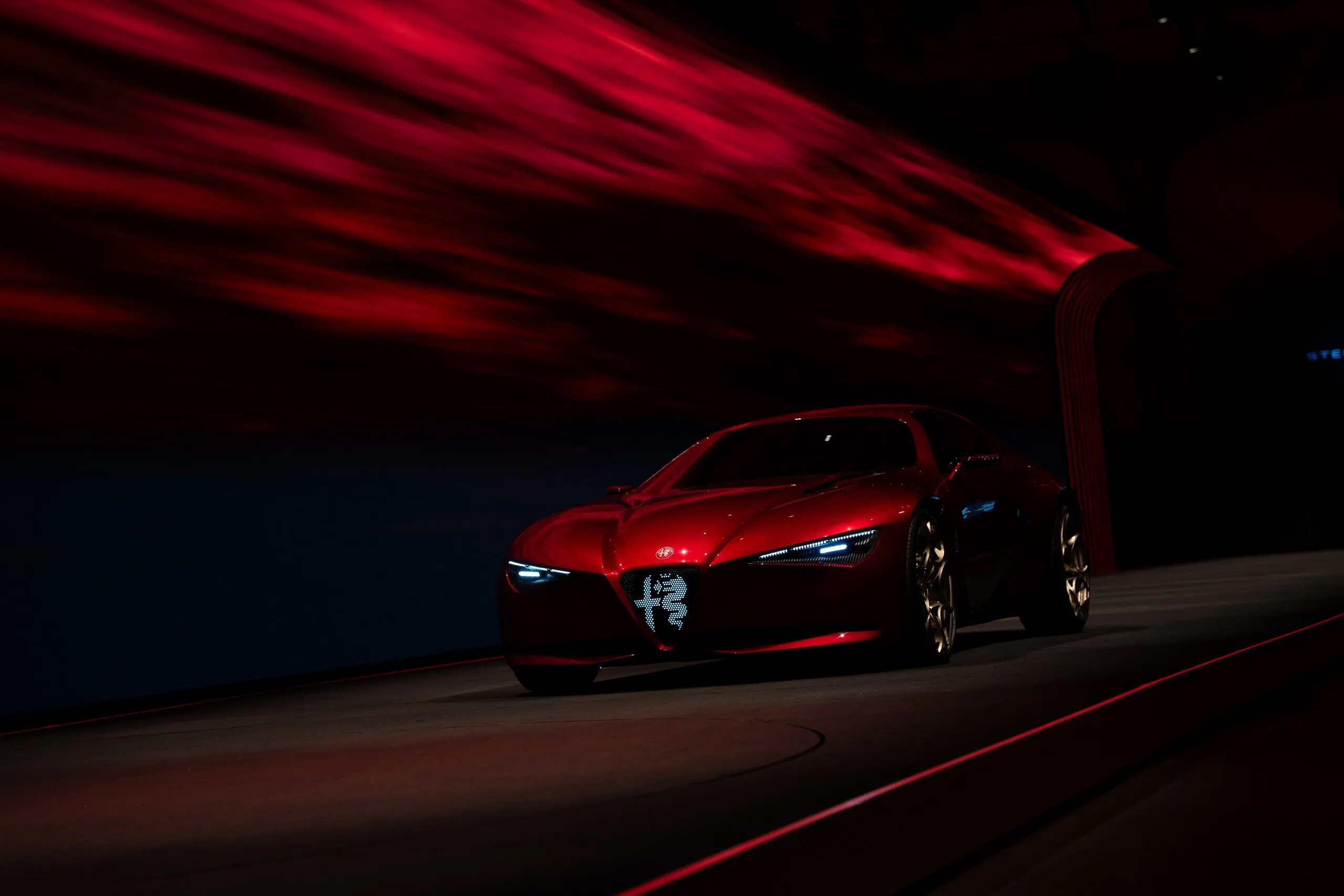
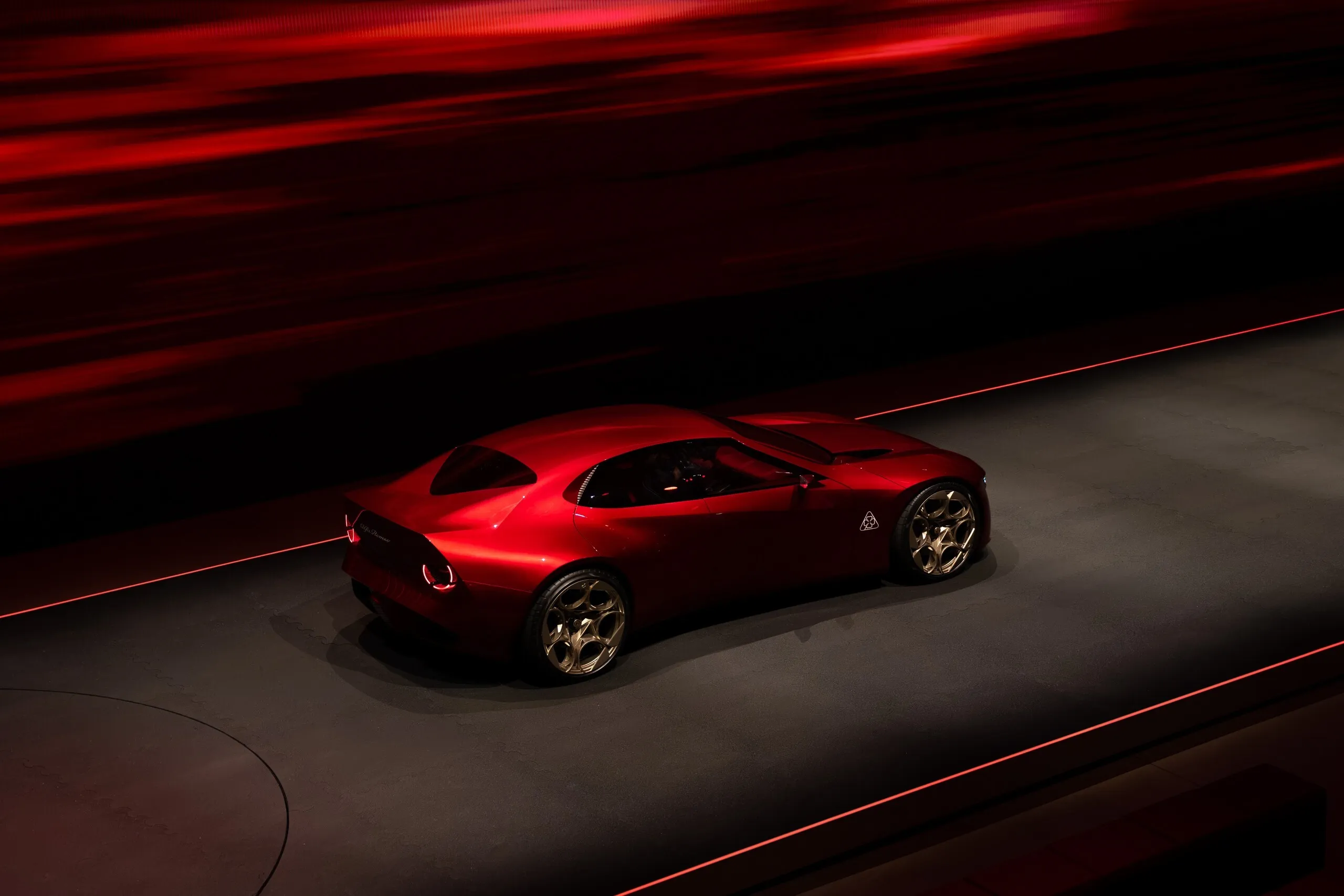
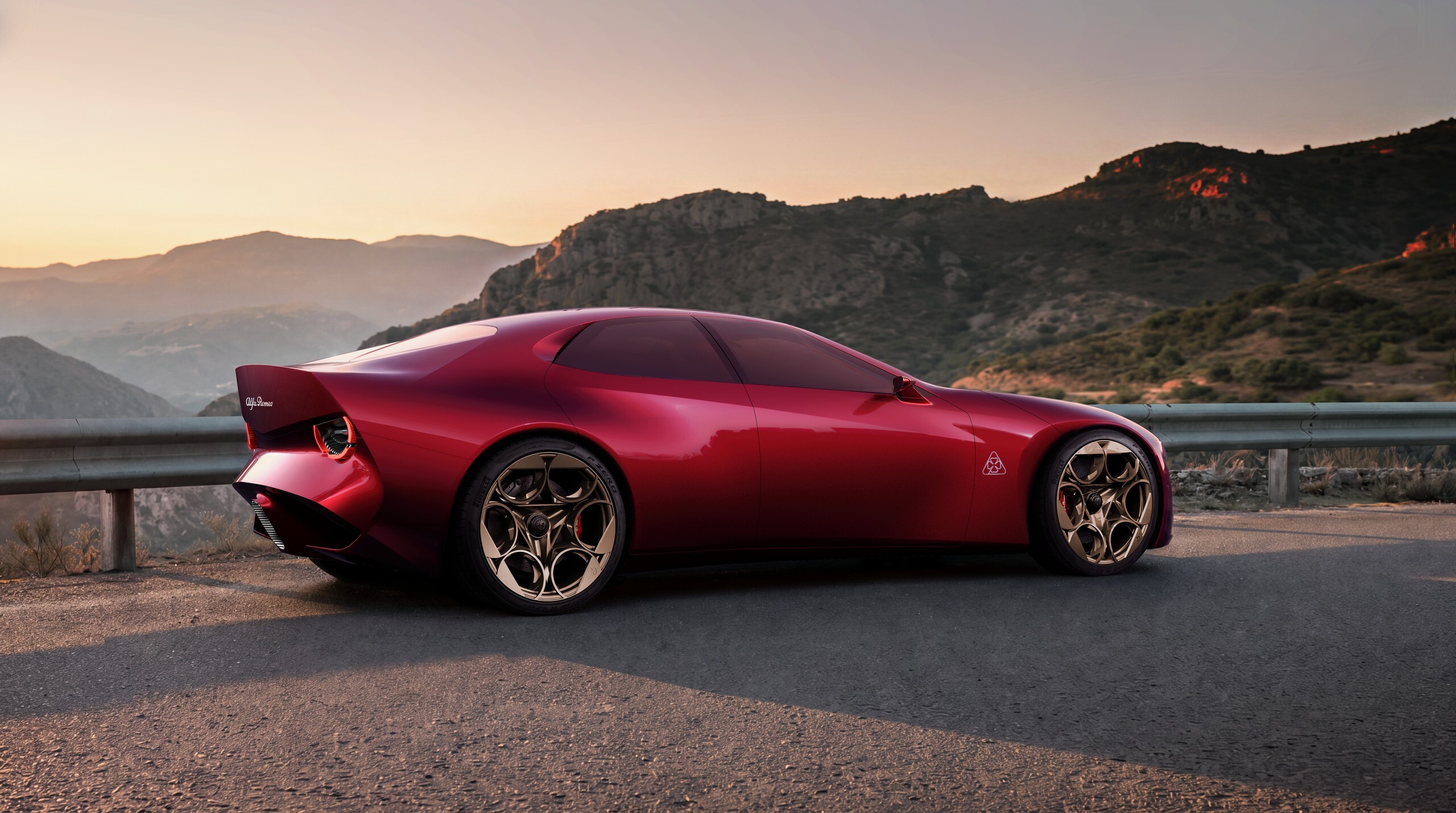
The wedge-shaped headlights are a new look for the brand, combining dozens of small LEDs to give the concept a very bold and dynamic look. Perhaps the best way to appreciate the Cuorerosso is to look at it from the side, where beautiful curves and creases run along the bodywork. There are also gorgeous side windows that gently wrap around onto the edges of the roof. A set of huge, forged wheels, each with six circular elements and a striking gold finish, further adds to the wild design.
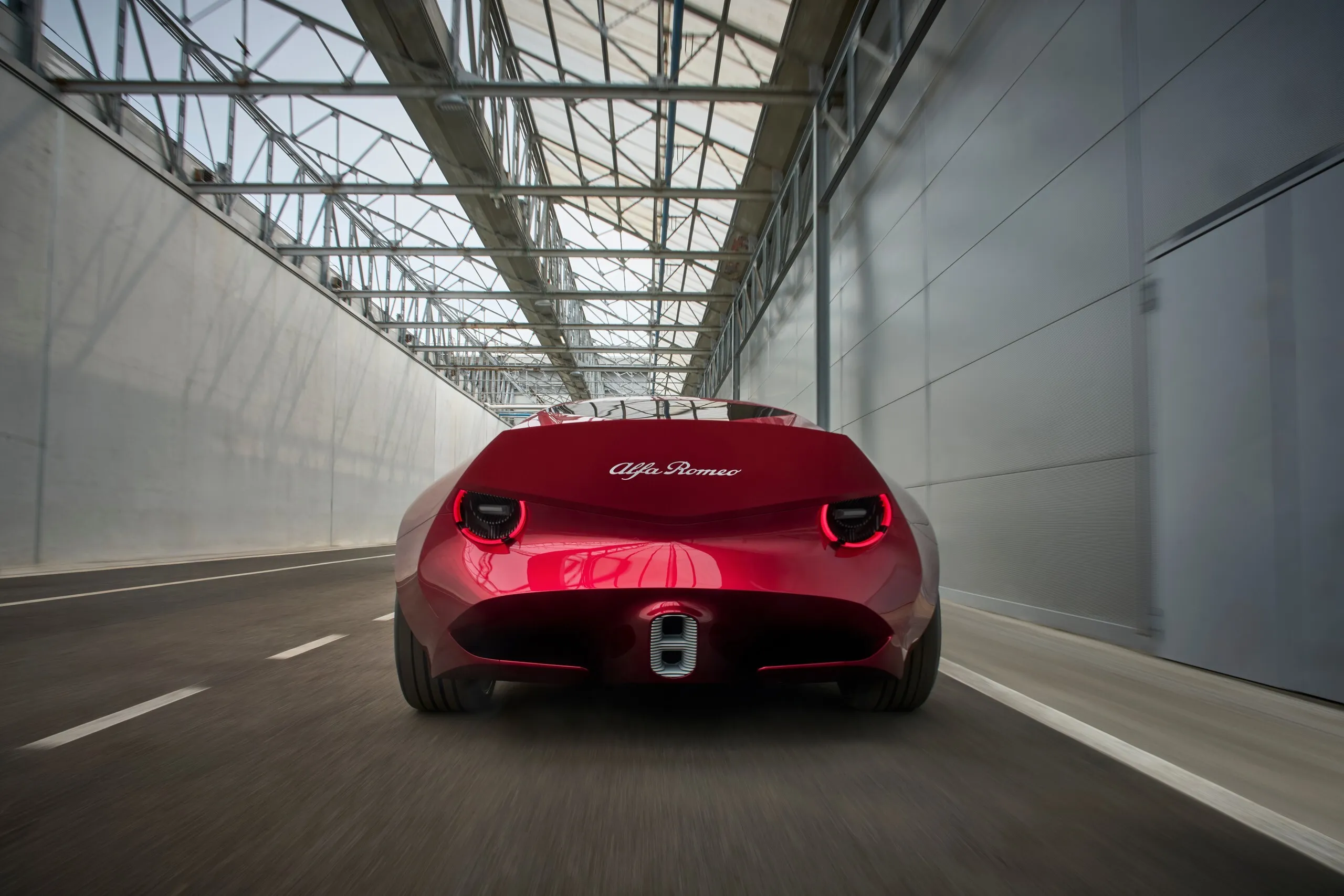
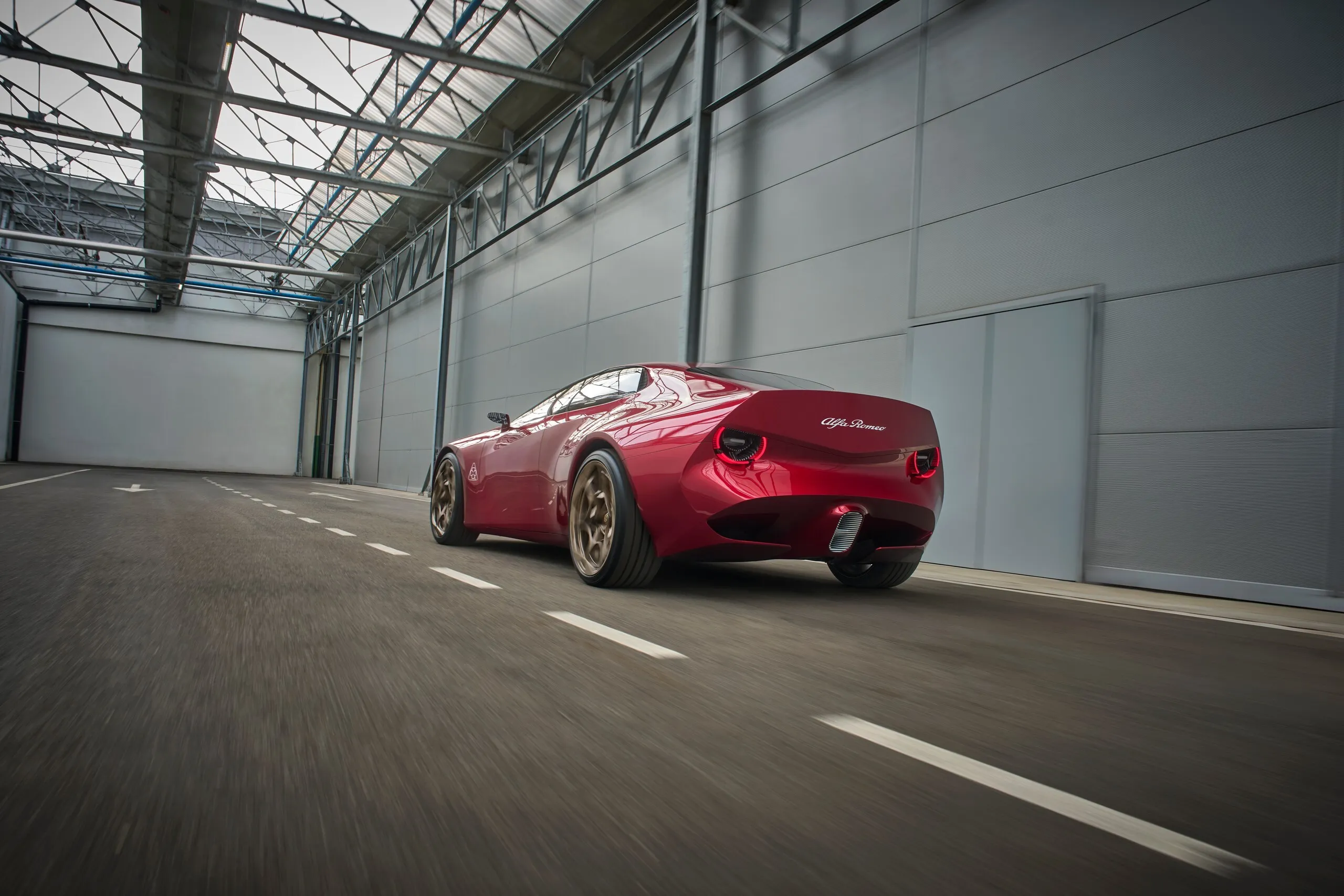
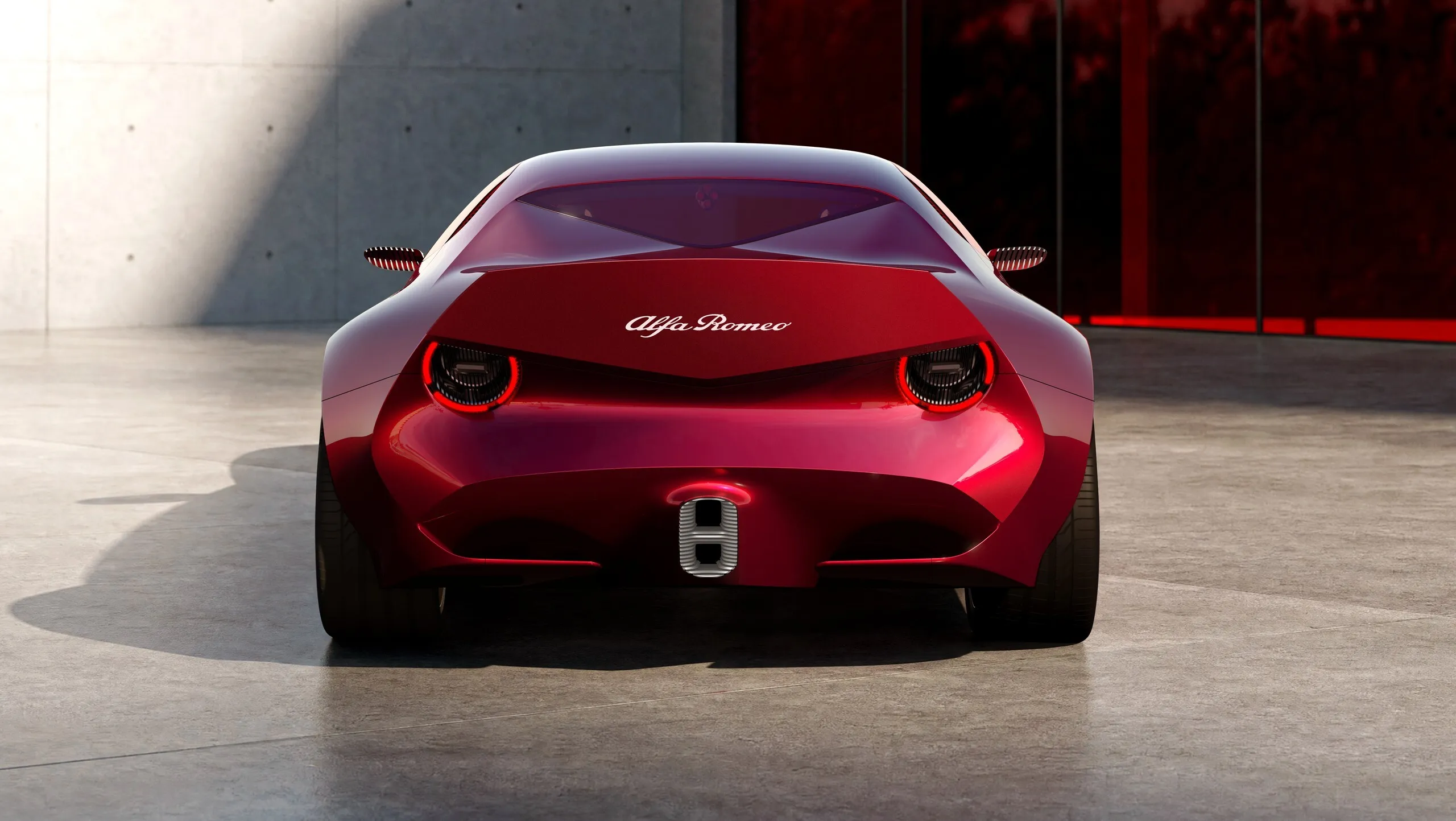
The rear is just as dramatic. It includes what Alfa Romeo calls a Scudetto-shaped rear window, a pair of circular LED taillights, and stacked exhausts sitting in the center of the bumper. Just like the car’s front, the rear looks angry, in the best way possible. Alfa Romeo says the Cuorerosso is 185 inches (4.7 meters) long, 77 inches wide (2 meters), and 51 inches tall (1.3 meters), making it slightly longer than an Alfa Romeo Giulia, as well as wider and lower.
Twin-Turbo V6 Power
Speaking of the Giulia, the Cuorerosso concept uses the same twin-turbocharged 2.9-liter V6 as the Giulia and Stelvio Quadrifoglio models. In those cars, the engine delivers 505 horsepower and 442 pound-feet (600 Nm) of torque, but Alfa Romeo says the concept pairs the engine with a hybrid system, so it should offer up even more grunt. Other key features include all-wheel drive, a torque converter transmission, and a carbon fiber driveshaft.

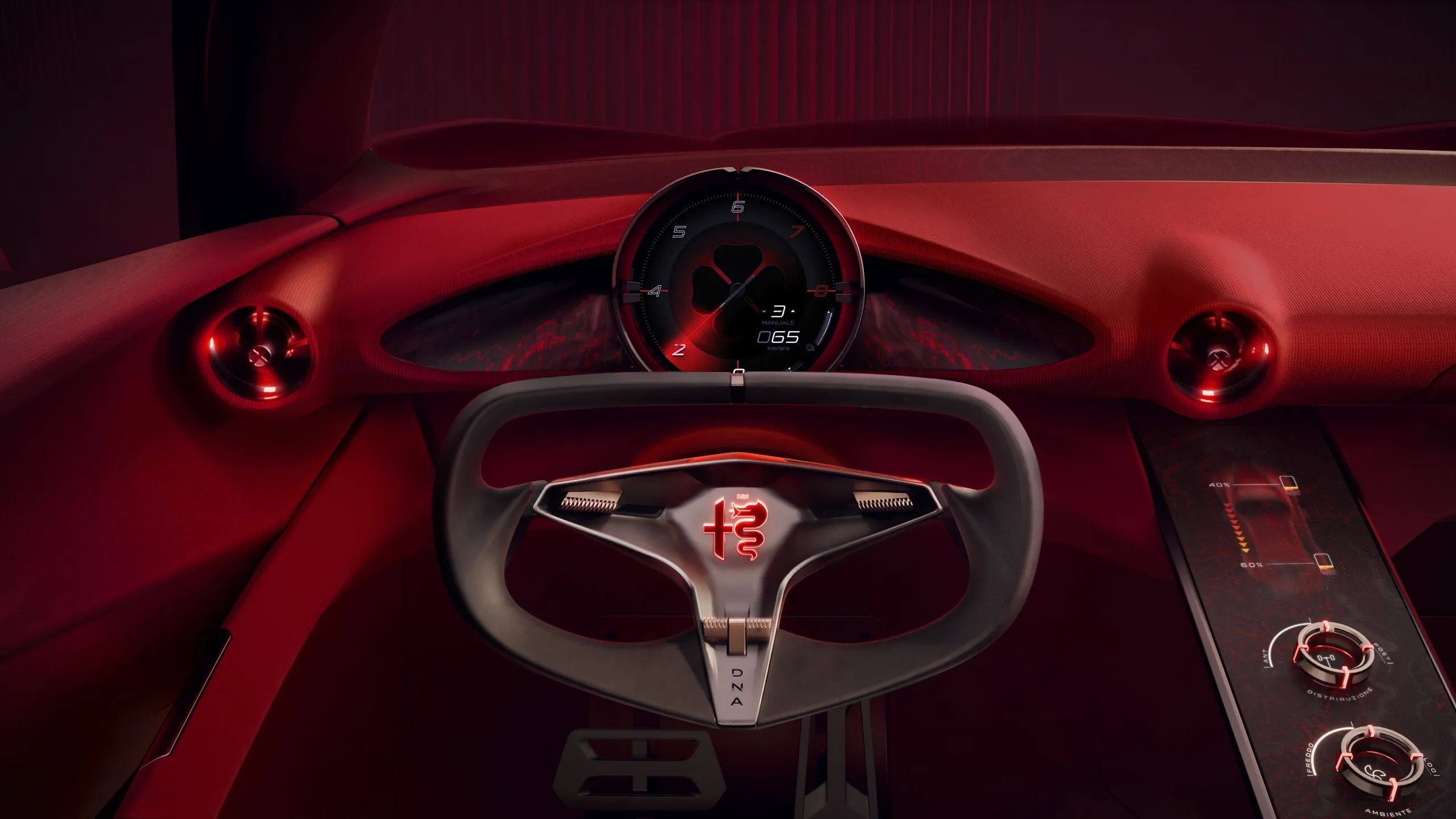
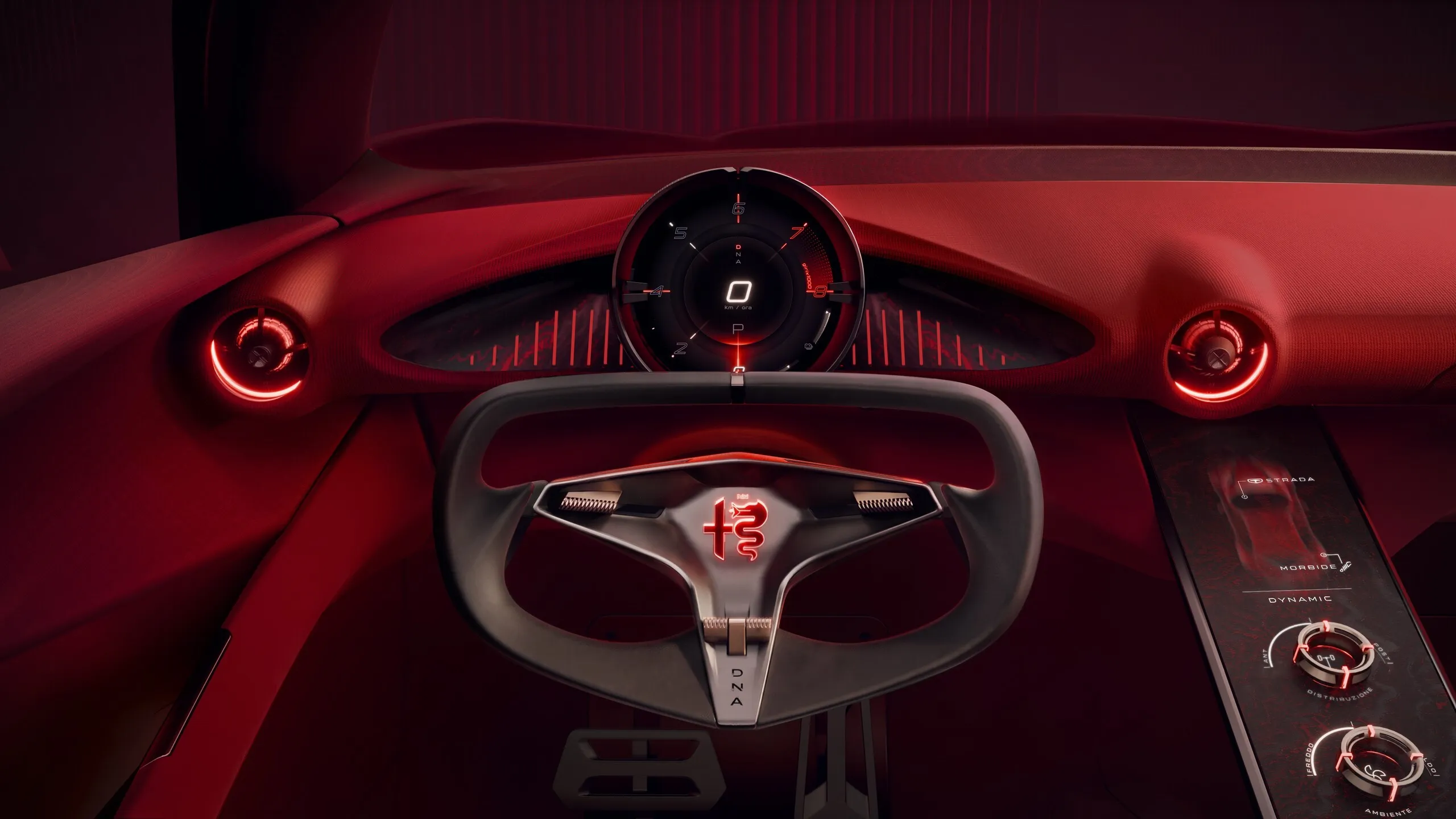
Alfa Romeo has gone all-out on the interior of the concept, proving once again that it can create much more stylish cabins than its competitors. It’s inspired by the 33 Stradale of 1967 and includes a yoke-styling steering wheel that includes a drive-mode controller and two other switches. The dashboard has a large gauge behind the steering wheel which, at the touch of a button, can split into two separate gauges, depending on what mood the driver’s in.
The cabin also uses familiar circular air vents to current Alfa Romeo models, in addition to having a floating central spine between the seats with a large touch panel and physical controls. Overall, the dashboard is minimalist but incredibly stylish and so very Italian. The driver and front passenger seats, trimmed in red and black leather, add to the sporty look.
A Cabin To Match
As for the rear seats, they’re also quite aggressive, and drivers can access various controls through a dedicated touchscreen. Making the experience at the rear even better is the fact that this area is accessed through the rear suicide doors.
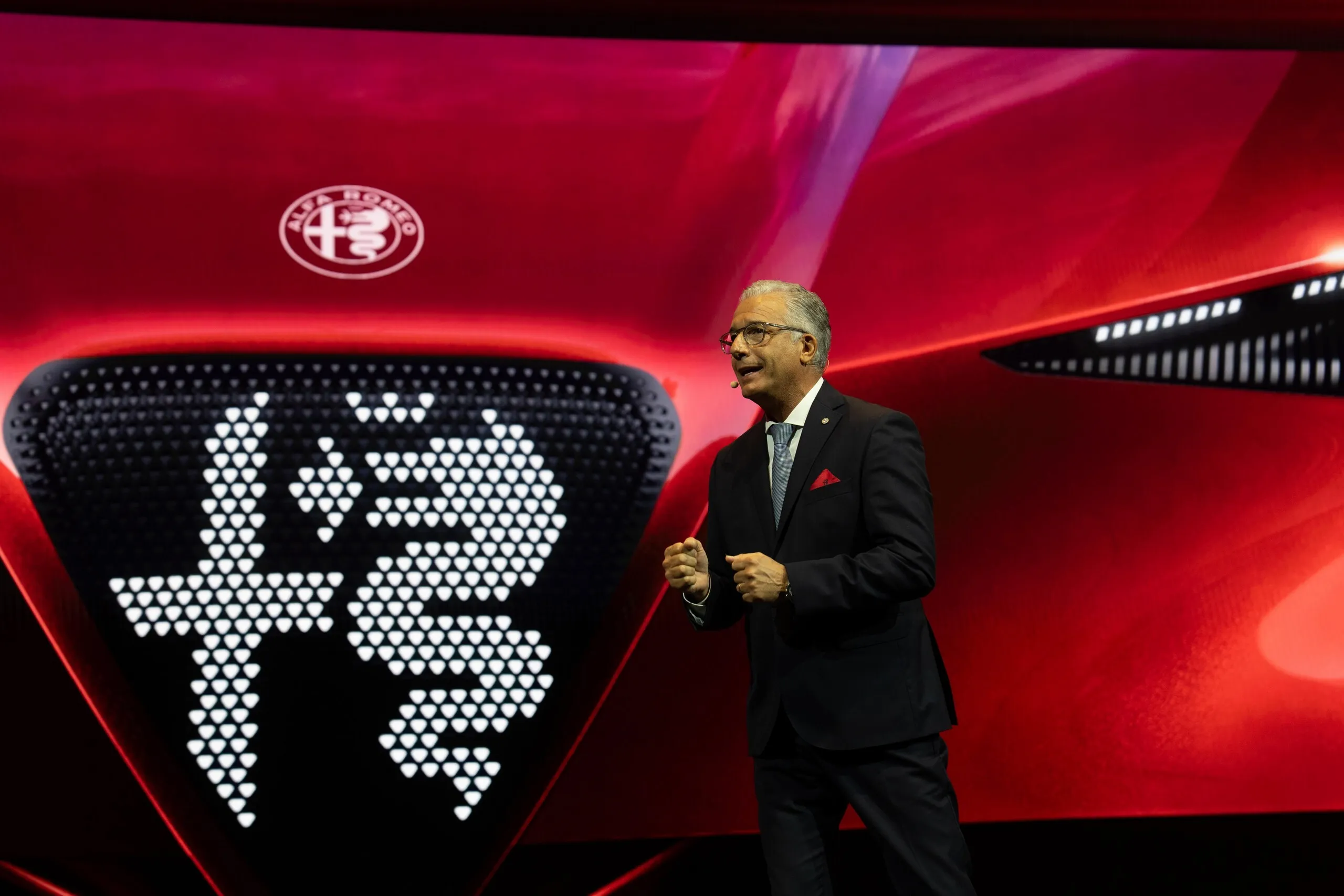
“Alfa Romeo has always created cars that are capable not only of moving people, but of arousing something within them,” Alfa Romeo and Maserati chief executive Santo Ficili said at the car’s unveiling. “It is this human-machine connection, fueled by a unique culture of the Italian spirit, sportiness and passion, which makes each of our cars an Alfa Romeo. With Cuorerosso, we bring this identity into the future, one open to different energy solutions, in which technology, function and quality are always at the service of emotions and driving pleasure.”