- Facelifted Hyundai Staria debuts with mild visual changes.
- Larger screens and more physical controls enhance usability.
- Chassis upgrades deliver a smoother and quieter driving feel.
The Staria might still feel like a fresh face on the road, but Hyundai’s futuristic minivan is already approaching its fifth birthday, having launched back in April 2021. To keep it sharp in a market that shifts quickly, Hyundai has introduced a mid-cycle update that’s more than just a surface-level refresh.
From the outside, the Staria looks pretty much the same to the untrained eye. A direct comparison with the pre-facelifted model reveals an uninterrupted full-width LED bar at the front with engraved Staria logos on the sides, better integrated lower headlights, and a different pattern for the cooling intakes.
More: Hyundai’s Staria Is Getting The EV Powertrain Its Futuristic Face Always Deserved
The higher-grade Lounge trim gets a lightly reworked grille with chrome accents, now visually separated from the bumper’s lower intake section. Hyundai hasn’t confirmed anything about the upcoming Staria Electric here, though prototypes have been spied testing with a unique front bumper.



A new paint color, Classy Blue Pearl, joins the standard palette, while the Lounge trim also adds Galaxy Maroon Pearl to its list of available finishes.
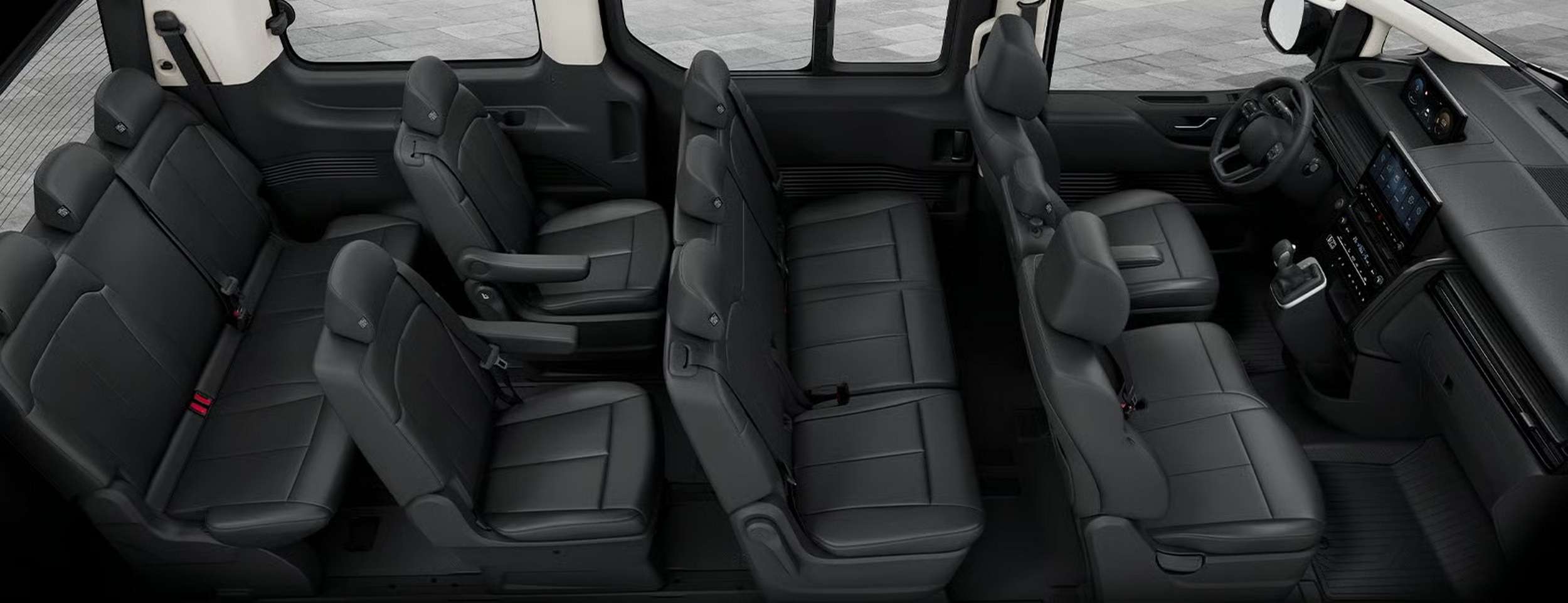
Inside, the cabin layout hasn’t been overhauled, but some key elements have grown up. Both the digital instrument panel and the central infotainment screen have increased from 10.25 to 12.3 inches, and now run Hyundai’s latest software, which supports over-the-air updates.
More: Hyundai’s Coming For The Toyota 4Runner And Tacoma, But That’s Just The Start
The dashboard has been revamped with new climate vents and a new storage tray. Furthermore, the redesigned center console gains more physical controls, replacing the touch-sensitive buttons of the outgoing model.


Other changes include the more modern steering wheel, the new column for the electronic shift control in the Lounge trim, and the auxiliary handle next to the driver’s seat for easier entry. Finally, Hyundai has added new color options for the upholstery, and more ADAS features as standard.
As before, the Staria is available with a wide range of seating configurations, from utilitarian two-seaters to spacious eleven-seat arrangements spread across four rows.


Improved Ride, Carry-Over Powertrains
Hyundai has also addressed ride comfort in this update, fitting a revised suspension setup along with subframe bushings. The Lounge variant benefits from hydro bushings, and across all versions, improved sound insulation helps reduce cabin noise.
Powertrains are carried over without any changes. The base non-electrified 3.5-liter V6 engine generates 237 hp (177 kW / 240 PS) and can run on LPG. The self-charging hybrid comprises a turbo 1.6-liter engine and a single electric motor producing a combined 242 hp (180 kW / 245 PS). A fully electric variant is still in the pipeline.
The 2026 Hyundai Staria is already available for order in South Korea, with prices starting at 32.59 million won (about $22,000) and rising to 48.76 million won (around $33,000) for higher trims. A global rollout is expected to follow.