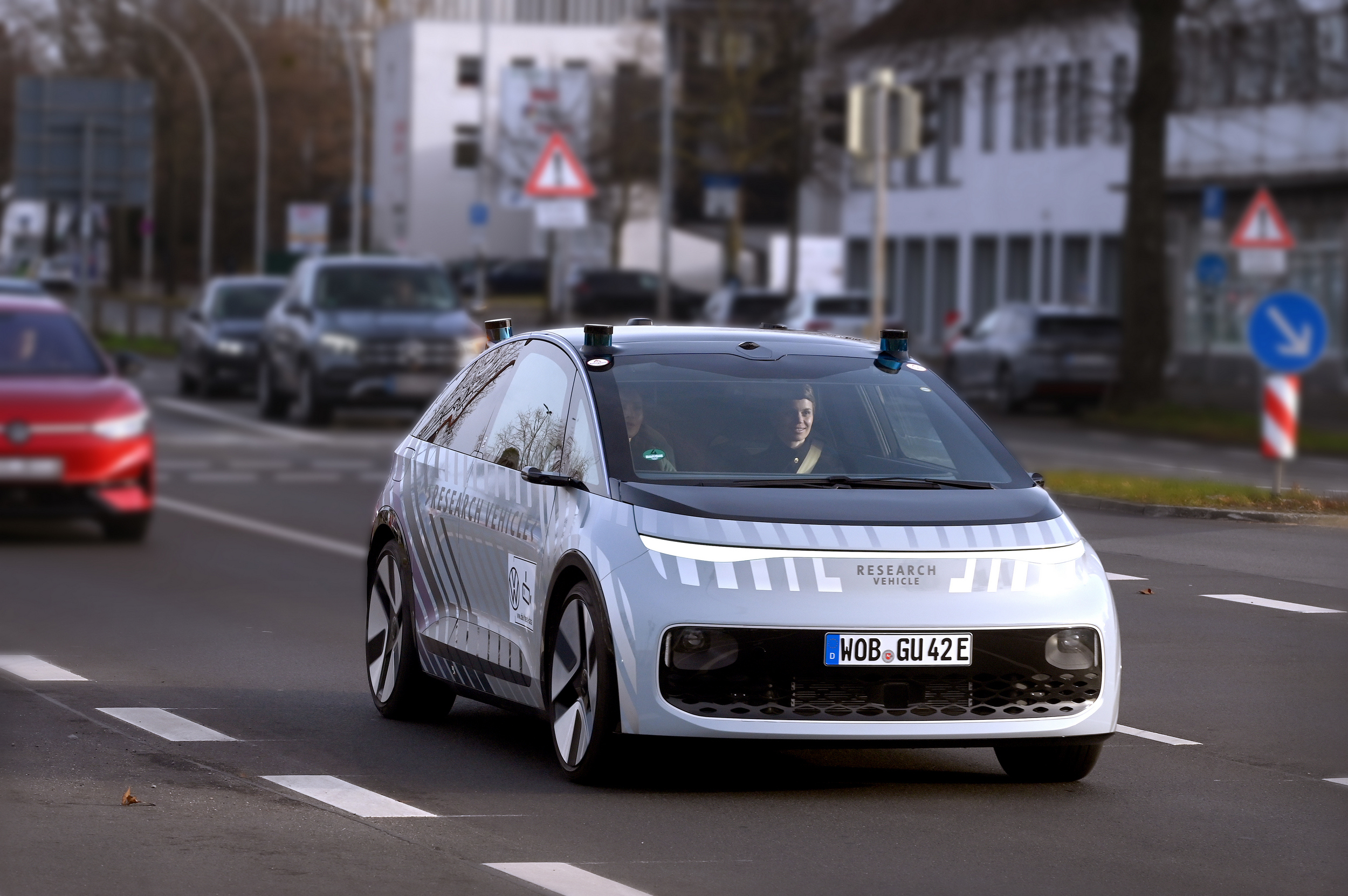
- Volkswagen revealed its Gen.Urban fully autonomous vehicle.
- City-focused prototype lacks a steering wheel and pedals.
- Gen.Urban explores human interaction with self-driving cars.
The robotaxi wars are heating up as Volkswagen’s Gen.Urban research vehicle is entering a new phase of testing. While the prototype has largely flown under the radar, it’s been undergoing “intensive trials” for the past year or so.
Thanks to all this work, the Gen.Urban can now drive autonomously in Wolfsburg’s traffic. Volkswagen hasn’t said much about the vehicle, but it lacks a traditional steering wheel and pedals.
Even so, a safety driver still rides up front in the passenger seat, ready to interveneusing a “specially developed control panel with a joystick.”
More: VW Beats Tesla With Production Robotaxi
On the styling front, the vehicle resembles a futuristic ID.3. It features a streamlined shape with a wide grille and low-mounted headlights. They’re joined by an upper light bar and “Research Vehicle” badging.
We can also see smooth bodywork, flush-mounted door controls, and digital rearview mirrors. More notably, the vehicle has four or five sensors on the roof. They appear to be joined by a front-mounted camera.
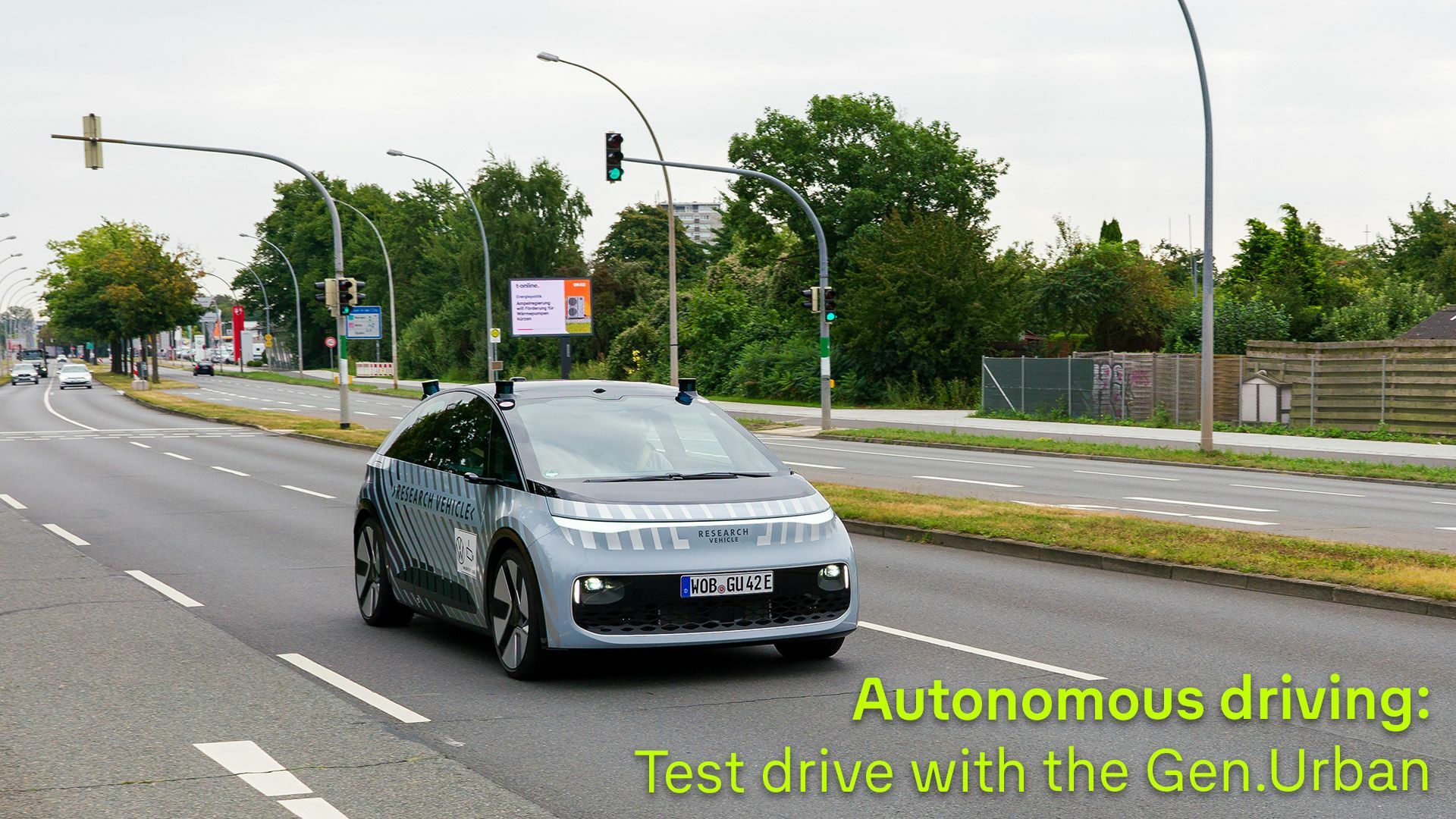
Volkswagen has been vague about technical specifications, but the latest round of testing will focus on how passengers use the vehicle. As the company explained, they’ll be “gathering comprehensive data on user behavior and interaction with the Gen.Urban.”
Among the areas of interest are how people spend time in a self-driving vehicle and whether or not they’re comfortable. The company also wants to see how people interact with autonomous vehicles as the model could presumably be used by everyone from children to seniors.
Volkswagen said the findings will help them to further refine the interior and user experience of future vehicles. Interestingly, customization doesn’t begin once you’re inside, as it starts before the vehicle even arrives. Using an app, they can adjust everything from the cabin temperature to the ambient lighting before the vehicle arrives.
Once inside, the passenger sits in the driver’s seat, which “automatically adjusts to the desired position.” They’re then greeted by a “wide front display,” which shows a variety of information.