












- Volvo recalled 40 EX30 EVs over a battery fire risk.
- Microscopic lithium growth may trigger short circuits.
- Owners must limit charging to reduce overheating risk
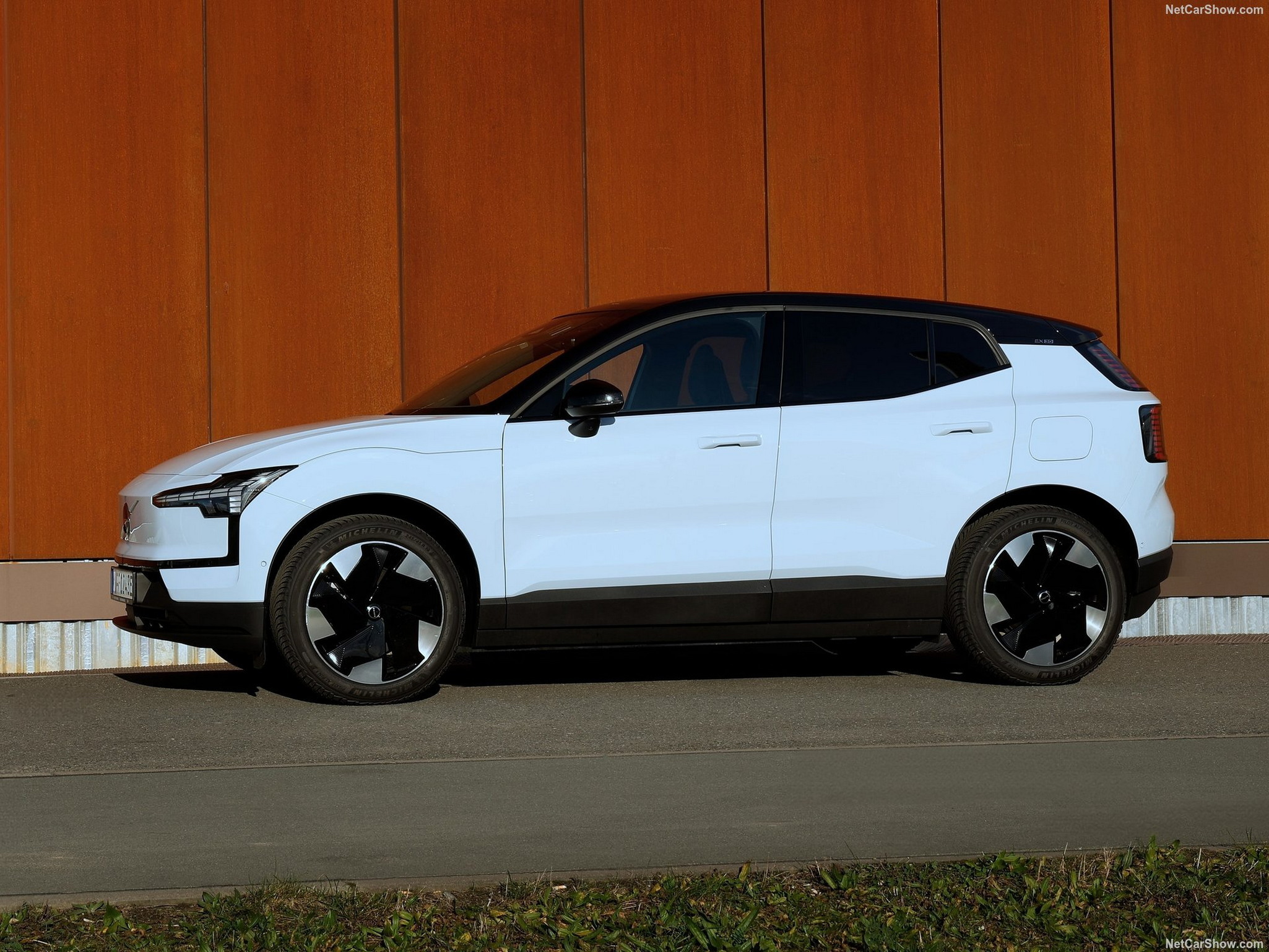
Volvo wants 40 EX30 owners to park outside, like right now. It’s not a matter of preference but a precaution tied to a rare but serious battery issue that, under the right (or rather, wrong) conditions, could lead to a short circuit and possibly even a fire.
The wildest part is that this serious safety issue comes down to a microscopic process taking place inside individual battery cells. Worst of all, for now, Volvo doesn’t actually have a fix for it.
More: Volvo Owner Sues Claiming Hybrid Recall Destroyed His SUV’s Value
According to a newly filed recall with the National Highway Traffic Safety Administration (NHTSA), the condition affects 40 examples of the 2025 Volvo EX30 built between September 6, 2024, and October 25, 2025.
These affected vehicles are equipped with high-voltage battery cells supplied by Sunwoda Power Battery Company in China, and Volvo estimates that 100 percent of the recall population contains the defect.
What’s the Problem?
The issue stems from what Volvo calls a process deviation during battery cell manufacturing. It doesn’t spell out exactly what that deviation was, but the results are laid bare. Whatever went wrong allows these batteries to build up lithium plating growth inside the cell.
That growth, also called dendrites, can get big enough over time to cause a short circuit. Clearly, that’s a bad day for any battery, but inside a car, it’s a potentially fatal issue. To that end, Volvo issued the recall and told customers to park outside.
Drivers may see a battery overheating warning displayed in the instrument cluster, but by that point, the situation may already be serious. The automaker first noticed the issue in July 2025 after it heard of a potential battery overheating situation outside of the U.S.
No Fix, Just Yet
An investigation led it to decide that a recall was the right move last December. Sadly, the remedy is something Volvo still hasn’t totally sorted out just yet.
For the time being, it wants owners to reduce the maximum state of charge in their EX30s to 70 percent. That will reduce the chance of lithium plating growth and allow Volvo to find a permanent remedy in the process.
It’s not an ideal situation, but there’s some consolation in the numbers, as it affects only 40 owners, not 40,000.