











- Bill could allow Rivian and Lucid to sell EVs directly to consumers.
- The measure expands Tesla’s long-standing direct sales carveout.
- Strict eligibility rules limit the policy to a small group of EV startups.
The USA might be called the land of the free, but try to sell a car directly to consumers, and that freedom dries up fast. Dealers have long held huge power and are currently scratching and clawing to keep the market as far from free as possible.
To that end, they’ve supported legislation that makes selling direct-to-consumer illegal in most states. If lawmakers in Washington State get their way, Rivian and Lucid might soon get a respite from that system.
More: Legacy Dealers Sue Colorado For Calling Scout An EV Brand
The proposal, known as ESSB 6354, would allow both Rivian and Lucid to sell vehicles directly to buyers statewide. If passed, it would put both brands on par with Tesla, which has itself had an exemption to the dealer franchise laws since 2014. The Washington Senate passed the bill 46–3 on March 3, and it’s now advancing through the House during the closing days of the legislative session.
The measure was first introduced on February 19 and previously cleared the Senate Transportation Committee before reaching the floor.
Dealer Franchise Laws Explained
Under current Washington law, most automakers must sell vehicles through franchised dealerships rather than directly to customers. Tesla received an exception more than a decade ago because it never operated a traditional dealer network. As a result, companies like Rivian and Lucid can operate showrooms in Washington but cannot complete vehicle sales through them.
The new legislation creates a similar pathway for a limited group of EV manufacturers. To qualify, companies must meet several requirements. They must be based in the United States, sell only battery-electric vehicles, have never used franchised dealerships, operate at least one service center in Washington, and have at least 300 vehicles registered in the state before January 1, 2026.
The bill also blocks potential workarounds. Established automakers cannot create subsidiaries to sell directly, preventing legacy brands from bypassing dealer franchise laws. The U.S.-only requirement would also exclude Chinese EV makers if they eventually enter the American market.
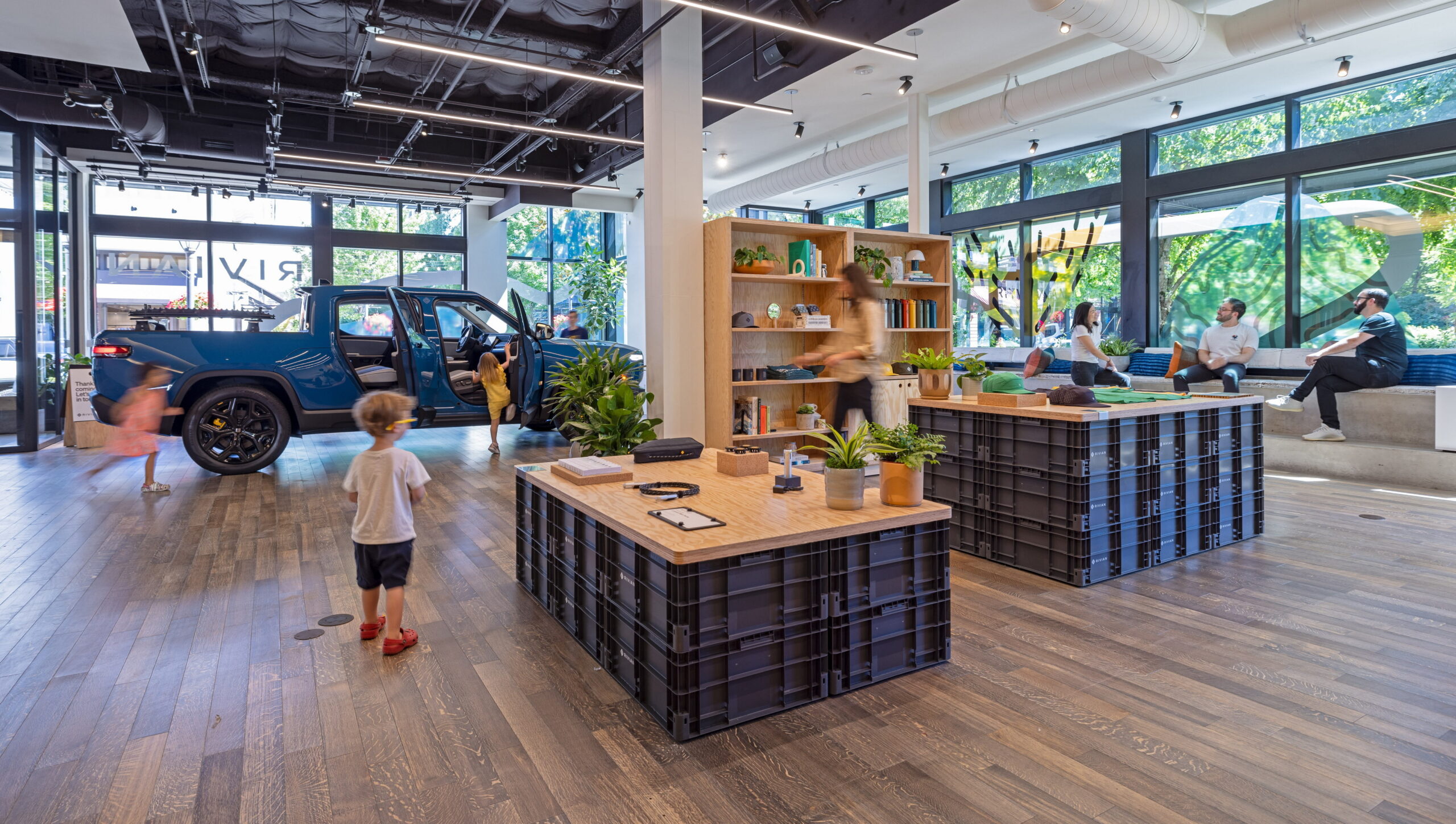
A Narrow Compromise With Dealers
That checklist currently narrows eligibility to just Lucid and Rivian. That’s key because it means this bill isn’t some big sweeping reform.
Remember that dealer network we mentioned at the outset? This bill and its very tight language are the result of a negotiated compromise between the automakers and the Washington State Auto Dealers Association, which historically has opposed efforts to expand direct sales.
If approved by the House and signed into law, Rivian and Lucid buyers would have a much easier time getting a vehicle inside the state. It could also create a framework for other brands to leverage in the future. House lawmakers have already amended it, so it’ll have to go back to the Senate if it passes the House. Should those two things happen, it’ll go to the Governor’s desk.
