












- The Miura debuted in 1966 and changed performance car history.
- The Countach, F1, Veyron and others pushed boundaries further.
- The NSX also deserves credit for reshaping supercar expectations.
You can carbon-date the Lamborghini brand to 1963, but Lamborghini as we know it was born 60 years ago this week. In March 1966, the upstart Ferrari rival pulled the covers off the finished Miura at the Geneva Motor Show, four months after teasing a naked, V12-filled Swiss-cheese chassis in Turin. That means the Miura just hit the big six-oh – and the supercar did, too.
More: Man Hid A Rare Lamborghini Miura Inside His Apartment For 40 Years
There’s plenty of gray area here with regards to the ‘first’ supercar, we know. It’s not like there weren’t already fast cars before the Miura came along. Ferrari’s front-engined 275 GTB of the time could top 155 mph (250 km/h), and Lamborghini itself had been knocking out rapid, but fairly ugly GTs with V12s in the nose since the early 1960s.



Photos Lamborghini
There were a few mid-engined sports cars, too, pre-Miura, including the Porsche 550 and 718, and the ATS 2500 GT. The ATS, crucially, like the Lambo, was conceived as a road car, not adapted from a racer. That wasn’t the case for the Porsche, or Ford’s GT40 MKIII, the road version of the Le Mans winner.
Left Ferrari Playing Catch-Up
But the Miura had it all, took the most outrageous aspects of every other performance car and packaged them together in one incredible wrapper. It had a crazily beautiful body by Marcello Gandini with racecar proportions, but a fully-trimmed, leather-lined and carpeted interior.
A quad-cam V12 that claimed 345 hp (350 PS) at a time when Ferrari’s 275 made do with a single cam per bank and 297 hp (300 PS). And a 170 mph (274 km/h) top speed that no other production street car could match.


Photos RM Sotheby’s/Alex Penfold
Leonard Setright at Britain’s Car Magazine supposedly coined the term ‘supercar’ after driving the Miura for the first time and being blown away by the giant leap forward it represented, though the word took a while to go mainstream as a catchall term for two-seat exotics.
The original, but was it the best?
Whether or not the Miura really was the first supercar, it’s widely accepted as being so today. But was it the most significant? You might argue that the Miura’s successor, the Countach, with its wedgy design and scissor doors, really laid down the template for the class.


Photos RM Sotheby’s/Alex Penfold
And it’s easy to make a case for the McLaren F1 as being the most important because its performance and use of materials was in another world compared with the Ferraris and Lamborghinis of the time. Yes, in modern parlance, it’s a hypercar, though that word wasn’t in wide use until long after the F1 had gone out of production. And anyway, what’s a hypercar anyway if not a super-supercar?
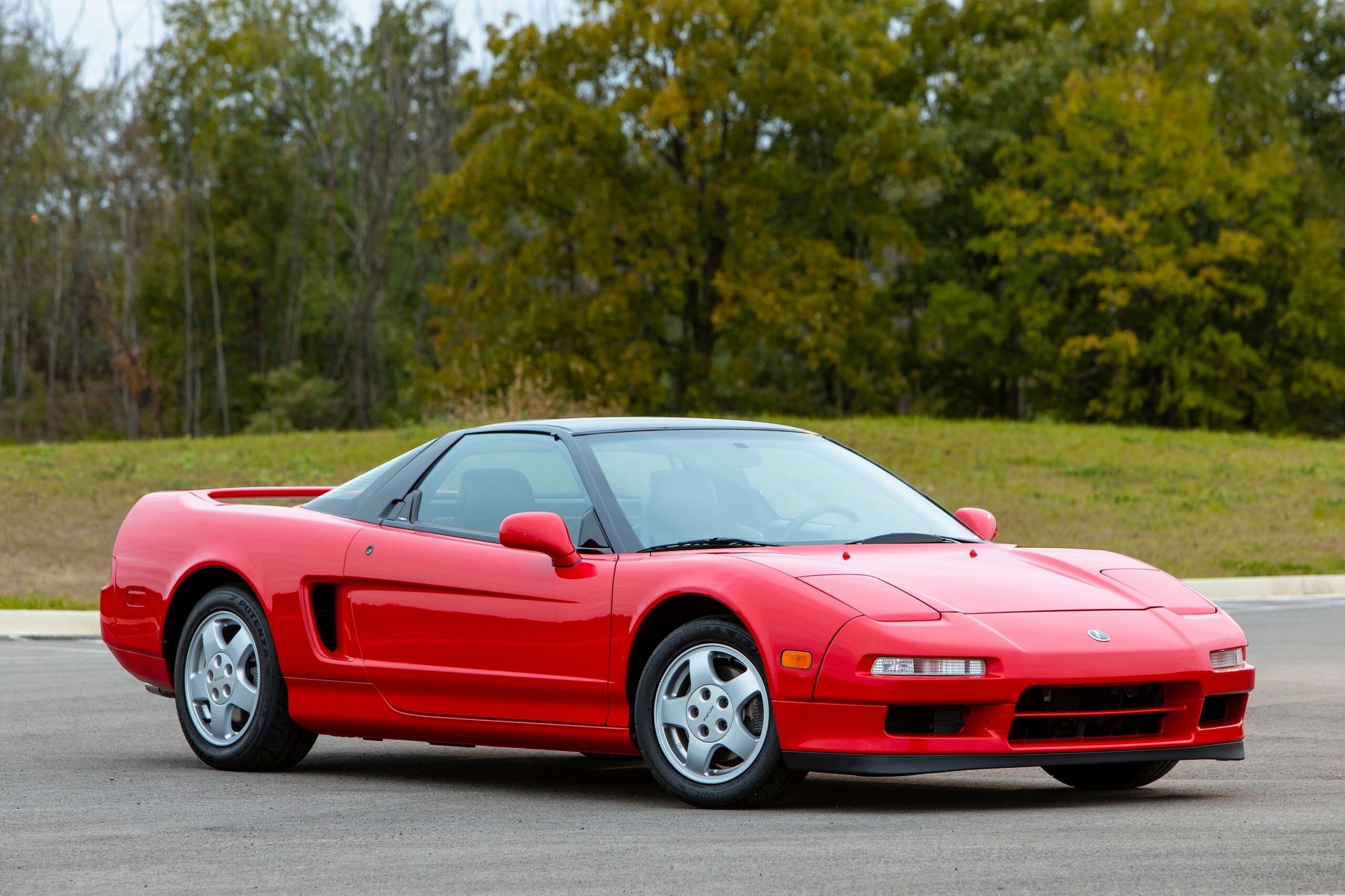
Or maybe you reckon Honda/Acura NSX’s represents the segment’s biggest leap because it inspired Gordon Murray’s work on the F1 by showing that supercars could be usable and reliable.
So here’s the question. Sixty years on, which one stands tallest? Which one is really made the biggest difference and matters most? Which is the greatest supercar, hypercars included? Drop a comment below and let us know.


