


- Pre-sales of the VW ID. Polo EV kick off this week starting at €24,995.
- Three power outputs and two batteries offer up to 283 miles of range.
- Interior features retro-style digital display and pneumatic seat massagers.
Over 20 million Polos have found homes since the nameplate launched more than 50 years ago. Now Volkswagen’s rebooting the whole thing as the ID. Polo, a fully electric seventh-generation hatch built on the new MEB+ EV platform with front-wheel drive, up to 283 miles (455 km) of range and a starting price that keeps it firmly in affordable territory.
More: VW’s 2026 ID. Buzz Adds 335 HP And Real Buttons, America Gets Neither
Pre-sales are already live in Germany, where the entry-level Trend trim kicks off at €24,995 ($29,300). That’s the headline number Volkswagen‘s been keen to shout about, though if you want one right now, the only available order is the mid-spec Life trim, which starts at €33,795 ($39,600). More variants follow in the summer.


There are three power outputs at launch. The 114 hp (116 PS / 85 kW) and 133 hp (135 PS / 99 kW) versions come with a 37 kWh lithium iron phosphate battery offering up to 204 miles (329 km) of range and DC fast charging at up to 90 kW, with a 10-to-80 charge taking around 27 minutes.
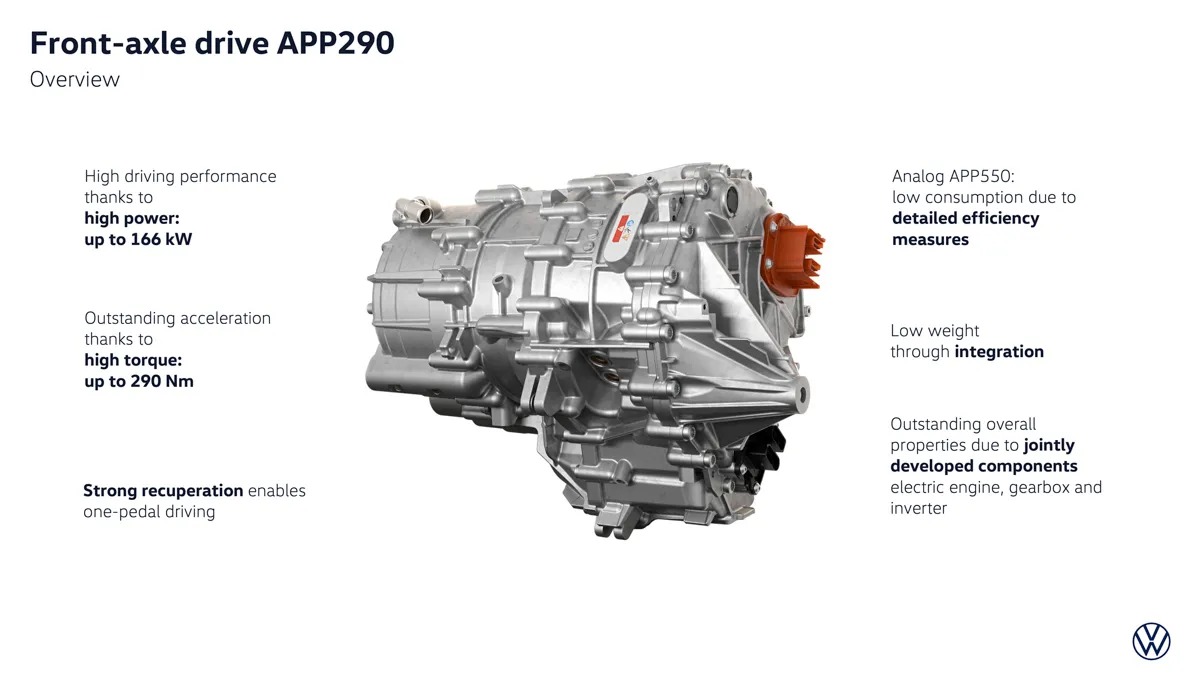
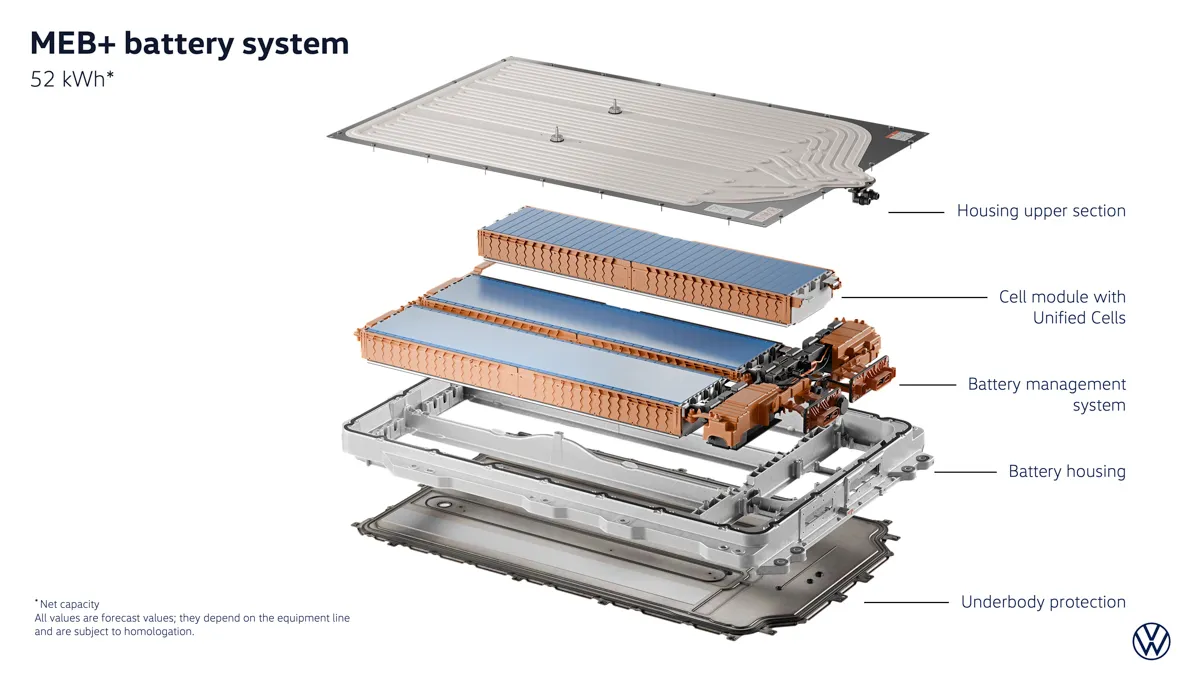
The 208 hp (211 PS / 155 kW) variant steps up to a 52 kWh nickel-manganese-cobalt pack, pushing range to a provisional 283 miles (455 km) and accepting up to 105 kW DC charging, shaving that charge window down to roughly 24 minutes. A GTI variant with 223 hp (226 PS / 166 kW) is coming in 2027.
New Front-Wheel Drive Platform
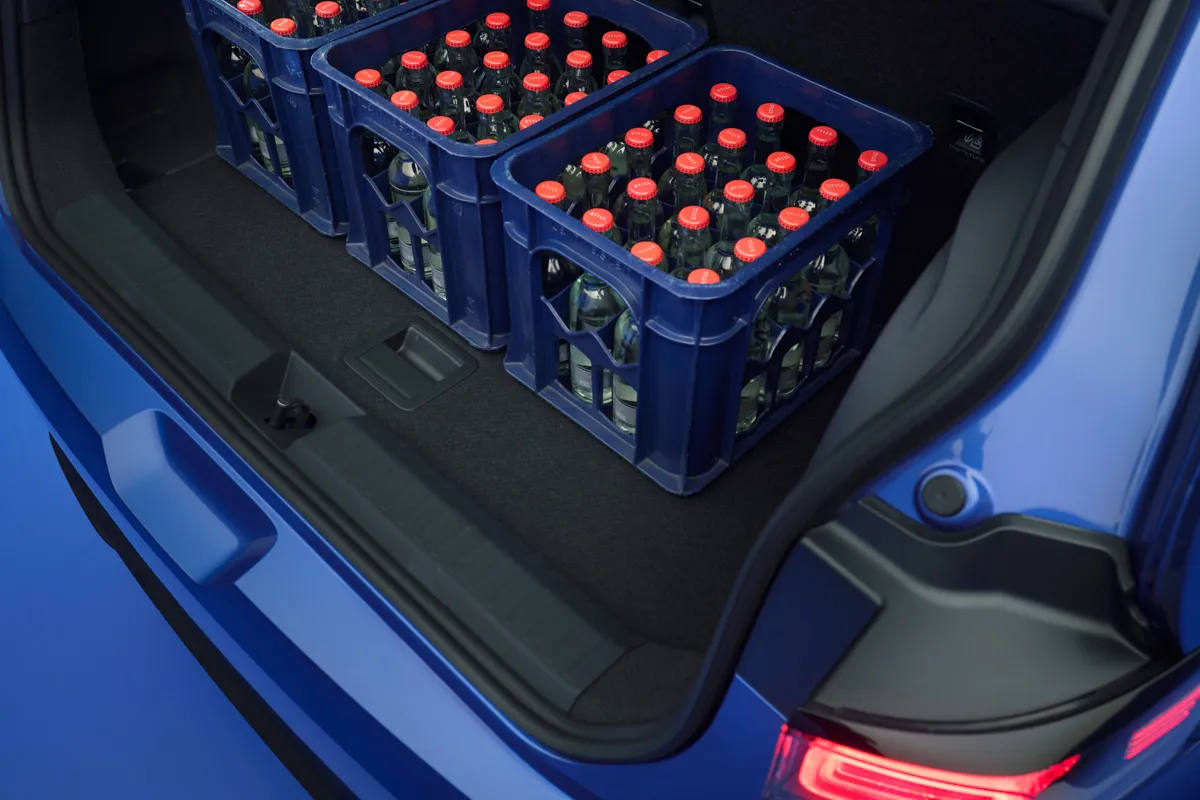
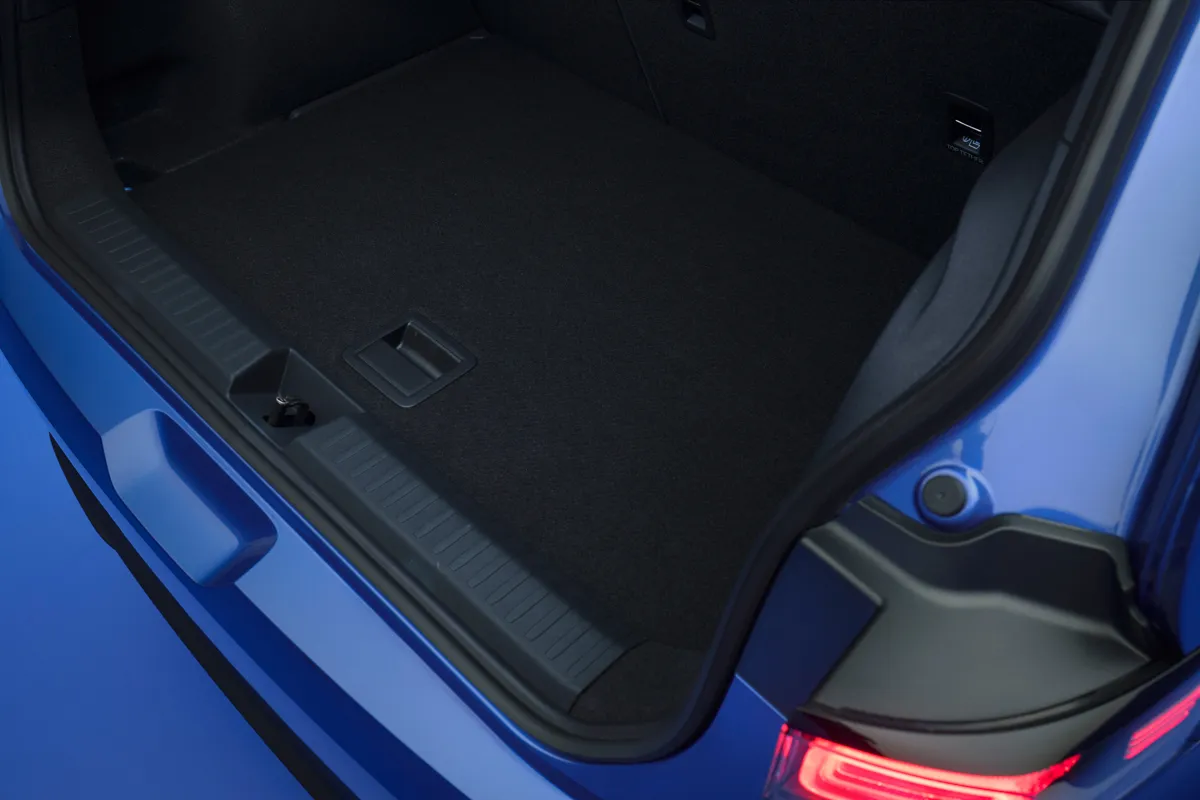
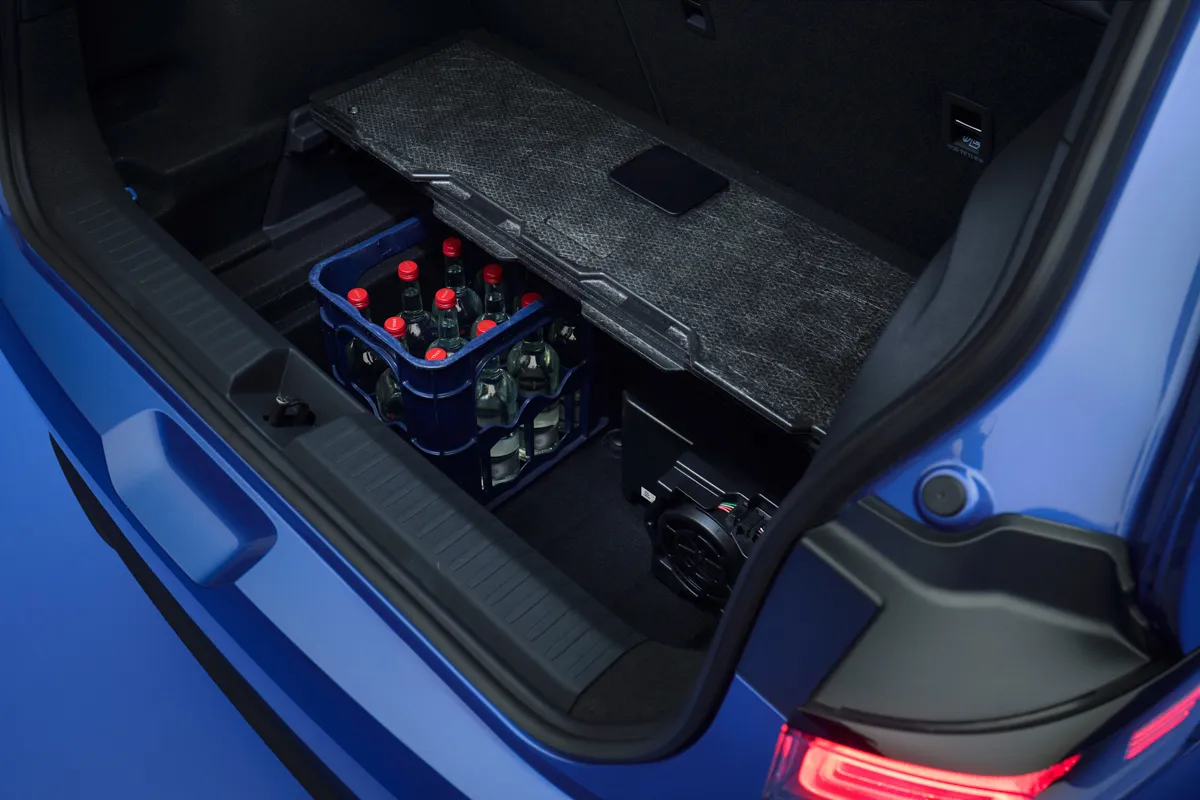
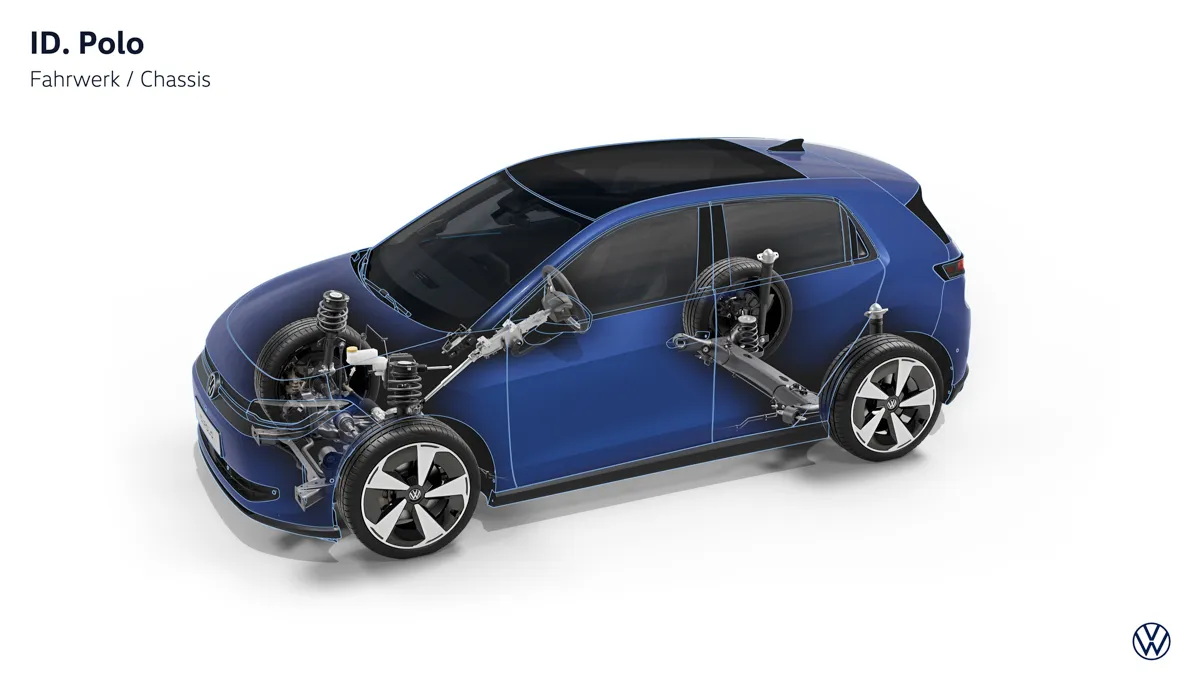
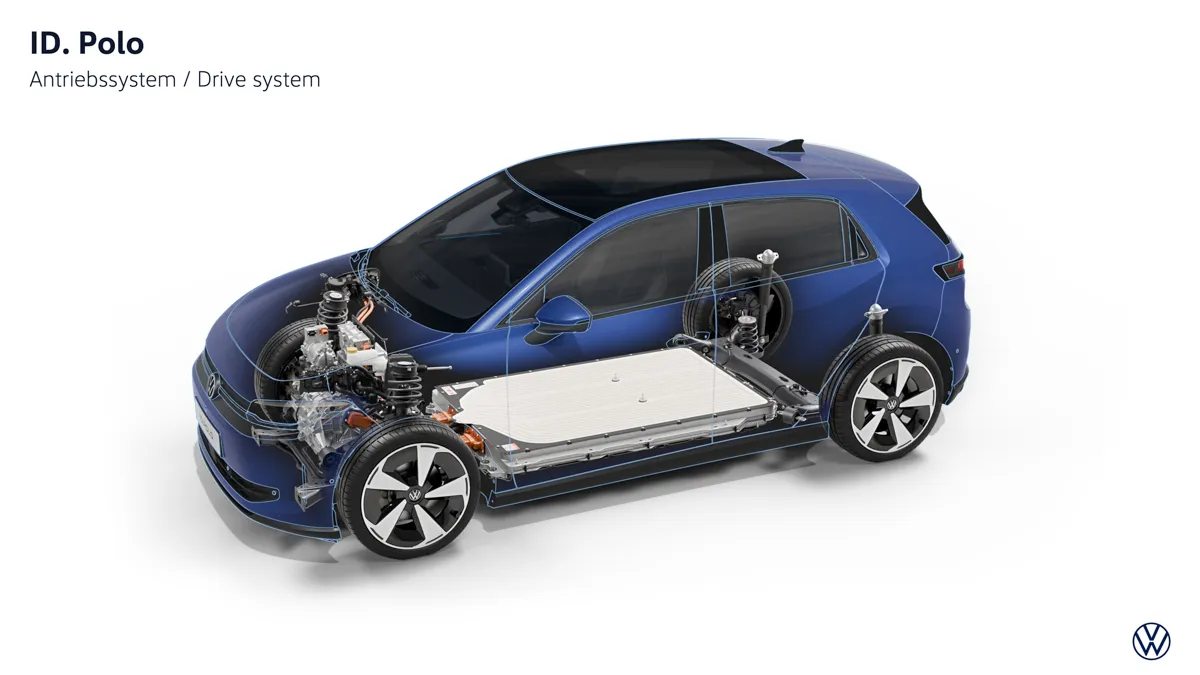
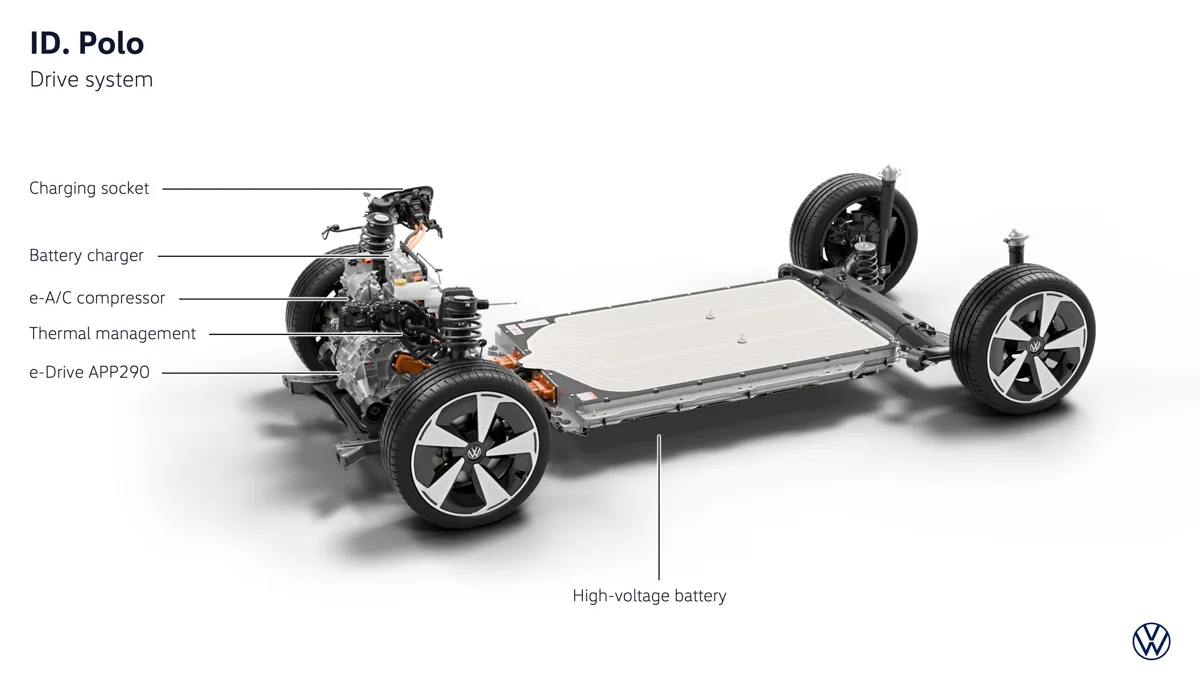
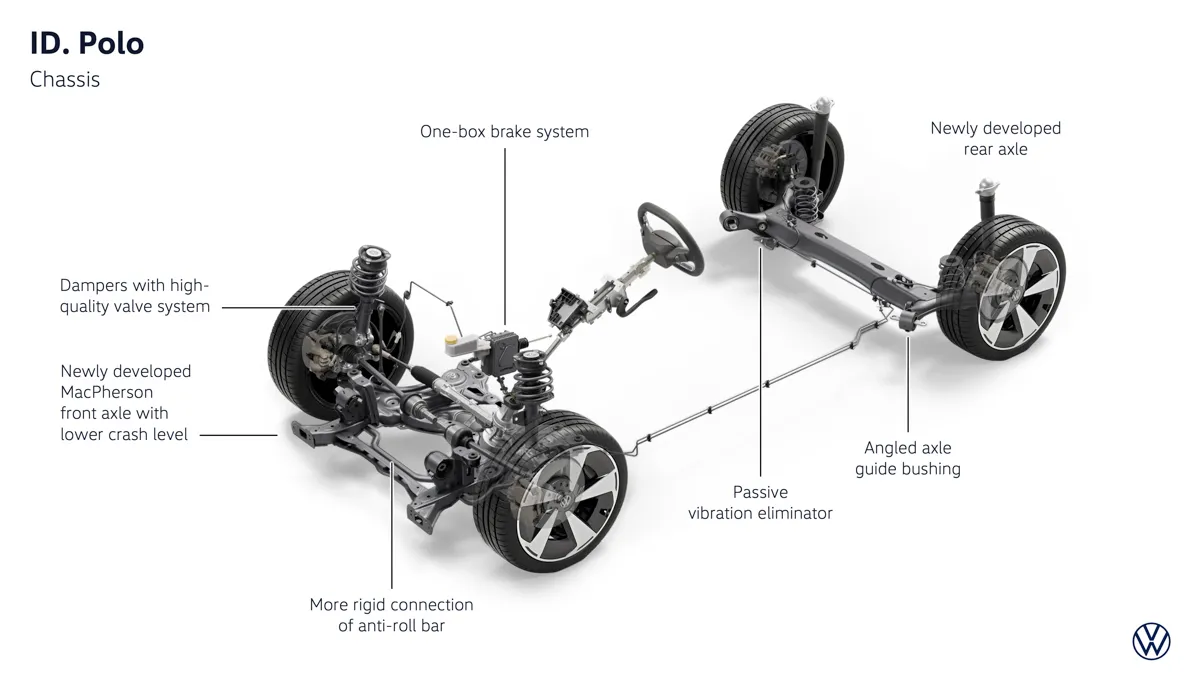
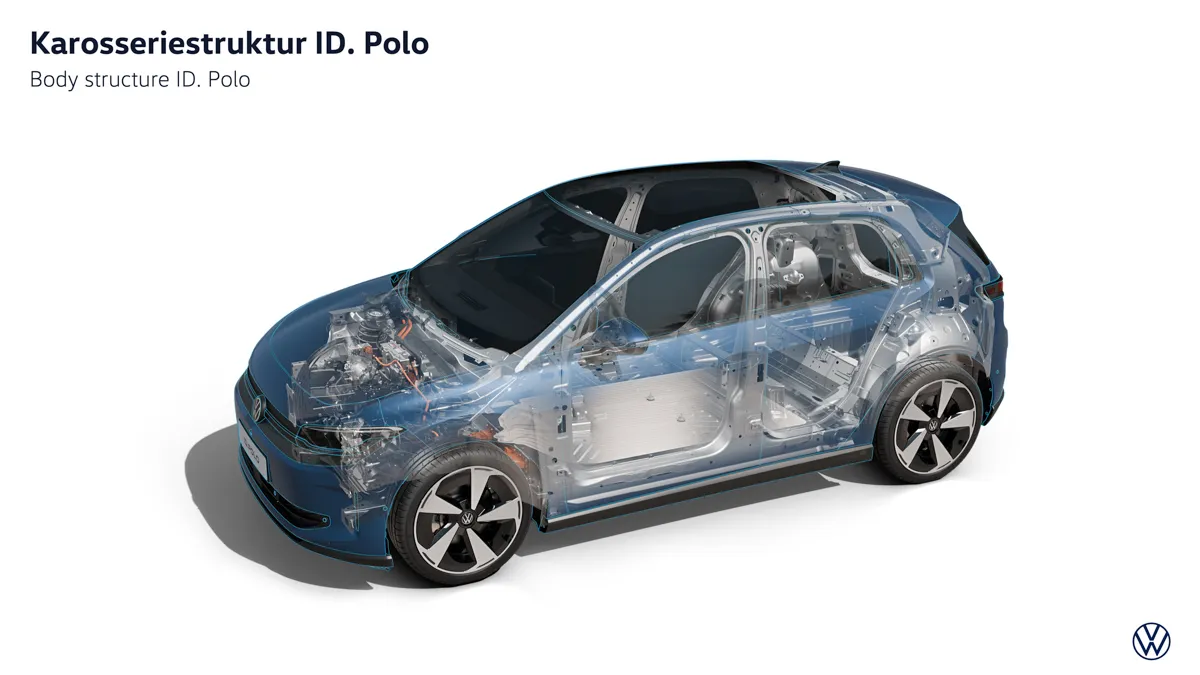
The switch to the front-wheel drive MEB+ platform pays dividends in terms of space because unlike the bigger ID.3 Neo, there’s no motor stashed under the cargo bay floor. Luggage volume jumps 25 percent over the combustion Polo, from 351 to 441 liters, and with the rear seats folded you’re looking at 1,243 liters. The interior also gains 19 mm of extra space that passengers will actually notice, particularly those in the back.
VW’s tape measure says the Polo comes in at 4,053 mm (159.6 inches) long, 1,816 mm (71.5 inches) wide and 1,530 mm tall on a 2,600 mm (102.4 inches) wheelbase. That makes 131 mm (5.2 inches) shorter and 42 mm (1.7 inches) narrower than its most obvious rival, the Renault 5 E-Tech, but as good as identical in size to the Cupra Raval, which like the Skoda Epiq, shares the Polo’s platform and running gear.
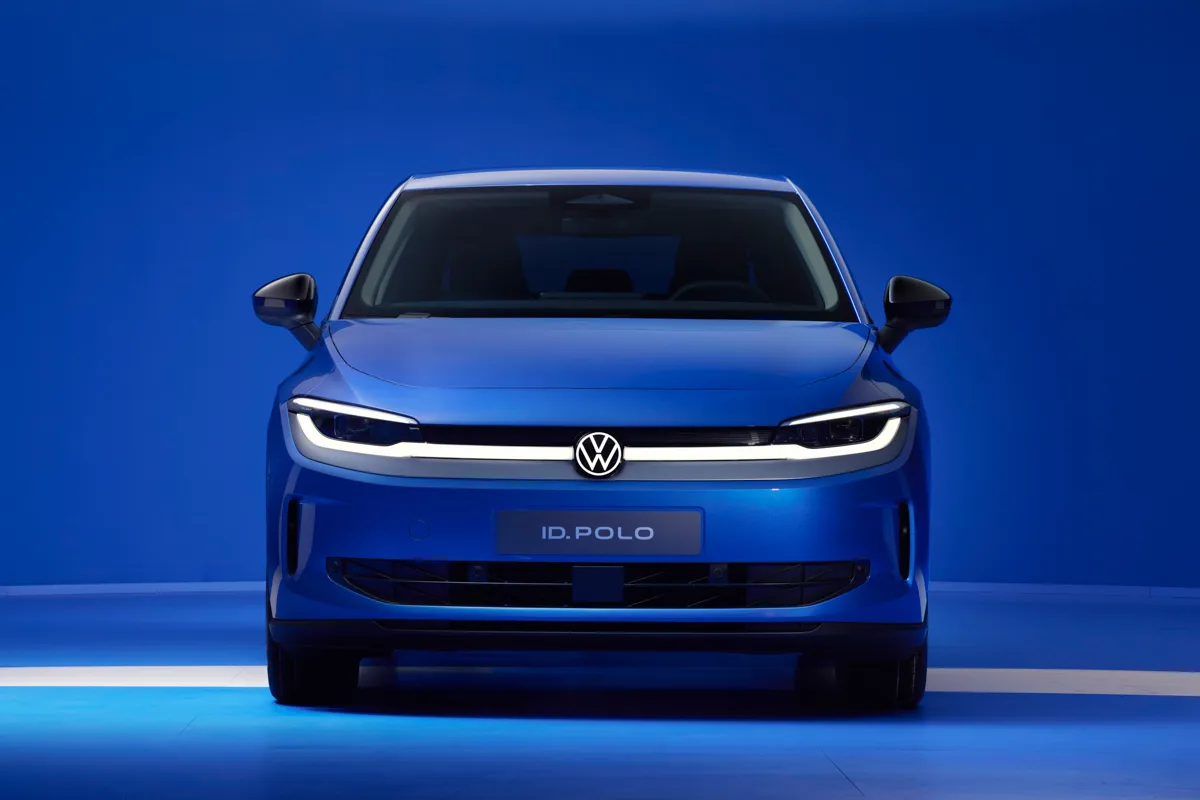
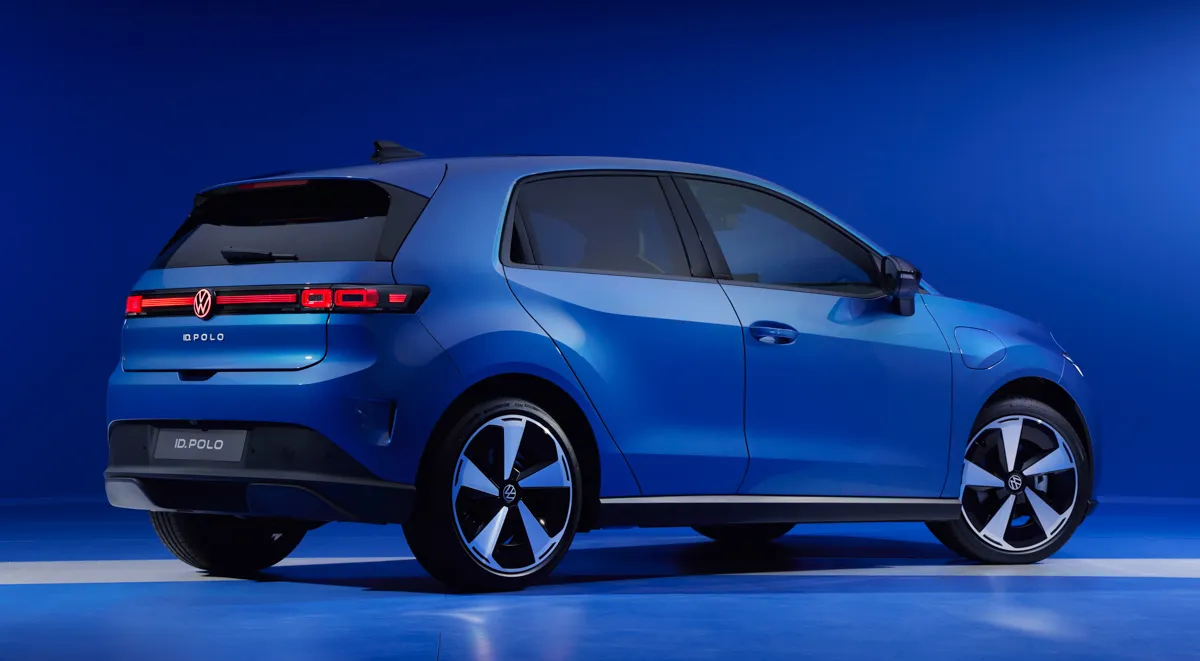
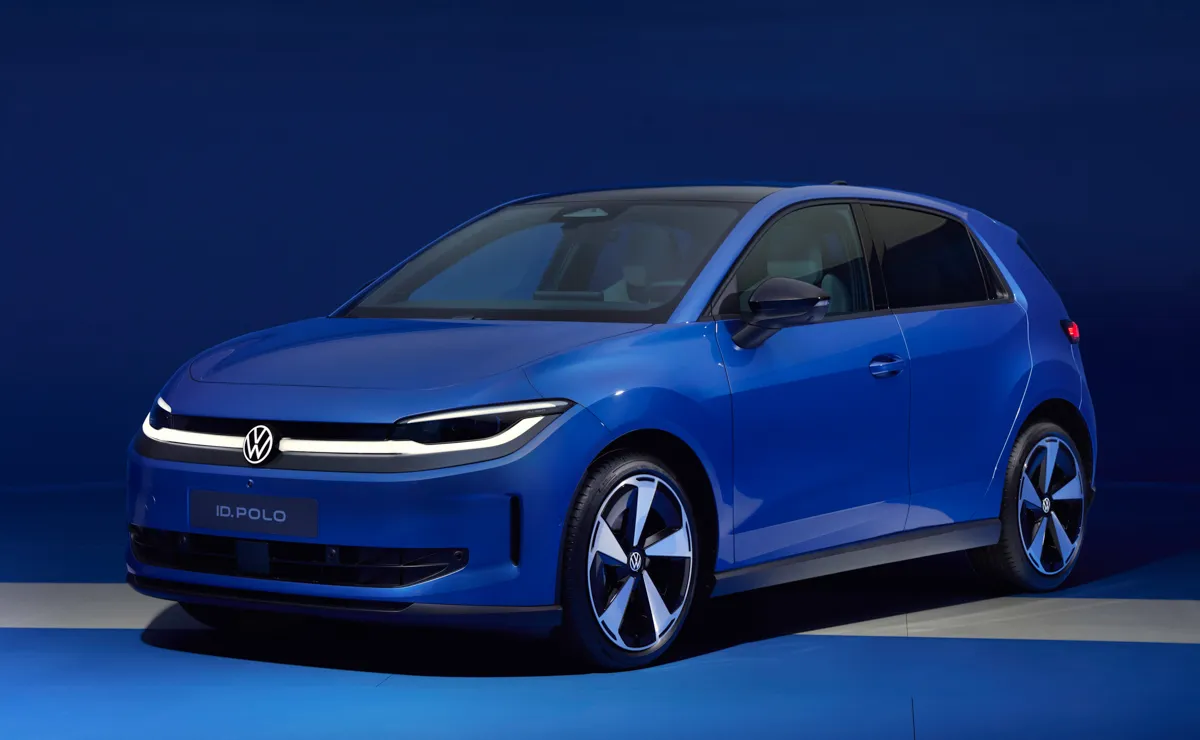
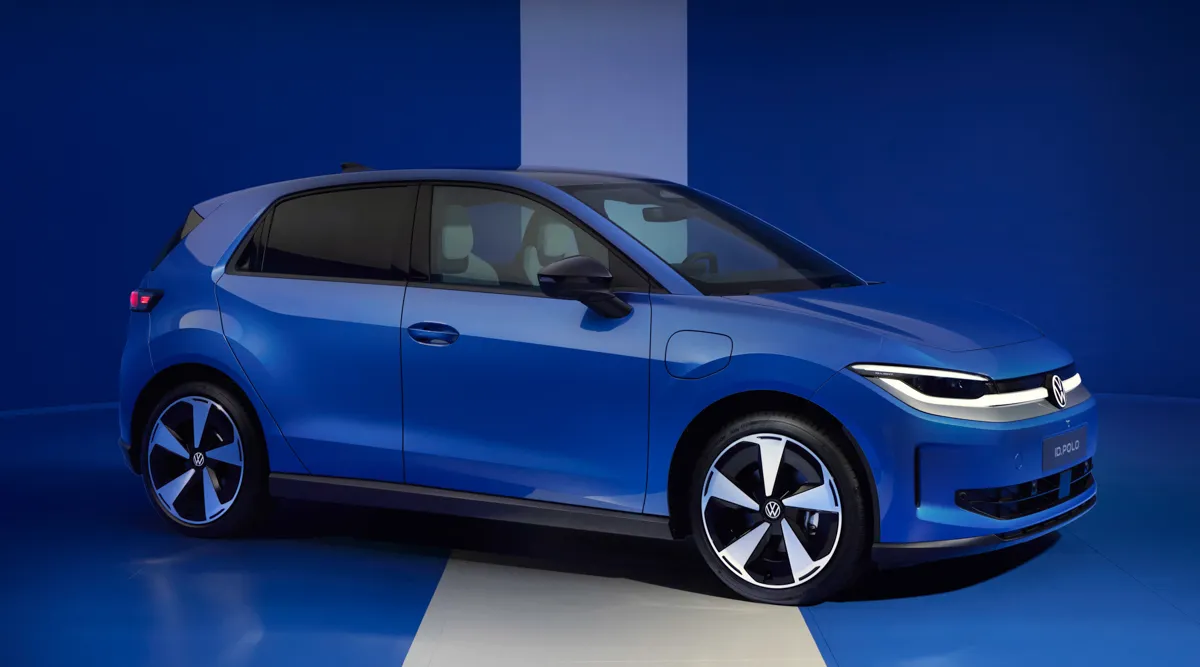
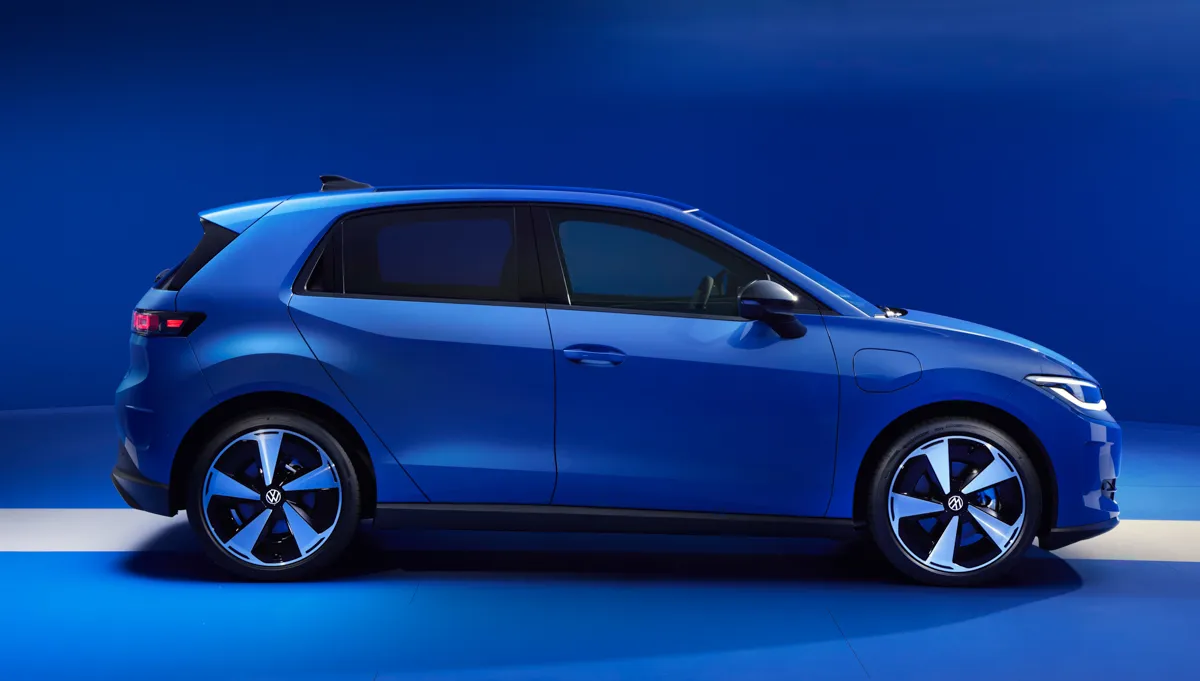
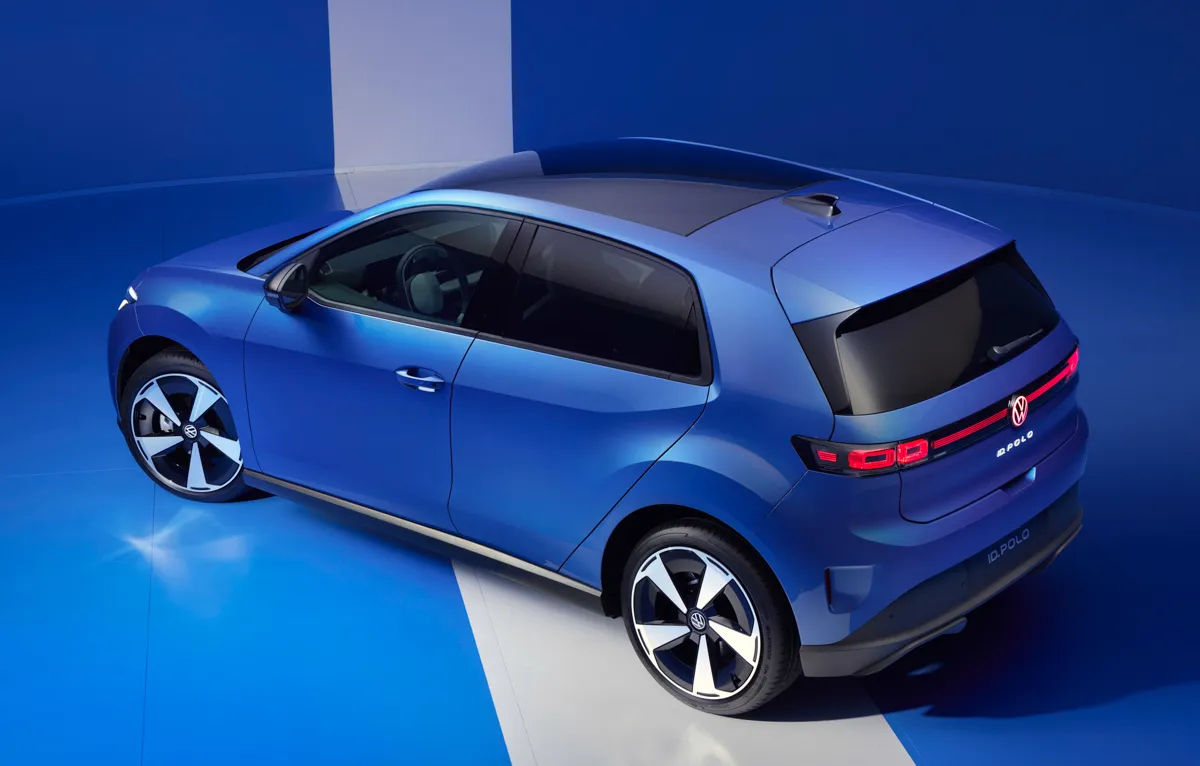
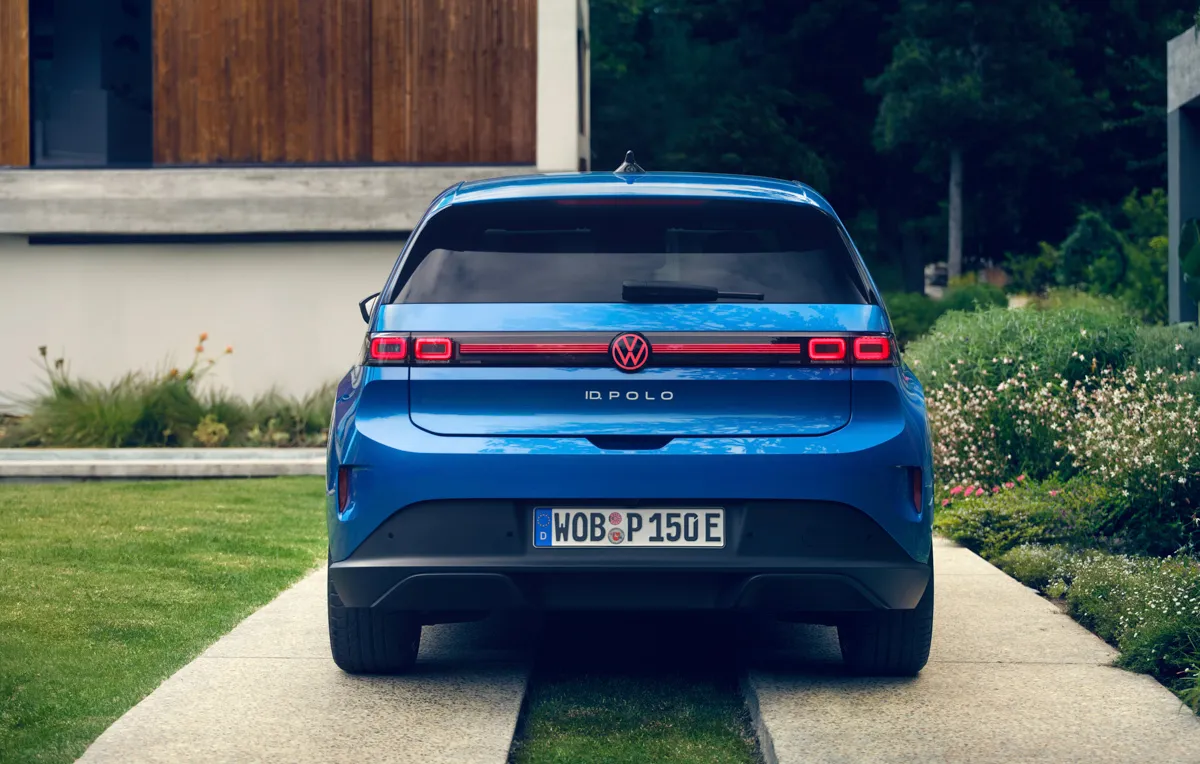
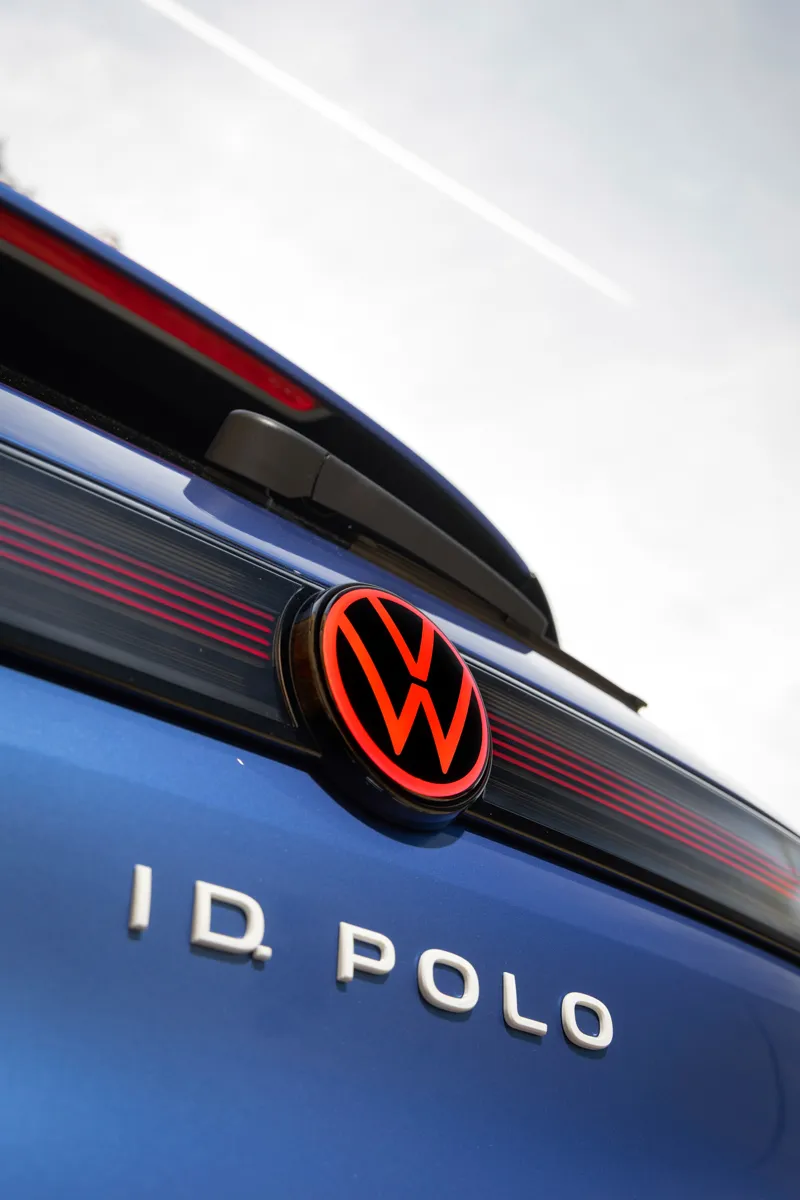
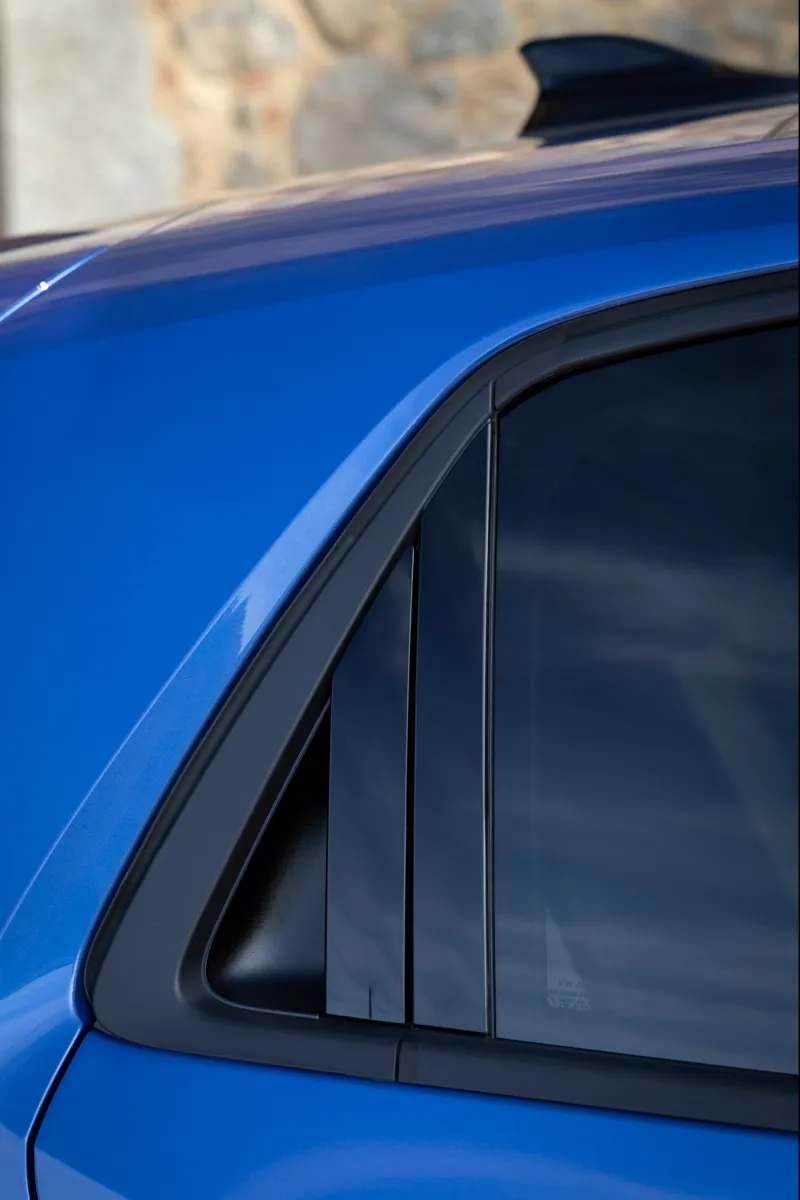
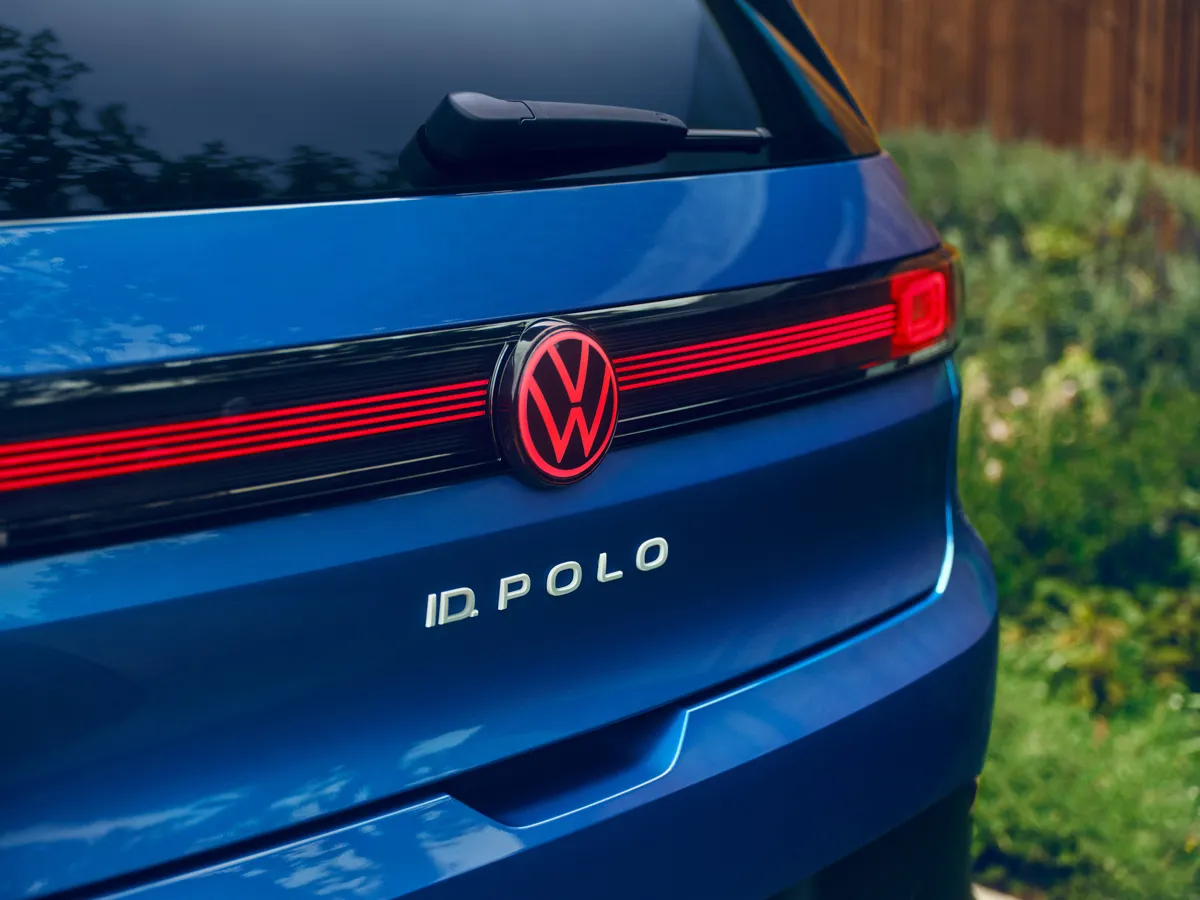
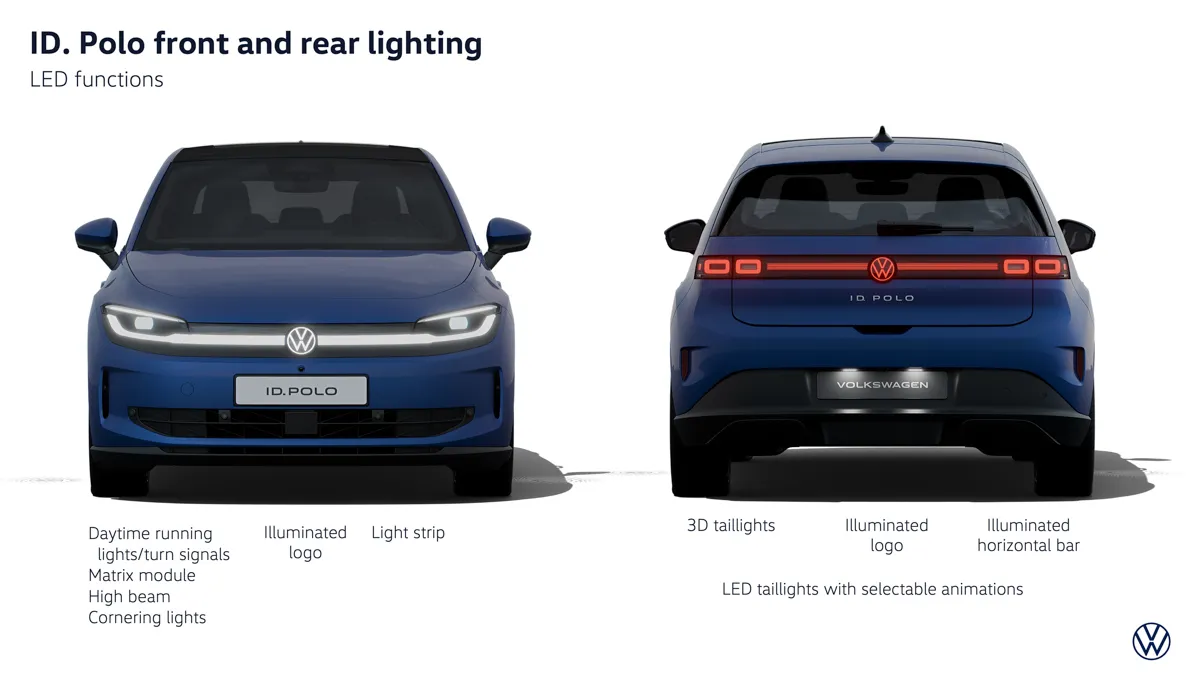
On the outside the handsomely chiselled ID. Polo looks almost identical to the 2023 ID.2all concept, right down to its fat five-spoke wheels and blue paint. The rear door handles are hidden near the C-pillar to clean up the lines, and a wide transverse light bar at the tail is crowned with an illuminated red VW roundel to finish what the white lit logo at the front started.
Retro-Digital Interior
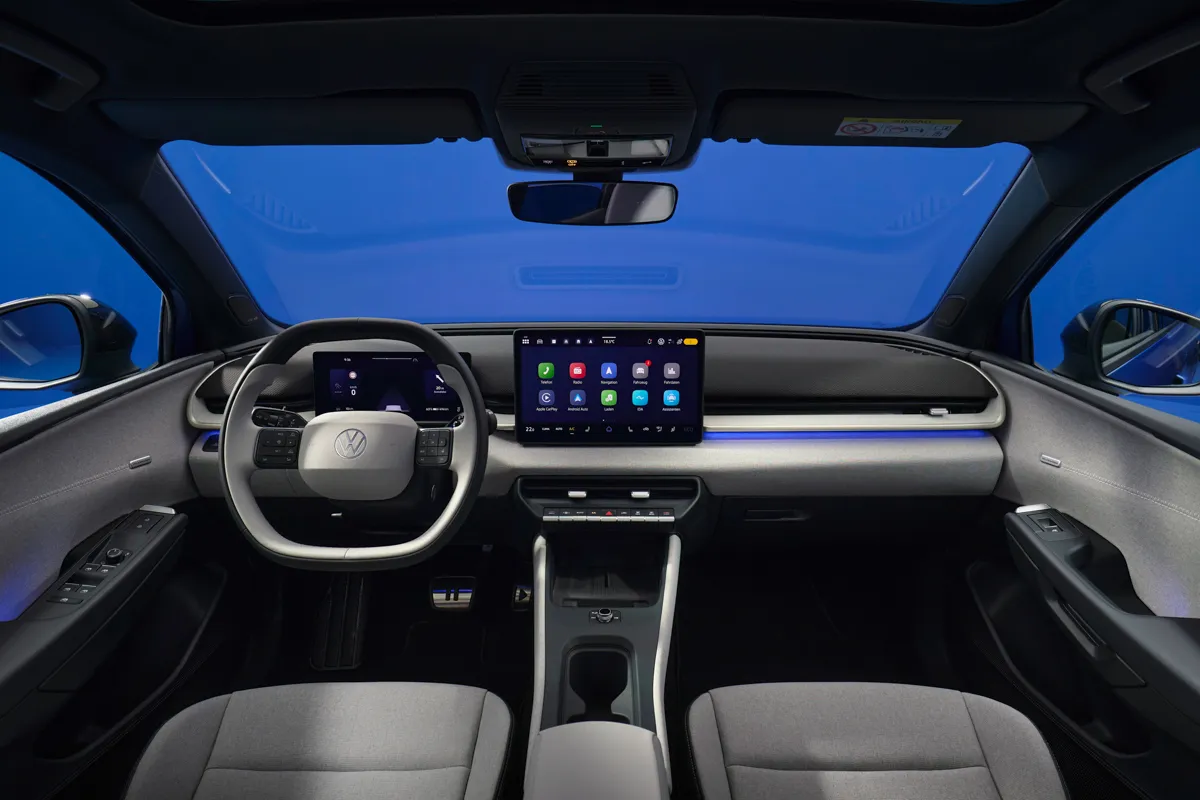
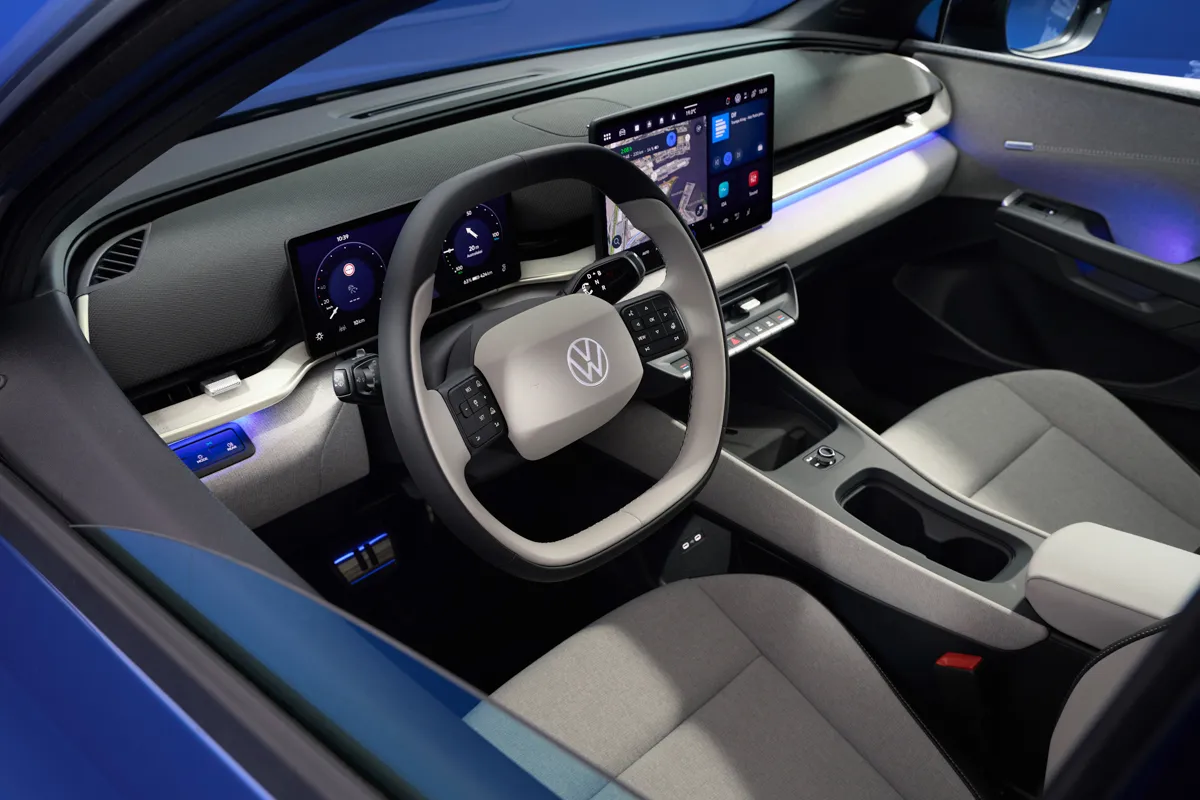
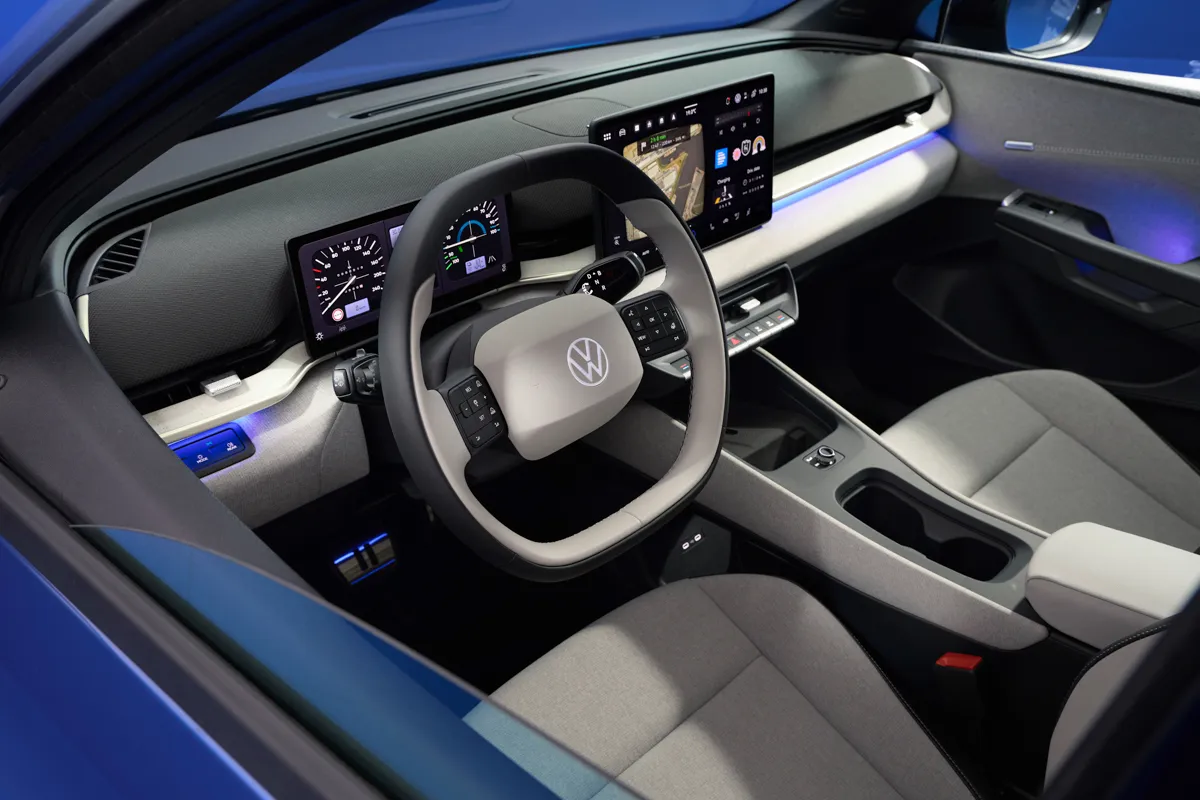
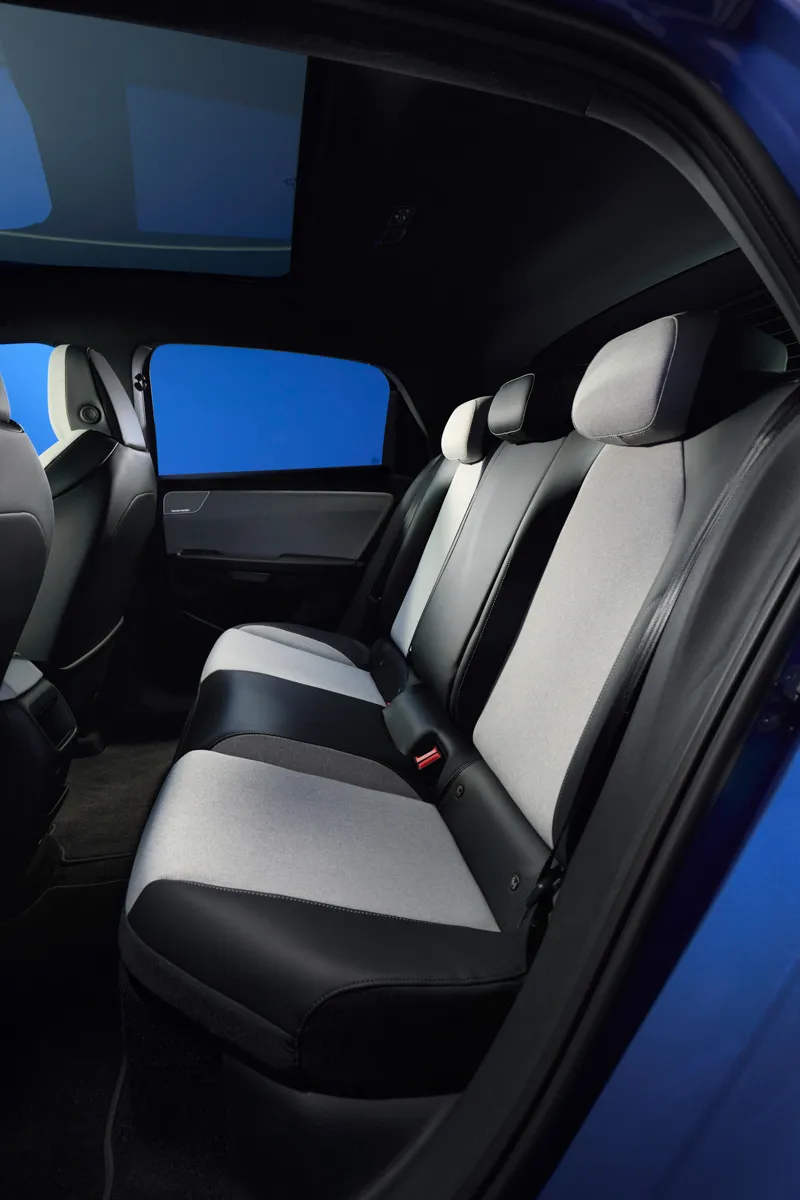
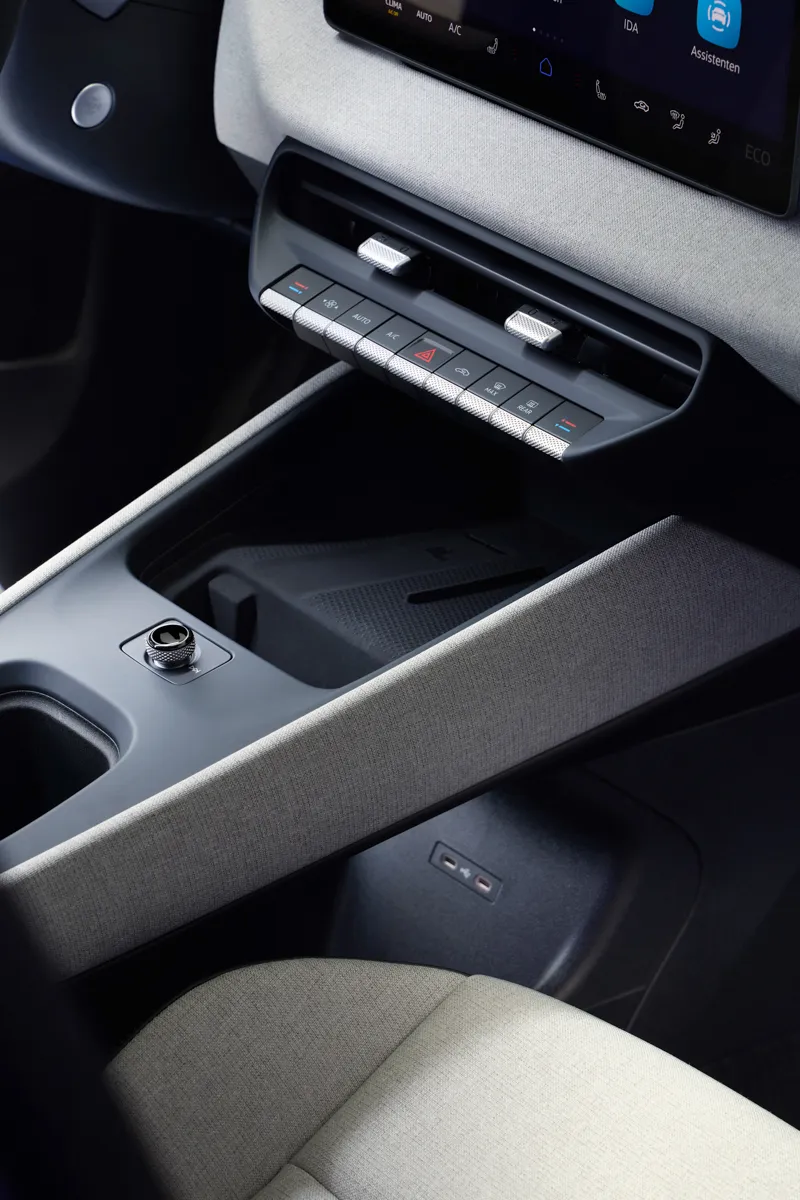
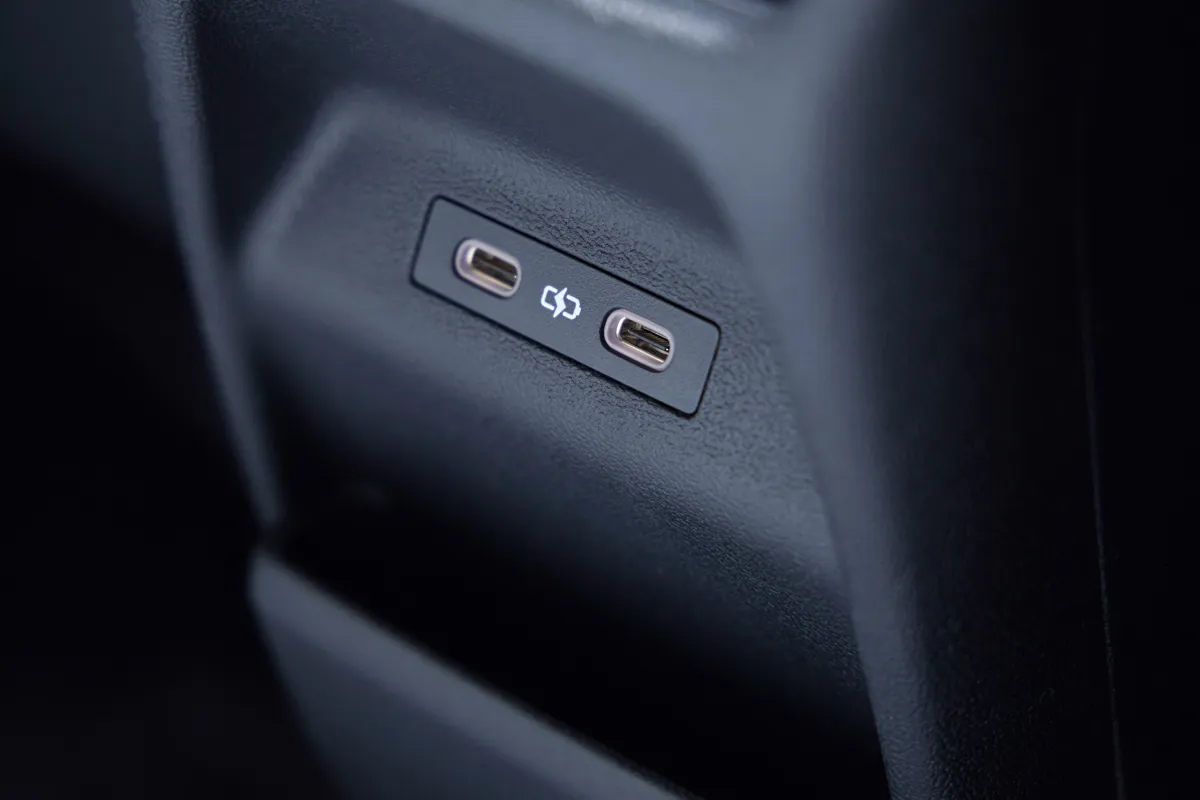
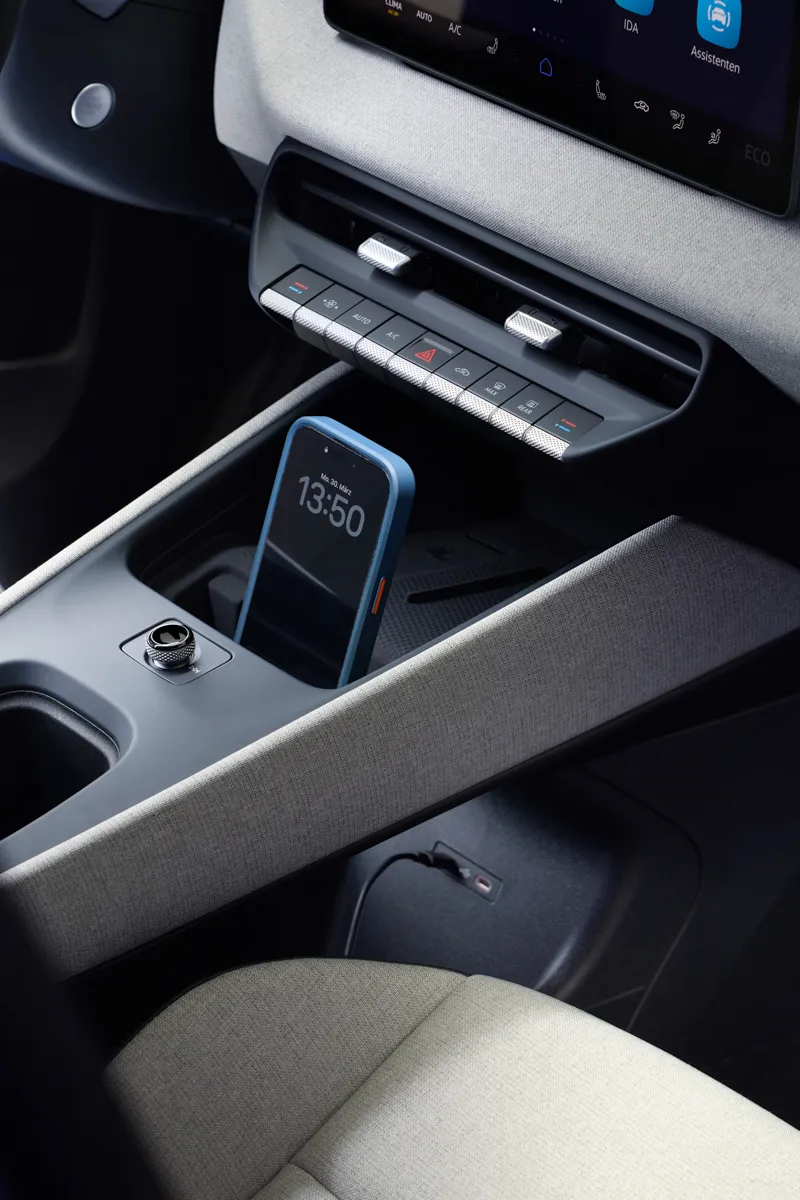
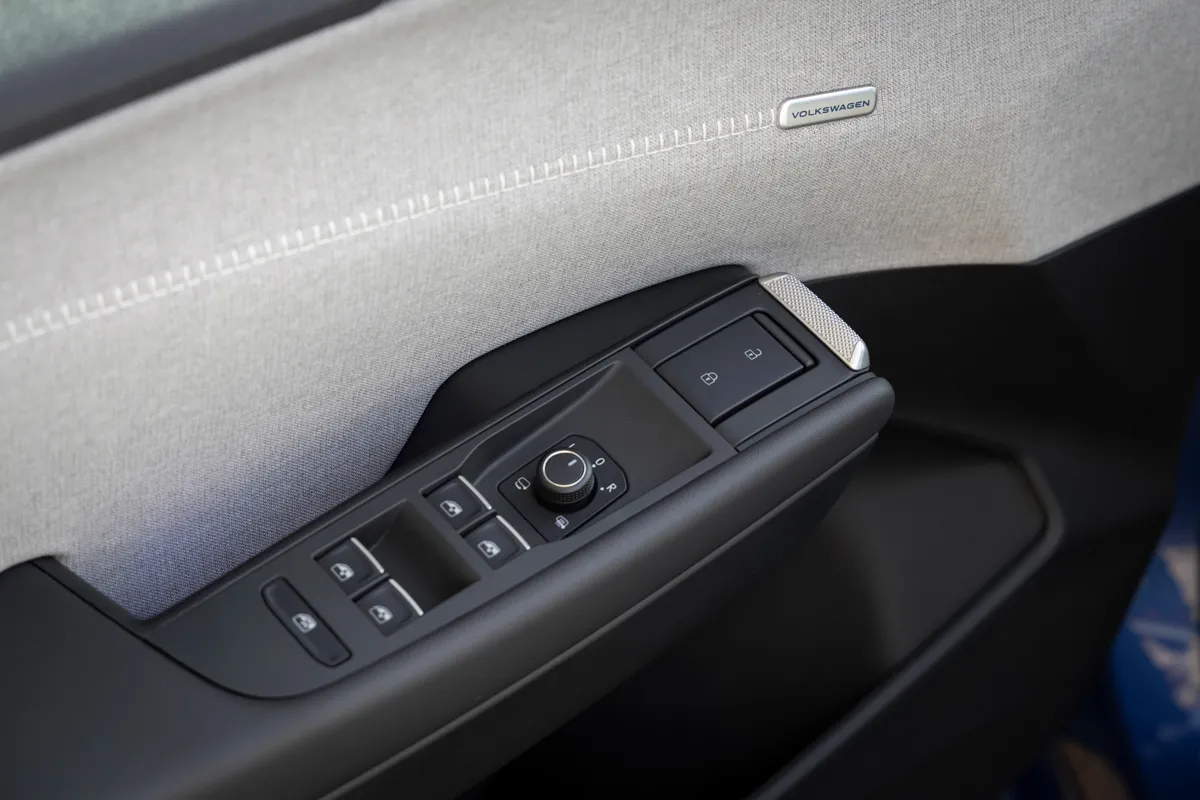
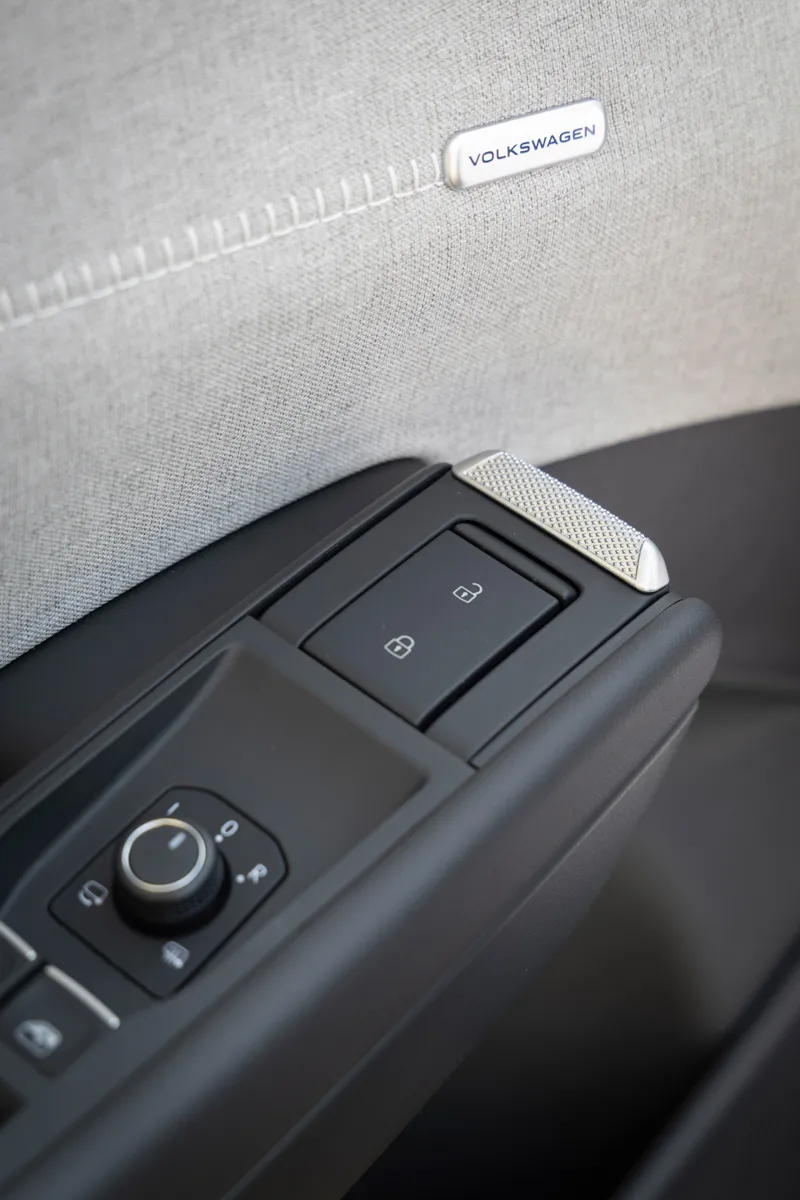
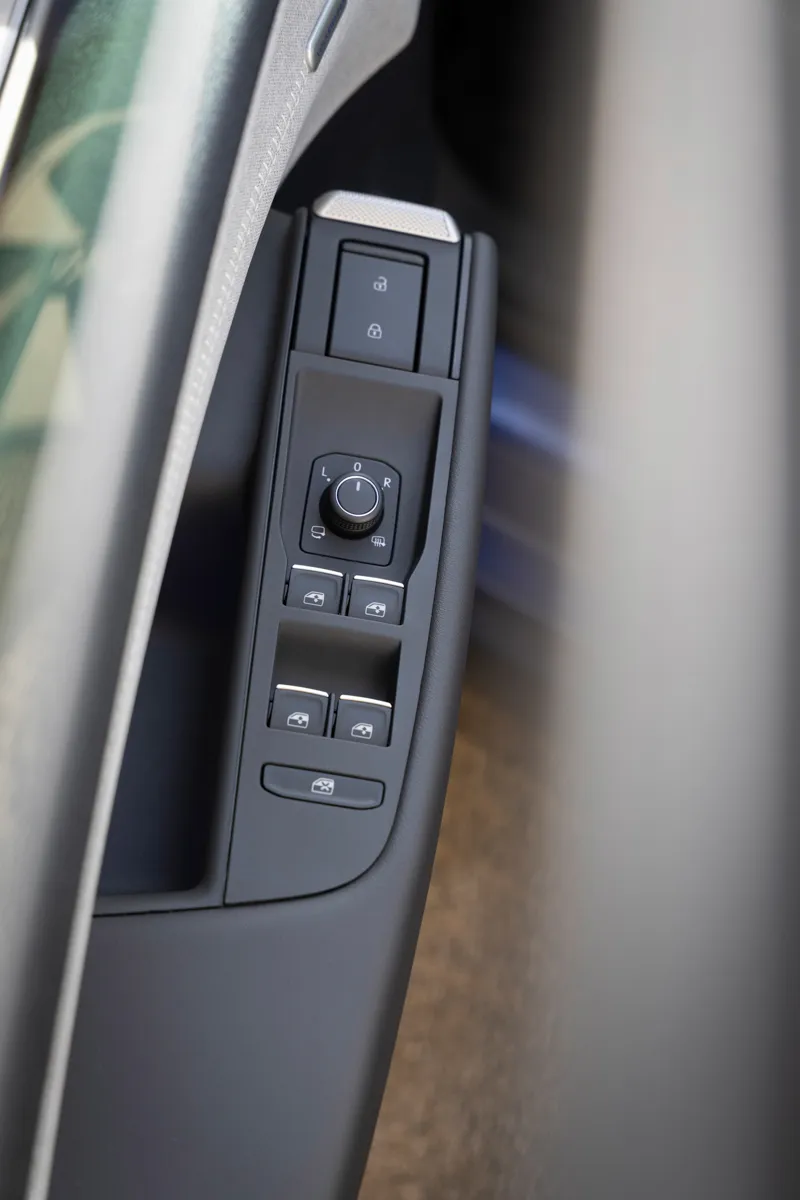
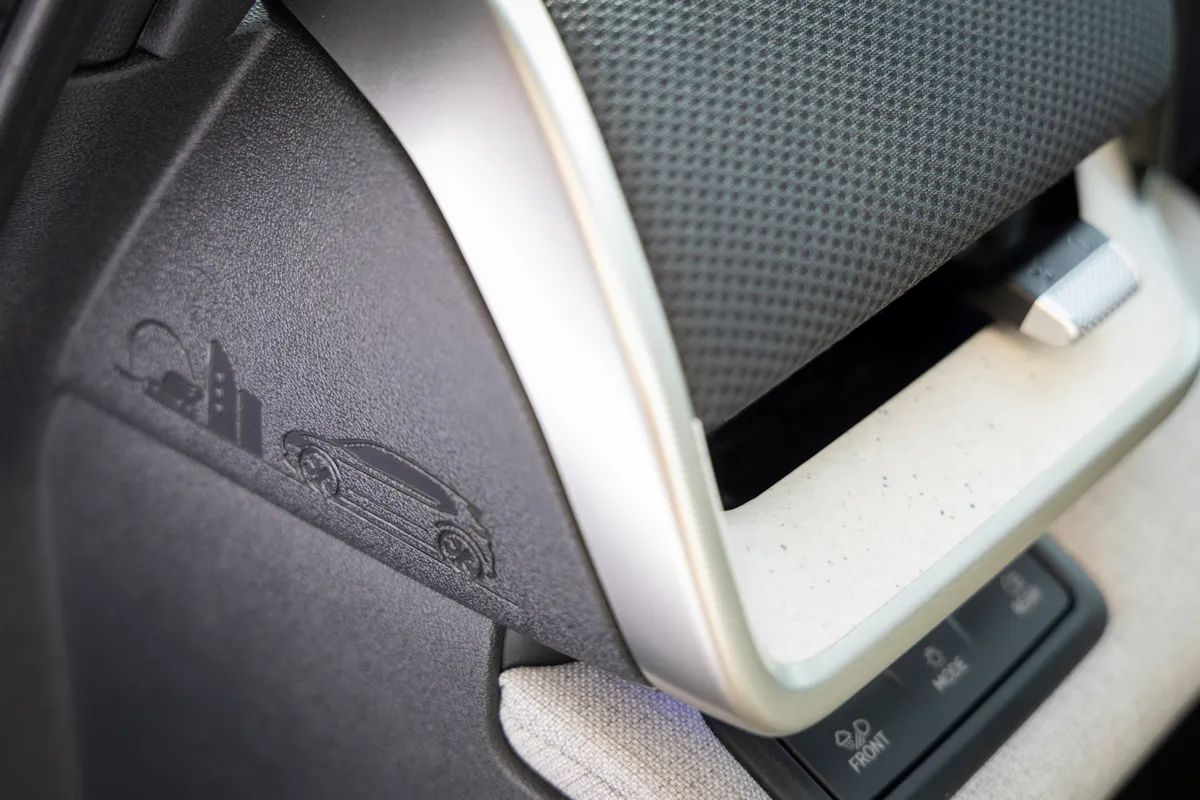
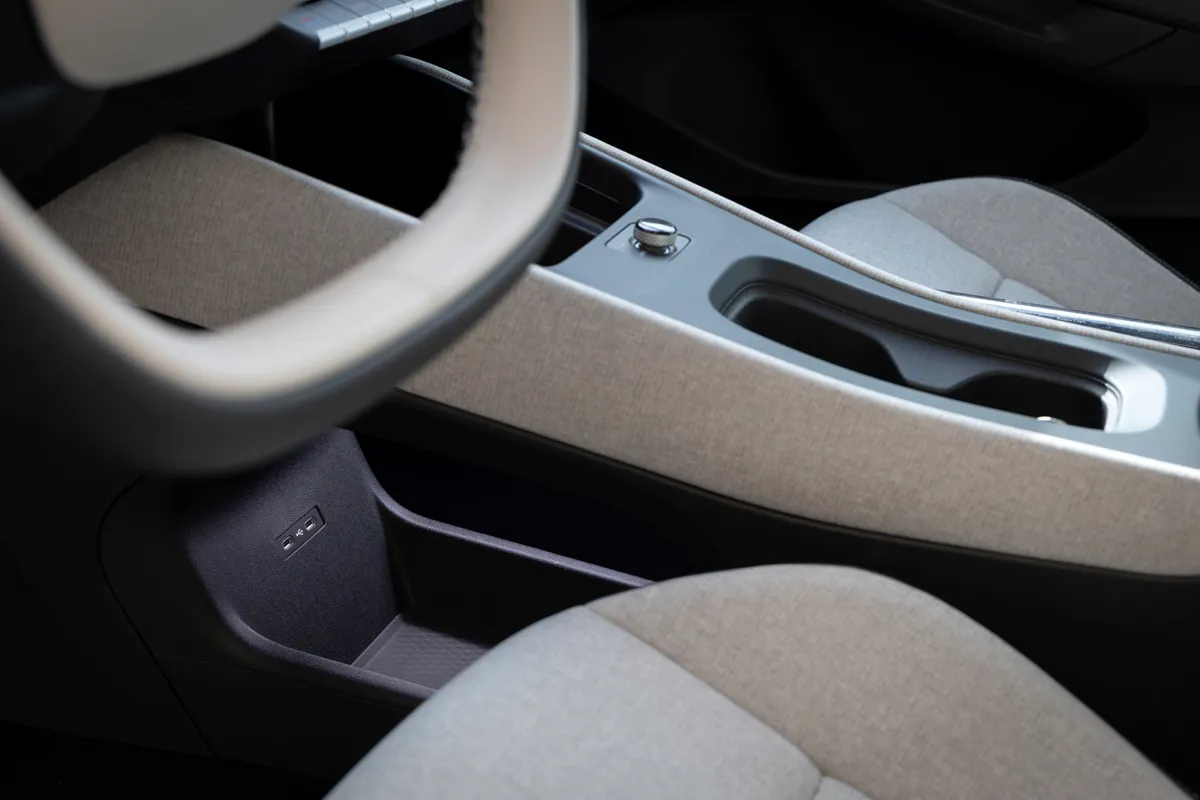
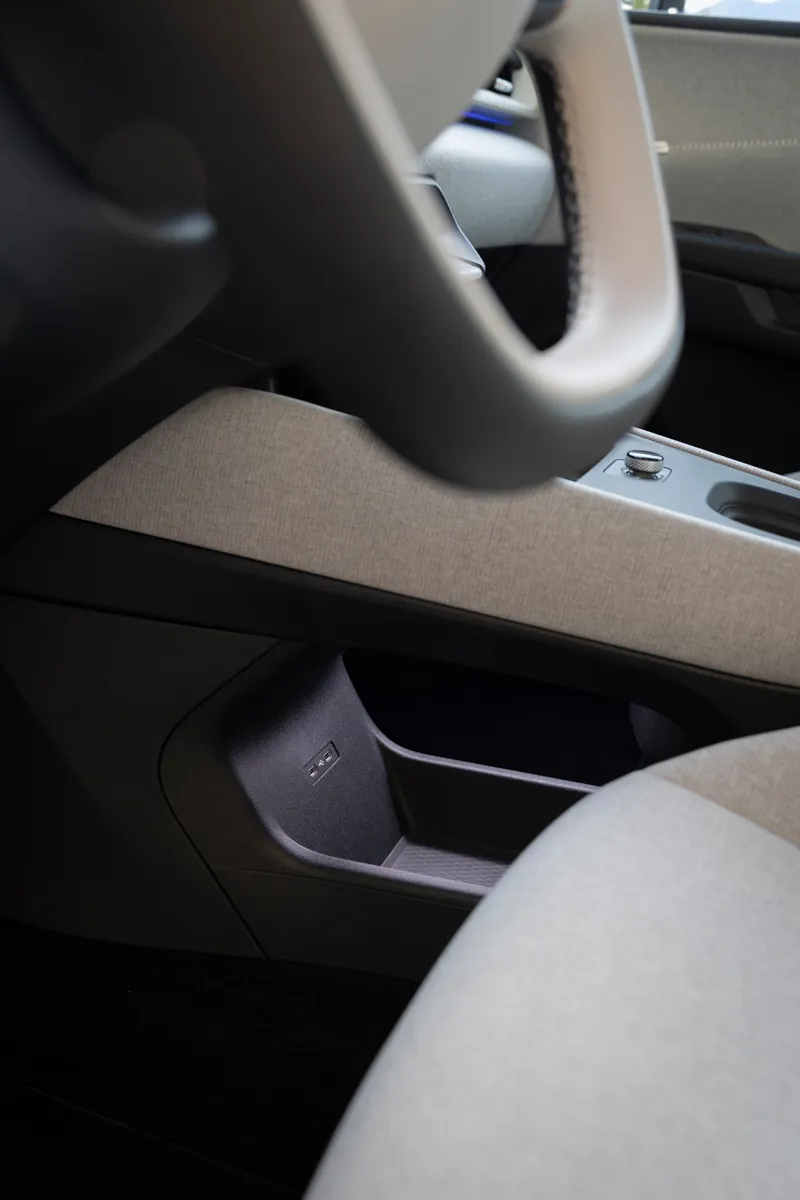
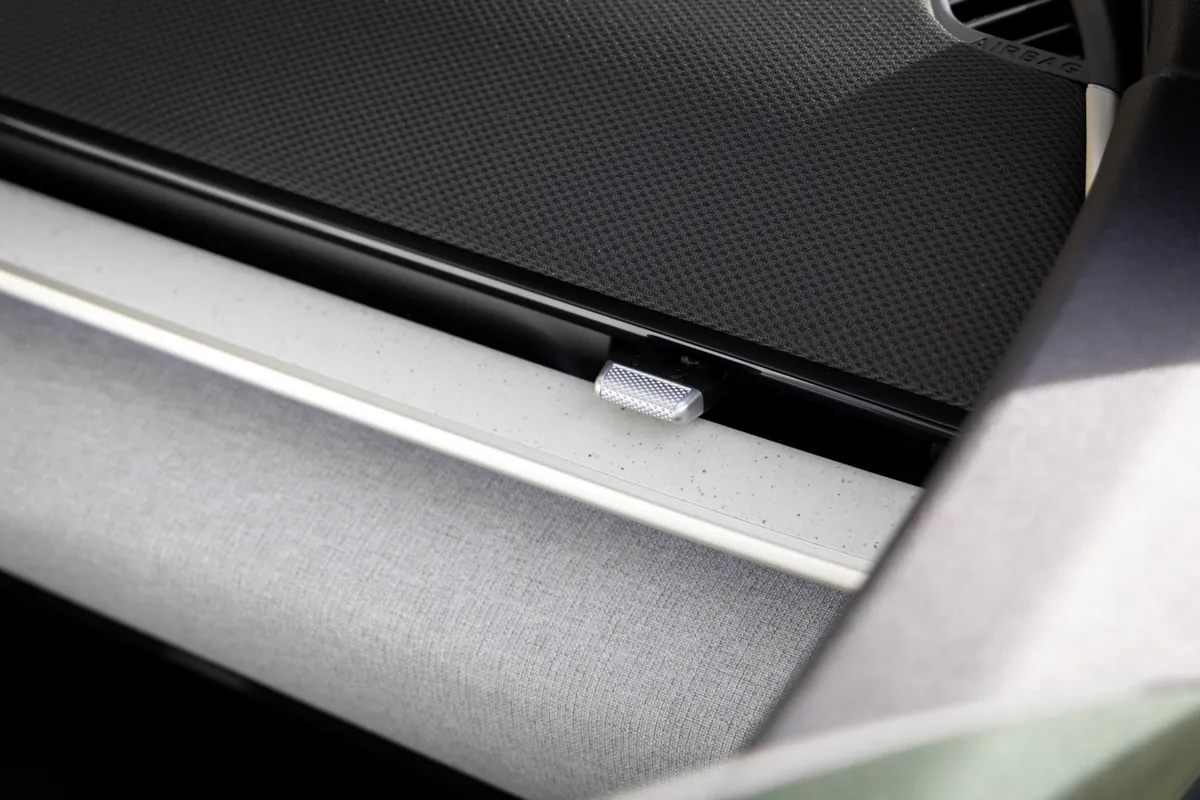
Inside, Volkswagen’s “Pure Positive” design language makes its production debut. Chief Designer Andreas Mindt says he wanted the cabin to feel like a familiar friend, and the approach blends a 10-inch digital cockpit with a 13-inch infotainment center touchscreen.
Physical buttons handle climate control, there’s a rotary audio dial between the front seats, and a “retro display” mode transforms the instruments into something that looks straight out of a post-facelift Mk1 Golf, complete with a classic speedo and a power gauge standing in for the rev counter. Nice touch.
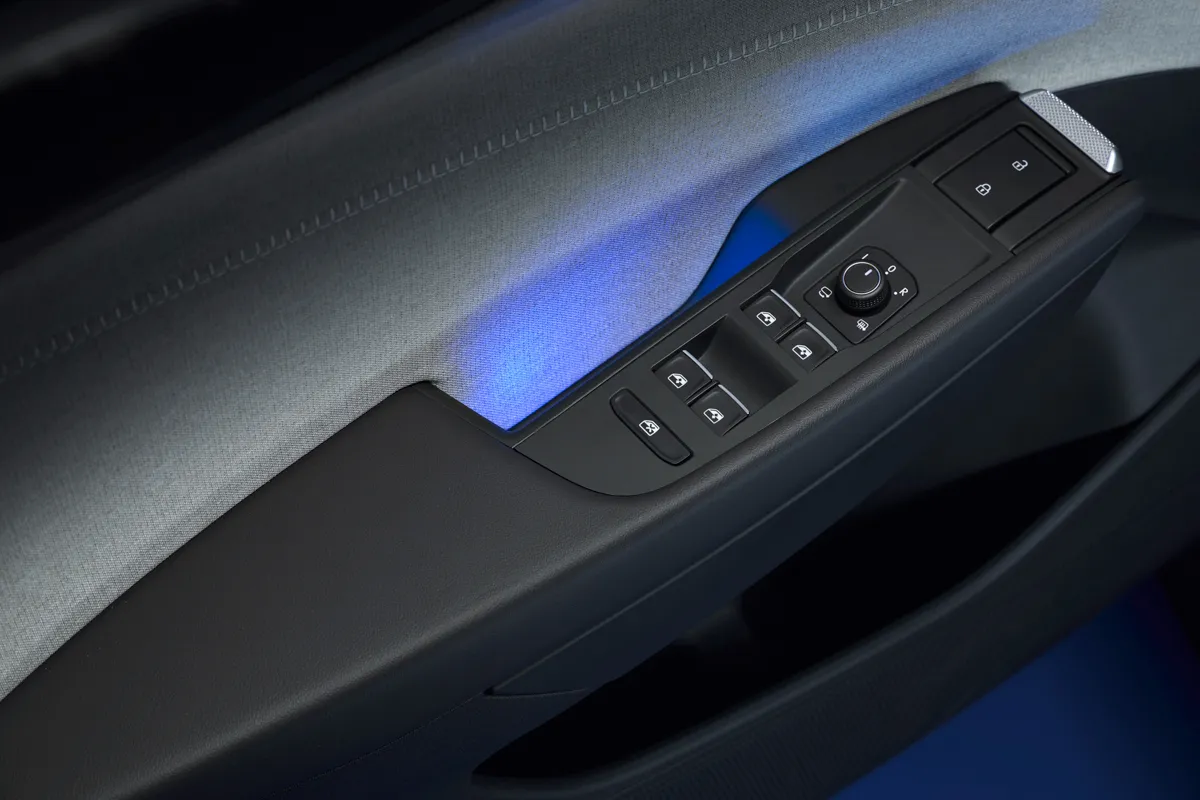
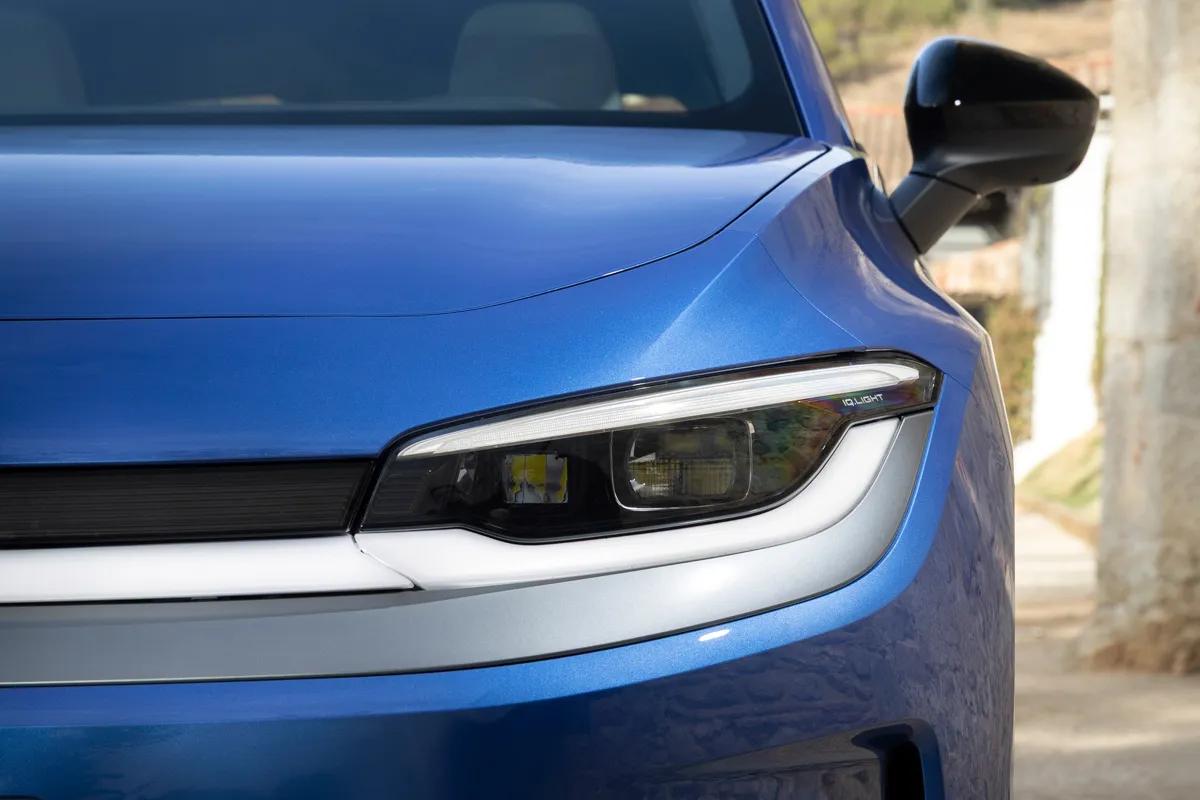
Three trim levels cover the range. The Trend gets LED headlights, Side Assist, Lane Assist and a standard 90 kW DC charging capability. Life adds Adaptive Cruise Control, a rear camera, CarPlay, Android Auto and wireless phone charging. Style goes further with IQ.LIGHT LED matrix headlights, 3D tail lights, an illuminated VW logo front and rear, sport comfort seats, two-zone climate and the upgraded ID. Light strip that now runs into the door panels.
Massage Seats



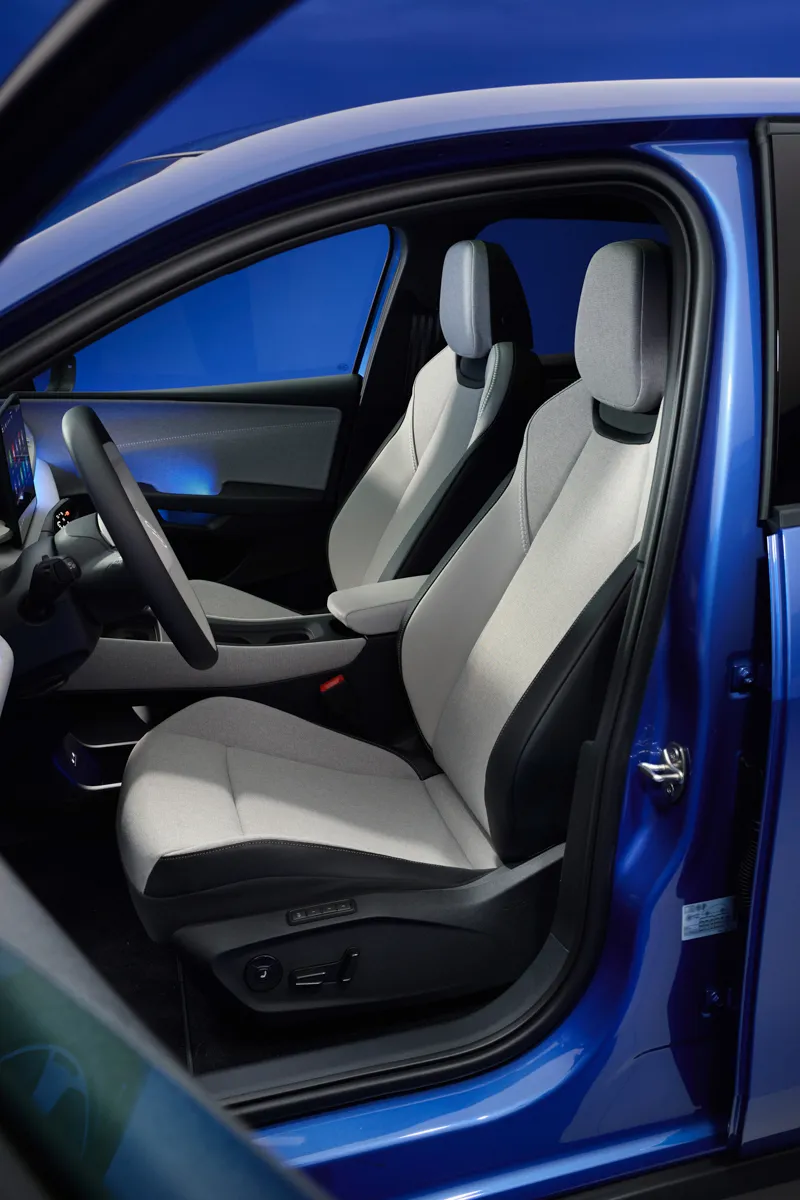
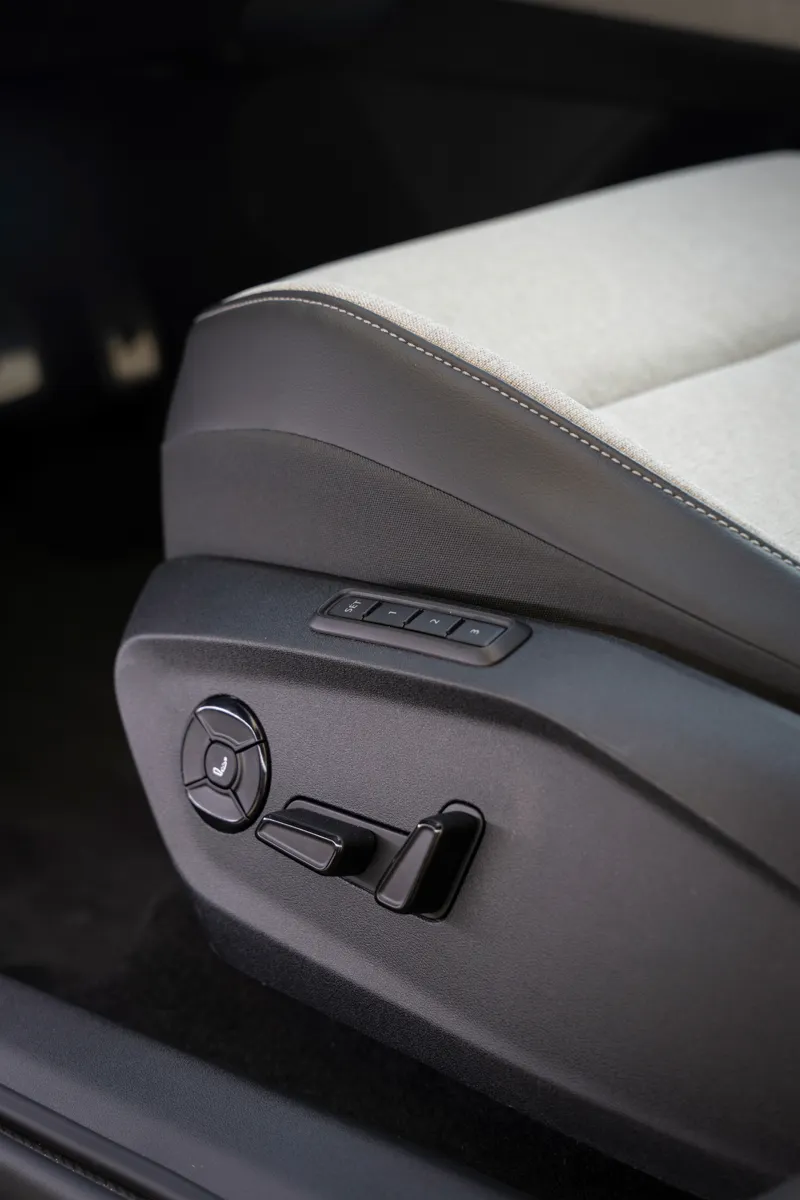
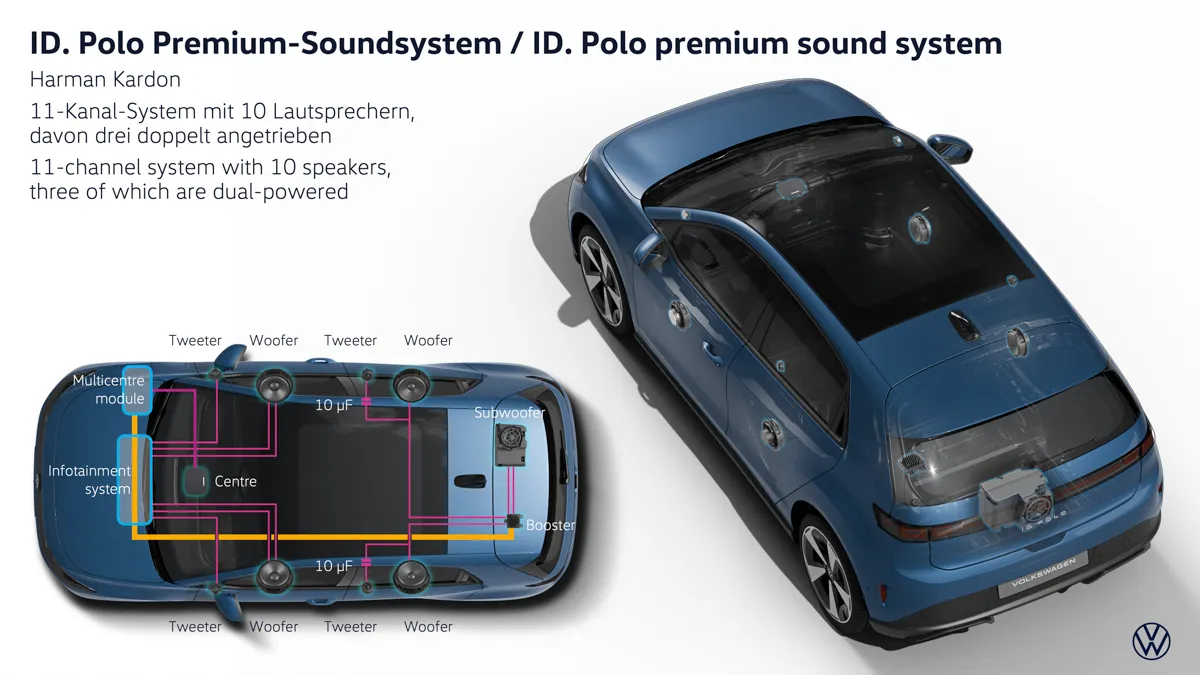
Optional tech potentially worth splashing for includes a 425-watt Harman Kardon sound system, a panoramic glass roof and something genuinely unusual for this class: a pneumatic massage function for the electrically adjustable 12-way front seats, with three programs to choose from. That’s a premium-saloon feature in a sub-€25,000 hatchback.
Also: VW Spent Years Removing Knobs From Its Cars, The ID.3 Neo Puts Them Back
The ID. Polo also supports Vehicle-to-Load as standard, meaning it’ll push up to 3.6 kW out through a Schuko adapter to charge e-bikes or run outdoor kit. Depending on spec, it can tow up to 1,200 kg too.
Cut-Price Charging



On the charging side, Volkswagen’s subsidiary Elli is launching a new city tariff at €0.39 per kWh for public AC charging across more than a million European charge points, aiming to make street charging as predictable and affordable as a home wallbox. A dynamic home tariff called Naturstrom Flex can cut home charging costs by up to 30 percent by automatically charging when electricity prices are lowest.
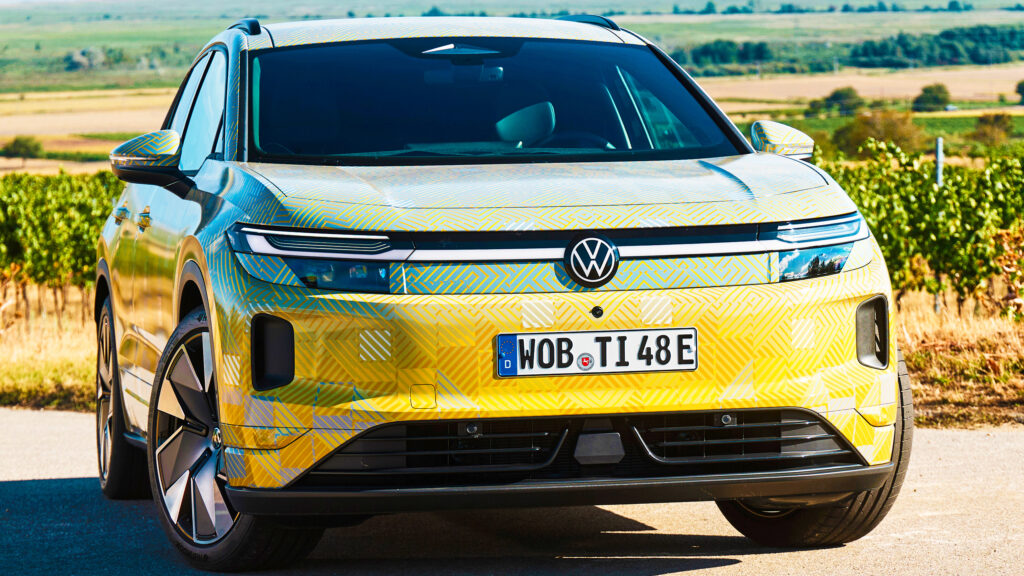
Aside from next year’s GTI, shown below in disguised form, the ID. Polo lineup feels pretty complete for a launch. It’s practical, it’s priced right, and that retro display alone might sell a few cars.