










- DeFlock can generate routes that avoid known ALPR cameras entirely.
- Users can choose how far they want to stay from surveillance cameras.
- The tool arrives as scrutiny of license plate readers continues to grow.
For years, automated license plate readers have quietly spread across America. They sit on utility poles, at intersections, near shopping centers, and along roads most drivers use every day. The overwhelming majority of motorists never notice them. A free website called DeFlock changes that by showing where many of those cameras are located and, more importantly, helping users avoid them if they choose. In a world where surveillance is often invisible, that’s a surprisingly powerful feature.
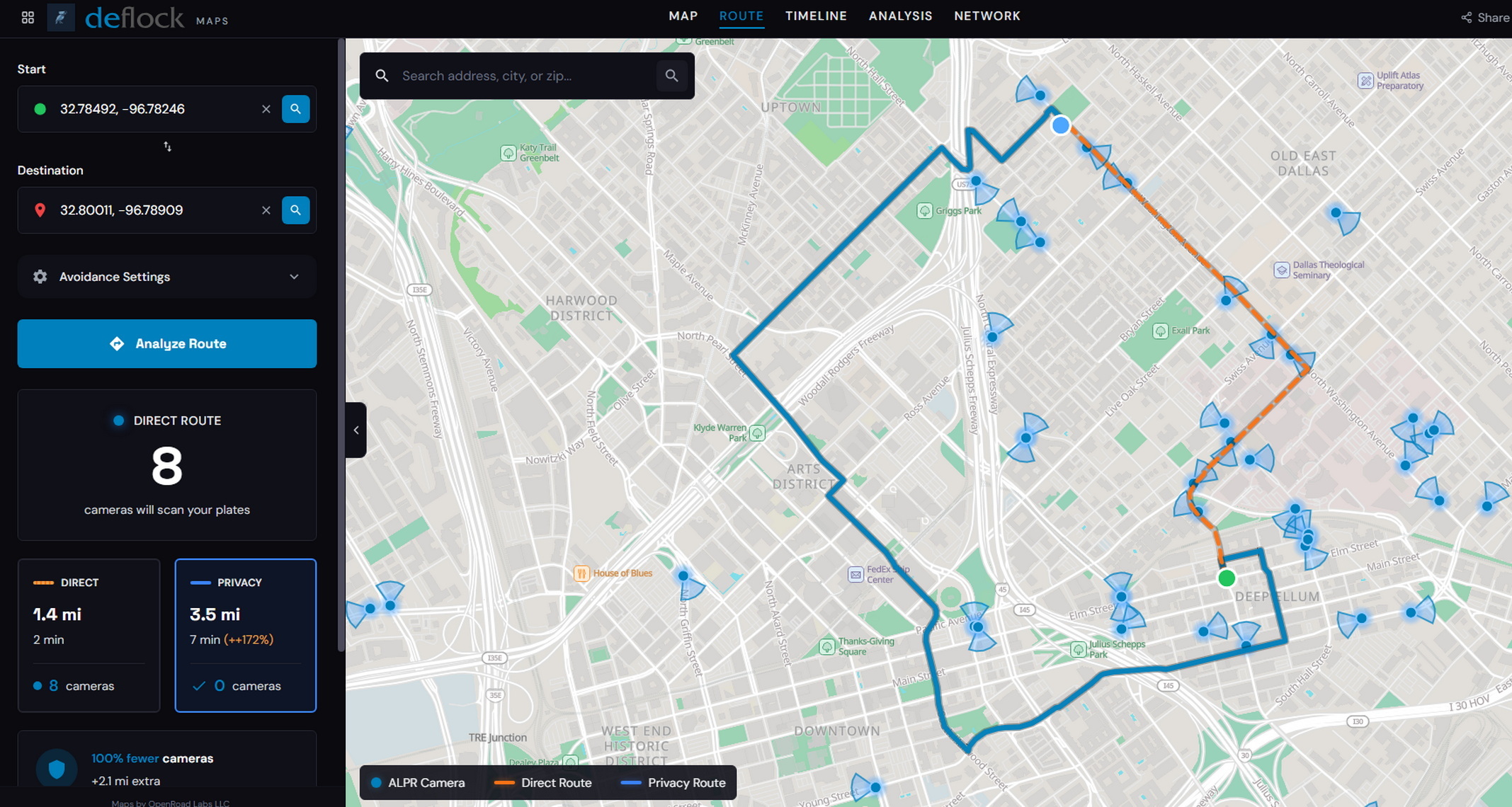
At first glance, DeFlock looks like any other mapping service. Enter a start and destination, and it’ll provide directions. The difference is that it overlays known automated license plate reader cameras and offers an alternative route designed to minimize or eliminate encounters with them.
Read: Dallas Has Hundreds Of AI Traffic Cameras, And Now Everyone’s Watching
Even better, users can customize just how aggressively they want the software to avoid cameras. A slider allows them to select a buffer zone ranging from roughly 50 feet to 500 feet from known camera locations. The larger the buffer, the more cautious the route becomes.
The site then compares the normal route against the privacy-focused alternative and clearly displays the tradeoffs. In one example, a direct route of 1.4 miles would pass eight ALPR cameras. The privacy route stretched the trip to 3.5 miles, added about five minutes of travel time, and avoided every mapped camera along the way. Frankly, that’s what makes the tool interesting. It doesn’t force a political position on anyone. It simply provides information and lets drivers decide whether avoiding surveillance is worth an extra turn or two.
Where And Why The Tool Is Useful
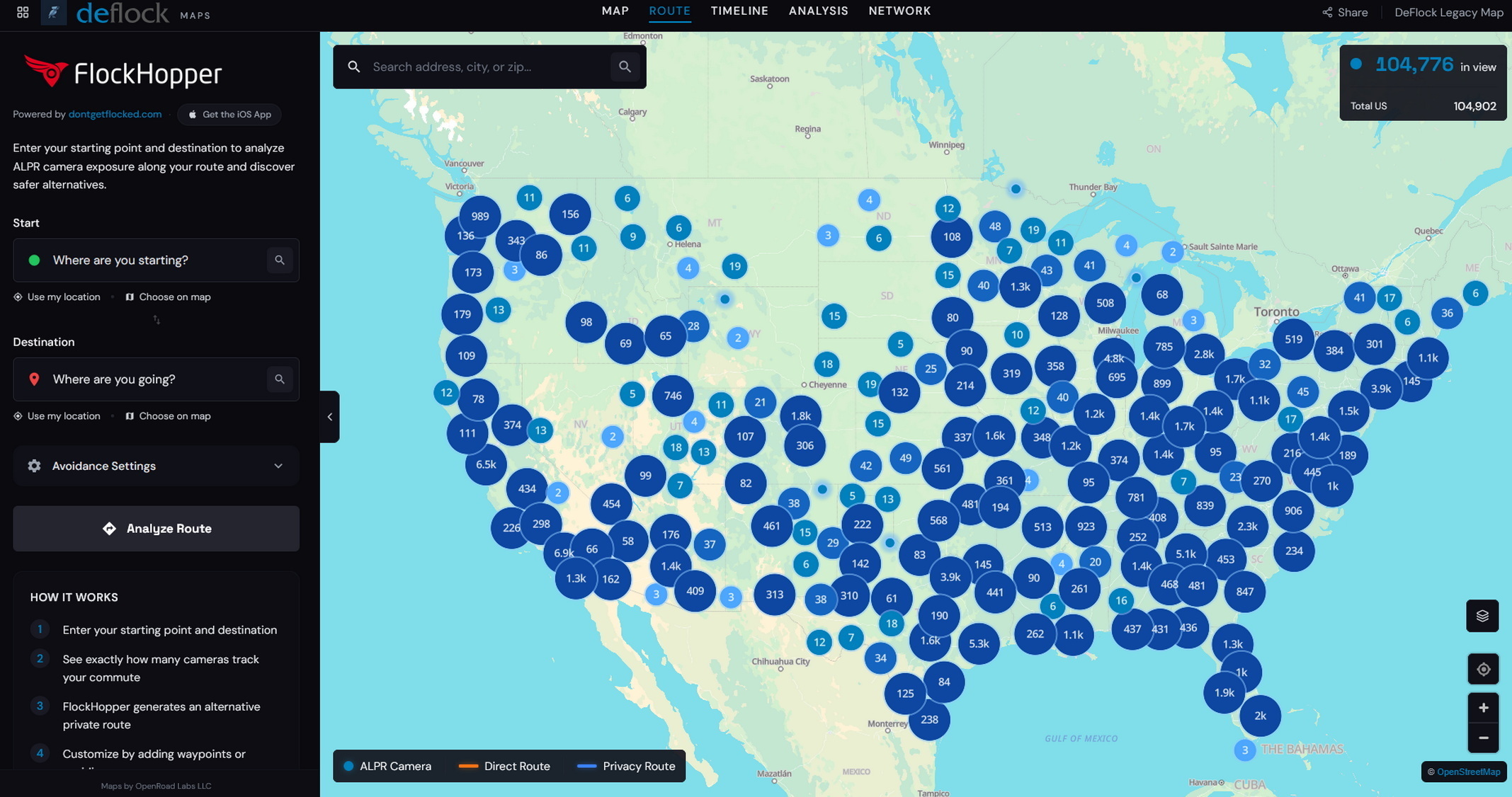
It’s also worth noting that DeFlock appears most useful for shorter local trips. Highways generally feature fewer fixed ALPR installations than urban and suburban streets. As a result, long-distance trips that begin and end near major highways may see little difference between the direct route and the privacy route.
Around town, though, where cameras tend to cluster around intersections, commercial districts, and major thoroughfares, the results can be eye-opening. And those cameras are collecting far more than just license plate numbers.
Modern ALPR systems often catalog vehicle make, model, color, unique markings, bumper stickers, damage, aftermarket equipment, and timestamps. Together, that information can create a detailed record of where a vehicle has traveled and when it was there.
Arguments For And Against
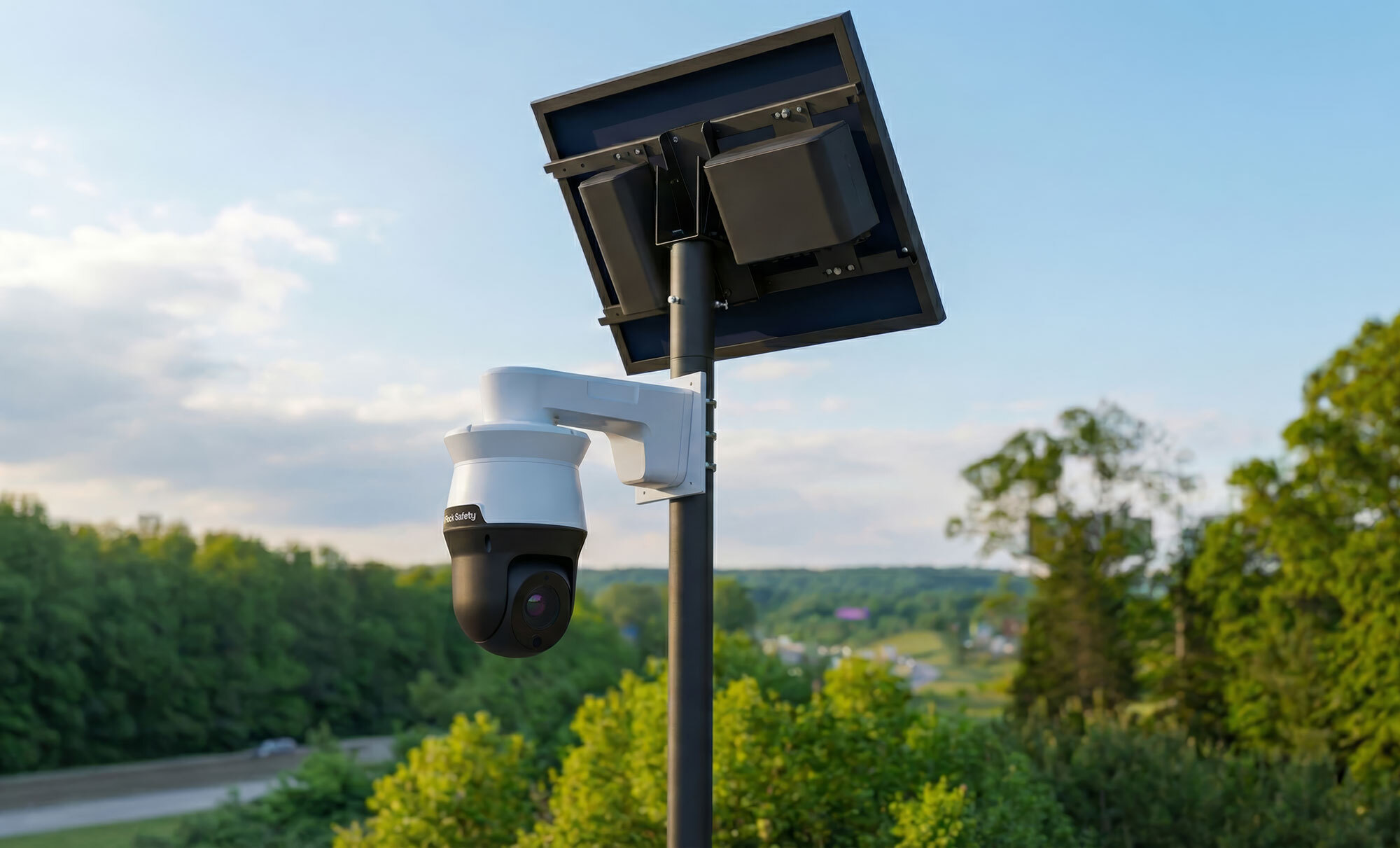
Supporters argue that the technology has become a valuable law enforcement tool, helping recover stolen vehicles, locate missing persons, and identify suspects linked to criminal investigations. There’s little debate that these systems can accomplish those goals. The debate centers on what happens to the data collected from everyone else.
Critics frequently point out that ALPR systems don’t only document criminal activity. They document ordinary activity too. Trips to work. Visits to friends. Attendance at religious services. Medical appointments. Political events. School pickups. Grocery runs. Every vehicle passing through the system becomes part of a searchable database regardless of whether a crime occurred. That’s where the familiar argument usually appears.
“If you have nothing to hide, why do you care?”
The problem with that line of thinking is that it assumes surveillance systems are only accessed by people using them appropriately. Recent events prove otherwise.
Earlier this year, a Wisconsin police officer faced felony misconduct charges after allegedly using Flock Safety’s system to search for vehicles connected to a personal relationship. Similar misuse examples have surfaced elsewhere, including cases in Georgia and Missouri. In several of those incidents, it wasn’t internal oversight mechanisms that uncovered the behavior.
Victims did.
Then there are the security concerns. Last year, researcher and musician Benn Jordan demonstrated that numerous public safety camera systems could be viewed online without meaningful authentication.
Working with 404 Media, he showed how surveillance footage could potentially be combined with other publicly available information to identify individuals, determine where they lived, track daily routines, and even uncover deeply personal details, including medical information.
The exercise highlighted a concern privacy advocates have raised for years. Data doesn’t exist in isolation. Once collected, it can often be combined with other sources in ways never originally intended. Those concerns have contributed to growing pushback against ALPR deployments.
Public Response
Cities across the country have paused, limited, or outright ended camera programs after residents raised questions about privacy, data retention, transparency, and oversight. Earlier this year, Staunton, Virginia, terminated its Flock Safety contract despite local police reporting investigative successes with the technology.
Officials ultimately concluded that citizen concerns deserved greater weight than the company’s assurances. Tools like ALPR.Watch allow citizens to track local legislation related to the cameras in their area and nationwide.
That doesn’t mean ALPR cameras are going away. If anything, they continue to expand. A new technology called Leonardo is capable of tying your phone, your fitness tracker, your pet’s microchip, and even more to your GPS location.
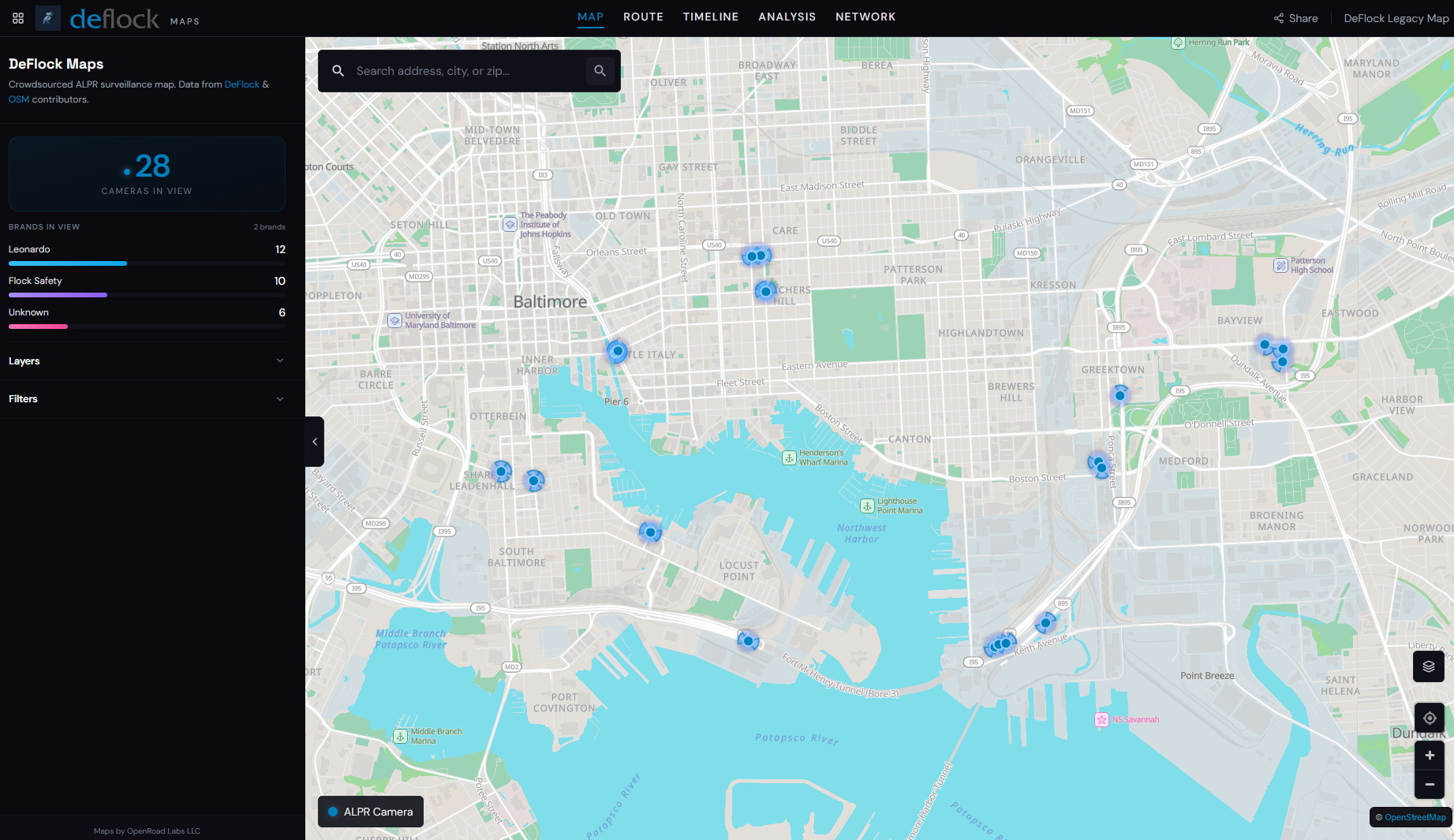
What DeFlock offers isn’t a way to stop them. It doesn’t disable cameras, interfere with investigations, or somehow make a vehicle invisible. Instead, it provides something many drivers have never had before: awareness.
Most people have no idea how many cameras monitor their daily commute. They don’t know where those cameras are located. They don’t know how many databases they’re entering. And they certainly don’t know whether avoiding those cameras would require a major detour or merely another minute behind the wheel.
DeFlock answers those questions instantly.
Whether drivers decide to change their route afterward is entirely up to them. That’s what makes the tool compelling. It’s not really about avoiding cameras. It’s about giving people enough information to make that decision for themselves.