- The next-gen i20 will include a squared-off roofline like the Santa Fe.
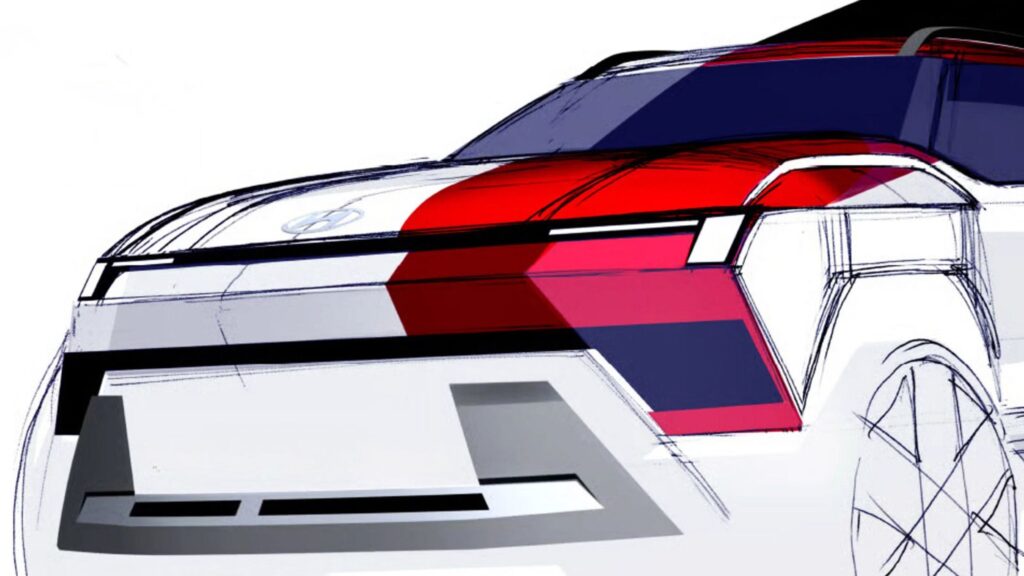
- Found up front will be an overhauled fascia with new headlights and DRLs.
- Hyundai will morph the flagship i20 N into a 1.6-liter turbo hybrid.
It’s been a touch over six years since the current Hyundai i20 hit the market, and for all its qualities, particularly in high-performance N guise, it has started to feel a little dated. Fortunately, Hyundai is working on an all-new generation of i20, and it’s shaping up to have all the same pint-sized appeal as the outgoing one.
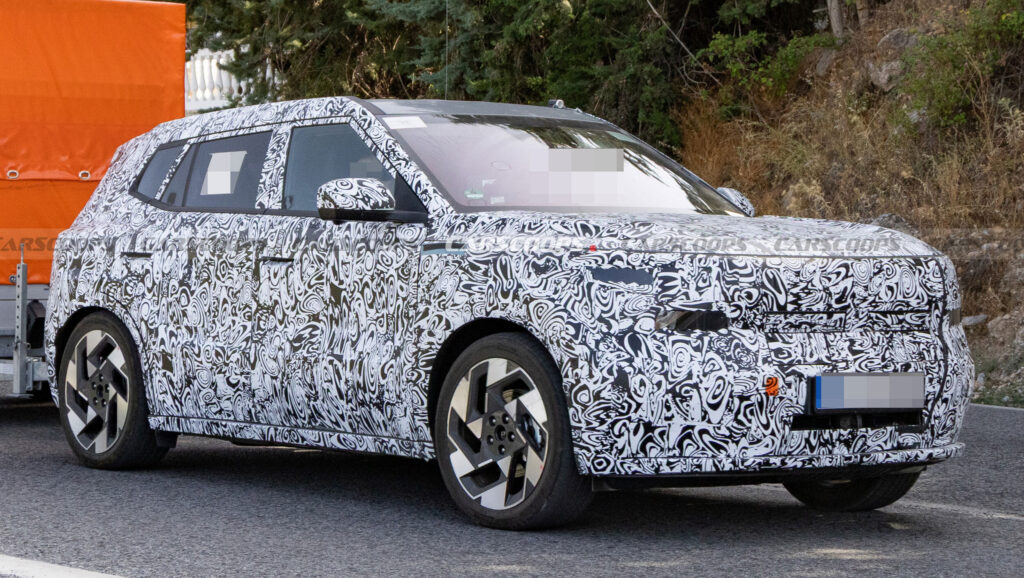
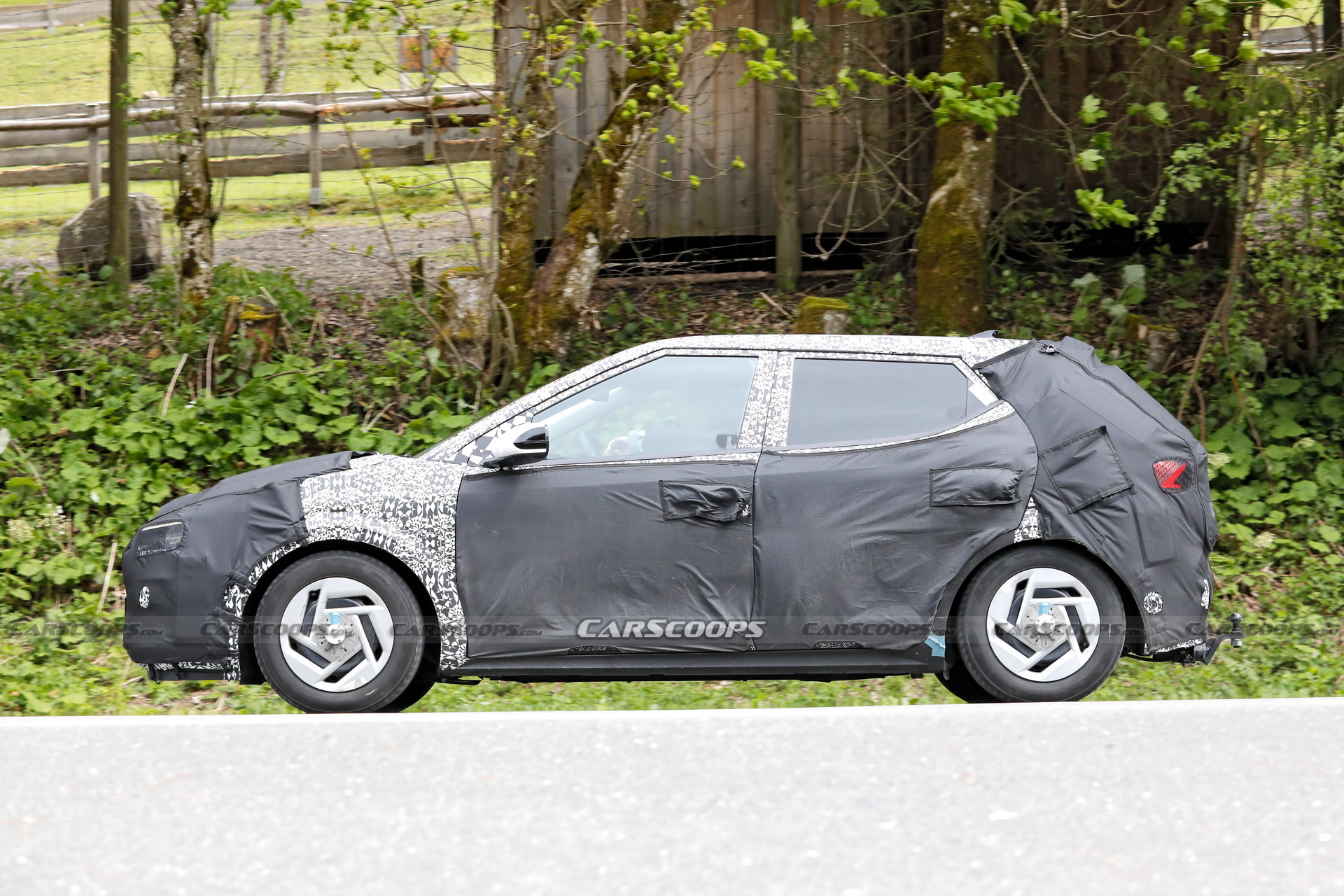
Our spy photographers recently spotted a heavily-disguised prototype of the new i20 testing in Europe. Although much of the hatchback’s design has been hidden from view, there are several important details that we can glean from these images.
Read: Hyundai’s New Small Hatch Toughens Up With Angular Styling
Perhaps the most obvious change is with the shape of the windshield, roof, pillars, and side windows. Like the Santa Fe and the tiny Casper/Inster, the A-pillars and side windows converge to a sharp edge. The angled roof continues, tapering towards the rear of the car. This prototype also reveals its flared front wheel arches.
Sadly, the entire front end is bathed in black cladding, hiding important design details. However, a prototype we spotted last year featured a large, blacked-out grille and an LED light bar. It also included eye-catching daytime running lights and all-new headlights.



Baldauf
Like the front, most of this car’s rear is hidden from view. With that being said, we can see a bit of the taillights, which also look very different from the existing i20’s lights. A tow bar is also visible, and while it’s unlikely many i20 owners will use their subcompact hatchbacks for towing, Hyundai obviously tests and verifies just how much it can safely tow.
An Overhauled Cabin?
We haven’t yet been able to get any clear images of the i20’s new interior. As such, it’s hard to know whether it will still have a fairly traditional layout like the current i20, or shift to the latest generation of Hyundai cabins, sporting the same Pleos Connect infotainment display as the all-electric Ioniq 3, complete with a Tesla-inspired central display.
ICE And EV Power
As for powertrains, the new i20 will continue to offer several combustion options and, for the first time, will also be sold with all-electric powertrains. It’s unclear whether the electric model will use the same E-GMP platform as Hyundai’s Ioniq models, but it appears unlikely, as those models are positioned in a more premium space than the i20. Whatever the case may be, we expect to see a 400-volt system and relatively slow charging speeds, which means the i20, even in EV guise, has to be affordable.
Changes are also afoot for the i20 N. It is expected to retain the familiar 1.6-liter turbocharged four-cylinder engine, but will be complemented by a small electric motor and battery pack, helping boost power while cutting emissions. Unfortunately, the implementation of a hybrid set-up means that Hyundai will, in all likelihood, ditch the six-speed manual.