











- A federal judge ruled Norfolk’s Flock cameras lawful.
- Court warned expanding surveillance could shift rulings.
- Plaintiffs plan to appeal, and similar cases have prevailed.
Flock Safety’s license plate cameras, along with similar surveillance technologies, are increasingly under fire in courts across the country. In Norfolk, Virginia, the city just secured a win that allows its camera network to stay active, at least for now, following a lawsuit that alleged a violation of Fourth Amendment rights.
The ruling doesn’t end the matter. In fact, the same federal judge who sided with the city also noted that future decisions could shift in the other direction. The plaintiffs aren’t done fighting either.
More: Flock Traffic Cameras Track Everything, Except The Cops Misusing Them
In a decision issued Tuesday, U.S. District Judge Mark Davis rejected claims from two Hampton Roads residents who argued that Norfolk’s automated license plate recognition (ALPR) network amounts to unconstitutional mass surveillance.
The city operates nearly 200 Flock cameras, primarily positioned at busy intersections, freeway ramps, and major entry and exit points.
Do License Plates Carry Any Expectation Of Privacy?
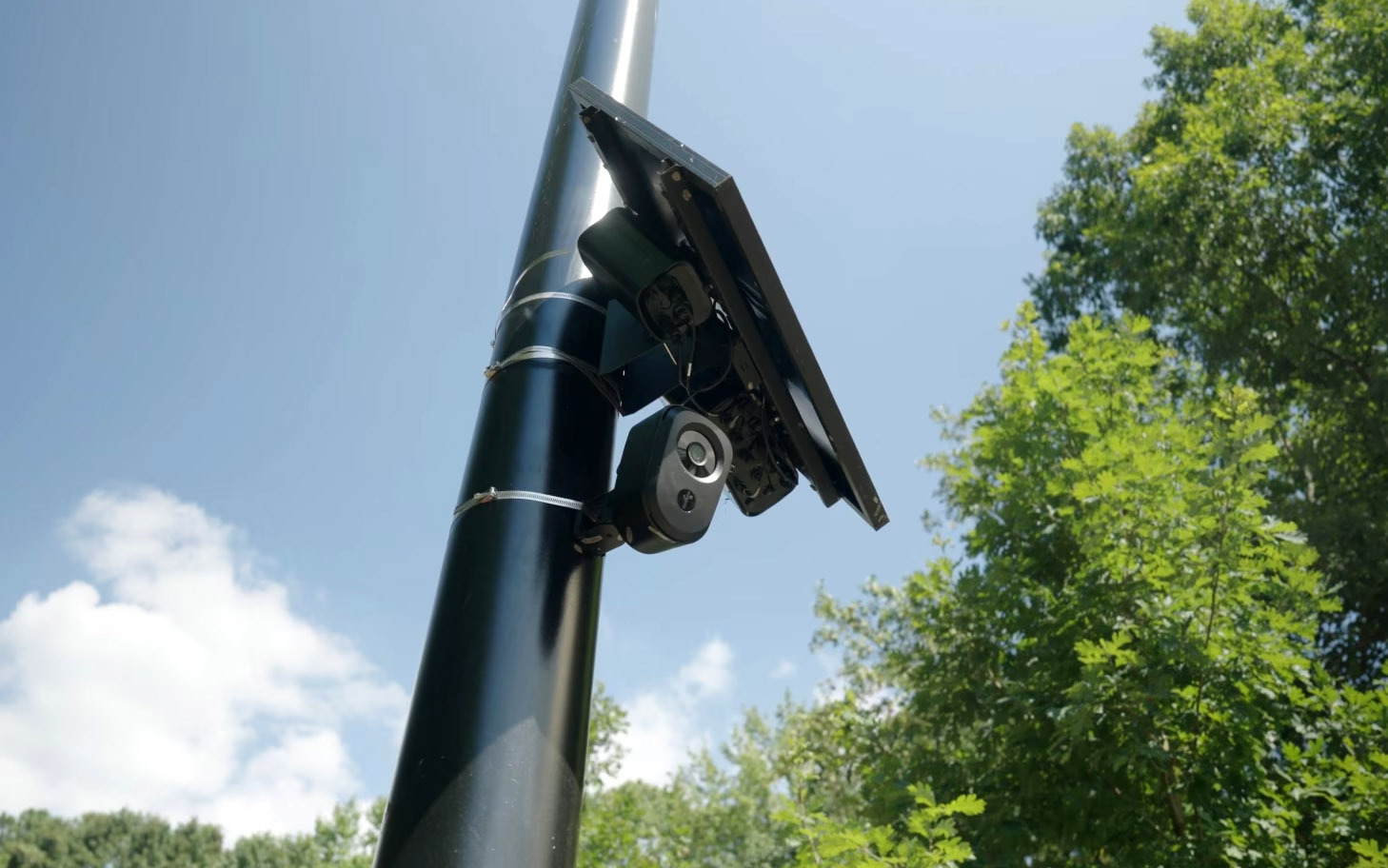
According to WTKR, Judge Davis pointed to a growing body of case law holding that drivers have no reasonable expectation of privacy in license plates displayed on public roads.
Courts have “almost uniformly concluded,” he wrote, that photographing plates in public and storing those images in a searchable database does not amount to a warrantless search. We’ll circle back to that “almost” and the heavy lifting it’s doing shortly.
Judge Davis’s reasoning aligns closely with what Flock Safety says about the issue. The company has repeatedly argued that license plates are government-issued identifiers intended to be visible, and that capturing them is no different than an officer observing a passing vehicle. However, the ruling also highlights why similar lawsuits have found more traction elsewhere.
The Legal Challenge
Several courts have cautioned against treating ALPR cases as settled law, especially as the technology evolves. The concern isn’t a single image of a plate, but whether large-scale, long-term collection can be used to reconstruct “the whole of a person’s physical movements,” a concept drawn from Supreme Court precedent such as Carpenter v. United States.
Some judges have sided with plaintiffs when surveillance systems approach that threshold, particularly in cases involving persistent aerial monitoring or continuous location tracking. In those scenarios, courts have reasoned that mass data collection can reveal intimate patterns of life, even if each individual data point is gathered in public.
Beyond Legality
Regardless of their legal basis, the reality of systems like that of Flock Safety is that it’s impossible to ensure that they’re always lawfully accessed. As we’ve pointed out several times, these systems have serious security vulnerabilities.
If it were possible to create a totally secure camera network, and it’s not, the issue then moves on to unlawful use. That occurs more than one might assume. We’ve already seen multiple examples of law enforcement accessing camera images and data improperly.
At this point, Norfolk’s cameras remain on, but the plaintiffs say that they plan to appeal the decision. As ALPR networks expand, retention periods grow, and analytic tools become more powerful, Davis warned that the constitutional balance “could conceivably tip the other way.”