- Suzuki Baleno gets a new face and new tech in India.
- It swaps to a more efficient 1.2-liter 3-cylinder engine.
- Range-topping trim introduces Level 2 ADAS features.
Suzuki has launched an updated version of its aging Baleno in India with revised styling, a longer equipment list, and a more efficient engine under the hood. Many parts of the car that buyers actually look at have been revised, though the fundamentals stay exactly the same.
The current Baleno dates back to 2015, when it arrived as a budget hatchback slotted above the Swift in Suzuki’s lineup. A light refresh followed in 2019, then a far more thorough mid-cycle overhaul in 2022. A new generation would have been the logical next move, but Suzuki went the other way and opted for a third facelift instead, keeping a decade-old platform alive for a little longer.
More: Think You Know The Suzuki Alto? There Are Five Different Versions On Sale Right Now
Visually, the highlight is the redesigned front bumper with a much larger grille featuring horizontal chrome slats and a new pattern. This makes the Baleno look like a baby Hyundai Elantra (the old one, not the new one). The new grille is combined with faux intakes and black bumper trim.
The headlights, hood, and fenders appear to be carried over from the 2022 facelift, but the Suzuki emblem is relocated on the nose.
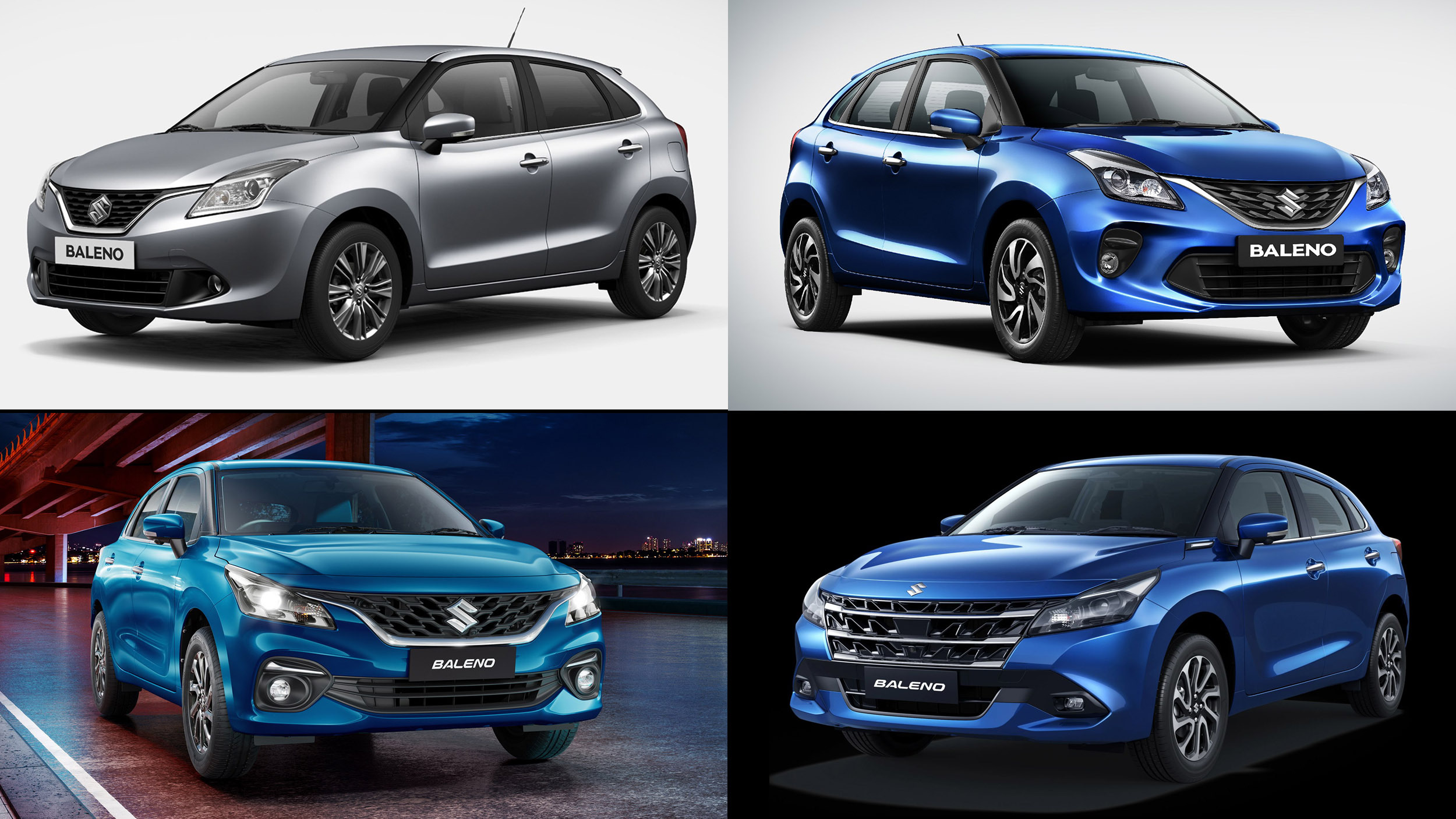
The profile remains largely unchanged, although Suzuki designers added decorative side gills on the front fenders, similar to the Vitara. Furthermore, the Baleno gains a shark fin antenna and a new Enigmatic Teal Green shade. The rear end is also carried over, with taillight extensions on the tailgate and chrome trim on high-end grades.
More Screens, More Vents, Same Dashboard



Inside, we find the familiar V-shaped dashboard with the same 9-inch infotainment display. High-spec models gain ventilated seats with synthetic leather inserts, a cooled wireless smartphone charging pad, a new six-speaker Clarion audio system, and extra AC vents and USB charging ports for the rear passengers.
More: Toyota’s Popular Rebadged Suzuki Failed Its Crash Test So Badly NCAP Cut It Short
Safety gets a much-needed boost with six airbags, ESC, hill-hold assist, Isofix child seat anchorage points, and a tire-pressure monitoring system fitted as standard across the lineup. The new flagship trim is equipped with a Level 2 ADAS suite including adaptive cruise control, lane keep assist, and more.
One Cylinder Down, One Less Reason To Fill Up


The Baleno rides on the same Heartect architecture but swaps the old 1.2-liter four-cylinder engine for a new 1.2-liter three-cylinder unit also found in the Swift hatchback and the latest Dzire sedan. Power is transmitted to the front axle via a five-speed manual or a five-speed automatic.
More: Suzuki’s New Electric Kei Car Squeezes 193 Miles From A Really Tiny Battery
The non-electrified naturally aspirated mill produces 82 hp (61 kW / 83 PS) when running on gasoline, with a CNG variant producing 69 hp (51 kW / 70 PS). This means it’s less powerful than its predecessor, but it gains a start-stop system and promises improved fuel efficiency.
What The Baleno Costs


The updated Maruti Suzuki Baleno is available to order in India with an introductory starting price of ₹6,09,900 ($6,500) for the base model. The flagship trim climbs to ₹9.55 lakh ($10,100).
Besides India, where the model is produced, the Baleno is exported to various markets in Southeast Asia, the Middle East, Africa, and South America. However, the nameplate was withdrawn from European markets in 2019 and from Australia in 2022.
It remains to be seen if similar updates will be applied to twin models like the Toyota Glanza in India, which is sold as the Toyota Starlet in South Africa.