











- A Florida woman has racked up $165,250 in property fines.
- This includes $101,750 in fines for parking on the grass.
- The state Supreme Court decided not to hear her case.
It’s the end of the road for a Florida woman who owes $165,250 in fines for “minor infractions,” such as having some vehicles partially parked on her lawn. It’s a devastating blow to Sandy Martinez, but she has to accept defeat after the Florida Supreme Court declined to hear the case.
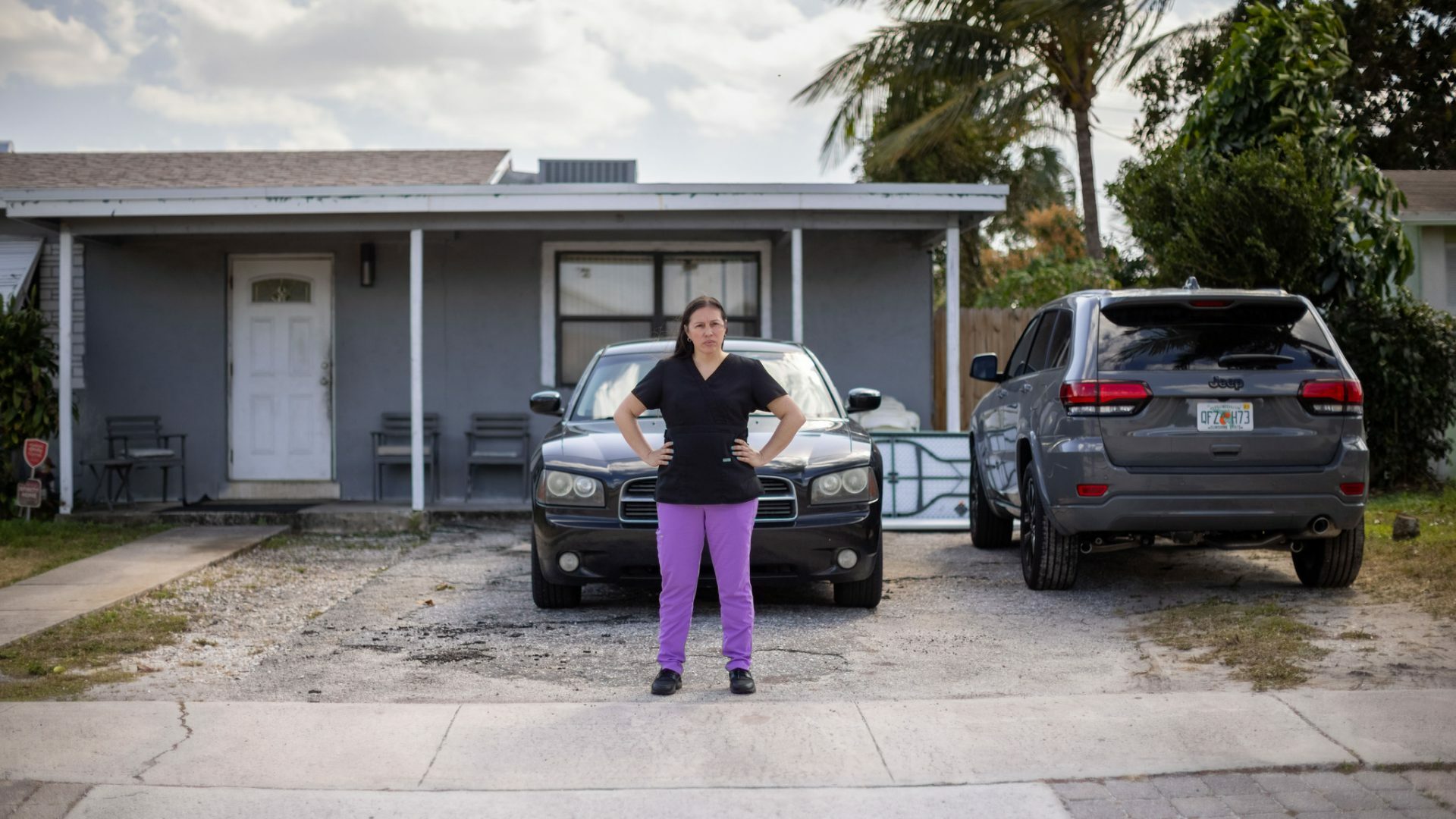
Martinez was being represented by the Institute for Justice and the nonprofit said six people live at the Martinez home and four drive vehicles. When all of them were parked on the driveway, one vehicle would have two tires on the lawn.
More: City Painted A Disabled Bay Around His Car, Then Fined Him Repeatedly
That’s a $250 fine in the city of Lantana and those fees quickly added up to $101,750. Doing the math, that’s 407 days of violations and a legal filing claimed Martinez couldn’t park on the street because there is no curb and the “roadways in front of and beside the house are only wide enough to handle two-way neighborhood traffic.”
The filing goes on to say Martinez was cited around May 6, 2019 for parking on an unapproved surface/grass/walkway and was treated as a repeat offender due to earlier violations. The “matter was heard on or about June 20, 2019” and she was deemed to be in violation. This meant Martinez would receive a $250 daily fine until she was in compliance with the city’s rule.
City Code Fines Pile Up
Institute for Justice
Martinez was notified by mail and reportedly sought a compliance inspection to prove the vehicles were moved. The filing claims “getting code enforcement officials on the phone … was fruitless,” so she “eventually forgot about the issue.”
As a result, she kept racking up a $250 fine each day. Martinez reportedly wasn’t aware of this until she attempted to refinance the house, although that seems fishy as you can’t expect a problem to randomly fix itself.
Regardless, the city told her she owed $98,500. An administrative assistant eventually explained, a “fine of $250/day was running from May 2019 until today [June 16, 2020]. While I was reviewing the cases, I noticed the fines were still accruing and I asked a code officer to go out and re-inspect the property. He noted the property was in compliance and stopped the fines as of today.”
Earlier Fines

Institute for Justice
While the parking fines are getting plenty of attention, they weren’t the only issue between Martinez and the city. The two sides first came into contact after Lantana started fining Martinez $75 per day for having cracks in her driveway. These were reportedly “purely cosmetic, but the homeowner “did not have the time or money” to fix the issue right away.
This meant fines added up for 215 days and eventually totaled $16,125. The Institute for Justice noted this was “far greater than the cost of an entirely new driveway.”
The problems didn’t end there as a “major storm” knock down a fence on Martinez’s property. She filed an insurance claim and waited, meaning she racked up a $125 fine for 379 straight days. When the insurance money arrived, she fixed the fence, but was facing $47,375 in fines. That was “several times the cost of the repair and substantially more than the cost of a completely new fence.”
Some Fines Were More Than She Made In A Day

Needless to say, Martinez can’t afford to pay $165,250 in fines. A filing from 2021 said she works at an outpatient health facility making $20.60 per hour. That means the parking fines were $85.20 more than she made in a day.
The Institute for Justice stepped in and tried to argue that the city of Lantana was violating the state’s excessive fines clause. Attorney Ari Bargil said the law was designed to “prevent people from being fined into poverty for trivial violations.” He went on to claim the Supreme Court’s refusal to hear the case is a “disservice to all Floridians.”
While the fines seem excessive, the Institute for Justice noted Martinez is protected from foreclosure by Florida’s homestead exception. However, they said the fees “effectively rob Sandy of the equity she has built up in her home and make it practically impossible to sell and afford another home.”