












- Jony Ive admits anxiety before the Luce’s big reveal.
- Ferrari’s first EV pursues a singular, radical design.
- It debuts in May ahead of its planned 2028 launch.
Ferrari is no stranger to controversy, and it rarely shies away from it either. Its upcoming all-electric Luce could turn out to be the most polarizing project yet. The man behind the design, Jony Ive, Apple’s former design chief who shaped the iPhone and several other era-defining products, admits he is feeling the pressure.
That seems like a perfectly reasonable response with a historic unveiling just two months away, especially when you are tasked with redefining what a Ferrari is supposed to be in the modern era.
More: Ferrari’s Luce EV Has A Glass Key And Buttons That Click Like A Rifle Bolt
This isn’t just another EV launch after all. It is Ferrari, a brand built on racing at the highest levels and on exciting V12 supercars, sometimes only obtainable through wild buying rituals, and now venturing into the silent world of EVs.
A Defining Electric Debut



SHProshots
Calling it a big deal would be a massive understatement, which is probably why Ferrari hired Ive and fellow designer Marc Newson for the task of shaping the Luce.
The exterior, in fact, has been penned by LoveFrom, the design house founded by Ive and Australian designer Newson, which makes this less a routine Ferrari project and more a collision between Maranello and Silicon Valley minimalism.
Speaking to Autocar, Ive openly admitted that he’s “anxious” about revealing the car to the world. It’s not concern over the design itself that sparks that feeling, but instead the gravity of just how big this moment is for Ferrari. He called it “still clearly a Ferrari,” but went on to say that “It’s a different manifestation based on some of the beliefs around simplicity and the inherent beauty of something.”
On the flip side, his co-designer, Newson, highlighted the freedom offered with such a project. “One of the great and serendipitous sort of things is that this is an electric vehicle, the first electric Ferrari, right? So that afforded us a degree of freedom that perhaps we would otherwise have not had: literal physical freedom or creative freedom… on many levels here,” he said.
Inside The Luce Philosophy


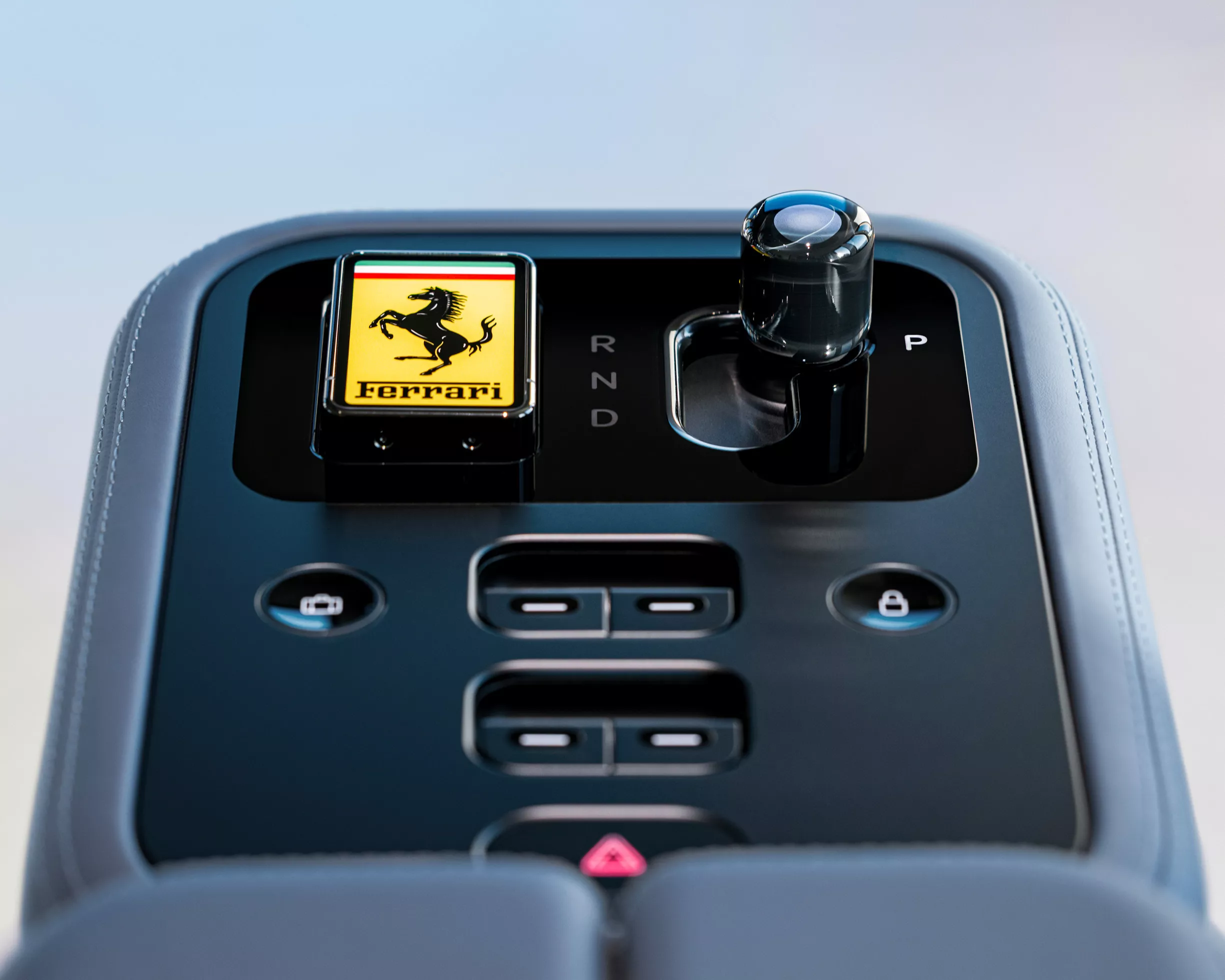
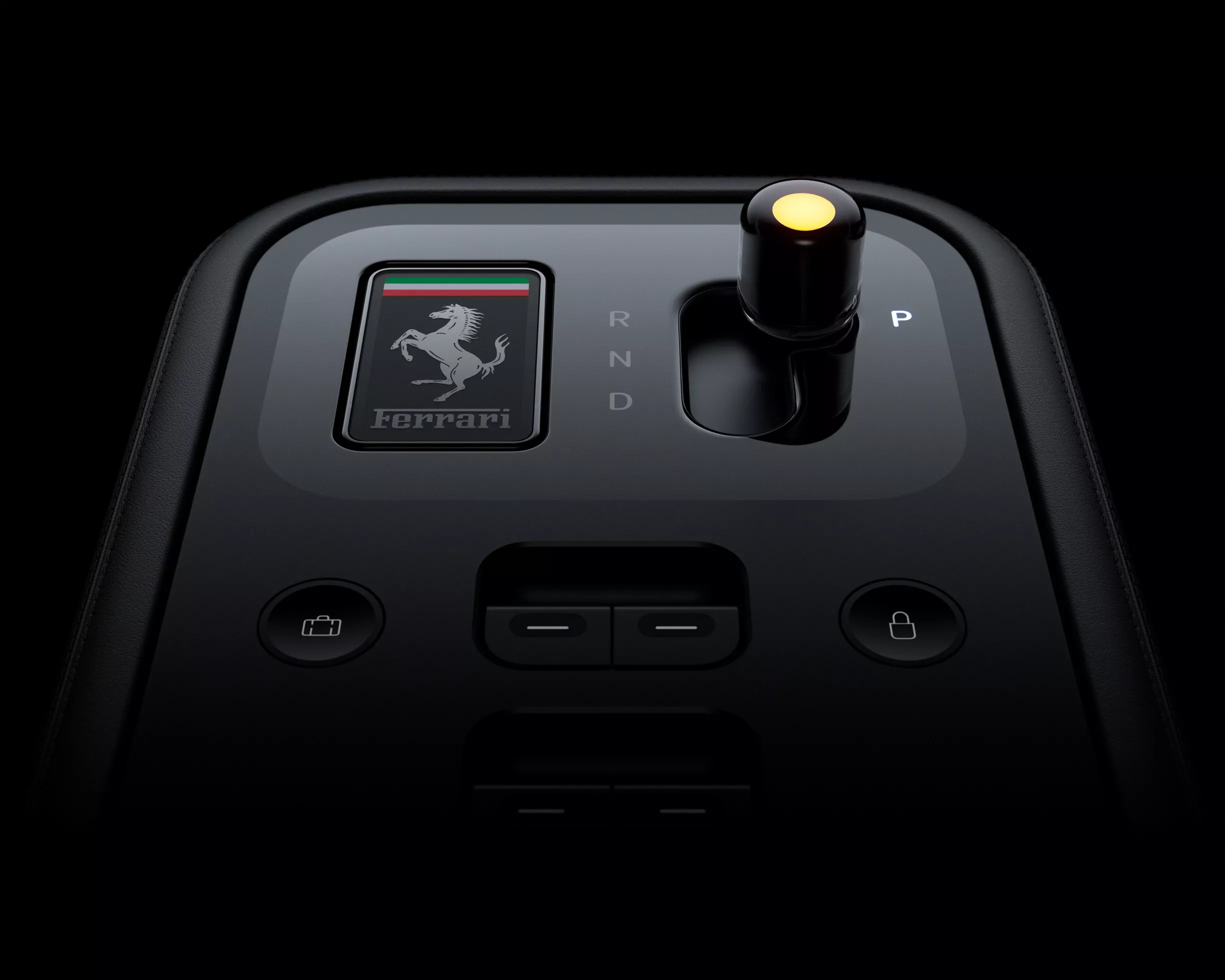


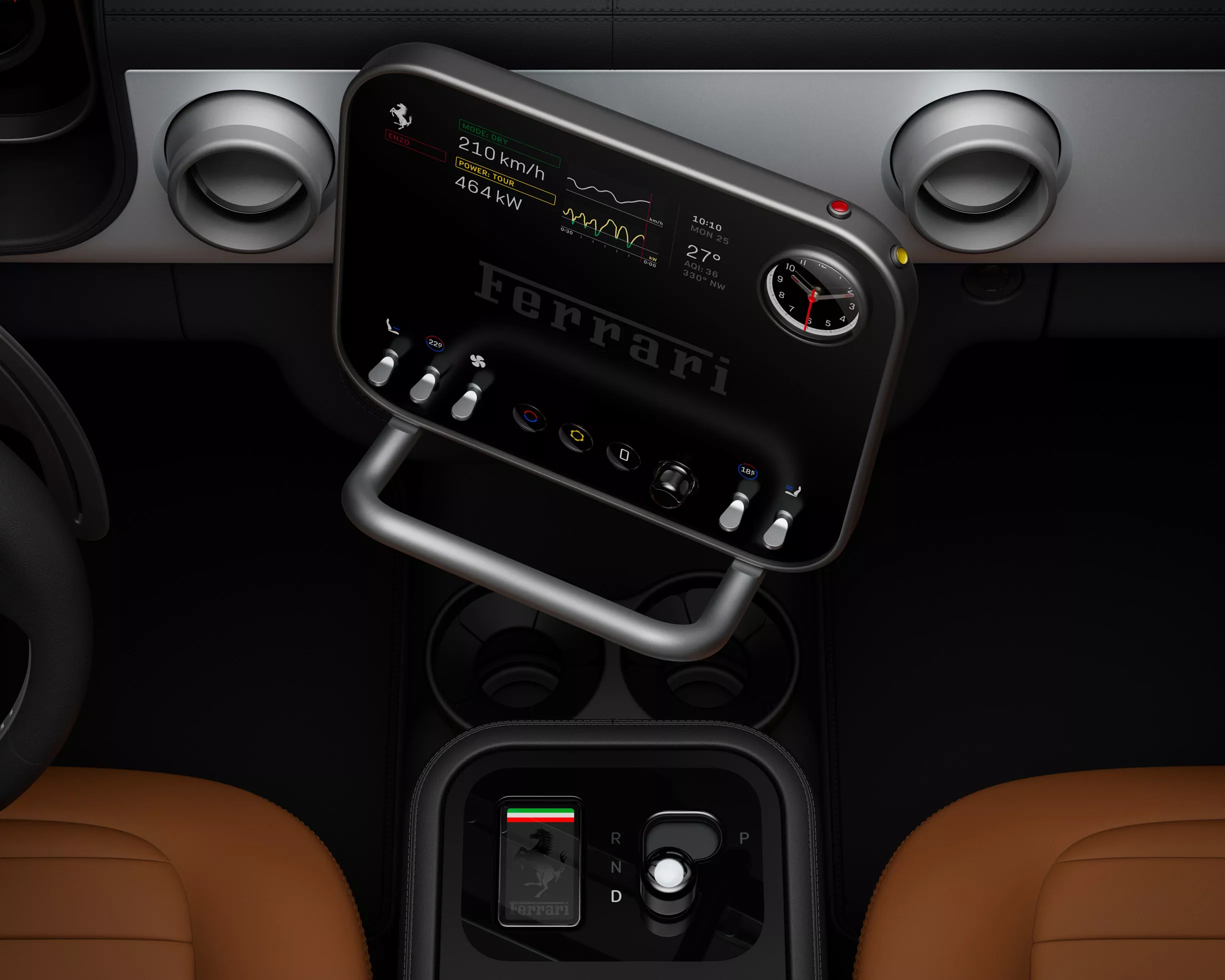


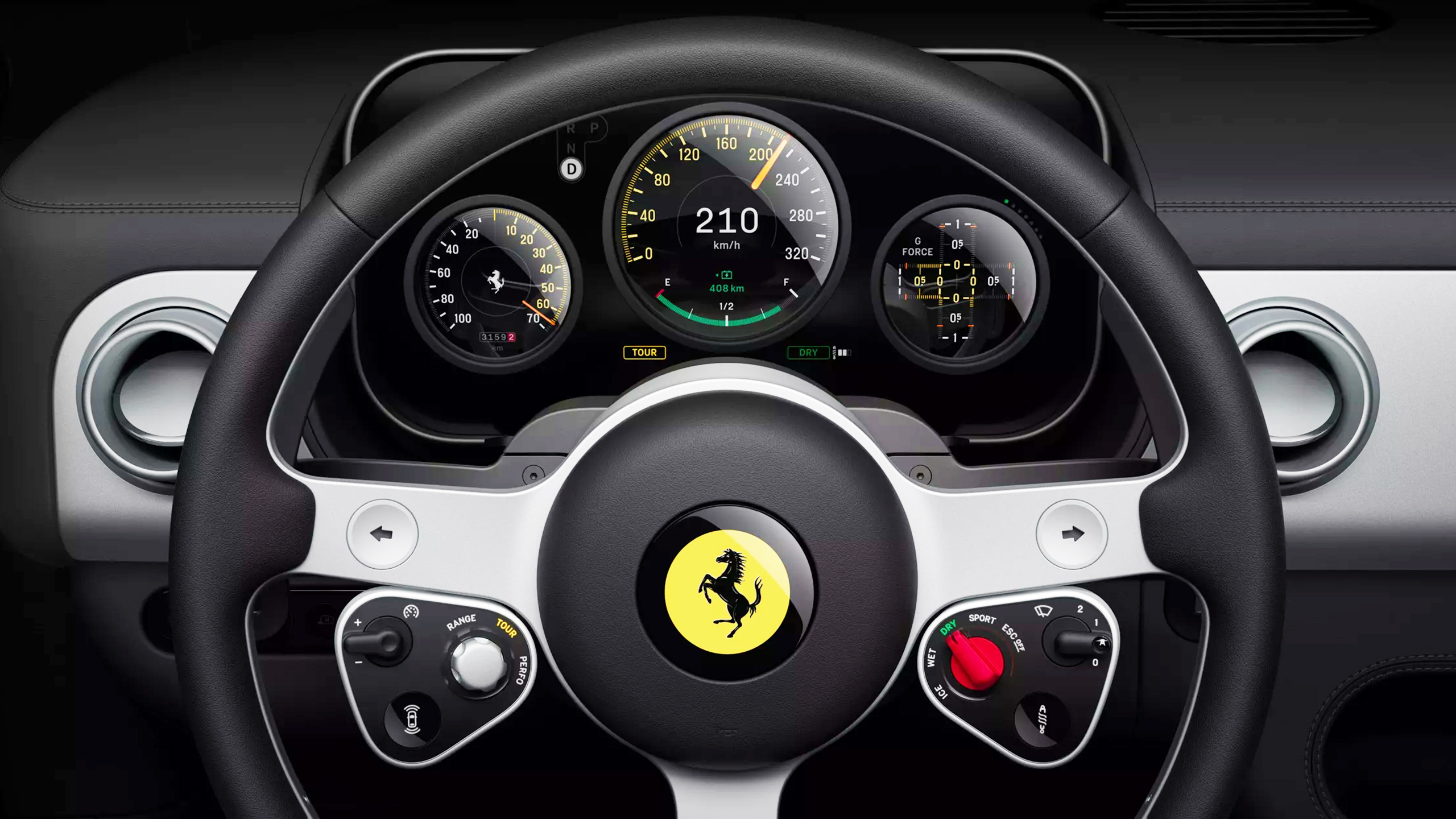
At this stage, we’ve already seen official bits of the interior. The brand unveiled the dash earlier this month. It’s quite the departure from other modern Ferraris. That’s key because Ive and Newson say that the entire car has a “consistency and a singularity” about it.
Ive has also stressed that there is “no disconnection” between the exterior and interior, noting that both were designed simultaneously rather than by separate departments. In his view, that approach results in a complete package that feels cohesive rather than pieced together.
What we also know so far is that the Luce will be a four-door, four-seat GT with a ride height similar to the Purosangue, and that it will feature a 1000hp four-motor powertrain. Ive has hinted that the car will be “big” in its proportions and just as radical on the outside as it is within.
Will The Luce Use Rear-Hinged Doors?


SHProshots
To that end, we wonder if the exterior will be far more retro-futurist than previously expected. While Ive was talking about the new Luce, our spies caught another heavily disguised prototype undergoing testing in northern Sweden this week.
Like earlier Luce testers, this one was wrapped in makeshift panels from top to bottom, making it extremely difficult to interpret what is happening underneath beyond a general sense of its proportions and size.
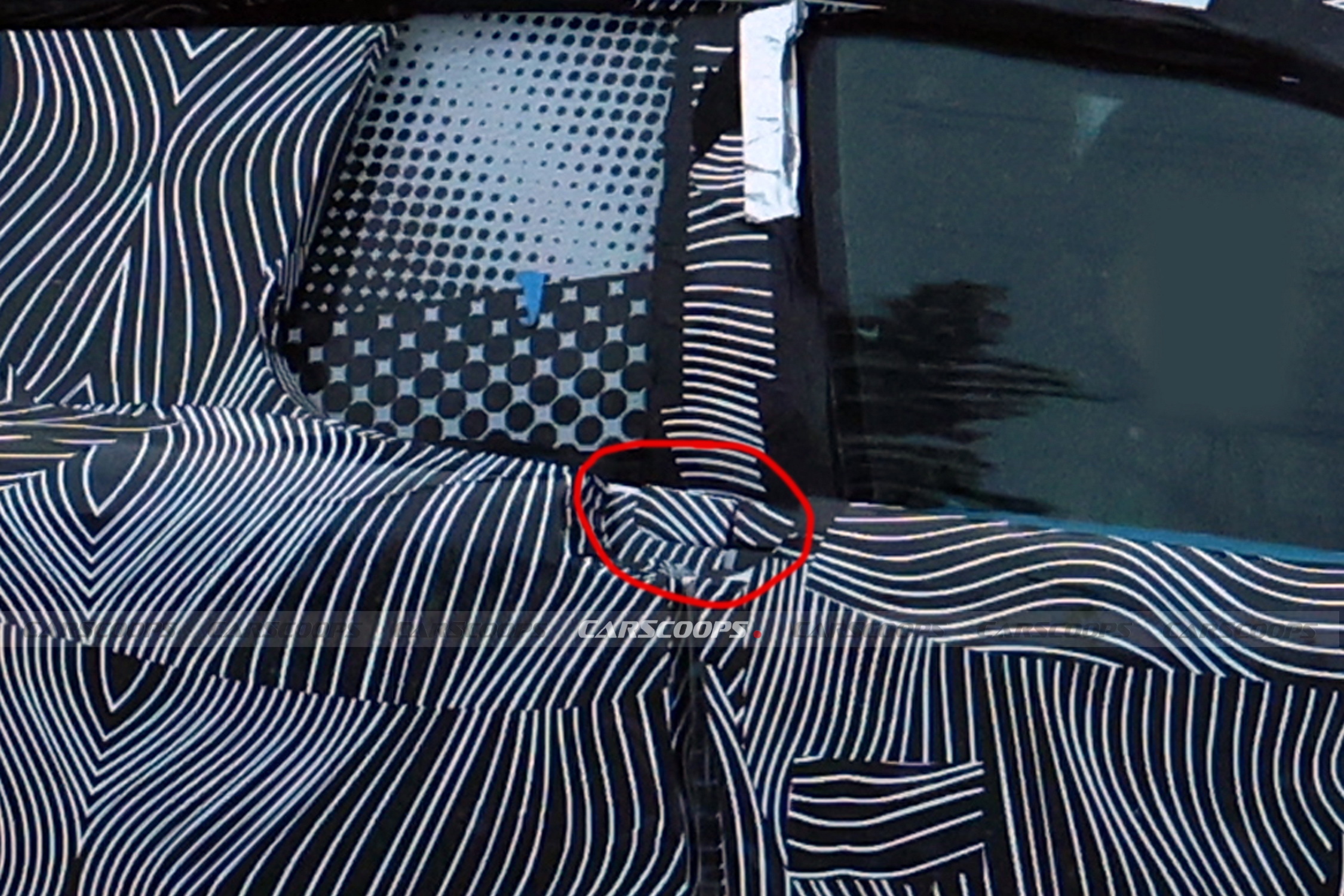
One detail our photographers did catch appears to be a set of door handles, circled in red, positioned just under the B-column in the middle section. According to our photographer, the Luce may be using suicide-style rear doors that open toward the front of the vehicle, similar to the Purosangue. This has not been officially confirmed, and it could just as easily be Ferrari engaging in a bit of cheeky misdirection.
We will know for certain in May, when Ferrari finally unveils its first EV.


