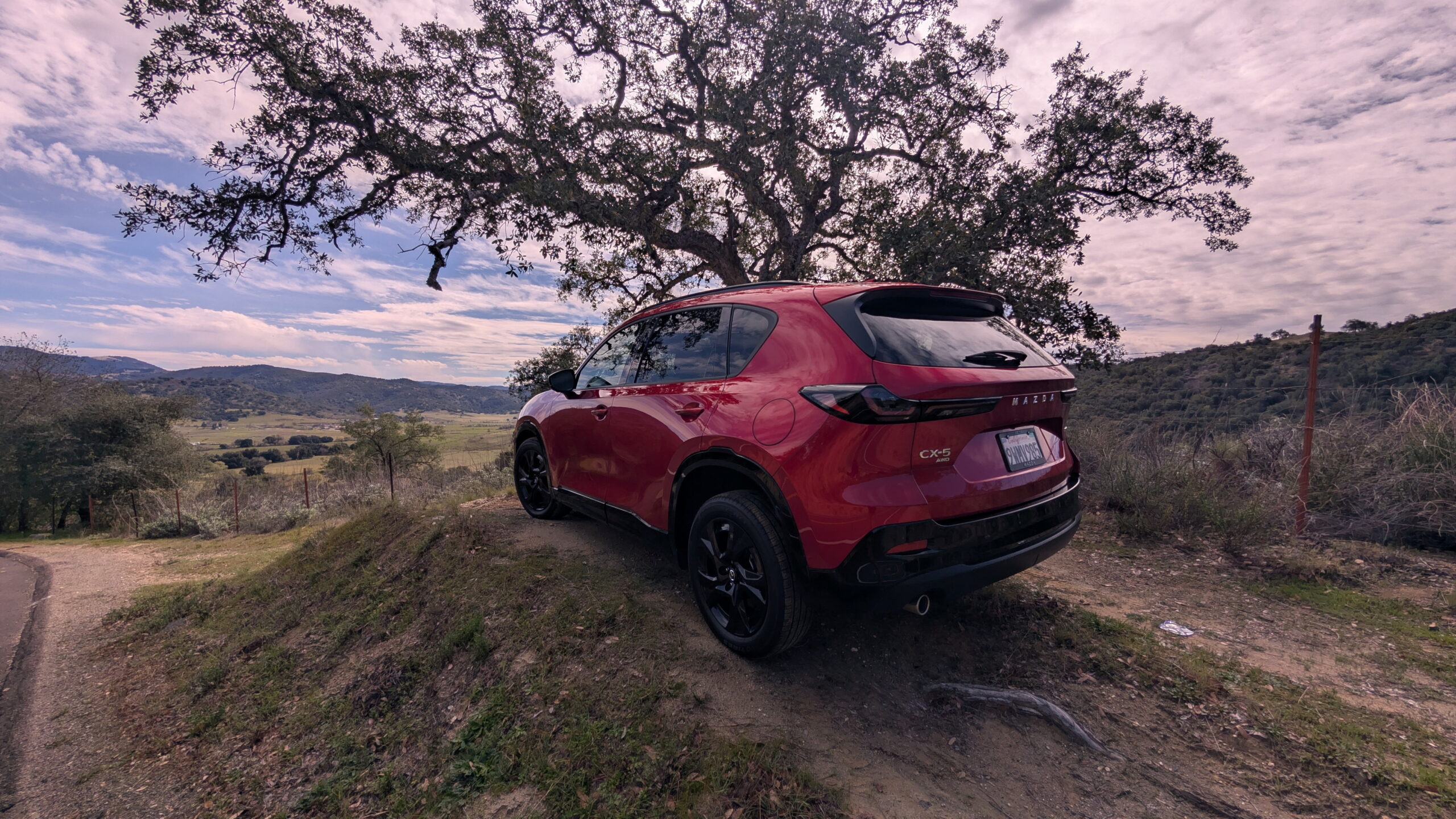











Mazda has spent the past few years sidestepping the design arms race playing out across the industry, and the all-new CX-5 doubles down on that restraint. Much of the market seems obsessed with constant model revisions, ever more elaborate lighting signatures, oversized grilles, and styling that shouts from across the parking lot.
Review: The New Mazda CX-50 Is A Gateway To The Great Outdoors
You could imagine Mazda leaning into that with a clean-sheet redesign. Instead, it remains almost stubbornly calm about the whole thing.
That restraint feels intentional. This new SUV clearly evolves from the car it used to be. But at the same time, it’s far from flashy or wild. You won’t necessarily look back at it after parking it. Spend a little time around it, though, and you begin to see what Mazda appears to be chasing: longevity.
Quick Facts
The last CX-5 was on sale for almost a decade. That’s almost double the time that the first version was available. Now, this third-gen car could be poised to last even longer should Mazda play its cards right. To find out just how good or not it is in the real world, we traveled to Encinitas, California, to drive it in traffic, around canyon roads, and on long stretches of abandoned roads. Read on to find out how it fared.
What Actually Changed Outside?
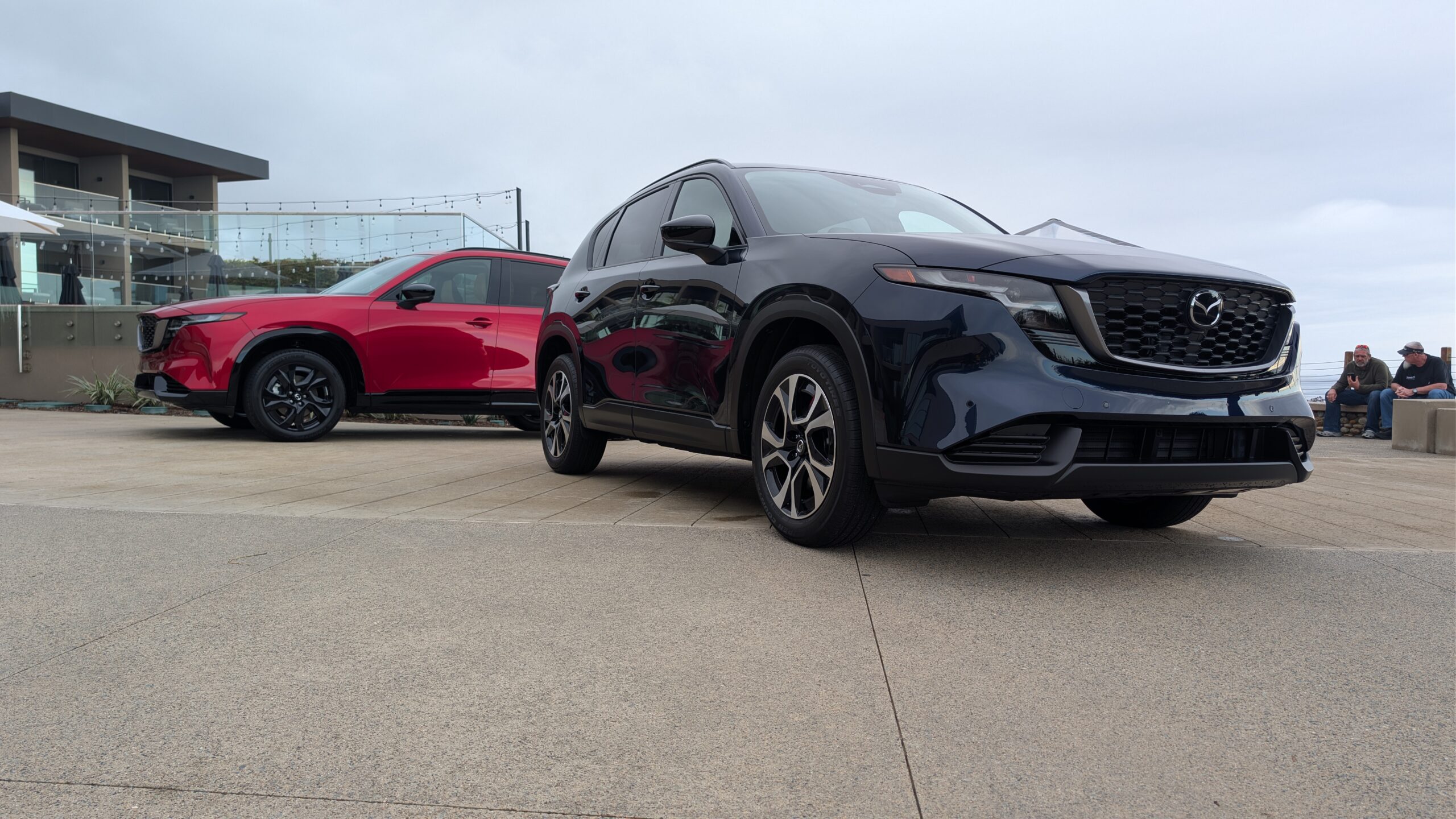
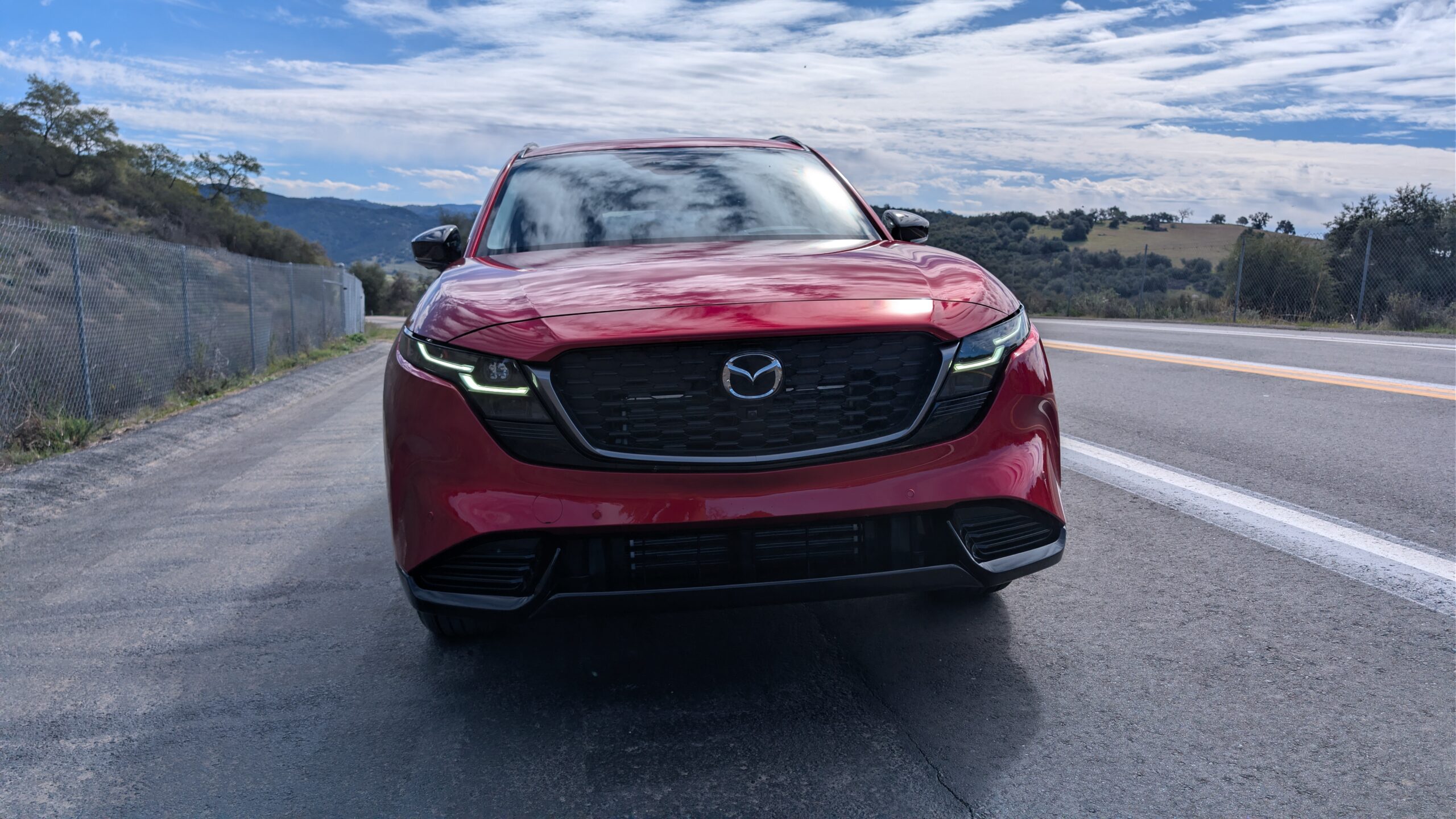
The exterior design simply matures what the outgoing CX-5 had already built. It’s smooth, it’s sleek, and it’s clearly more of an urban cruiser than it is a rugged weekend overlander like its wider CX-50 sibling.
To my eyes, the headlights and taillights are the biggest changes and the most outstanding of the group. They’re sharper. They’re modernized. And they’re attractive and unique. Mazda put the paintbrush down on each at just the right time.
Review: The 2026 Nissan Kicks Isn’t Bad, It’s Just Surrounded By Good Choices
The body itself is unquestionably larger, and that may be its weakest visual trait. It looks slightly more bulbous than before. Whether buyers will overlook that in exchange for added practicality is hard to say, but crossover shoppers tend to prioritize space over sculpture, so it likely won’t matter much.



Photos Stephen Rivers / Carscoops
What stands out most is the lighting. The new signatures give the CX-5 just enough attitude without turning it into a cartoon. The wider visual stance helps too, and the updated rear lettering subtly pushes the vehicle into Mazda’s new design language alongside the larger CX-70 and CX-90.
If you want personality, Soul Red still does the heavy lifting. Without it, the CX-5’s biggest styling trick is simply not trying too hard.
A Cabin That Punches Up
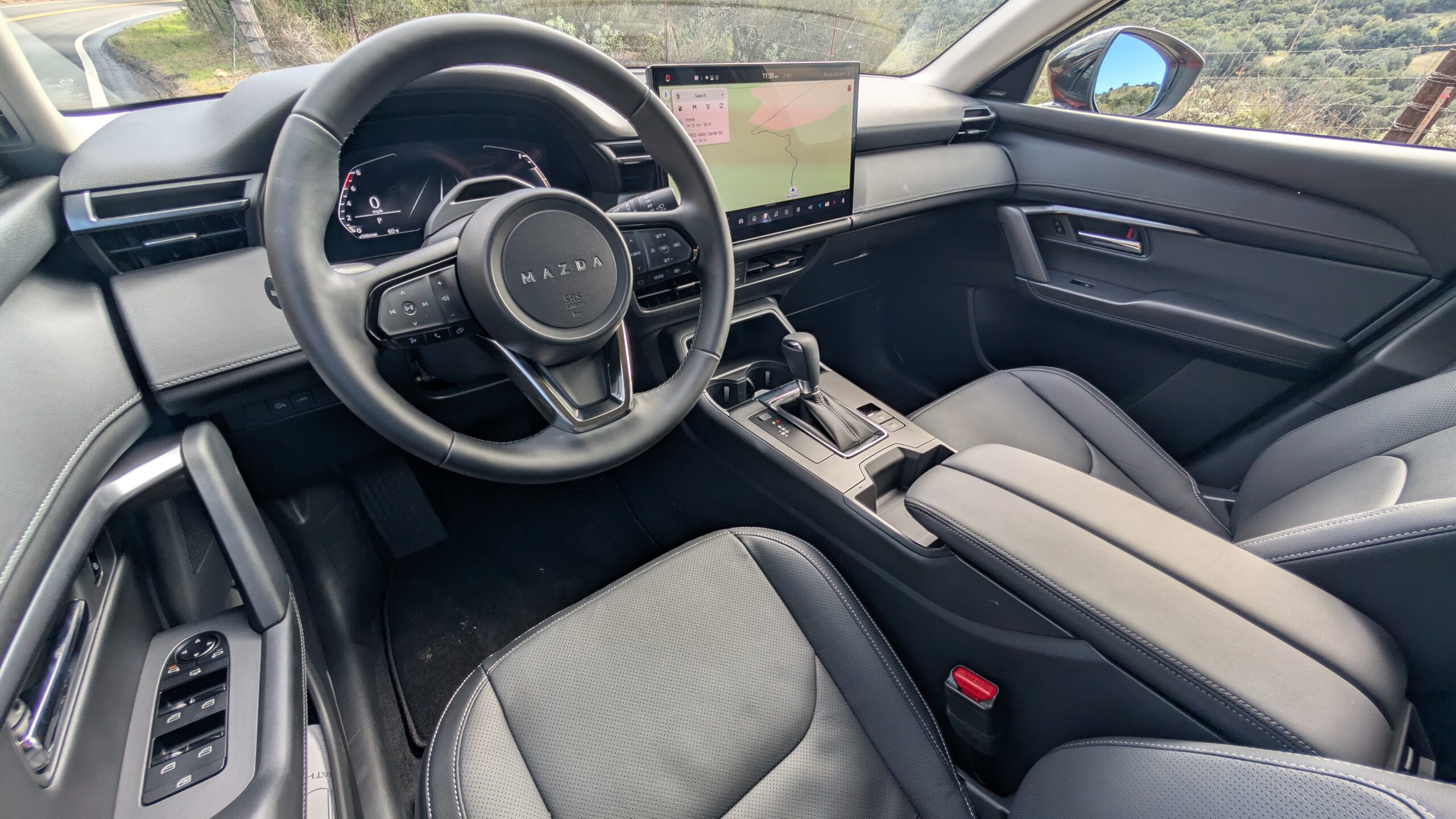
Step inside and you’re immediately reminded why Mazda keeps punching above its class when it comes to cabins. The company clearly chose where to spend and where to save. The upper dash isn’t especially plush, but the places you actually touch feel more expensive than most rivals.
The switchgear feels solid. The layout is clean and intuitive. And yes, piano black plastic is mostly gone. There’s a little on the steering wheel, arguably the worst place for it, but otherwise Mazda exercised welcome restraint.
Review: The 2026 Kia Sportage Hybrid Makes Pricier SUVs Feel Like A Bad Deal
Technology has also taken a step forward. Depending on trim, you get a 12.9-inch or optional 15.6-inch touchscreen with Google built-in integration. This is probably the largest change to old-school Mazda fans. The Command Control knob setup is gone, and while I’ll miss it, plenty of buyers will be excited to get a large screen with clean, intuitive controls.
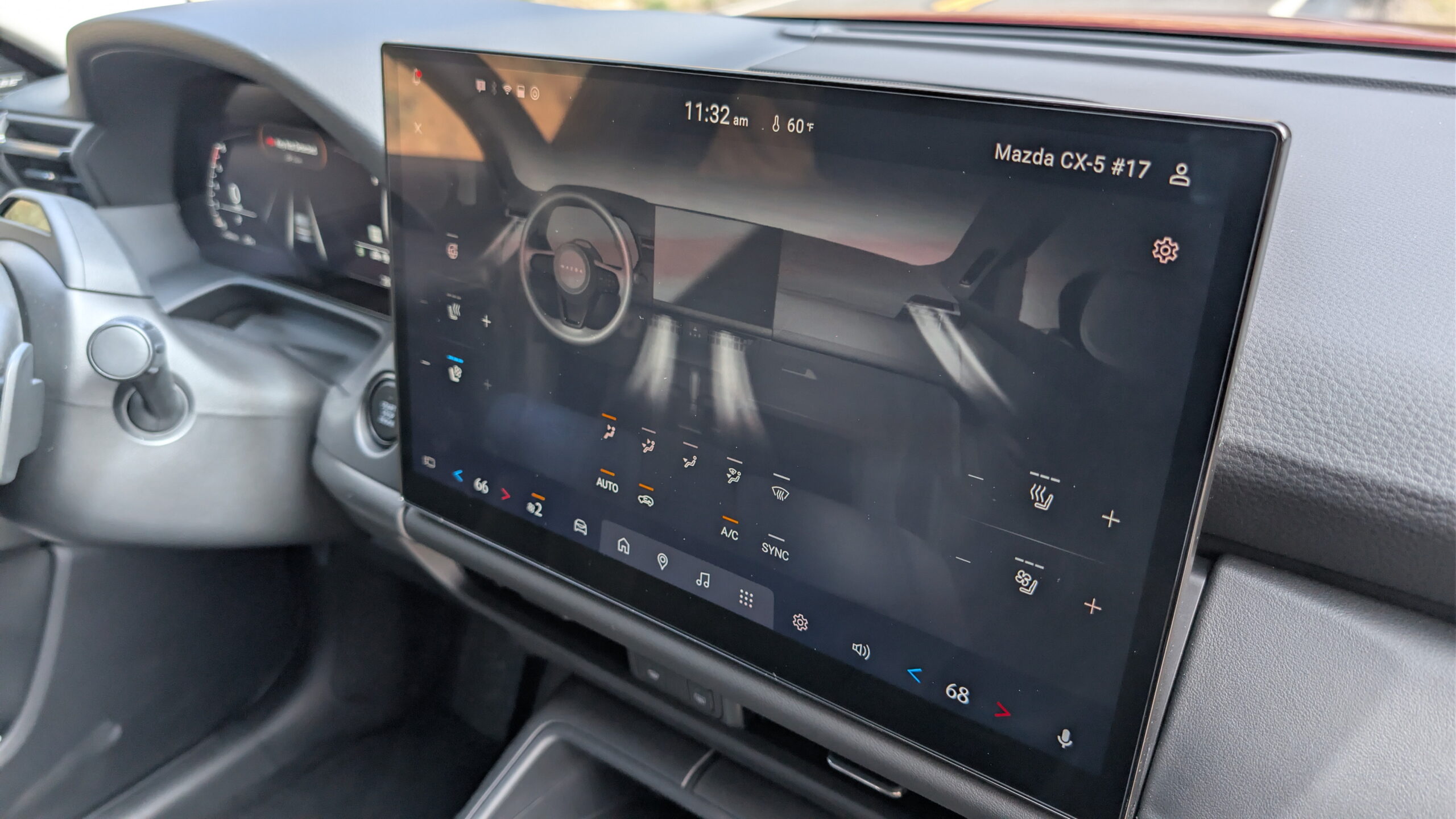
The interface feels modern without overwhelming the cabin. The only ergonomic gripe I ran into was the cupholder placement. They sit farther forward than expected, which means even with long arms you’re reaching more than you should. Still, the biggest story isn’t the dash. It’s behind you.
Is This The Roomiest Rear Seat In Class?
Over the course of a week, I drove the latest Nissan Frontier, the Toyota BZ Woodland, and the Toyota C-HR, before getting a chance to sit in the rear seat of the new CX-5. The Mazda makes them all feel cramped. It might be the most efficient use of newly added inches to a car in a long time.
The only vehicle I’ve driven in recent memory that felt so spacious is the Volkswagen ID.Buzz. That’s how spacious the rear seat of the CX-5 is. It’s unreal how much legroom and headroom it has. At 6’6’’ I didn’t come close to touching the back of the front seats or the roof. I imagine this is how most cars feel for average-height individuals. It’s really that impressive.

The best part of that back-seat space is that the cargo area doesn’t suffer for it. We should also highlight how the rear seat splits 40/20/40. This should be more standard across the industry because it’s so useful. Now, owners can load longer objects like surfboards, hockey sticks, skis, and more without giving up one outboard rear seat.
Mazda made a point of how the seats fold flat, and it’s true that they do, but we should point out one issue. Objects with smaller feet or rollers can still get stuck between the cargo space and the seatbacks. Sure, that’s annoying, but it’s an edge case for most buyers.
More: Only $90 Separates The New CX-5 From The CX-50
Notably, the opening of the rear brings us back to a point that affects all four doors. Mazda made the cargo opening larger than in the past, and they made the rear doors open to a full 90 degrees. Ingress and egress are key points in the design. The load floor in the rear is lower than in the past as well. All of this spells out just how thoughtful and careful Mazda was when putting this car together.


Photos Stephen Rivers / Carscoops
What makes all of this more interesting is that Mazda didn’t simply stretch the CX-5 and call it a day. Bigger crossovers usually lose some of the tightness that made them appealing in the first place. Add space, add weight, soften the suspension. That’s the normal formula. The CX-5 takes a different path.
Review: The 2026 Jeep Wagoneer S Is Fast, Comfortable, And Wearing The Wrong Badge
Despite the larger footprint and obvious practicality gains, it still feels engineered around the driver first, which makes what happens once you actually get moving all the more surprising.
Driver First Dynamics
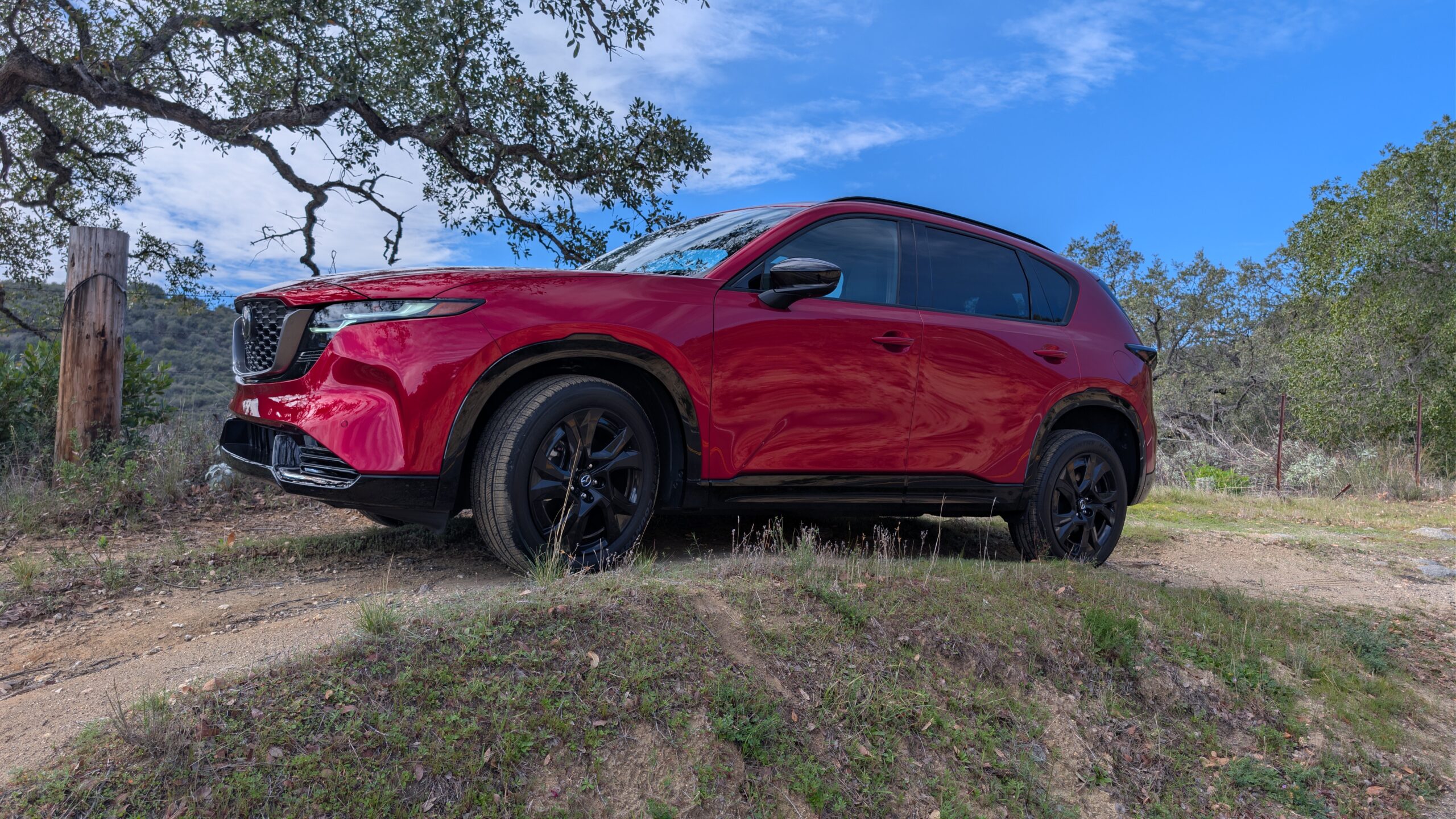
The way the CX-5 navigates the world is both excellent and frustrating. Let’s get the biggest problem out of the way first, then we’ll dip into the good stuff and finish with the practical reality. No matter which trim you choose, you’re working with 187 horsepower (139 kW) and 186 lb-ft (252 Nm) of torque. It doesn’t feel like enough, and that’s especially true considering the rest of the segment and this car’s fit within it.
More: Mazda’s CX-5 Cost-Cutting Starts Where You Touch First, But It Won’t Stop There
Up against something like the FWD Honda CR-V, it’s fine, even sharper to drive, but a 0-60 time of around 8 seconds by our guess is objectively slow these days. If that wasn’t enough, the new RAV4 offers more fuel economy and more horsepower. That said, there are some parts to get excited about.
The new linear dampers control body motion earlier in the suspension stroke, and it’s immediately noticeable. This CX-5 feels calmer and more controlled than both the outgoing model and even the CX-50 over broken pavement. Classic Mazda steering remains. It’s nicely weighted, direct, and refreshingly free of artificial numbness.
AWD That Actually Pulls Its Weight
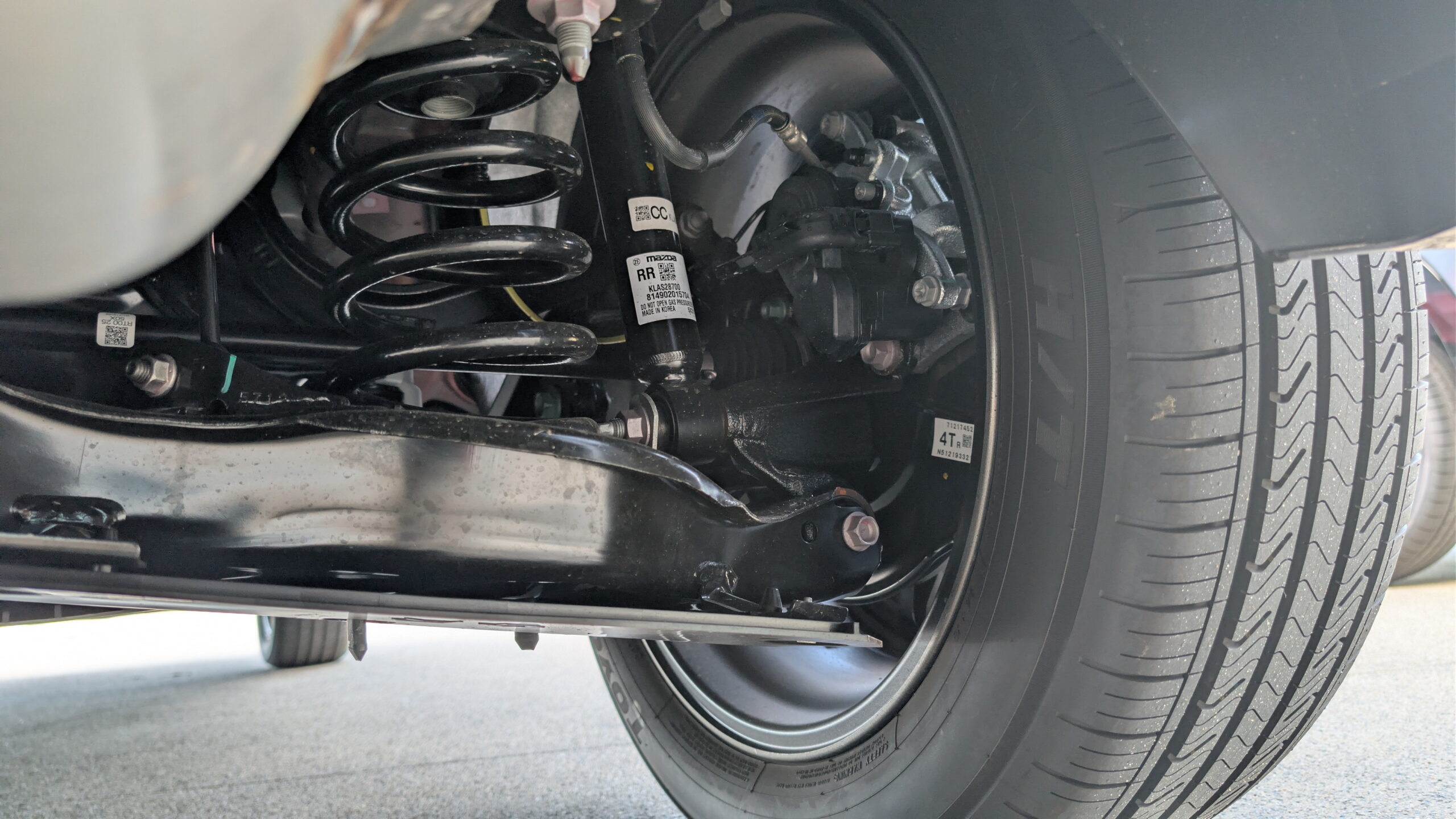
This thing has the same AWD system as the CX-50. That might not sound like much, but it basically means that it can withstand more abuse for longer. In most situations, it trundles along with a heavy front-wheel-drive bias. The system is always pre-loaded in these situations so that it can more quickly shift torque to the rear.
While you’ll never get the back end to slide out in dry conditions (without seriously sketchy input), that’s not to say that the CX-5 isn’t engaging to drive. This SUV also borrows Mazda’s G-Vectoring Control Plus (GVC Plus) system from the CX-50. Often overlooked, the technology adds a very subtle helping hand in corners through software.
More: Mazda’s New EV May Not Arrive Until 2029 After Quiet Delay
The car’s CPU is constantly monitoring things like speed, steering angle, pedal engagement, and more. GVC Plus can use those data points to cut torque as one turns. That’s akin to an old-school racing car driver skill called trail braking, which helps to improve front-end bite and traction.
Then it can also add braking force to individual wheels on the inside of the turn. That’s akin to torque vectoring, the same tech found in some supercars. Both help the CX-5 (and by extension the CX-50) manage corners, all corners, more adeptly. This software hangs out in the background and helps every driver manage the wheel with more accuracy and skill, even if they don’t realize it.
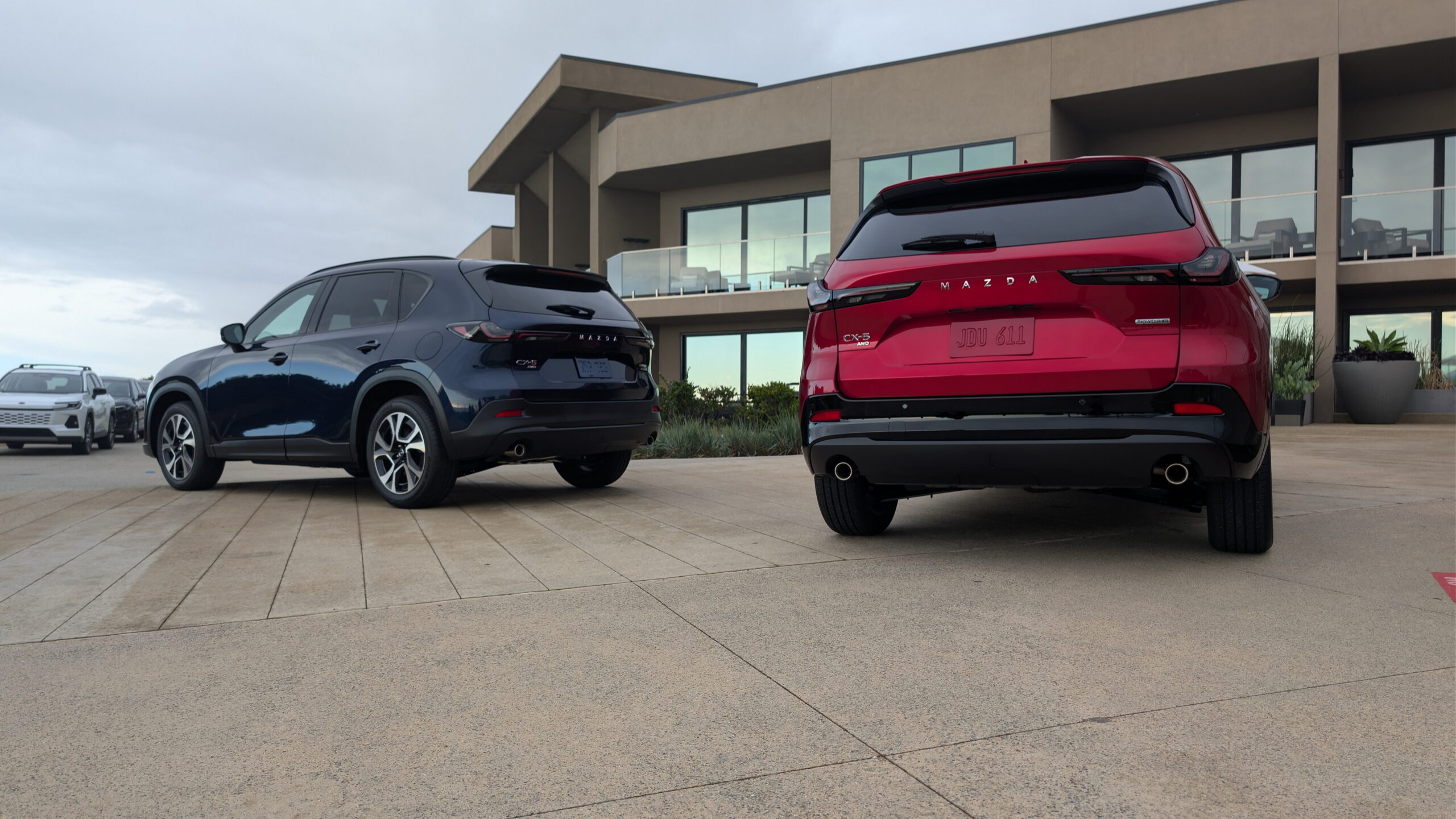
The downside of a car that leans into athletics is that it can sometimes suffer from middling fuel economy. That’s essentially where the CX-5 falls, or at least did during our day with it. It achieved 22.4 mpg across a mix of conditions, including highway, freeway, city, and pleasure driving. That’s a long way from what cars like the Honda CR-V and Toyota RAV4 offer, but neither of them handles this well either…
Facing The Segment Heavyweights
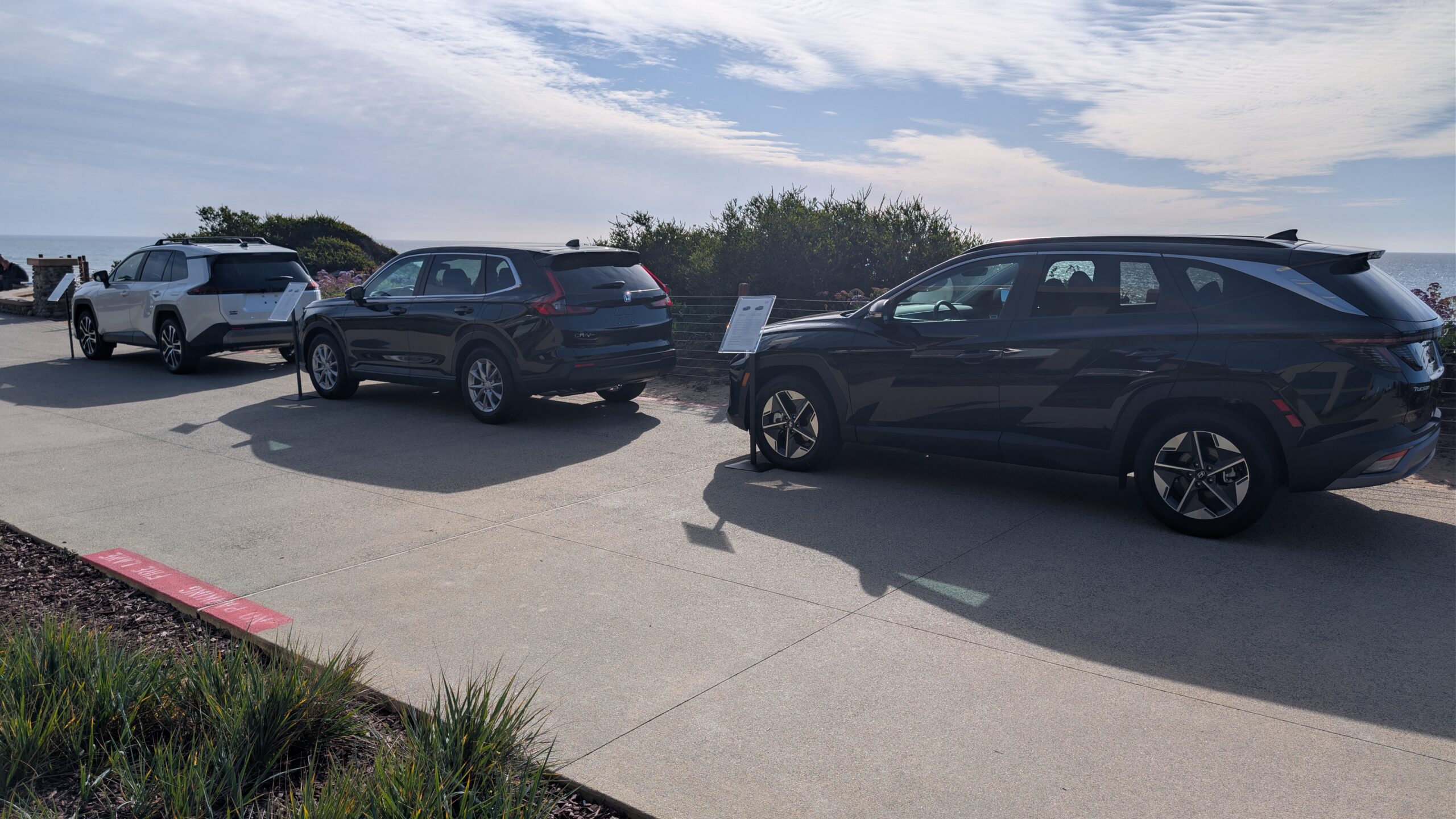
Mazda deserves credit for how it framed the competition. Just about every brand loosely mentions rivals. What I’ve never seen is a brand brave enough to bring out examples of those rivals. That’s exactly what Mazda did. And it didn’t pull punches or play tricks either.
Instead of bringing stripped-down base trims, it lined up the CX-5 directly against equivalent versions of rivals like the CR-V, Tucson, and RAV4. That honesty works in the CX-5’s favor. This kind of move takes real confidence in one’s product.
Also: World’s Least Powerful Gullwing Door Sports Car Finally Gets The Mazda Rotary Power It Deserved
The Mazda clearly wins when it comes to driving engagement and interior execution. The cabin feels richer, the steering feels alive, and the chassis makes everyday driving more enjoyable. That said, it’s worth noting what’s not on the spec sheet Mazda cooked up.
Rivals offer stronger fuel economy, more horsepower, and, in the case of Hyundai and Kia, significantly longer warranty coverage. This isn’t a knockout win for Mazda. It’s a values decision.
Still The Enthusiast’s Choice
The 2026 CX-5 feels like Mazda doubling down on a very specific philosophy. This is the crossover for people who still enjoy driving. The ones who notice steering feel, who appreciate good damping, and who want something that doesn’t feel numb or over-isolated. At the same time, it’s now genuinely family-friendly thanks to its huge rear seat, wide door openings, thoughtful cargo area, and strong safety focus.
Would I like more horsepower? Absolutely. Better fuel economy? Without a doubt. The segment proves you can have both, often in the same showroom. Yet in a class fixated on efficiency charts and feature counts, the CX-5 still feels as though it was engineered by people who care, first and foremost, about how a car actually drives.
If your top priority is maximizing fuel efficiency or getting the most power per dollar, you should keep shopping. But if you want something that feels genuinely rewarding to drive every day, and still works brilliantly for kids, cargo, and real life, the new CX-5 deserves to be near the top of your list. It’s not flashy. It doesn’t chase headlines. It just works. And it works really, really well.