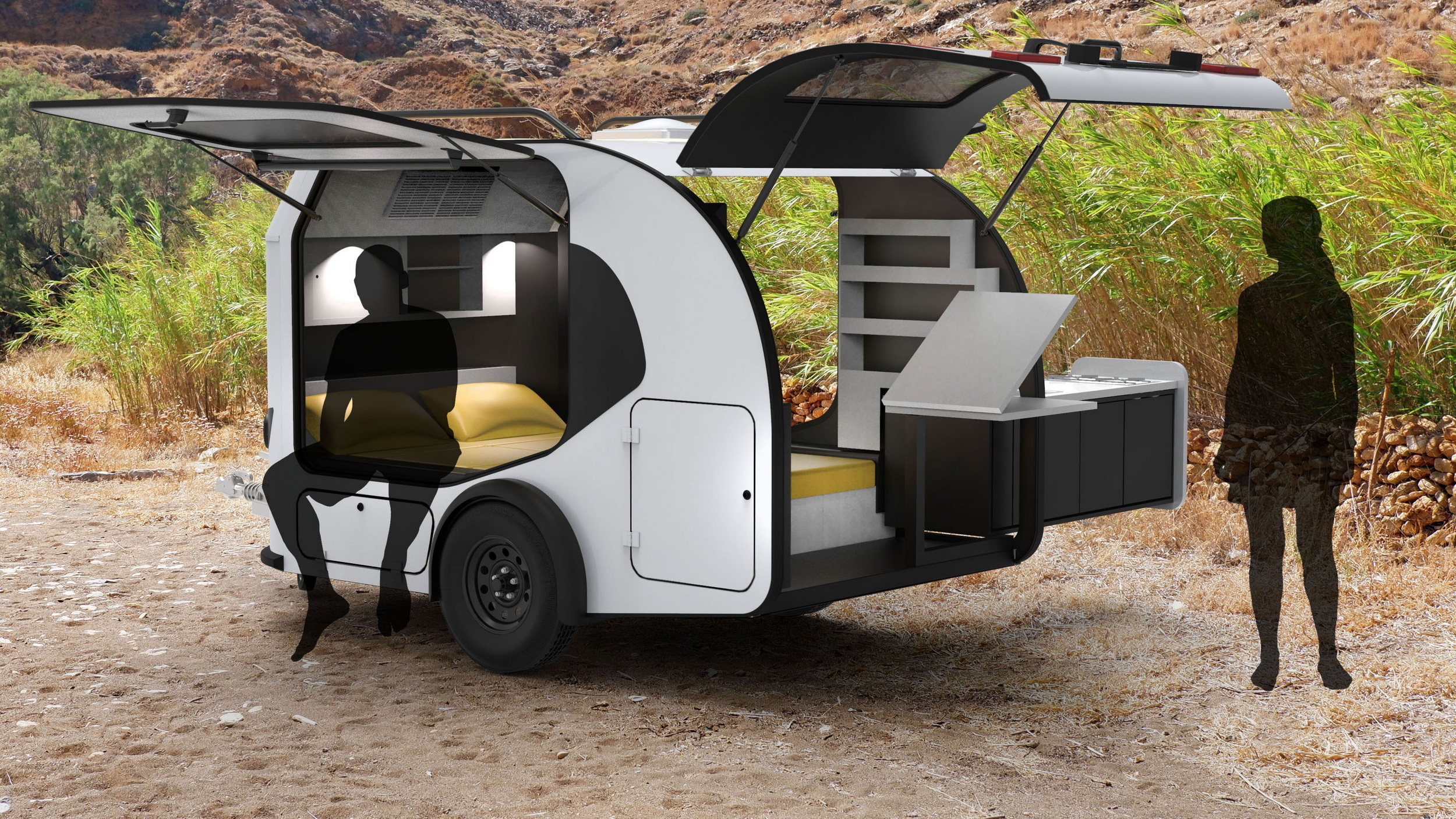









- I helped develop a compact, lightweight caravan design.
- The teardrop aims to bring hotel-like comfort outdoors.
- It is affordable, modular, and easy to tow with small cars.
Campervans and motorhomes promise open-road freedom, fresh air and Instagram-ready sunsets. But what if your budget says “festival tent” while your expectations say “boutique cabin”? That’s where the teardrop trailer comes in, the smallest and lightest form of caravan, and arguably the most sensible gateway into van life without the van.
Also: Honda’s Futuristic Camper Looks Like A Concept, But You’ll Soon Be Able To Buy It
Plenty of companies now offer high-end teardrops loaded with premium finishes and matching price tags. This project aimed in the opposite direction. I was involved in developing a budget-friendly teardrop camper that evolved into a surprisingly complete concept.
A Design Engineer’s Side Project



Although I have spent more than a decade writing about cars, I actually graduated as a design engineer, which explains how I ended up involved in this project. The original brief came from a customer who later chose to step away from the project.
Even so, the rest of the team, including Vasilis Spandagos, Thanos Pappas, and Eirini Tzavara, carried it through to a well-documented concept stage, ready for further development into a prototype and, ideally, a production model.
Designed For Budget And Practicality
The goal of our teardrop was simple: make camping more appealing and more accessible to a wider audience on a lower budget. It was also designed to be highly customizable, with a long list of optional extras that can bring a touch of hotel-style comfort into the wilderness.
Perhaps just as crucial, it had to be compact enough to fit in a standard parking space and light enough to be towed by the kind of small hatchbacks and SUVs that dominate European roads.
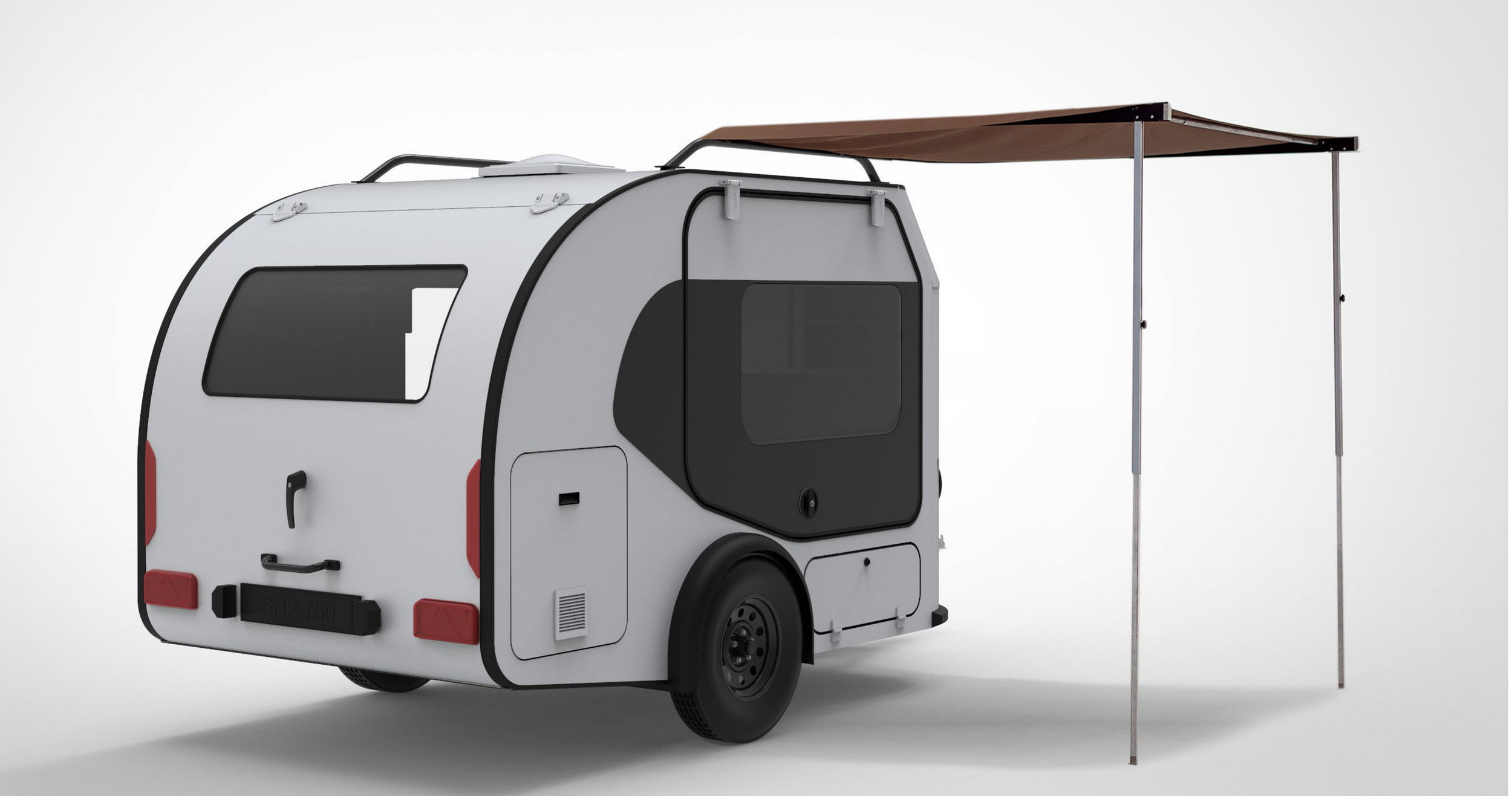
The decision to go with an aluminum exterior shell dictated much of the design. To keep production costs down and avoid expensive molds, the panels had to remain flat or use a single curvature. Even within those limits, we added decals, light-inspired reflectors, and subtle surfacing to give it a bit more visual character and aerodynamic efficiency.
More: VW’s Biggest Motorhome Is A Tiny House On Wheels
Details such as the fender extensions, exposed hinges, functional roof rails, black steel wheels, and the spare tire help give it a tougher, more outdoorsy appearance.
Compact But Roomy


Our teardrop measures 2,921 mm (115 inches) long, 1,747 mm (68.8 inches) wide, and 1,850 mm (72.8 inches) tall. The small footprint makes it easy to maneuver on narrow European roads, simpler to park, and more convenient to store when not in use. We also ensured that ground clearance, as well as approach and departure angles, are comparable to those of an SUV.


Access to the interior comes via two large side doors with integrated windows, along with the rear hatch. All three open upward, helping occupants feel more connected to their surroundings. If the weather is not ideal, the insulated aluminum shell and secure locking mechanisms create a safe, sheltered place to rest.
More: Pininfarina Designs Luxury RV That Expands Into A Mini Mansion
The cabin sleeps two adults on a double bed, with additional space for a young child or pet on the rear bench. Storage compartments for luggage and personal items are located under the bed and along the front and side walls.
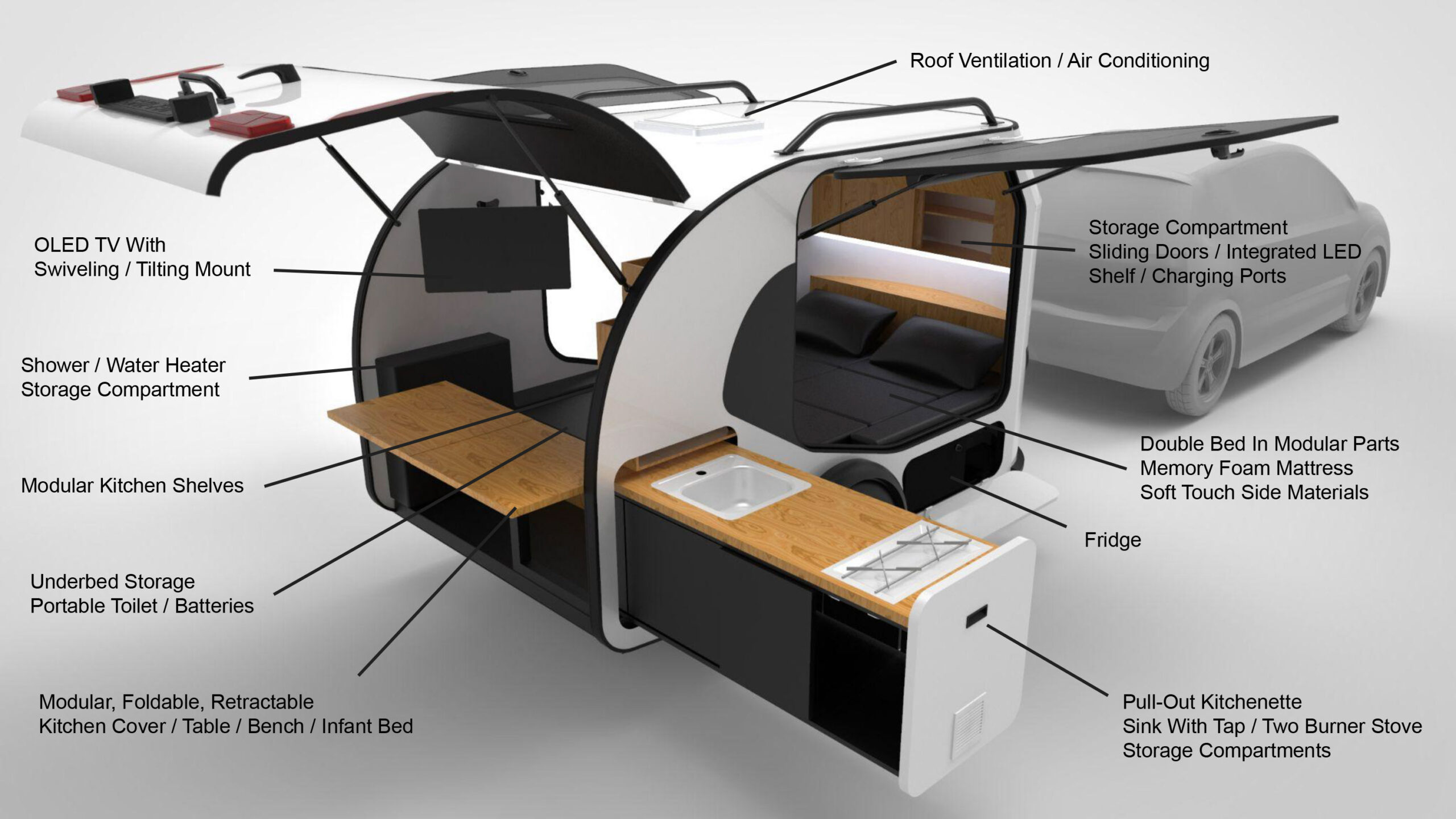
The memory-foam mattress is split into removable sections, allowing access to the under-bed storage and enabling it to transform into a couch. Soft-touch side padding and pillows complete the setup, turning a compact space into a genuinely comfortable lounge and sleeping area.
Wooden cubbies on the front wall are designed for clothes, books, and personal items. They can be fitted with reading lights, sliding doors, and USB charging ports. Optional LED ambient lighting in the roof adds a warm glow at night, giving it more of a boutique cabin feel than a basic campsite.
A Sliding Kitchen Setup


One of the highlights of the concept is the rear kitchenette. Unlike rival products, this is accessible both from inside and outside thanks to a sliding mechanism. This also means it can easily move out of the way and allow access to the cabin from the rear hatch. The sliding module has a two-burner gas stove, a sink with tap, water tanks, and space for your cutlery, tableware, pans, and pots.
Furthermore, there is a foldable and removable bench above the kitchenette that can serve as a dining table, a mobile work space, or even a small bed for a baby, toddler, or pet.
More: Space Camper Turns Your Tesla Cybertruck Into A Tiny Mobile Home
Depending on the specification, the equipment list can stretch to include a range of modern amenities. An OLED screen on a tilting, swiveling mount lets users watch their favorite shows from inside or outside the teardrop, with portable Bluetooth speakers handling the soundtrack.
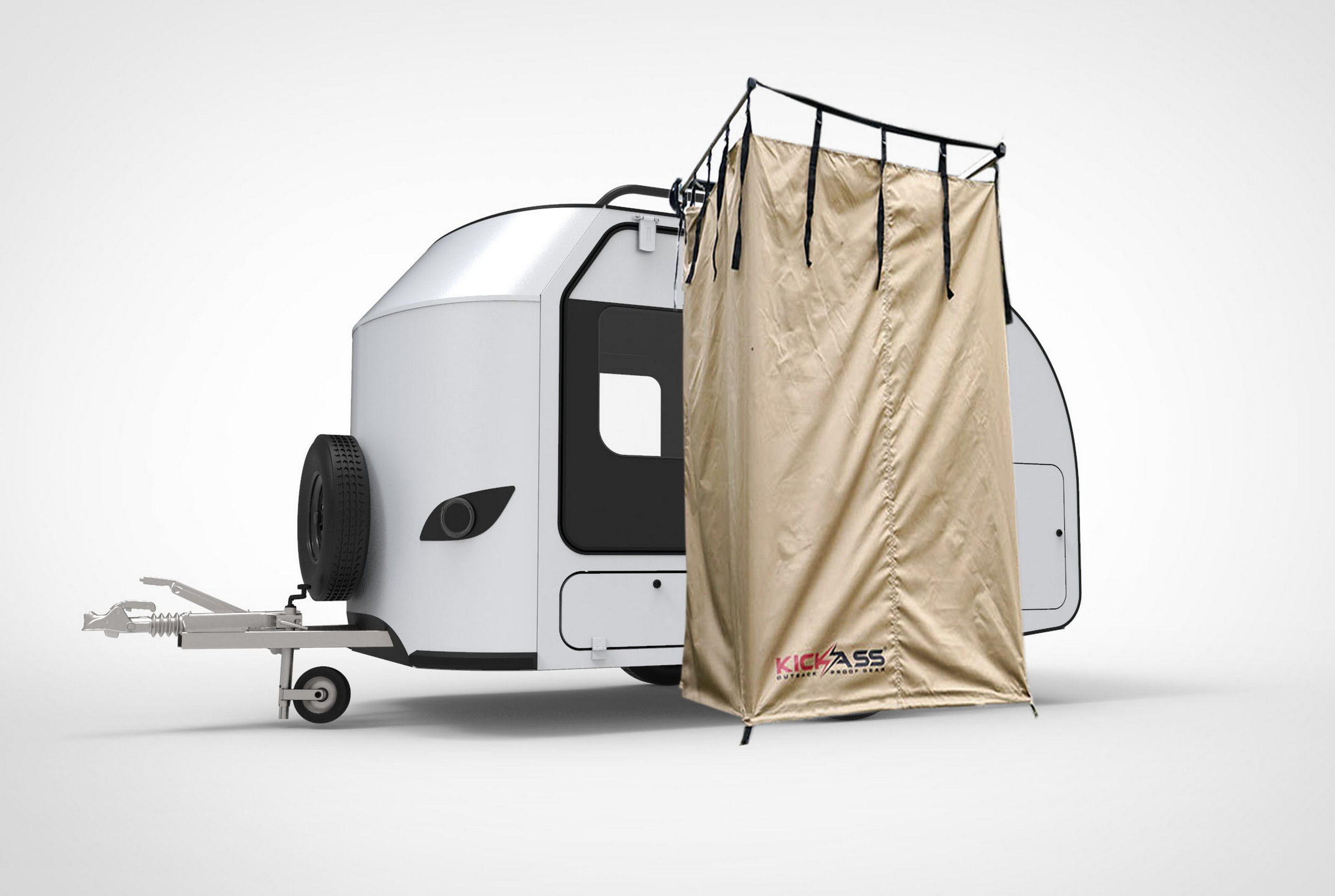
There is also a drawer-style fridge on the left side, roof ventilation with optional A/C, a portable toilet that fits under the mattress, and an outdoor hot-water shower system.
Solar panels can be added to the roof to charge the batteries and extend off-grid capability. Alternatively, a roof tent can sleep two additional people, increasing total capacity to five. A foldable awning expands the shaded area already created by the upward-opening doors.
Could It Reach Production?
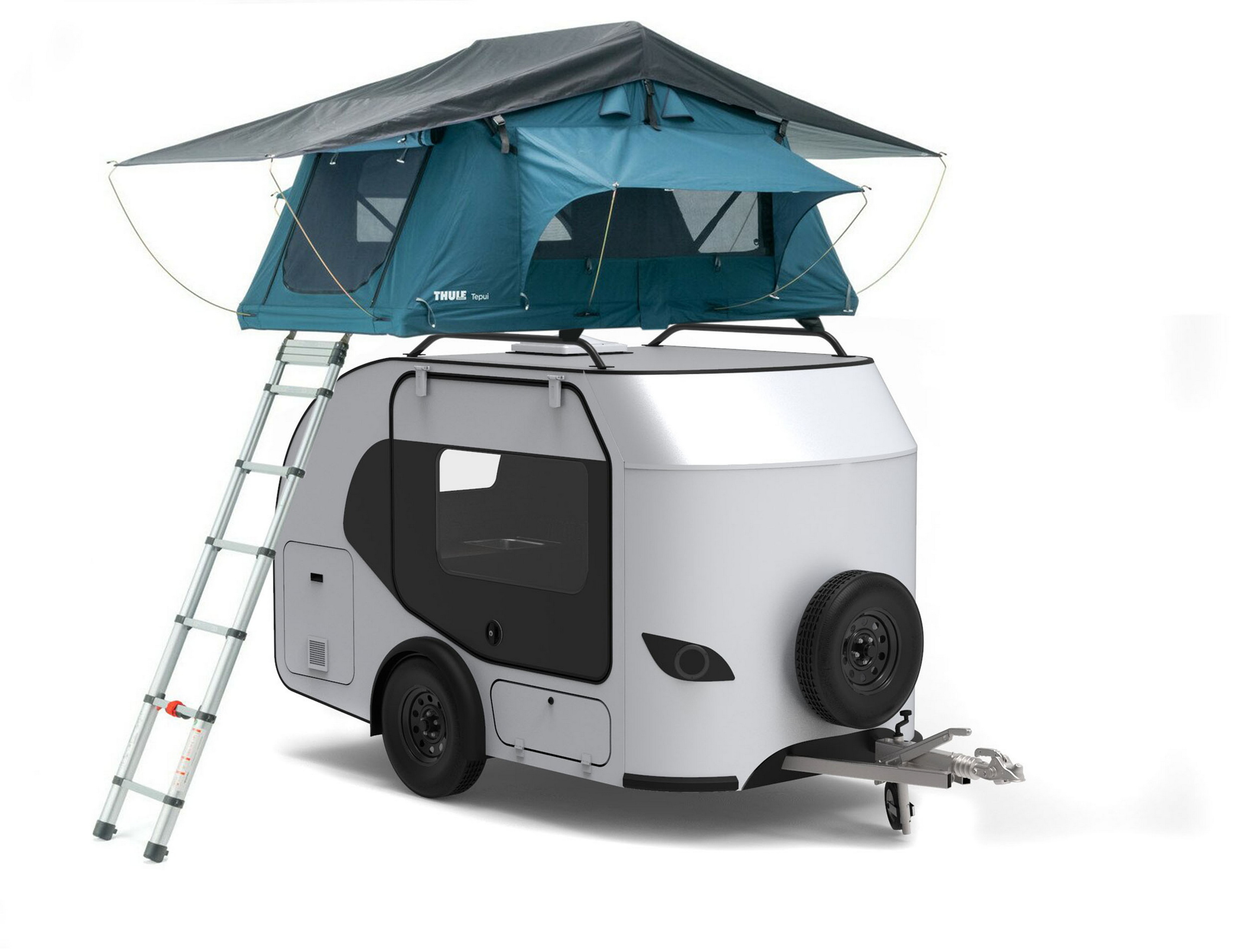
Currently, our teardrop trailer only exists in the digital world. However, it was conceived from the get-go with low production costs in mind and could realistically be built by a small team. The next step would be a full-size prototype to act as proof of concept, enabling proper testing and refinement before any serious move toward production.
Final pricing would hinge on production scale, material choices, and the options box you decide to tick. The aim, however, would be a starting price close to $10,000, rising to around $15,000 for a fully specified example like the one shown in the renders. That would undercut most rivals and stay true to the core idea of making compact camping accessible to a wider audience.
As this is a project I have been personally involved in, I’m genuinely keen to hear your comments and suggestions below.