













Don’t let this make you feel too old, but the C8 Corvette has been around for just over half a decade. In that time, it’s already made a big name for itself. The first mid-engine Corvette of its kind has spun off trims that put real fear in the hearts of those who own supercars.
In fact, we can say that from experience after testing several different versions. The E-Ray, ZR1, and ZR1X all put down performance figures that sound too good to be true. In many ways, though, they exist to punch Ferraris in the mouth and then ask what they plan to do about it.
The base Stingray isn’t that car. The specs on paper look a lot more earthly and less like unobtainium. In fact, we just spent two weeks with just such a car. Equipped with the Z51 performance package, our test car stickered at $96,795. That’s a lot of cash. Even before you start ticking boxes, you are looking at $77,100.
Quick Facts
*Manufacturer
So here’s the real question. Can the “base” Corvette, even one equipped with Z51 package, be anywhere near as compelling as those halo trims? Usually, entry-level trims exist mainly to make the range-toppers seem irresistible. In this case, the answer isn’t so simple.
Styling



Photos Stephen Rivers / Carscoops
Roswell Green shouldn’t work. I told a few folks during testing that I was piloting a green Corvette, and almost universally, they had a look of disgust on their faces. Then I showed them the car in person. Most shades of green come off as too muted or too loud. This one is neither. It’s deep. Rich. Metallic in a way that absolutely detonates under sunlight. We’ll skip the alien jokes, but suffice it to say, it entrances people the way something not from this planet might.
More: This New Corvette Could Be The Sweet Spot We’ve Been Waiting For
Really, though, the paint is just a small portion of what is an already engaging shape. The mid-engine proportions aren’t cosplay. The intakes gulp in real air; the hips are wide because of them. The spoiler is doing real work. The nose can be super-low and aggressive. The entire package screams performance because that’s exactly what this car is about.
For all of the comments about how this “looks like a supercar,” it’s important to remember that it does so because it is one. Park it next to a Ferrari, Lamborghini, McLaren, or Porsche, and it doesn’t shrink. If anything, it stands proud.
Interior
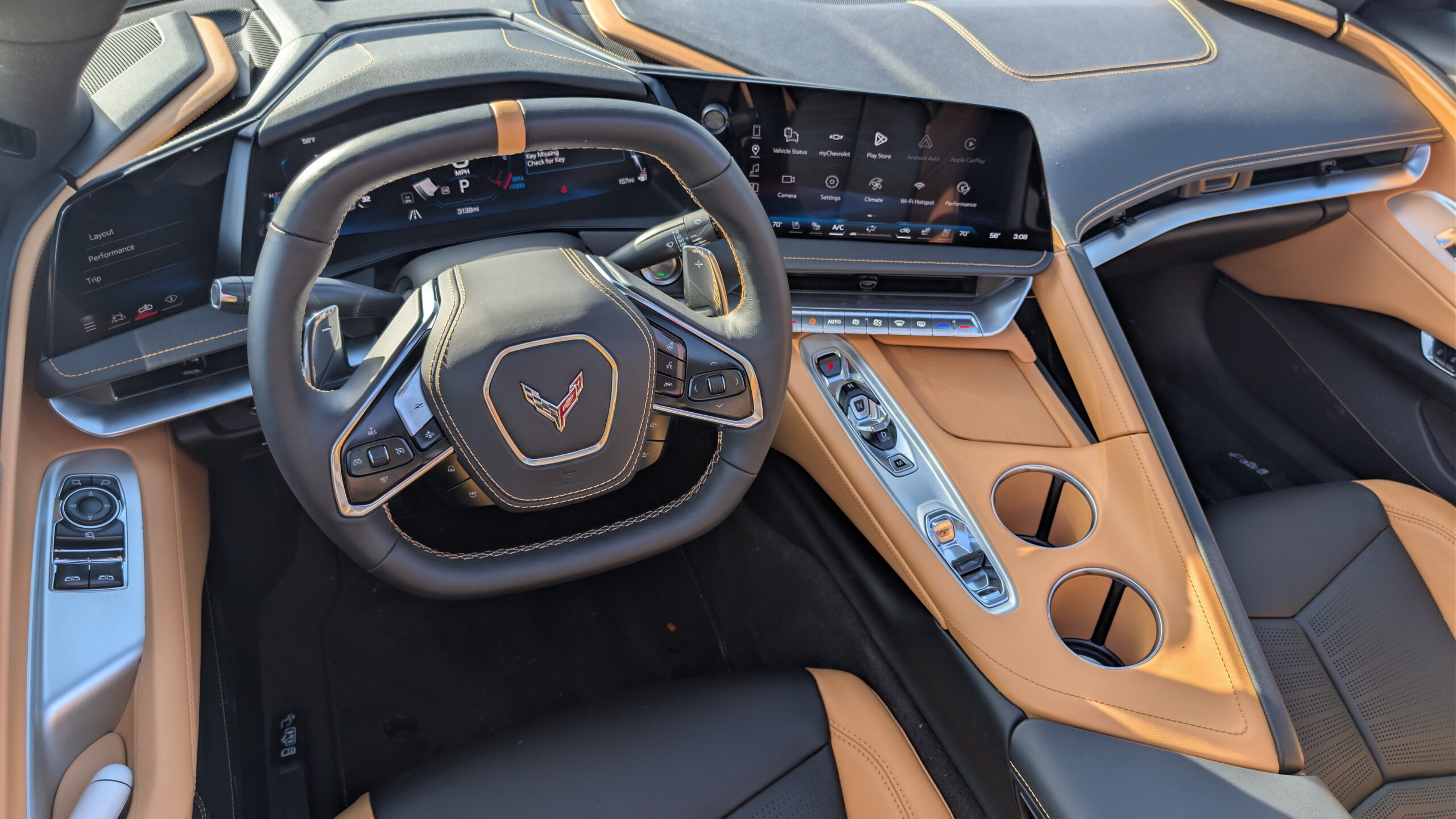
If something about the cabin of this 2026 Corvette stands out, it’s the change in the wall of buttons that used to sit between each occupant. I personally liked the drama of that setup, but the new layout is cleaner and objectively more intuitive.
The cabin is unapologetically driver-focused. The seating position is laid back, almost Formula 1-esque, compared to a normal car. That posture helps mitigate the limited headroom available, but taller drivers will still struggle. I personally wouldn’t want to test the rollover physics in this thing.
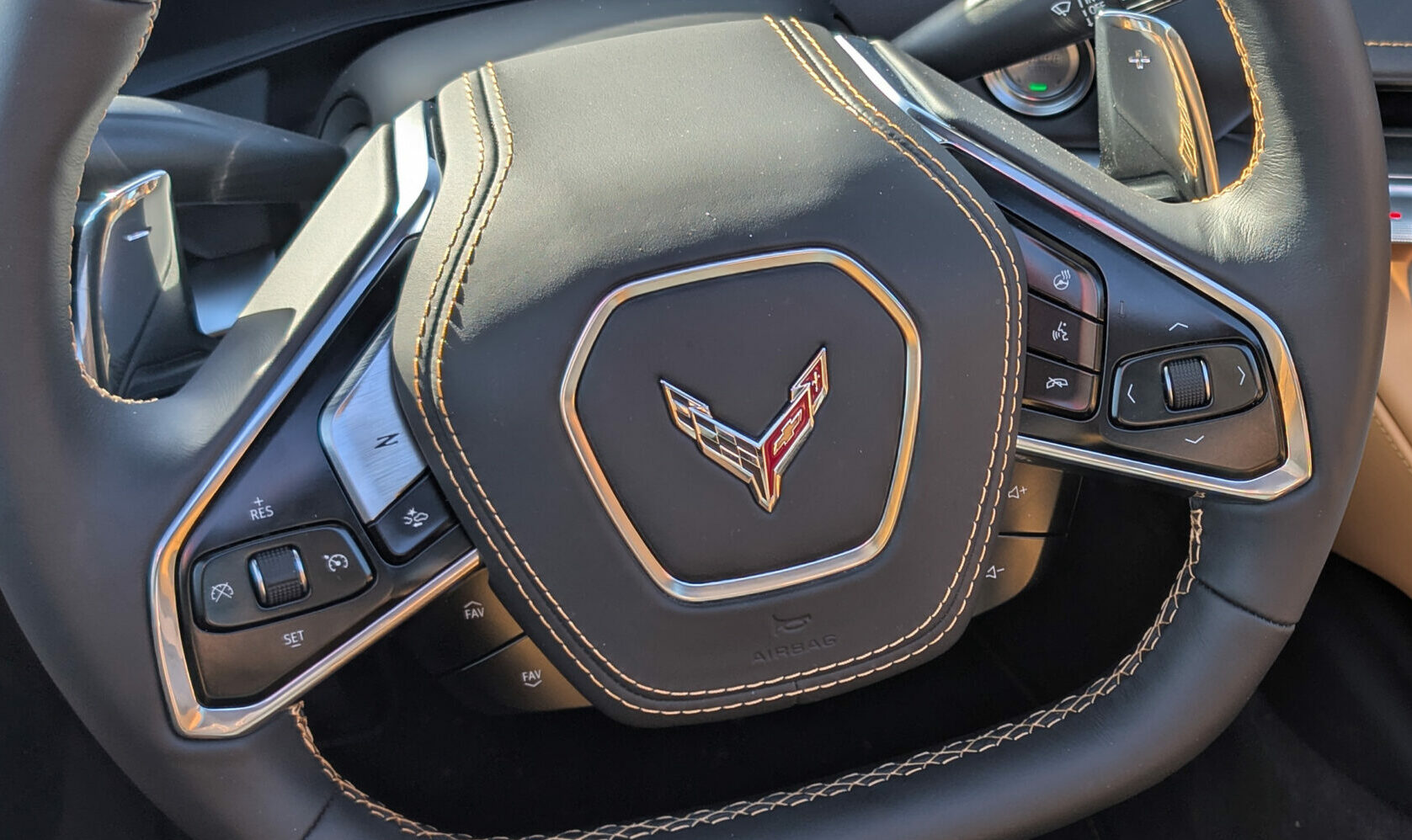
The steering wheel is a bit busy, but in a good way. Physical buttons, physical scroll wheels, and matte finishes combine functionality and tactile feedback in a pleasant package. They do show some fingerprints, but not obnoxiously so. Some switchgear feels overly familiar. For example, you’ll find some of the exact same switchgear in a Chevrolet Trax.
The infotainment system is a highlight. It’s sharp, easy to navigate, and quick to respond to input. The gauge cluster provides vital data and is configurable, and the small screen to the left of the gauge cluster is a great little touch that makes the cockpit feel more like a fighter jet. Chevrolet saw fit to include physical HVAC controls with a silver finish that resists smudges. That’s another smart choice.
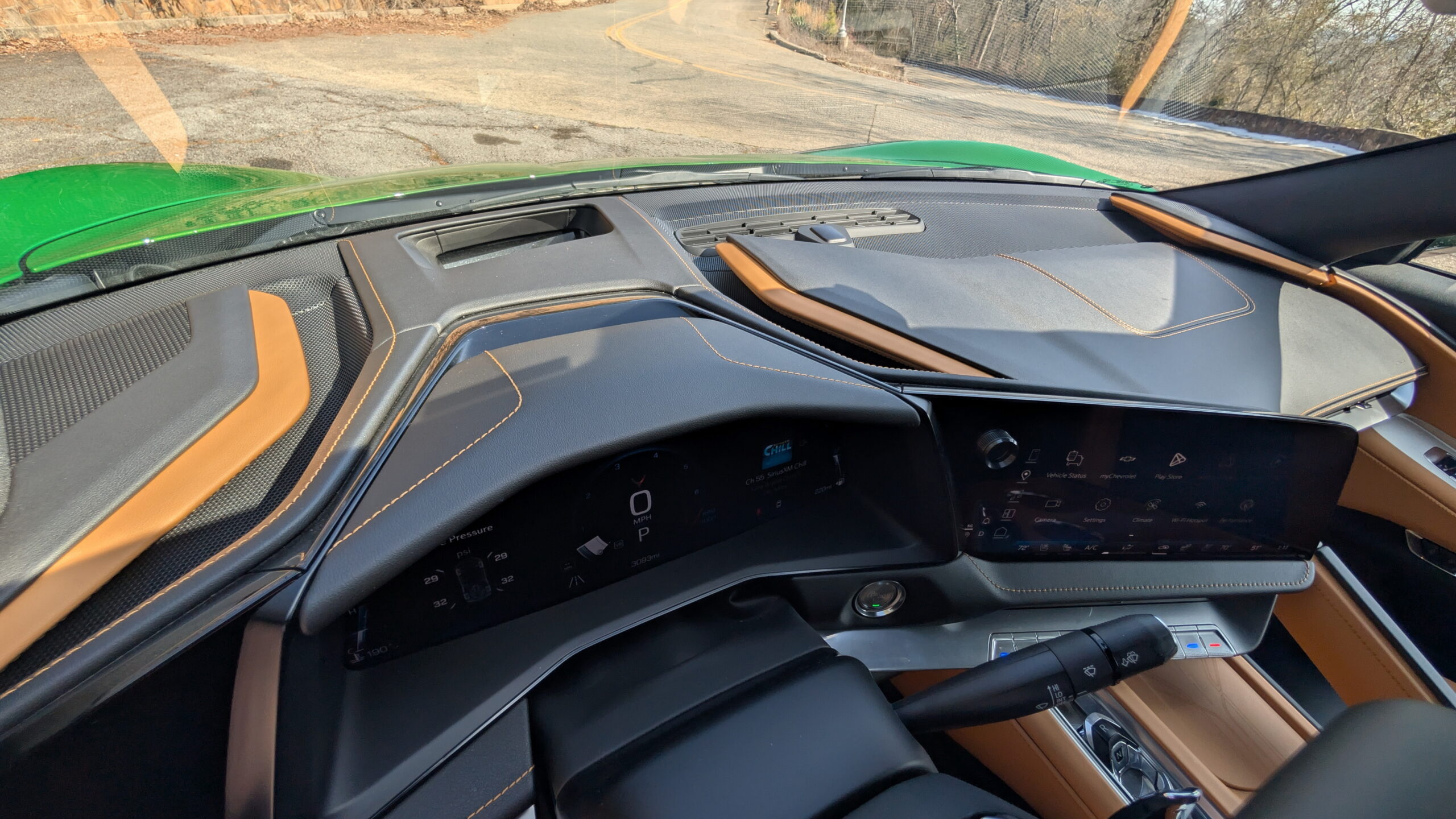
The integrated phone holder in the center console is a tiny detail that shows real thought. It’s subtle, compact, and works brilliantly. Two wireless chargers, one tucked between the seats, reinforce that this is a performance car built for daily use. The dash carries subtle stingray-inspired sculpting that adds visual interest where things might otherwise feel flat.
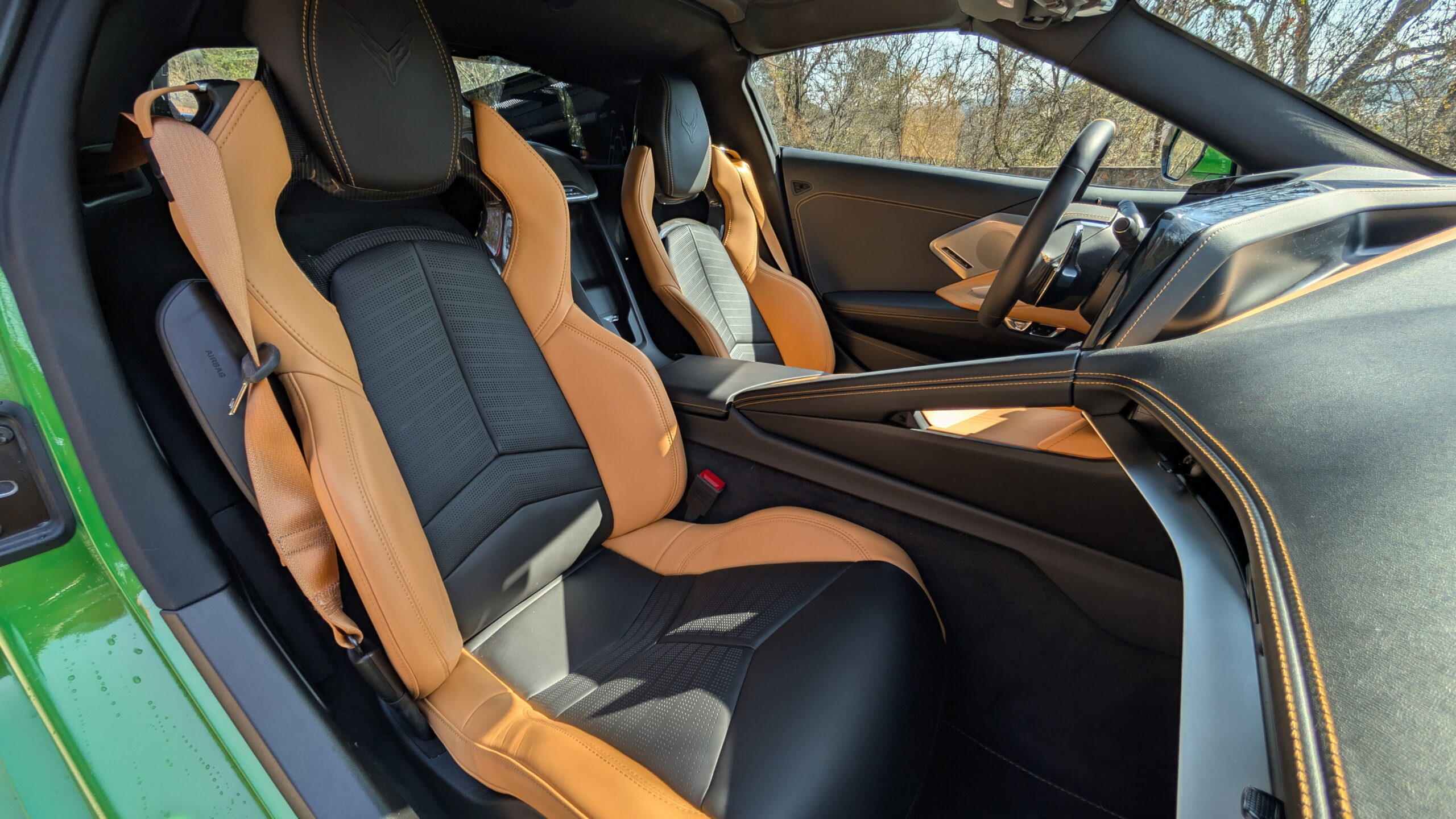
Comfort is impressive given the car’s size. Storage isn’t abundant, but it’s usable. And the Bose system? Slightly above average. You probably won’t use it much anyway. The V8 soundtrack is better.
Drive Impressions
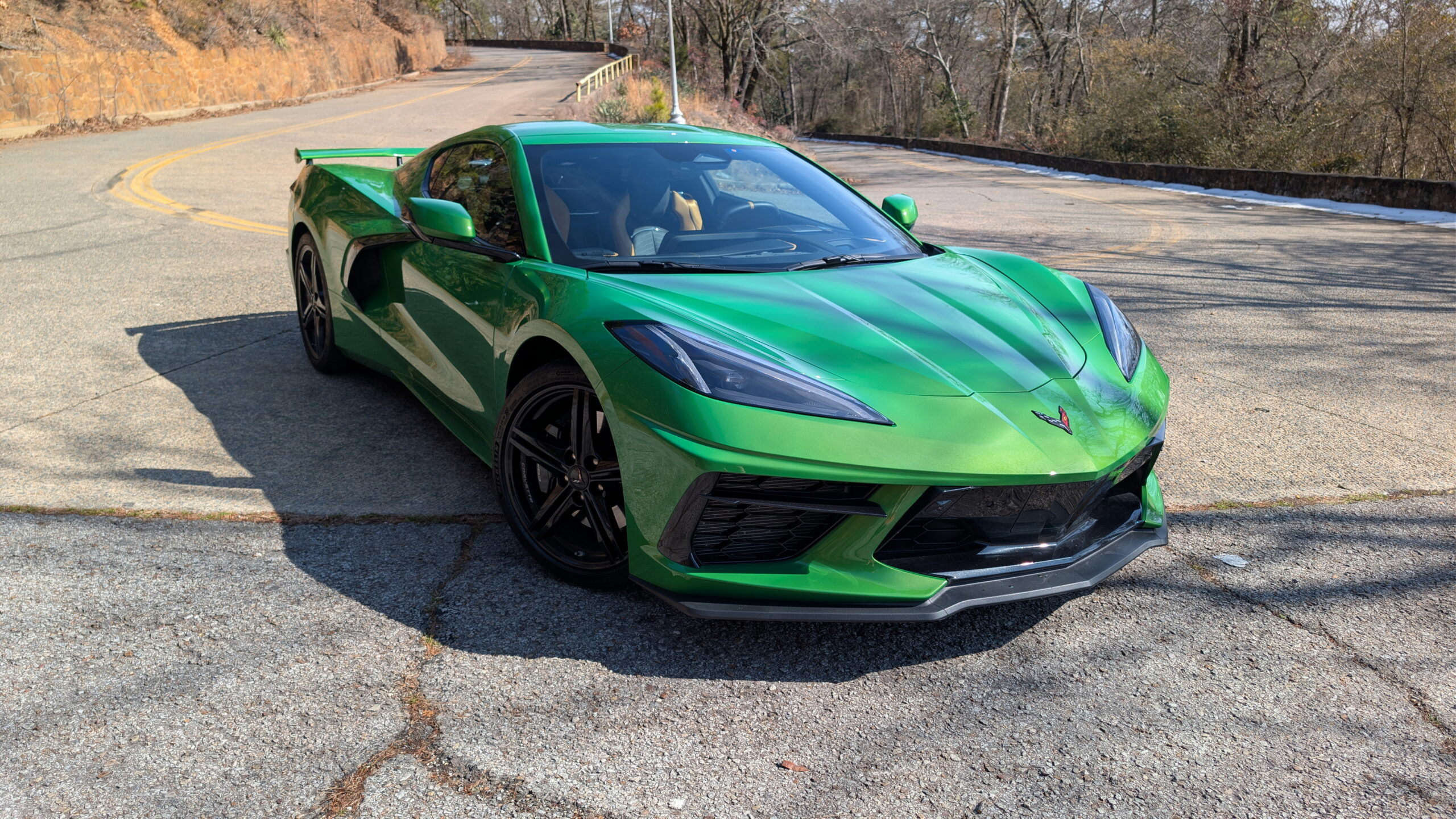
It’s amazing. It really is, and don’t get us wrong – for $96,000, or even $77,100, it should be. But allow us to lay out what this car is and how it accomplishes what it does. The Z51 package on this car adds a revised rear axle ratio, high-performance Michelin tires, larger performance brakes, a performance exhaust, a heavy-duty cooling system, an electronic limit-slip differential, and a rear spoiler. Ticking an additional box adds the special magnetic ride control. Together, these options help the base Corvette take on a Jekyll and Hyde persona.
Trundle around town in Touring mode, and you’ll never feel uncomfortable, put out, or like you’re compromising comfort to drive a car as potent as this one is. The suspension is shockingly good at soaking up bumps. Navigating speed humps at pretty normal speeds is no big deal at all. While our test car had the optional axle lifter, we never needed it for everyday driving situations.


Photos Stephen Rivers / Carscoops
That experience is only elevated when pushing the Corvette hard. The V8 makes 495 hp (369 kW) and 470 lb-ft (637 Nm). It’s mated to a dual-clutch eight-speed automatic gearbox, and together, they can propel the car from 0-60 mph in just 2.9 seconds, though we could only manage 3.9 seconds in real-world conditions. Cooler temps and tire grip likely played a role. Some wheelspin was unavoidable, no matter how carefully we launched. Still, 3.9 seconds in imperfect conditions isn’t slow.
Thrashing it on a tight mountain road or over sweeping rural highways only serves to reinstate just how sharp and rewarding it is. The steering communicates clearly and consistently. You know what’s happening at the contact patch. The throttle response is nearly instantaneous, and the naturally aspirated V8 delivers power in a clean, linear surge that feels more honest than turbocharged rivals.
The dual-clutch is lightning fast under load. In traffic, it occasionally hunts for a gear. It’s rare, but noticeable. Do I wish it had a manual? Yes. This isn’t a 1,064-hp ZR1. A three-pedal Stingray would arguably be one of the best driver’s cars on the planet.
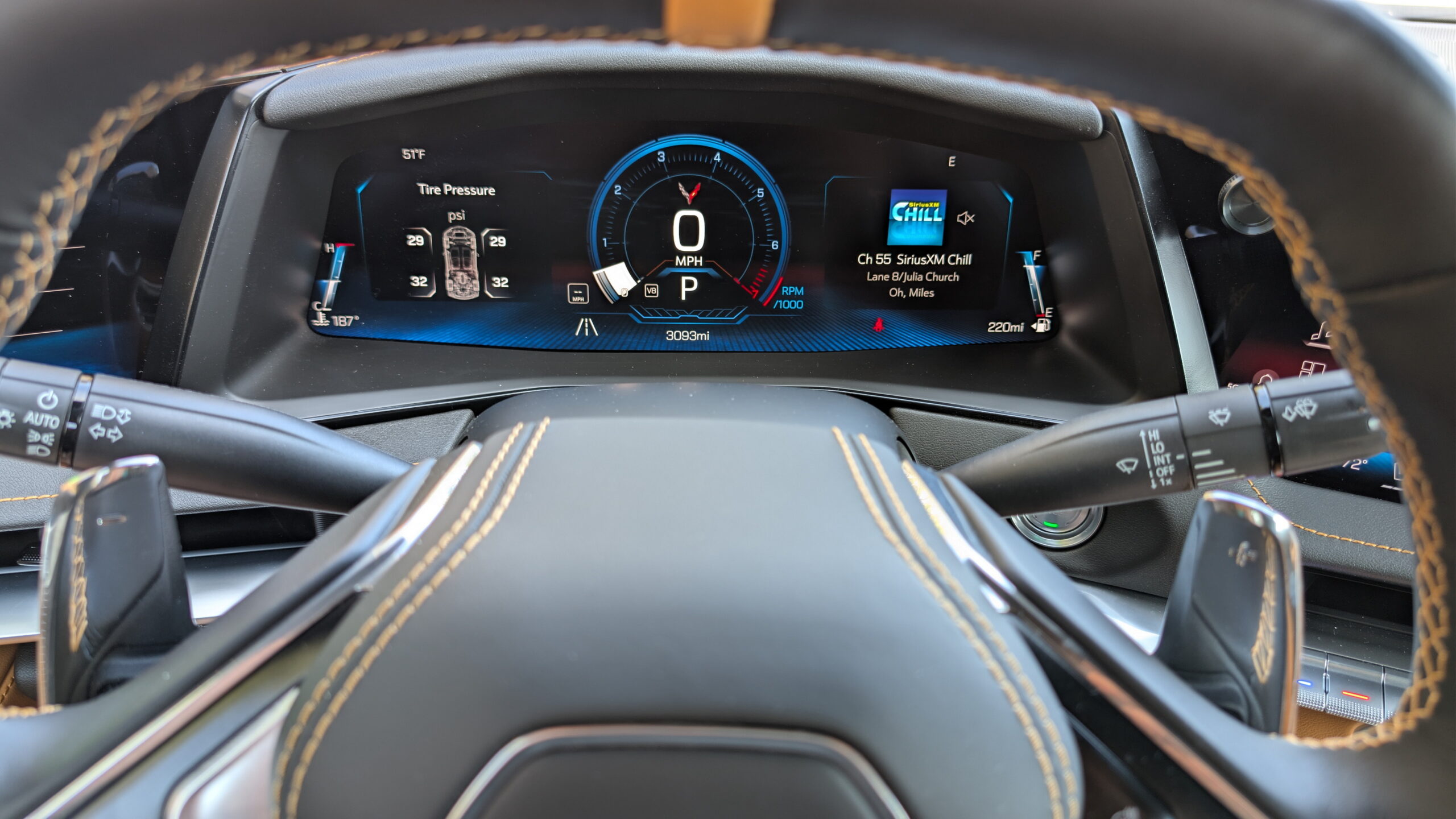
Want to drift? It’ll rotate predictably. Want to chase lap times? It’ll stick to the track and aid the driver in setting a new personal best. Want to hit the drag strip? It’s capable, even if our numbers didn’t match the brochure. That’s the big win here for buyers of the base Corvette.
Everyone expects the ZR1, the ZR1X, the Z06, and the E-Ray to embarrass exotics. Few expect it of the Stingray, but don’t sell it short. Track day lap times often come down to driver skill before outright power or price tag. The Stingray, especially with the Z51 package, is a car that, with the right driver, could easily outpace cars two or three times as expensive.
Real World Considerations
Fuel economy is rated at 16 mpg city, 25 highway, and 19 combined. We averaged 17.7 mpg in mixed driving. That’s surprisingly close to the EPA’s 19 combined rating, especially considering the temptation to use all 495 horsepower regularly. That’s also better than I get in my Ford Flex. That’s how far fuel economy tech has come in 15 years.
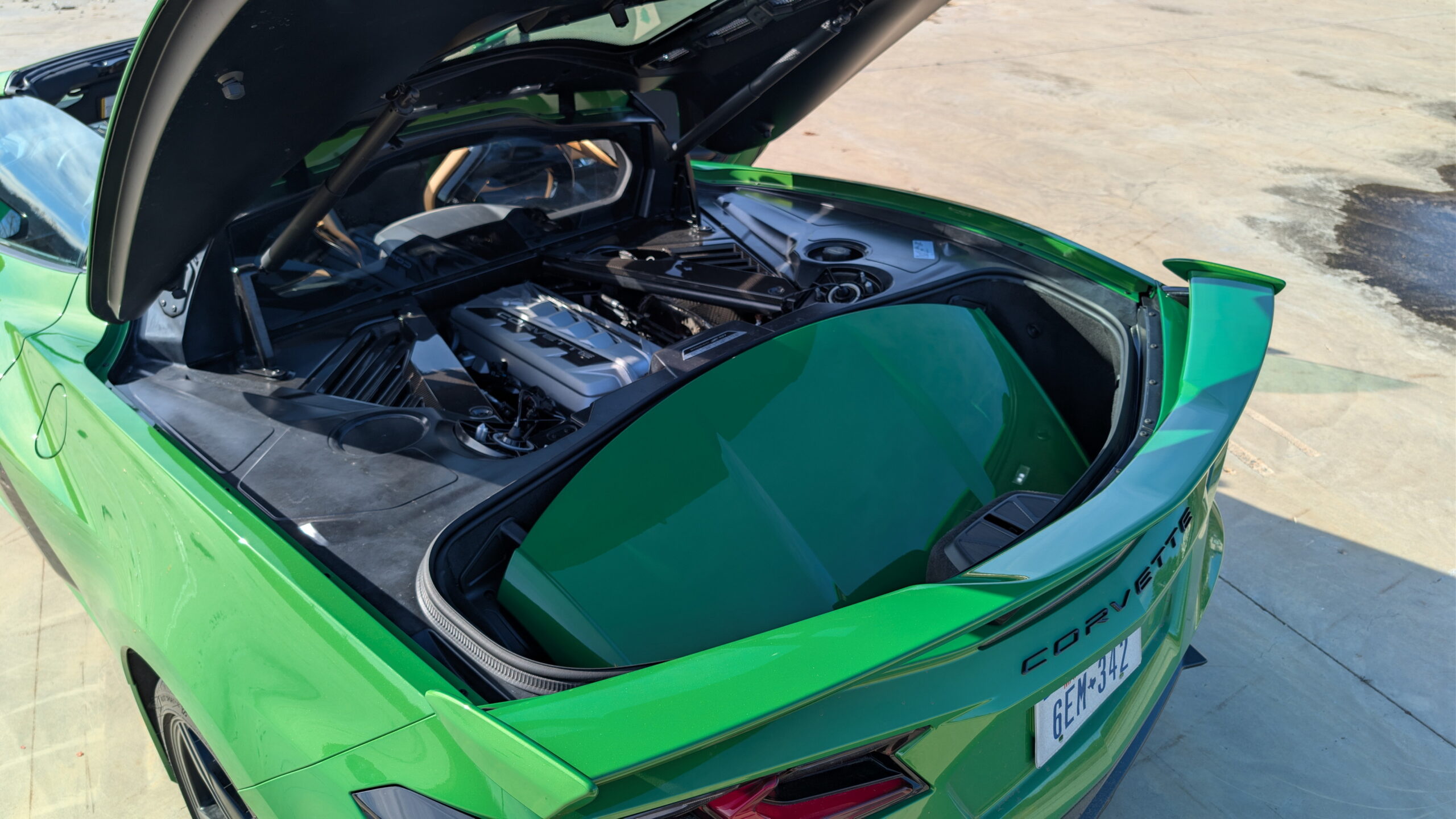
Thanks to the copious amounts of cargo space, it’s easy to actually use as a daily driver. I filled this thing up with groceries, supplies from the hardware store, and even hockey gear at one point. Chevrolet also thought well enough ahead that the targa top stores in the rear cargo area with ease. That leaves the front trunk wide open for a small carry-on or something similar.
It’s kind of absurd just how practical this supercar-killer is.
Competition
Nothing in the segment really matches the Corvette beat for beat, and that’s consistent across most specs on paper. The BMW Z4 isn’t as powerful, is turbocharged, and starts at a much lower price. The Toyota Supra is basically the same, though it costs a little less and drives a little more frantically than the Z4. That said, neither holds a candle to the composed track-focused attitude of the Chevrolet.
Read: The Nismo Z Just Got What You Always Asked For
Perhaps the most fun car in this segment, the Nissan Z NISMO, is just nowhere near the Corvette in terms of overall package. The Chevrolet rides better, is more practical for everyday driving, is faster, looks better, feels more special, and doesn’t cost that much more.
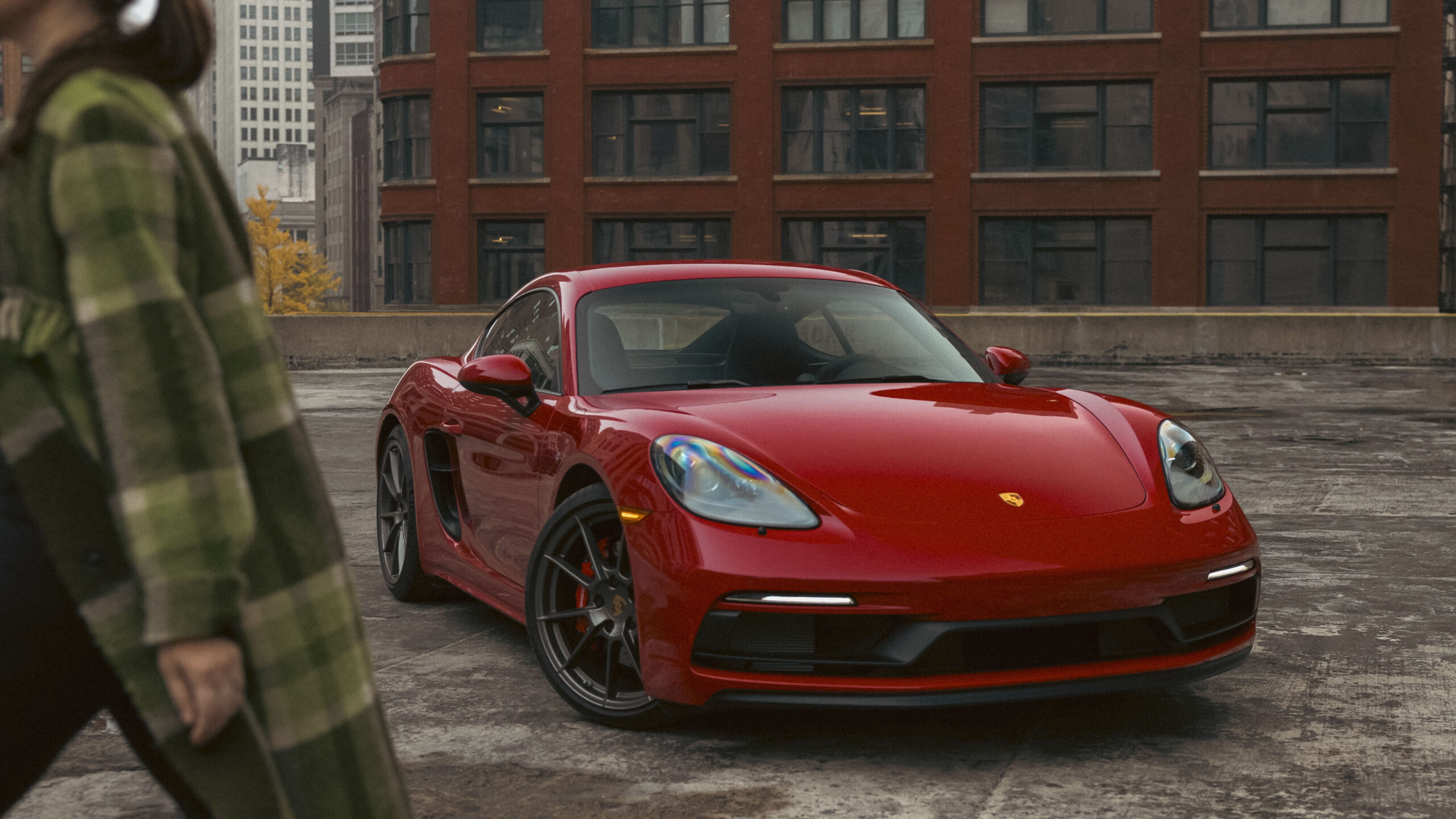
The Porsche 718 is probably the closest thing in terms of pricing and general ethos, but for the same cash, buyers give up around 200 horsepower and get what is the most chilled-out, touring-focused version of a much slower, albeit more luxurious car.
Final Thoughts
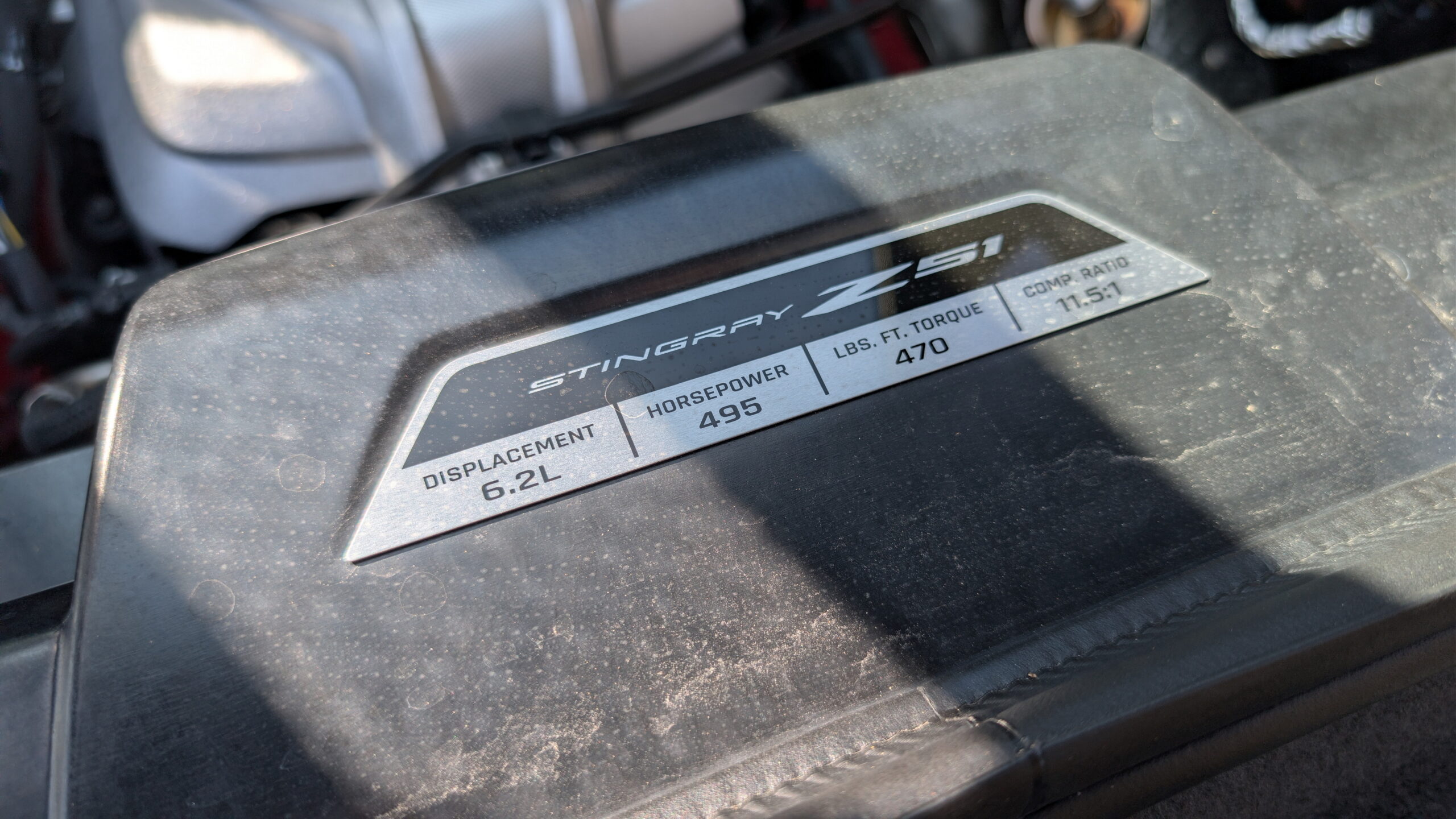
No matter what, some folks are going to scoff at this badge. They’ll say it’s what a person buys when they can’t afford a European exotic. I’d argue the opposite. The Corvette badge is becoming counterculture. Sure, it’s still beloved by dads in socks and sandals that’ll show up to a cars and coffee with a billboard about how their car is one-of-one because it was the only red one built by JimBob in Bowling Green on the third Wednesday of the month under a blood moon.
But it’s also the choice of drivers who care more about capability than clout. The Stingray is roughly 9/10ths as engaging as the halo cars. On most tracks, for most drivers, the lap time difference between this and the ZR1 likely won’t be dramatic unless you’re dealing with massive straights. How often are you really exploiting a 2.3-second 0-60 time? How often are you running 200 mph? Exactly.
For $77,100, or even $97,000 in this spec, this could be the best driver’s car on the planet. It blends supercar performance with real-world usability in a way almost nothing else can. Forget the velvet rope. If the goal is to drive, not pose, the Stingray Z51 might be the sweet spot of the entire lineup.


