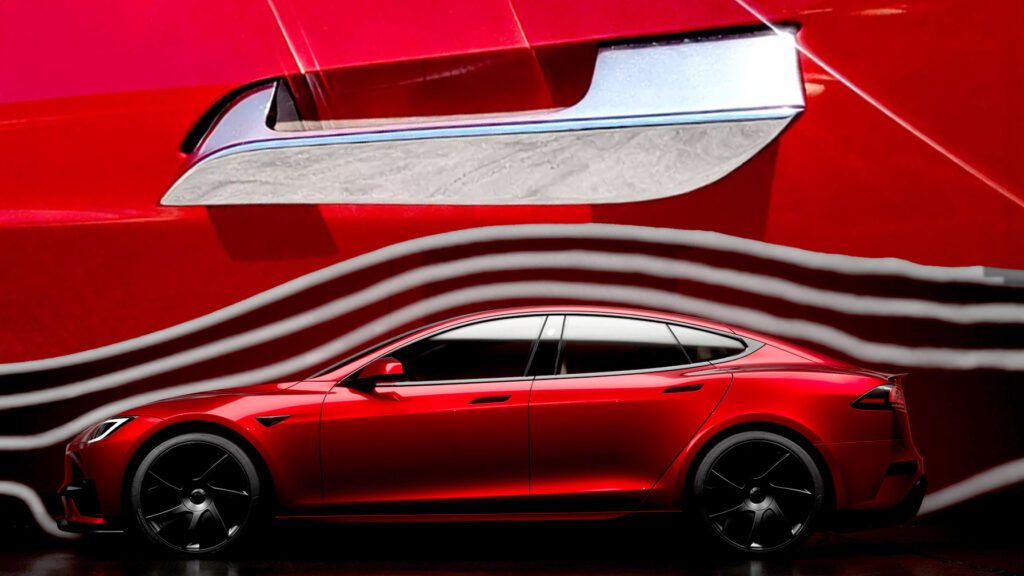


- A Tesla owner performed a series of real range tests in his single-motor Model Y.
- He drove the same route 30-mile route at 50 mph, 60mph, 70 mph and 80 mph.
- Going 80 mph vs 50 mph cut time by 38% but dropped range by same amount.
Speed or efficiency? For as long as there have been cars, drivers have had to weigh up that decision. Going faster means getting from A to B sooner, but is going to burn through more fuel, costing you more money.
And now, in the EV age, there are added pressures. Some electric cars are only good for 250 real-world miles (402 km), and BYD’s new 1,500 kW chargers aren’t here yet, meaning that if you need to stop mid-journey you can easily add 15-30 minutes to your trip, more than wiping out the time you saved by flexing your right ankle.
Related: Tesla’s Budget Model Y Gets Grip And Grit For $2K More, But Don’t Call It Standard
So what’s the sweet spot? That’s what one Tesla-owning YouTuber behind the Carwire channel decided to find out by conducting a series of test runs in his single-motor, rear-wheel drive Model Y.
He ran the same 30-mile (50 km) looping route along local multi-lane freeways (dual-carriageways in UK-speak) at 50 mph (81 km/h), 60 mph (96 km/h), 70 mph (113 km/h) and 80 mph (129 km/h), noting the Wh/mile efficiency for each trip.
Taking those numbers and assuming a 75 kWh usable battery capacity, he was able to extrapolate realistic freeway-type range figures, plus a hypothetical time for a 200-mile (302 km) journey based on the time taken to complete each loop at the different speeds. While this isn’t exactly super-scientific, it still delivers a useful comparison that highlights the huge effects different speeds have on efficiency and journey time.
The first loop, taken at a steady 50 mph, would result in 200-mile trip in the Model Y taking four hours. But the excellent 224.7 Wh/mi efficiency gives a calculated 333-mile (536 km) range, meaning you’d get to your destination with stacks of charge to spare.
80 MPH Decimates Range
At the other end of the scale, the 80 mph run crashed efficiency to 366.2 Wh/mi, and the range to just 204 miles (328 km). So while technically you could handle the 200-mile journey in one go, and in only 2 hours and 30 minutes, few people would risk not filling up before they hit the finish line.
The sweet spot, as Carwire concludes, seems to be somewhere between 60 and 70 mph. Bumping the speed up to 60 mph cuts a handy 40 minutes off the 50 mph journey time, yet the 300-mile (483 km) range is only 33 miles (53 km) lower.
Pushing the needle up to 70 mph cuts another half hour from the trip, and though the efficiency starts to tumble the 248-mile calculated range would still let you comfortably complete your 200-mile run without charging, or stressing that you probably ought to.