- The facility now builds LFP cells for grid and data use.
- Retooling the plant cost the joint venture tens of millions.
- LG is also shifting other battery plants to storage facilities.
Just a few months after Ford announced that one of its battery plants, originally destined for EV batteries, would instead start making batteries for energy storage systems, General Motors has done the same.
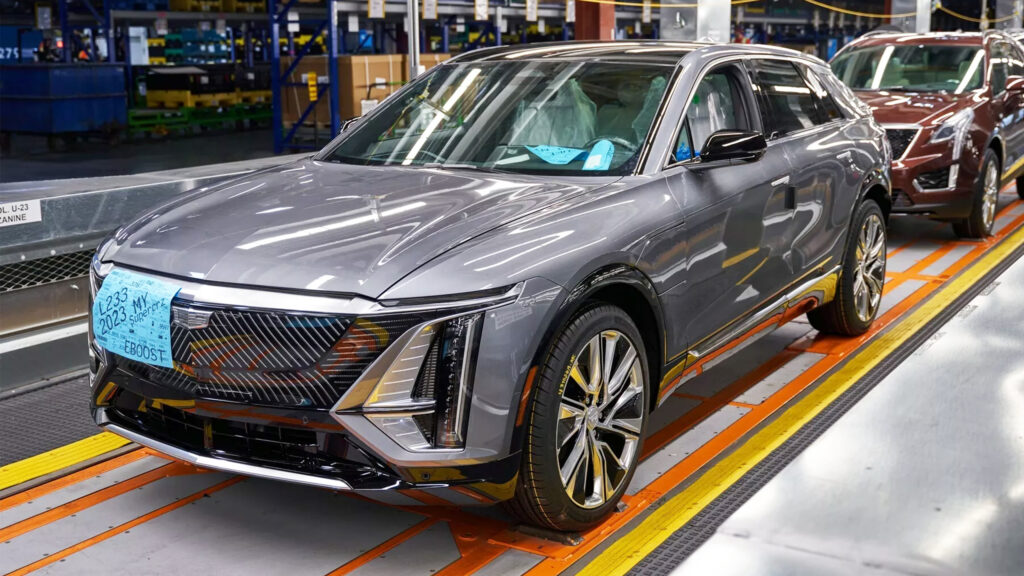
The car manufacturer, in partnership with LG Energy Solution, operates the Ultium Cells LLC joint venture and runs a large factory in Tennessee. This site opened in 2024, making cells for the Cadillac Lyriq and Vistiq, and the Acura ZDX. Late last year, more than 700 employees were laid off from the plant as GM, like its competitors, pulled back its EV investments.
Read: GM’s EV Plant Will Now Build The Gas Models People Actually Want
Now, Ultium’s vice president of operations, Tom Gallagher, said that these workers will be rehired and return to work by the end of April, as the site is switching to lithium-iron phosphate cells for grid and data center customers.
An Expensive Pivot

Bloomberg reports that retooling the plant has cost the joint venture tens of millions of dollars, but will help prevent hemorrhaging even more money from its EV pivot. It will also help LG, which is also retooling four other EV battery plants in North America, including two in Michigan, one in Canada formed through a joint venture with Stellantis, and an Ohio plant established with Honda. All of these sites will now begin manufacturing LFP cells for storage systems.
“Having these facilities that are able to be converted in less than a year means that we can react and we can actually get up to capacity,” chief product officer from LG’s systems integration unit, Vertech, Tristan Doherty said. “We’re going to be supplying the majority of the US market with domestic cells.”
GM says staff at the joint venture battery plant will be retrained as part of the shift. But the car manufacturer is remaining silent about its longer-term plans for the site, having previously stated that it’d start producing lithium manganese-rich batteries in Tennessee by 2028.