

- Analysts expect Tesla deliveries to more than double by 2030.
- Q1 2026 delivery expectations sit around 420,000 vehicles.
- Tesla’s early release hints at softer near-term expectations.
Analysts believe that Tesla is on track to double its global deliveries by the end of the decade. That’s a huge bet, and it relies on more factories, cheaper models, and a broader global footprint that can push annual volume into the millions. That said, there’s a bit of a disconnect. If that’s indeed what the future looks like, the same analysts’ Q1 2026 predictions aren’t exactly screaming momentum.
The automaker just compiled estimated reports from 23 big-time analyst firms, including UBS, Barclays, Wells Fargo, and more. Wall Street expects Tesla to deliver roughly 420,000 vehicles in Q1 2026. For a company evidently on the verge of explosive growth, that figure leaves some room for head-scratching because it’s nearly flat compared to 2025 levels.
More: This Might Be The Tesla Roadster’s Biggest Update Since 2017
That said, the professionals betting on the future clearly see a path ahead. Their consensus is that Tesla will deliver 1,689,691 cars this year. That’s actually just above the 1,636,129 figure it managed in 2025, with a a modest 3.3% increase year over year.
Starting in 2027, their estimates just go up, up, and away, though. Notably, 2027 is the latest year in which all 23 firms provided an estimate, in this case, of 1,880,496 deliveries.
Twenty of the firms predicted (on average) that Tesla will deliver 2,128,187 cars in 2028. Just 13 firms went as far as to provide a consensus for 2029 and 2030. Those figures hit 2,613,623 deliveries for 2029 and then 3,032,000 the following year.
As is the case now, analysts believe the vast majority of the cars that Tesla does sell will be the Model 3 and Model Y by a factor of around eight to one overall. Notably, that mix diminishes to as low as four to one by 2030 in the consensus.
That’s important because it suggests that Tesla will need to continue to heavily invest in the growth and proliferation of both the Model Y and Model 3. Those two will largely bolster the car side of Tesla’s business if this consensus is correct.
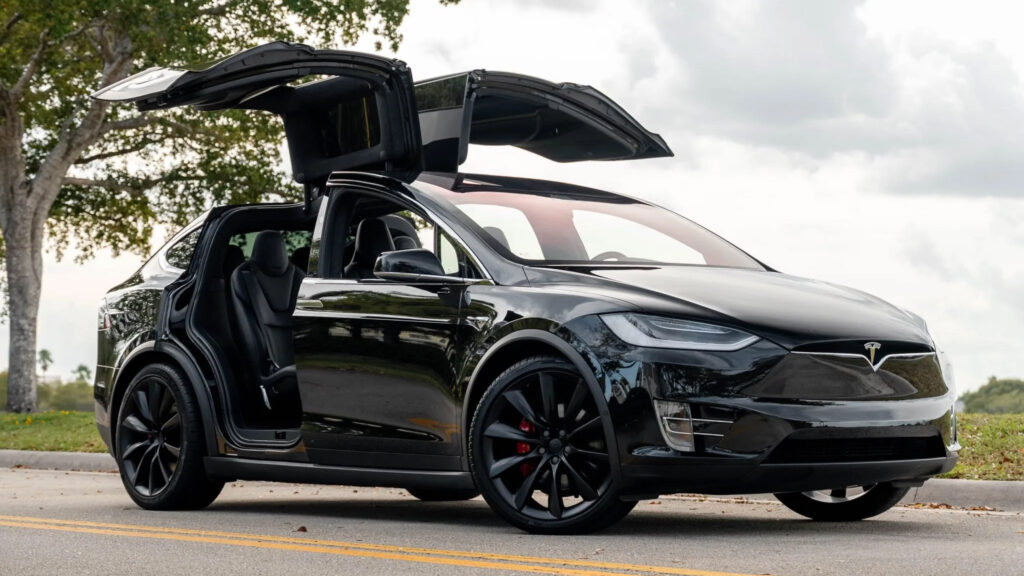
What it doesn’t clarify is what falls under those “other models.” With the Tesla Model S and Tesla Model X out of the picture, the lineup narrows quickly. That leaves the Tesla Cybertruck as the only other vehicle currently in play, alongside plans for the Tesla Cybercab and, if Elon Musk is to be taken at his word, something he has teased as “way cooler than a minivan.”
The decision to publish this consensus ahead of its Q1 report is also significant and Tesla has done this in the past. It could be that it’s hoping to anchor expectations if results end up lower than some hoped for.