










- Audi’s adaptive Digital Matrix headlights are coming to America’s Q9 and SQ9.
- New micro-LED tech can dim glare without reducing forward visibility.
- Audi says its system satisfies tough U.S. rules that delayed adoption for years.
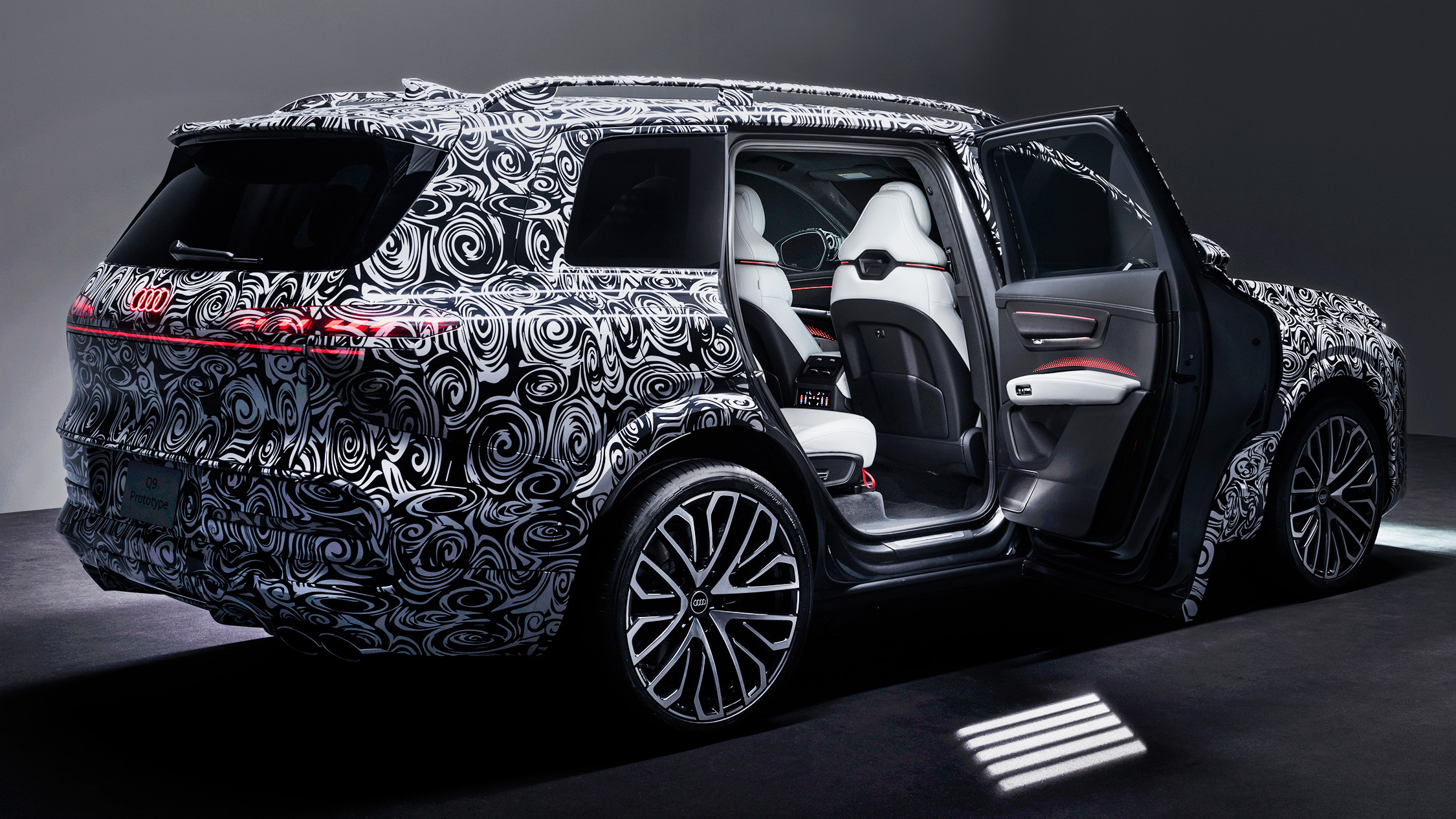
For years, consumers around the globe have benefited from adaptive headlights while U.S. customers have been left behind. Slowly but surely, automakers are finding a way to bring this incredible technology to the States, and now Audi is one of them. The brand’s new Q9 and SQ9 flagships features micro-LEDs with over 25,000 lights per side.
If you’ve never seen or experienced headlights like these, they can be easy to brush aside as no big deal. In the real world, they’re an absolute game-changer at nighttime. Instead of simply switching high beams on and off, Digital Matrix headlights actively reshape their light pattern in real time.
More: Audi’s New Q9 Is So Luxurious You Might Never Touch A Door Handle
Cameras mounted at the front of the vehicle monitor traffic ahead and identify oncoming cars or vehicles traveling in the same direction. The system then selectively darkens only the specific portions of the beam that could cause glare, while leaving everything else illuminated. It’s akin to getting to have your brights on all the time without ever worrying about blinding other drivers, regardless of where they are.
That matters because headlight glare has become a genuine complaint among drivers. Audi cites a recent AAA survey showing six out of ten motorists struggle with excessive glare at night. Obviously, automatic high beams provide some genuine utility, but when they sense another car, they turn off and leave only the normal headlights on. Audi says its Digital Matrix technology will deliver a much more precise solution.
Audi of America SVP of Product Planning Filip Brabec said, “Audi has always been a leader in lighting technologies… We are very excited to be able to offer Digital Matrix LED lighting functions to our U.S. customers for the first time.”
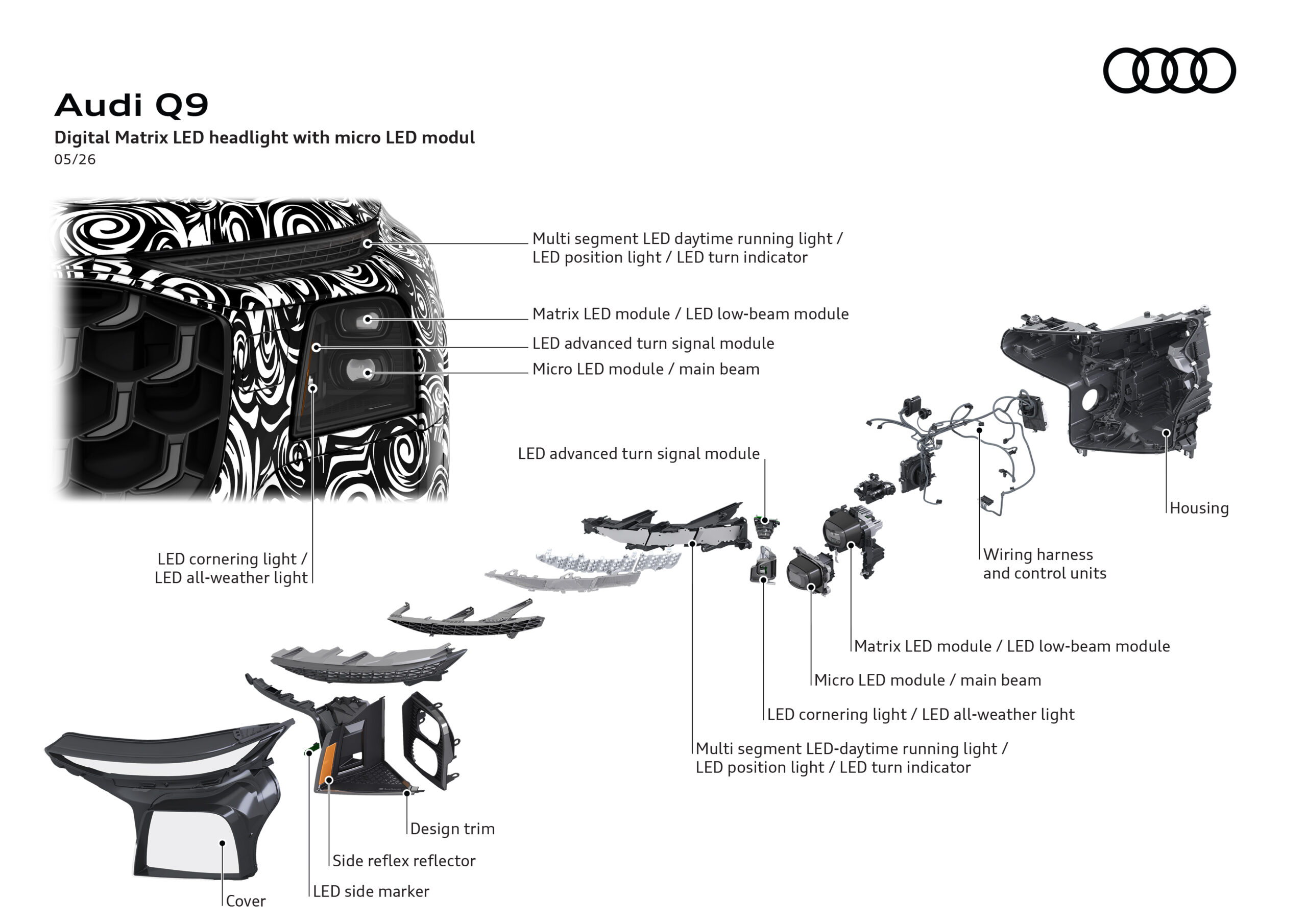
The hardware itself sounds appropriately over-engineered. Audi says the micro-LED module measures only about 13 mm wide but packs roughly 25,600 individually controllable LEDs for a total of 51,200 for the two headlamps . Each one is around 40 micrometers across, roughly half the thickness of a human hair.



The new Audi Q9’s interior.
Adaptive lighting has technically been legal in America since federal rules changed in 2022. But automakers have struggled to satisfy the country’s unusually strict testing standards. Audi claims it has now engineered a system capable of meeting U.S. requirements while retaining the performance Europeans have enjoyed since 2013.
Beyond improving nighttime visibility, Audi says the system can reduce fatigue, dim reflections from road signs, and even project selectable lighting scenarios when entering or exiting the vehicle. Full details on the Q9 arrive in July.