

A New Bill Would Ban Tourists From Driving A Chinese Car Into America Even For A Day
Just when you thought US-Canada relations couldn't get any worse, two Michigan Democrats want to ban tourists from visiting in Chinese cars
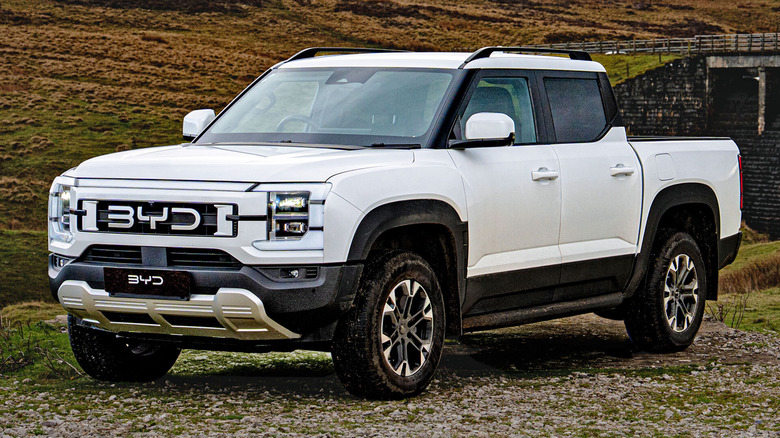
- Two members of Congress are taking renewed aim at Chinese vehicles.
- A new bill would target models built by a company with a 15% Chinese stake.
- Tourists wouldn't even be allowed to drive their Chinese vehicles in America.
Detroit stands to lose big if Chinese automakers get a foothold in America, so it comes as little surprise two Michigan politicians have joined forces to announce the Protecting America from Chinese Cars Act. Introduced at last month's Mackinac Policy Conference, the bill aims to prevent "Chinese connected vehicles from entering the U.S., including through our neighbors to the north and south."
That's a not so subtle reference to Canada and Mexico, where Chinese vehicles are a growing presence. In particular, the offices of Representative Haley Stevens and Senator Elissa Slotkin noted Canada recently embraced Chinese EVs, while Chinese vehicles have quickly gained a roughly 15% market share in Mexico.
More: GM Boss Isn't Thrilled About Canada's Plan For Chinese EVs
The proposed bill would "prevent connected vehicles from China and other adversarial nations from entering the U.S." This includes vehicles manufactured or designed in China as well as models "manufactured by a Chinese company or an entity in which Chinese companies have a greater than 15% stake."
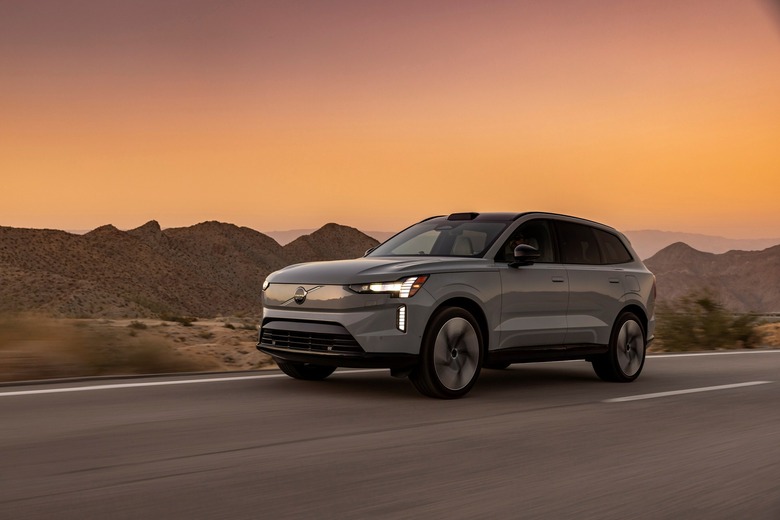
That would be a huge problem for Volvo as Geely reportedly owns a 78.7% stake in the company. Polestar could also be in the crosshairs as over 20% of the automaker is reportedly owned by Geely.
Volvo recently had to deal with a similar issue over a Biden era rule designed to "prohibit the sale and import of connected vehicle hardware and software systems, as well as completed connected vehicles" from China and Russia. However, the Trump administration recently granted the company a "specific authorization," which prevents their vehicles and technology from being banned under the Securing the Information and Communications Technology and Services Supply Chain: Connected Vehicles rule.
The new Protecting America from Chinese Cars Act would also allow for specific authorizations to "allow otherwise prohibited vehicles to enter the U.S." However, these would only be "granted under strict conditions, with both transparency and congressional oversight."
This sounds like a lot of unnecessary rehashing of earlier efforts, but Stevens claimed it "closes dangerous loopholes that currently allow Chinese connected vehicles to enter the United States through Canada and Mexico." Slotkin added an important caveat as she said the bill would ban "fully finished Chinese vehicles from driving over in any capacity, even just for the day."
That's a key difference as the bill would prevent Canadian and Mexican citizens from visiting the United States in their Chinese vehicles. That's probably overkill, but Slotkin described Chinese cars as "surveillance packages on wheels" that are "fully capable of geolocating individual drivers, collecting full-motion video, and mapping sensitive infrastructure sites, including our military."