









- Ford will launch Level 3 autonomy in a $30K EV starting 2028.
- LiDAR and a new in-house computer will power the L3 system.
- Autonomy will not be standard, but offered as an optional add-on.
Ford has announced plans to roll out a hands-off, eyes-off Level 3 driver-assistance system in 2028, marking a major step in its autonomous tech strategy. The system will debut in a vehicle built on the company’s new Universal Electric Vehicle platform, which itself is set to launch a year earlier, in 2027.
A system this advanced has been a long time in the making for Ford. Back in 2016, the automaker confidently predicted that it would leapfrog Level 3 entirely and go straight to Level 4 by 2021, placing fully autonomous vehicles into commercial service.
Read: $30K Ford Electric Truck Coming In 2027 Is Seriously Bad News For Slate
That timeline, like many others in the industry, proved to be overly optimistic. As it turns out, building vehicles that can reliably drive themselves is less about bold promises and more about slow, methodical progress.
How Will It All Work?
Ford has confirmed that its upcoming Level 3 system will rely on LiDAR, a choice consistent with most high-end automated driving tech. The system will debut on a vehicle using the new Universal EV platform, which starts with a midsize electric pickup projected to cost around $30,000. However, the company hasn’t officially stated whether that truck will be the first to feature the new L3 tech.
Speaking with Reuters, Ford’s EV chief Doug Field noted the new driver-assistant suite will not come standard at Ford’s $30,000 price point and will be made available as an option. He added that Ford has yet to decide whether it will be available as a recurring subscription or as a one-off fee.
Software Built In-House
According to Ford, “autonomy shouldn’t be a premium feature,” and it will make its L3 system attainable thanks to software and hardware that’s been developed in-house. It added that, as it owns the technology behind the systems, it can deliver “significantly more capability at a 30% lower cost than if we bought it from outside suppliers,” helping make the system more scalable.
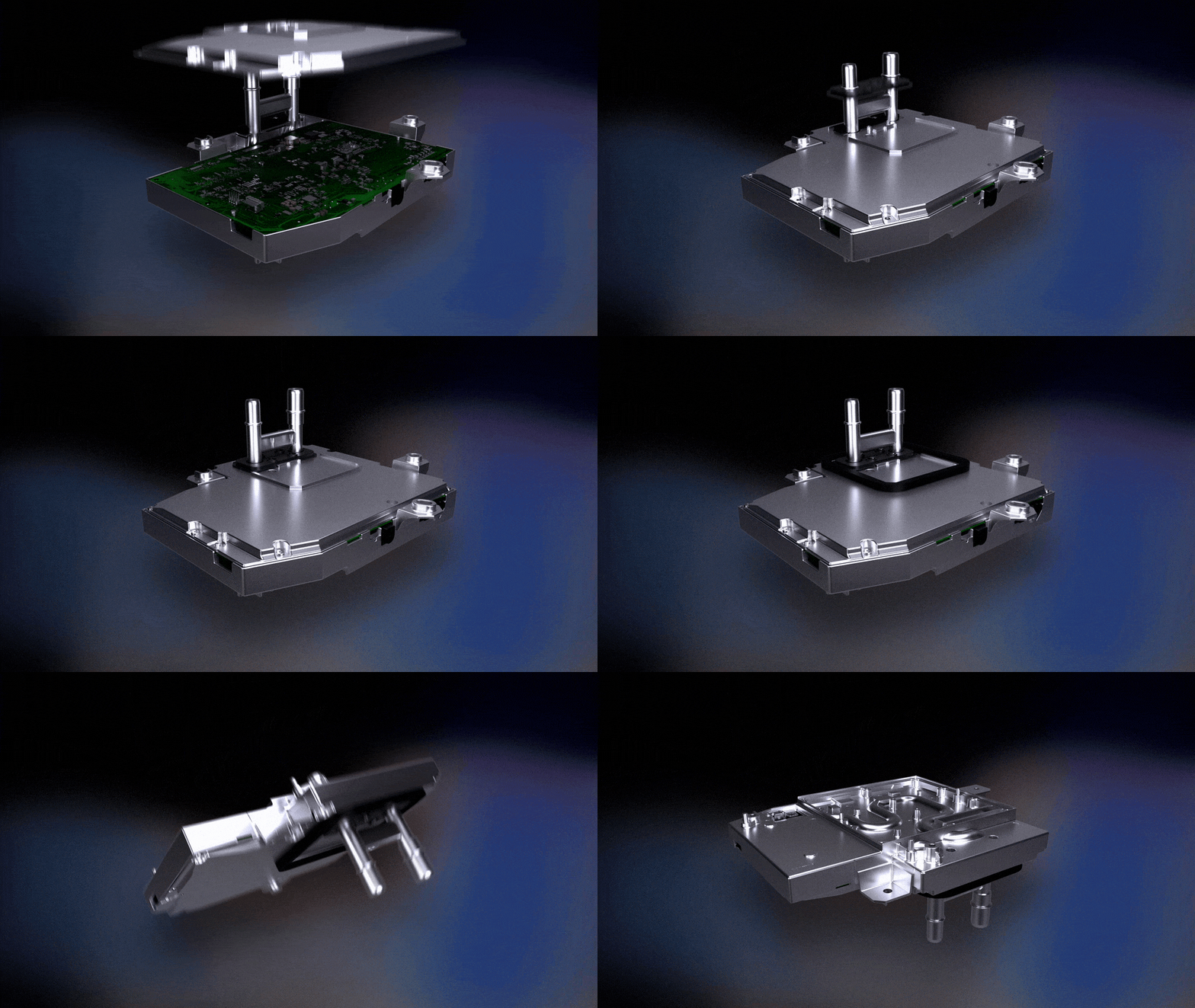
Helping to make everything possible is Ford’s new unified vehicle brain, a powerful module unifying the infotainment, ADAS, audio, and networking systems. This new compute center gives Ford five times more control over semiconductors, handles complex computing tasks faster than ever before, is nearly half the size of old computers, and is significantly cheaper to produce.
A Smarter Copilot



Ford also used its CES stage time to unveil a new AI assistant that’s designed specifically for its vehicles. The assistant will soon roll out to Ford and Lincoln mobile apps, with plans to bring it directly to in-car screens starting next year.
Unlike generalized platforms like ChatGPT or Gemini, this one is purpose-built. Take a photo of bundled firewood, and it can estimate how many will fit in the bed of your F-150. It’s a practical use case aimed squarely at truck owners, and one that hints at how Ford sees AI assisting with day-to-day tasks