- Facebook page exposes listings hiding car damage histories.
- Repaired wrecks return to market presented as clean vehicles.
- VIN checks and mechanic inspections help buyers avoid scams.
The used car market can be a murky place, where even the most polished listing may conceal an uncomfortable truth, especially on social media where presentation does most of the work. Still, those same platforms have also given rise to pages like Dodgy Car, a UK-based Facebook page, that cuts through the haze by flagging ads that gloss over questionable histories.
More: Scammers Keep Tricking Dealers Into Loading Six-Figure Cars Onto The Wrong Trucks
According to information shared on the Dodgy Car page, not all salvaged or heavily damaged vehicles are reflected in an HPI check, the UK’s vehicle history report. In some instances, insurance claims do not immediately make their way onto the MIAFTR (Motor Insurance Anti-Fraud & Theft Register) database, and updates can reportedly take months or even years to appear.
Following The Digital Footprints
Even so, cross-checking a VIN through specialized databases and archived listings can sometimes reveal a car’s earlier life. That is the method used by the page and its followers, who typically support their claims with screenshots and photographic records from prior auctions or listings.
The goal, at least in stated intent, is to help prospective buyers make more informed decisions and avoid potentially misleading adverts.
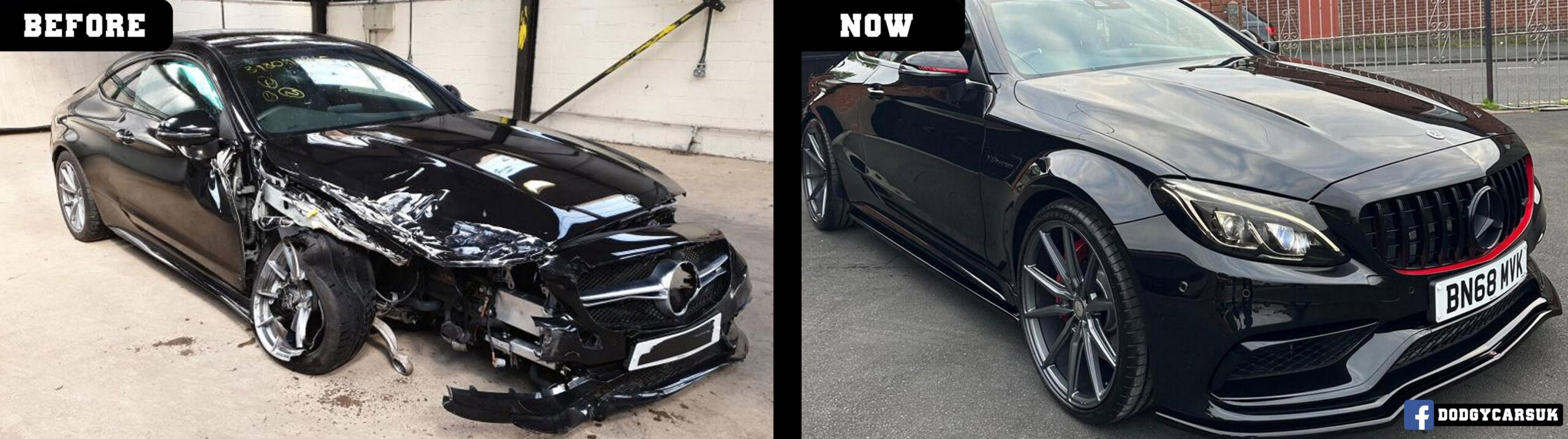
Many of the vehicles flagged are described as unrecorded wrecks sourced from salvage auction sites such as Copart. After repairs to the bodywork, and often a quick cosmetic refresh like painting the wheels black, they reappear on the market presented as being in “like new” condition.
With no official marker attached, a standard history check can return clean, potentially leaving buyers with a car that may have underlying structural repairs and a market value far below what they paid.
A Tesla That Came Back From Hell
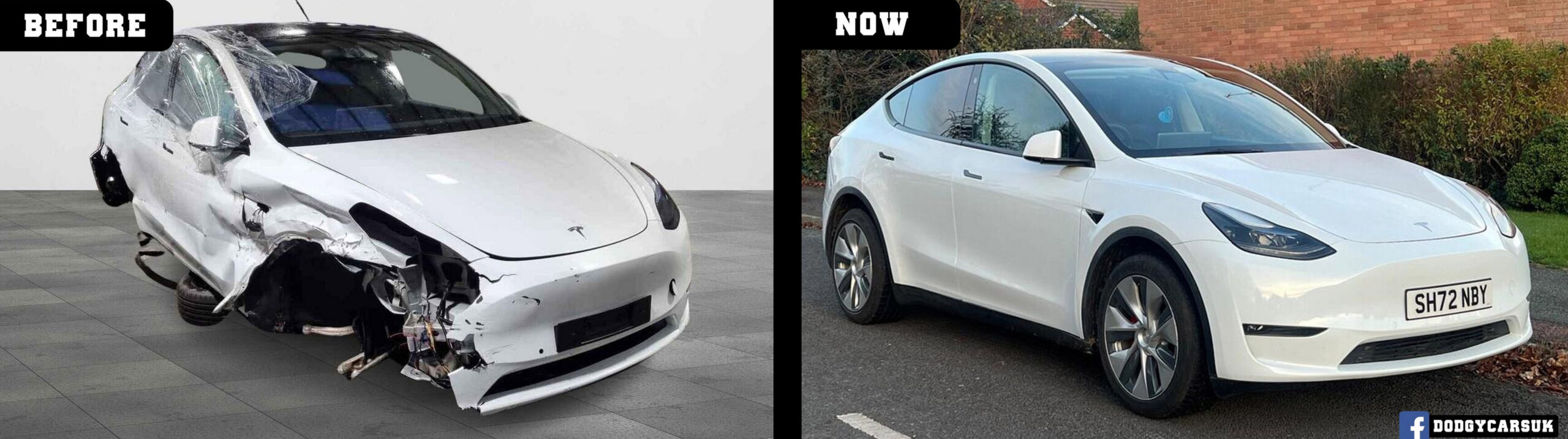
One of the more dramatic examples shared on the page involves a white 2022 Tesla Model Y Long Range showing 36,500 miles (58,741 km). Although the original listing has since been removed, a shared screenshot shows an asking price of £21,000 (equal to $28,700 at current rates).
The advertisement images depicted a clean, well-presented EV. However, archived auction material from 2025 appears to show the same vehicle after a severe collision.
More: These Car Insurance Scams Were So Absurd Even Investigators Were Surprised
Both right-hand-side wheels of the Model Y had been ripped off along with suspension components, making it look as though it had been struck by debris from a failed SpaceX mission to Mars. The side airbags were deployed, and various body panels, including the fenders and doors, were seriously deformed.
The damage was significant enough for the electric crossover to receive a “CAT S” classification, indicating structural damage and an insurance write-off under UK guidelines. Despite that designation, the car reportedly later resurfaced advertised with an “HPI Clear” title.
Time Travelers And Tarnished Histories
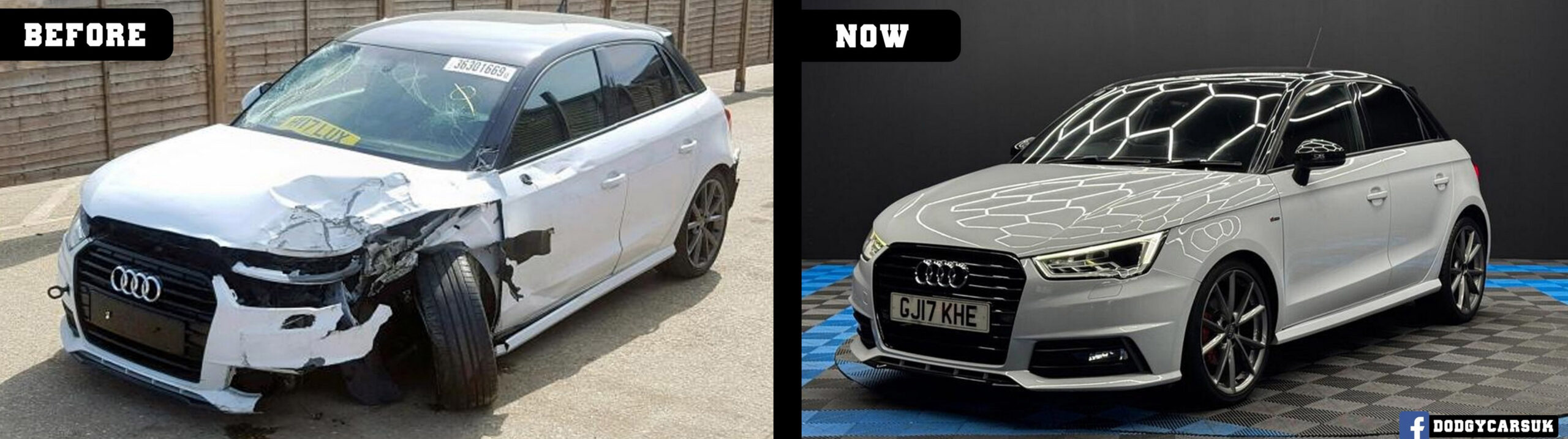
Another case highlighted involves a white 2017 Audi A1 hatchback with a black leather interior, described in a recent advert as being in “immaculate condition.” Archived records indicate that in 2019 what appears to be the same vehicle, albeit wearing different license plates, was listed on a salvage auction site with front-left crash damage, undercarriage damage, deployed airbags, and a missing rear bumper.
More: Scammers Built Fake Audi Sites So Convincing They’re Fooling Real Buyers
Not every questionable listing involves crash damage. Take a black 2017 Toyota Avensis that somehow managed to travel backward in time, dropping from 159,553 miles (256,775 km) to 63,335 miles (101,928 km) within a few years.
The latest advert for the diesel Toyota sedan even includes mileage data from MOT entries in 2018, 2022, 2023, 2024, and 2025. The discrepancy appears early in the record, though the paperwork stops short of offering any explanations.
Of course, there’s no shortage of crashed BMWs and Mercedes-AMGs in the mix, plus a suspiciously high number of VW Golfs. A few Porsches and Mustangs show up too, gleaming on the outside while hiding less glamorous histories underneath. The real issue is not that these cars were repaired. It is that the accident history too often disappears somewhere between the body shop and the sales pitch.
A Cross-Border Concern
The issue is not confined to Britain. In the United States, a loosely comparable practice known as title washing can occur when a totaled vehicle is transferred to a state with different disclosure requirements. Under certain circumstances, a previously branded “Salvage” or “Junk” title may be reissued in a way that does not prominently reflect its earlier status.
More: What The Hell Happened To This Ferrari Purosangue?
No matter which side of the Atlantic you are on, caution pays. Never take a listing at face value. Run the VIN through more than one database, check the MOT or service history where you can, and have a qualified mechanic look the car over before you hand anything over. A glossy advert and a freshly detailed interior can be convincing. Paperwork and a proper inspection tend to be even more so.