- Chery launches Lepas as new Western-focused brand.
- L8 shares Jaecoo 7 plug-in hybrid powertrain setup.
- System pairs 1.5 liter engine with 18.3 kWh battery.
Chinese carmaker Chery has decided it wants a bigger slice of the Western market, so it has created a new sub-brand to chase it. Called Lepas, it is bound for Europe, Australia, and South Africa, and it opens its account with the L8 SUV, aimed squarely at legacy fixtures like the Toyota RAV4 and Mazda CX-5.
The name Lepas blends “Leopard,” “Leap,” and “Passion,” and the L8 rides on Chery’s new New Energy Vehicle (NEV) modular platform. In markets such as the UK and Australia, only limited powertrain details have been confirmed. However, the model is already on sale in Indonesia with the same plug-in hybrid system used in the Jaecoo 7, and it is widely expected that this setup will be offered in other regions as well.
Read: UK Buyers Now Love This ‘Temu Range Rover’ More Than The Real Thing
Combining a 1.5-liter four-cylinder with an electric motor and an 18.3 kWh battery, Lepas notes that in South Africa, the L8 will have an all-electric driving range of 66.4 miles (107 km) and a combined range of 808 miles (1,300 km). The engine itself is rated at 141 hp (105 kW) and 155 lb-ft (210 Nm), while the electric motor adds 201 hp (150 kW) and 229 lb-ft (310 Nm).
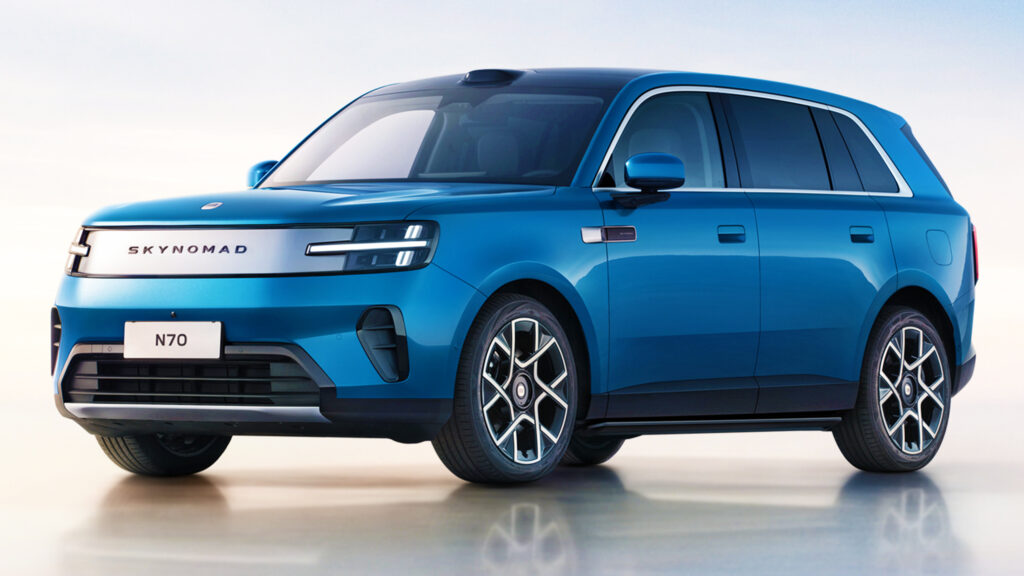
Visually, there’s nothing particularly inspiring about the design of the L8. In some regards, the split LED headlights remind us of some of Audi’s new SUV models. There’s also a huge chrome front grille, which Chery clearly thinks buyers in the West will be receptive to. We’re not so sure.
A Tech-Focused Cabin



In a sea of Chinese-made SUVs with interiors that often look identical, the cabin of the Lepas L8 has some interesting elements. The most intriguing is the portrait-oriented 13.2-inch infotainment display sitting in the center of the dash, and looking slightly classier than the landscape tablet displays that have proliferated new models.
Additionally, Lepas has fitted a 10.2-inch digital instrument cluster, metal speaker grilles on the doors, and a textured dashboard. Positioned below the central screen is a prominent volume knob, as well as physical switches for the fan speed and other HVAC controls.
Market-specific pricing details have not yet been announced, but should be confirmed in the coming months.