









- Ferrari’s first electric car carries four motors and 1,035 horsepower.
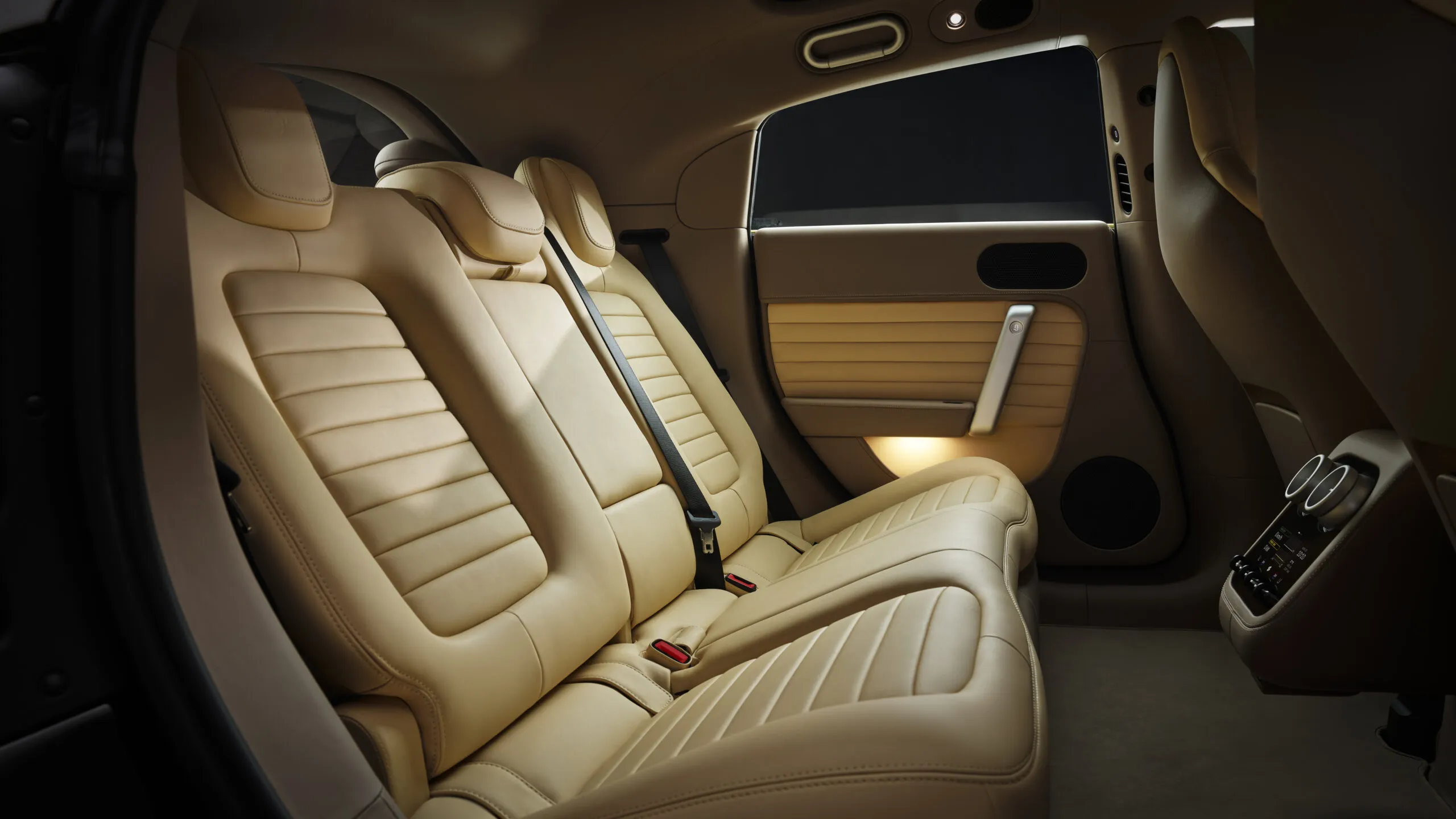
- The Luce seats five and adds a rear hatch, breaking with supercar tradition.
- Sir Jonathan Ive’s LoveFrom handled the exterior and interior design.
We’ve officially entered a new automotive age that includes an electric Ferrari. We saw disguised test vehicles roaming around Europe. Executives talked around it. Spy photographers chased camouflaged prototypes. But there was always a sense that Maranello was buying itself more time before confronting what might be the biggest challenge in its modern history. Well, time’s up. Meet the Ferrari Luce.
Read: NASA Helped Ferrari Fix The Luce EV’s “Disturbing” Acceleration
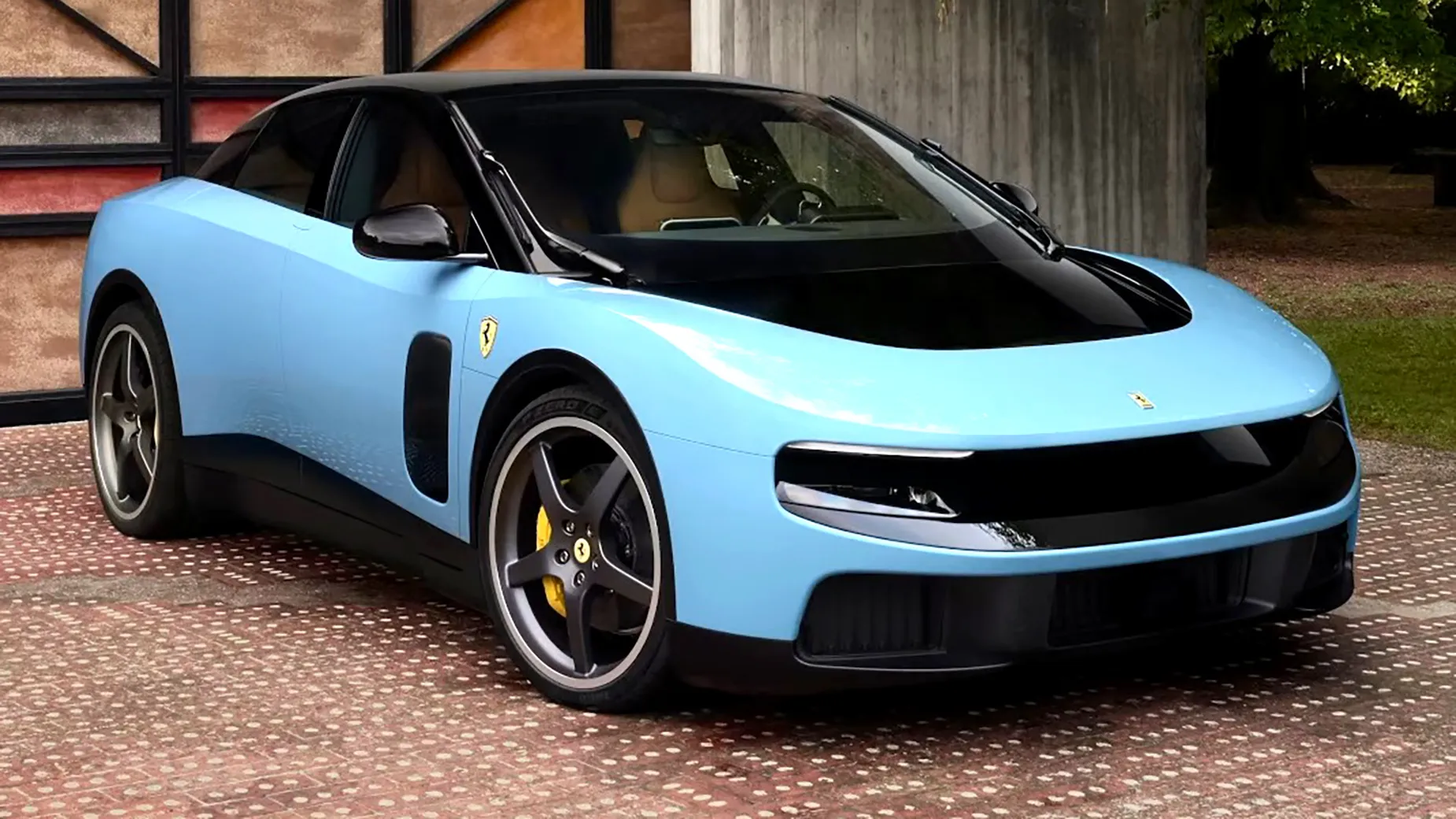
Ferrari didn’t tiptoe into electrification either. Rather than building a low-volume experiment or a softened-up grand tourer, it has created something entirely new: a four-door, five-seat, four-motor EV making 1,035 hp (772 kW / 1,050 PS) and capable of hitting 62 mph (100 km/h) in just 2.5 seconds. That’s only marginally slower than a couple of American sedans that cost under $300,000.
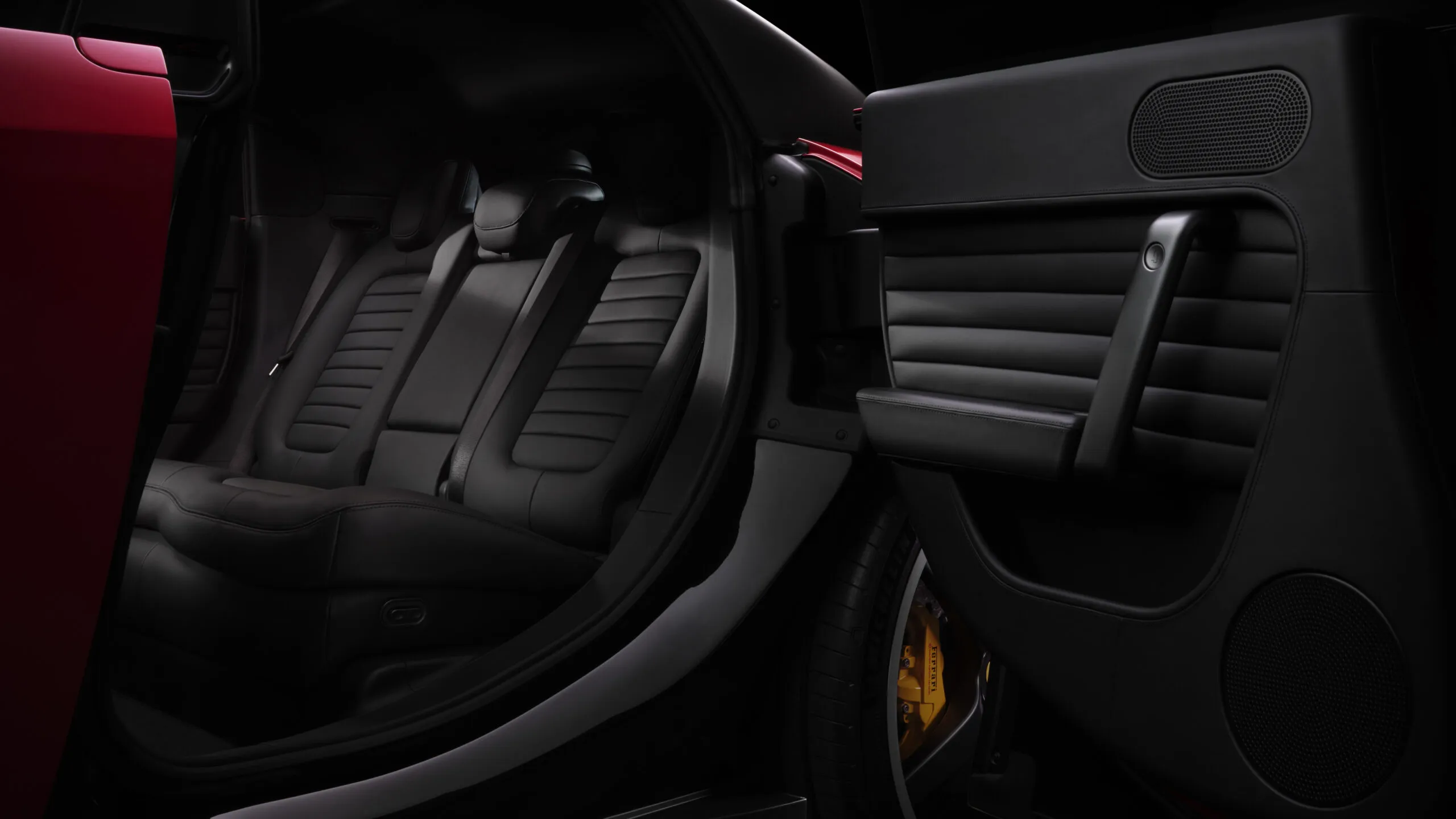
The company says Luce (Italian for “light”) isn’t intended to be viewed as merely Ferrari’s EV. Instead, Maranello calls it a “Ferrari 360°,” a completely new product intended to broaden the brand without replacing combustion or hybrid models. To that end, it’s not a ‘supercar’ in the traditional sense, of course. Thanks to the EV architecture, this is the first Ferrari in history that can shuttle a driver and four passengers at the same time.
A Four-Door Ferrari Designed From Scratch
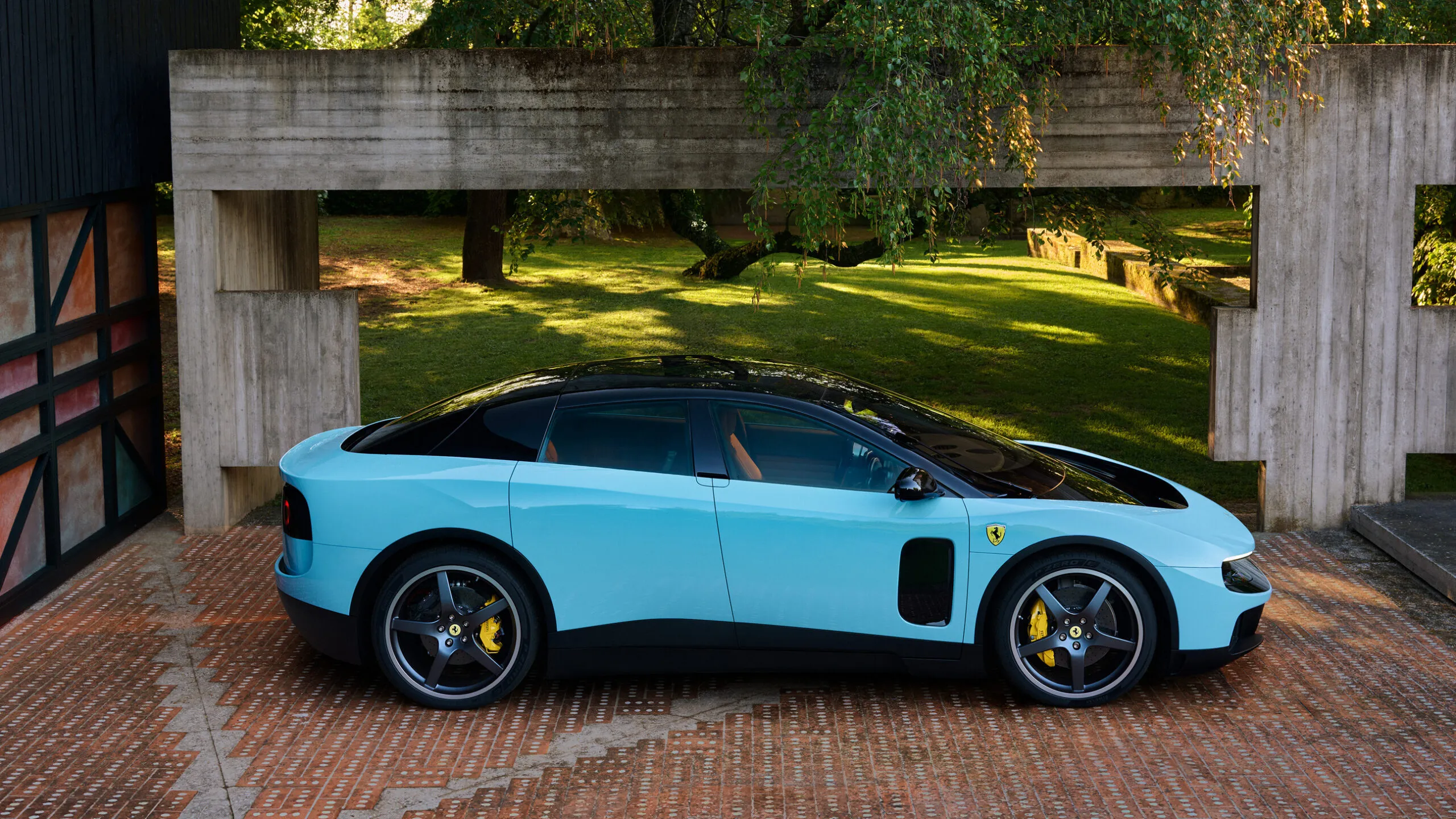
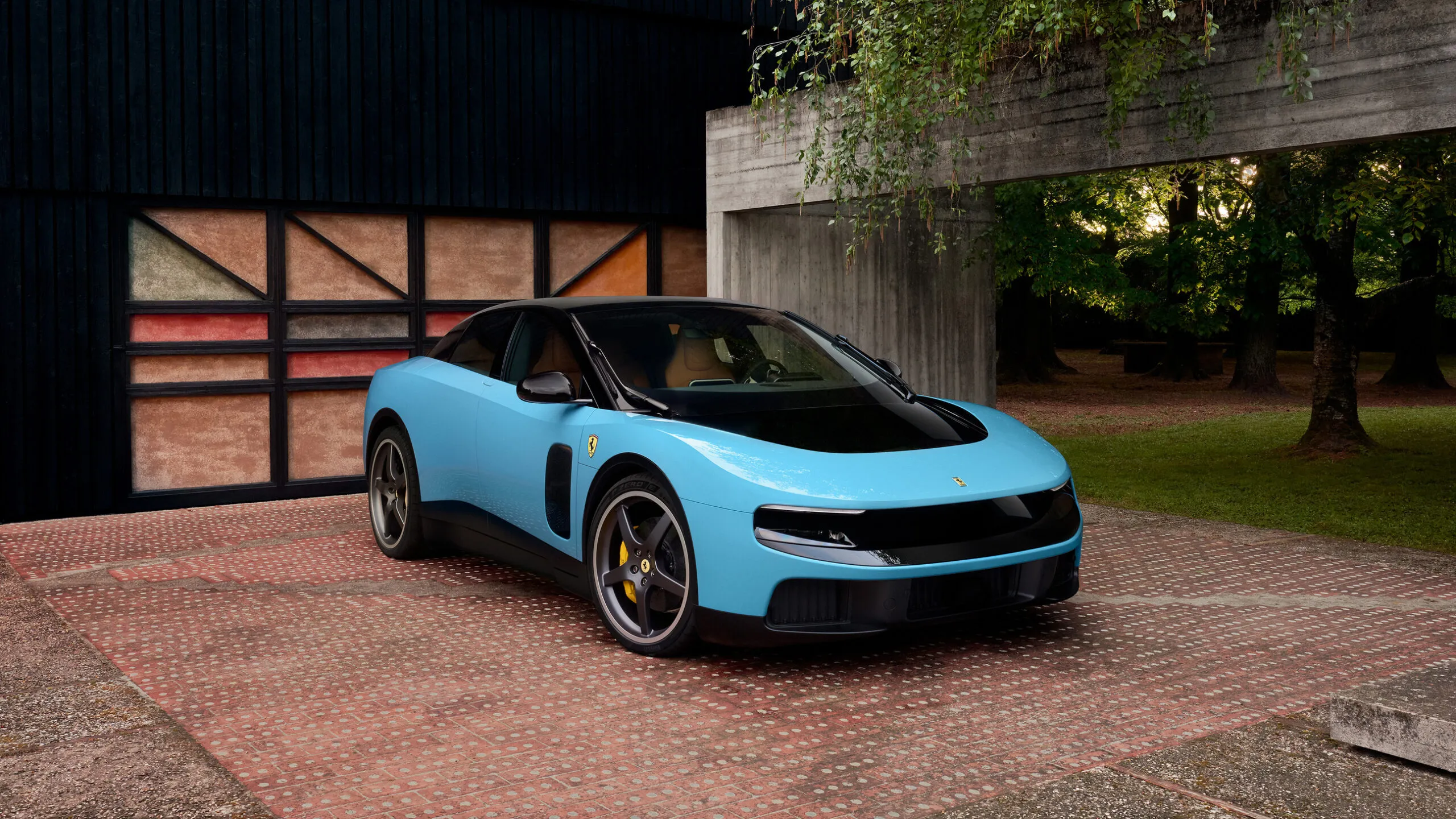
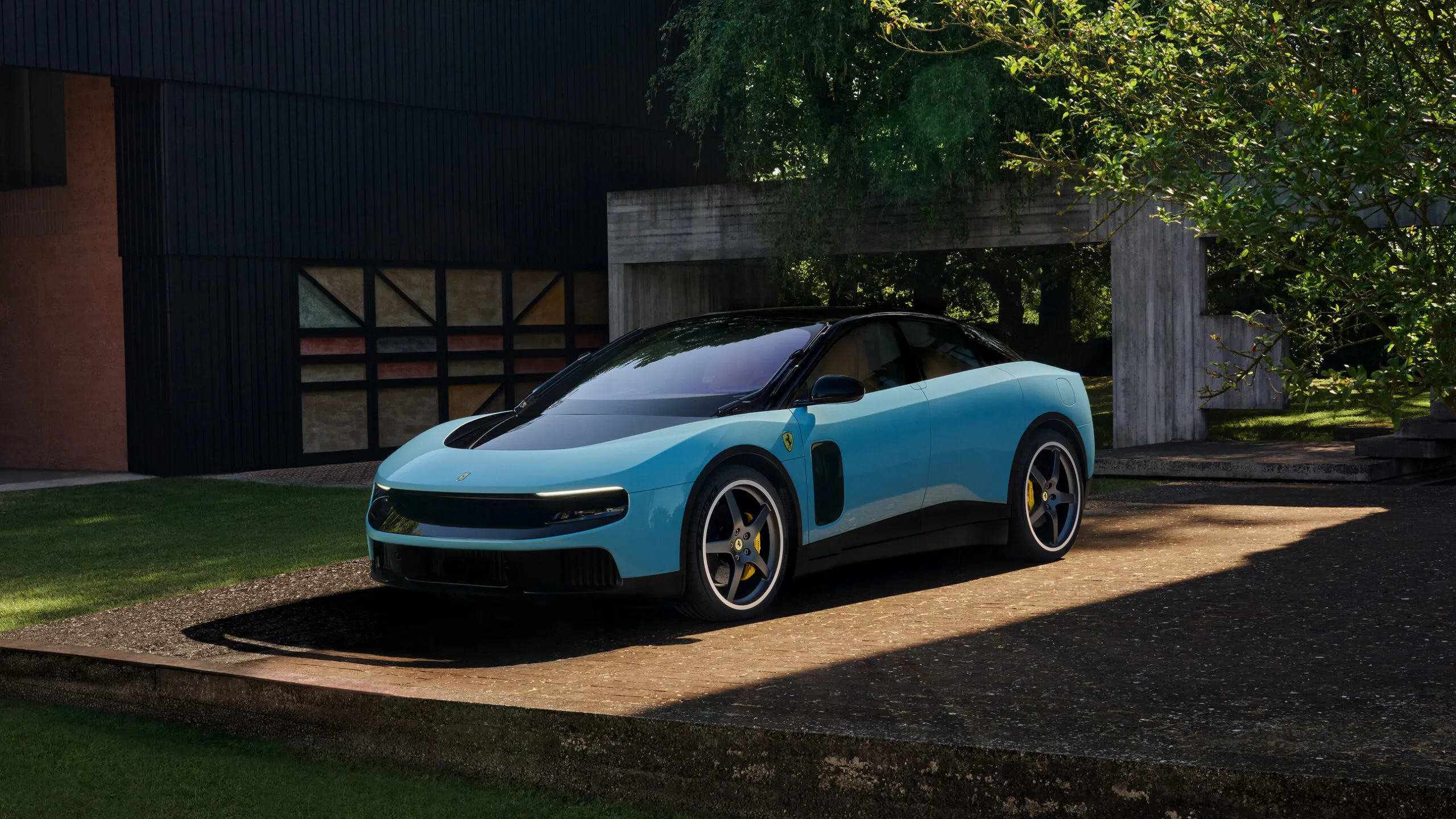
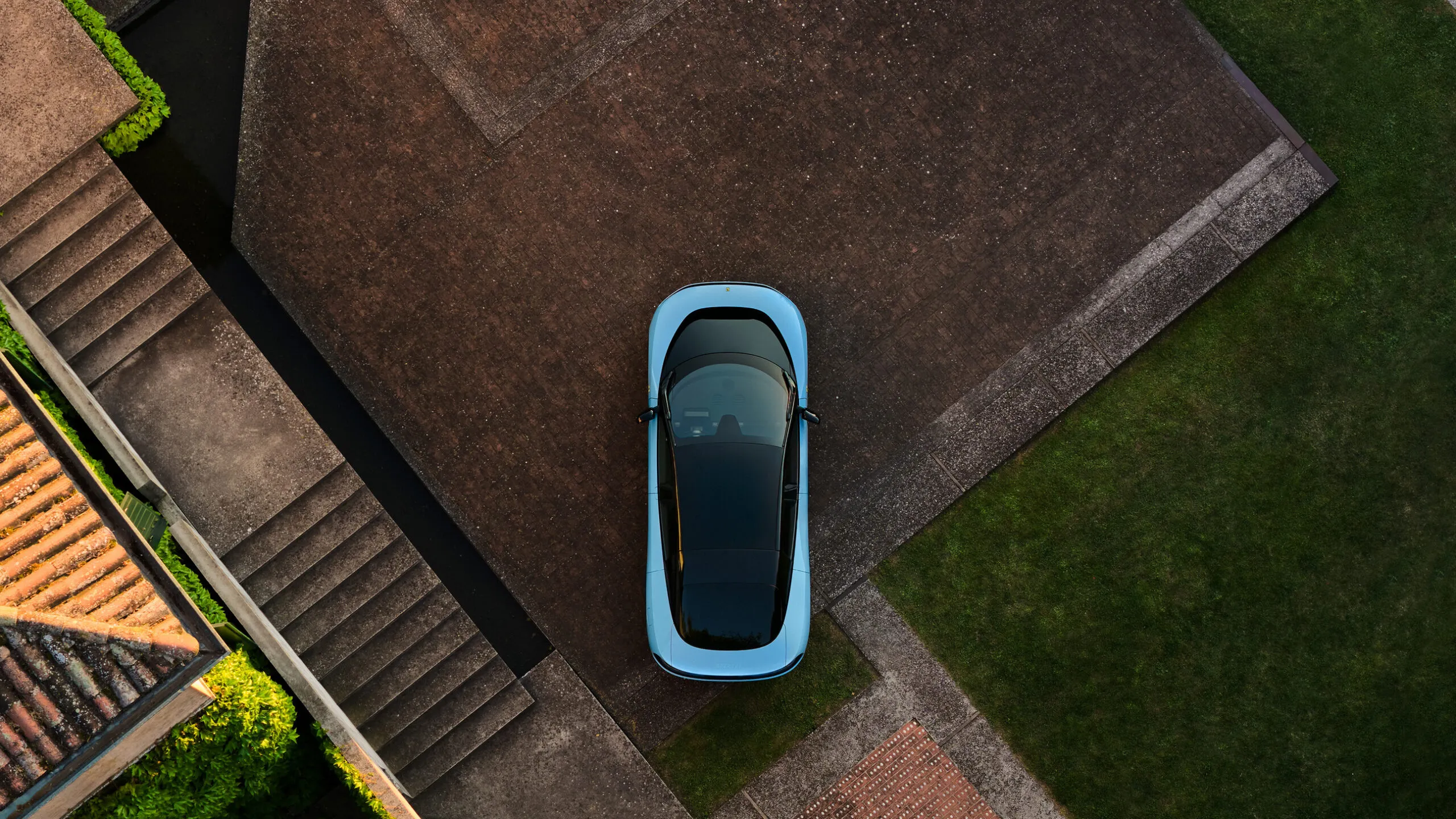
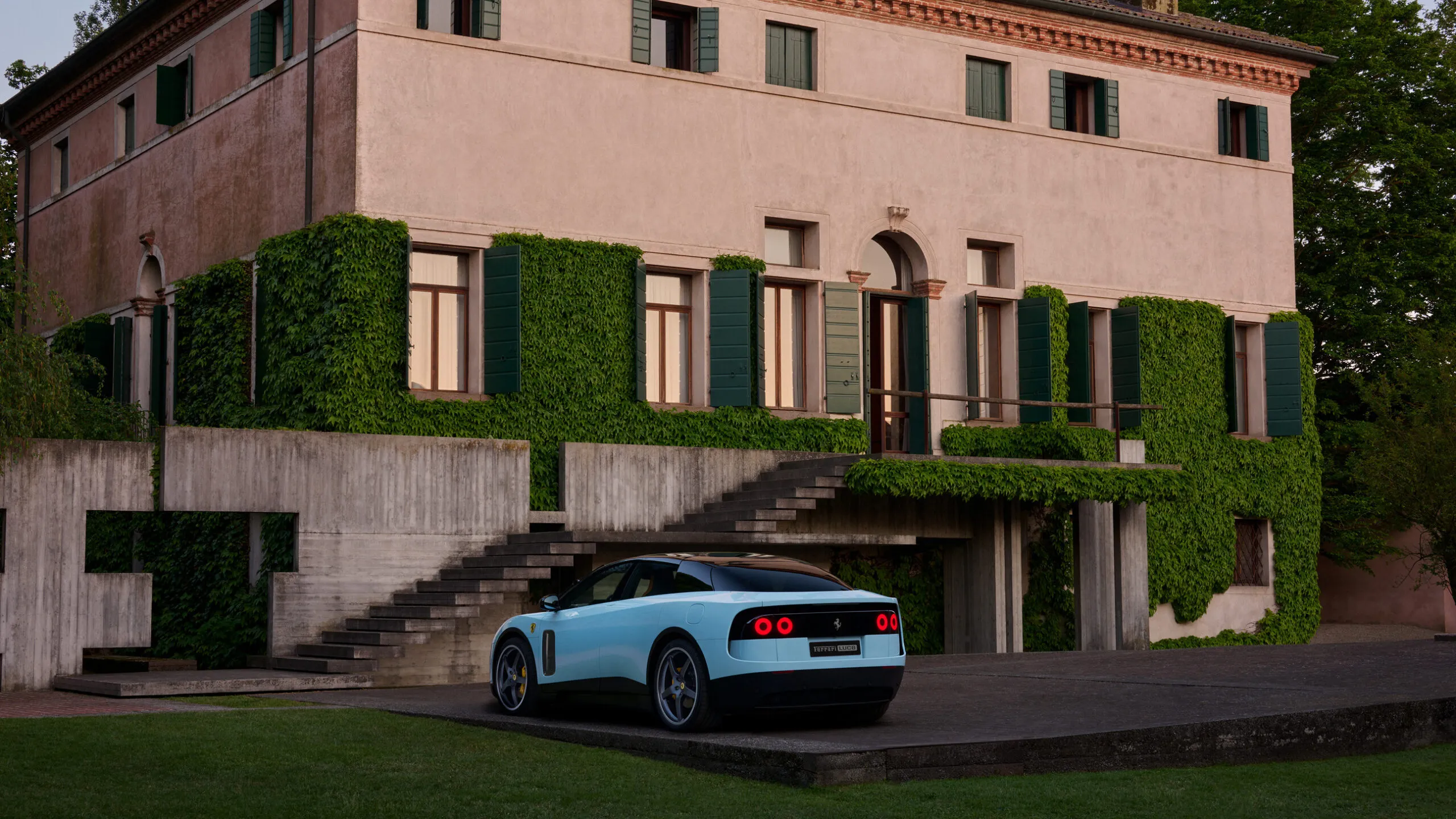

The Luce was shaped almost entirely by LoveFrom, the studio set up by Jony Ive and Marc Newson together after leaving Apple. Outside design houses are not new to Maranello. Pininfarina and Bertone, for example, have both left fingerprints on the brand over the decades. What is different this time, Ferrari says, is that LoveFrom was given the freedom to argue for something genuinely unconventional rather than refine an existing template.
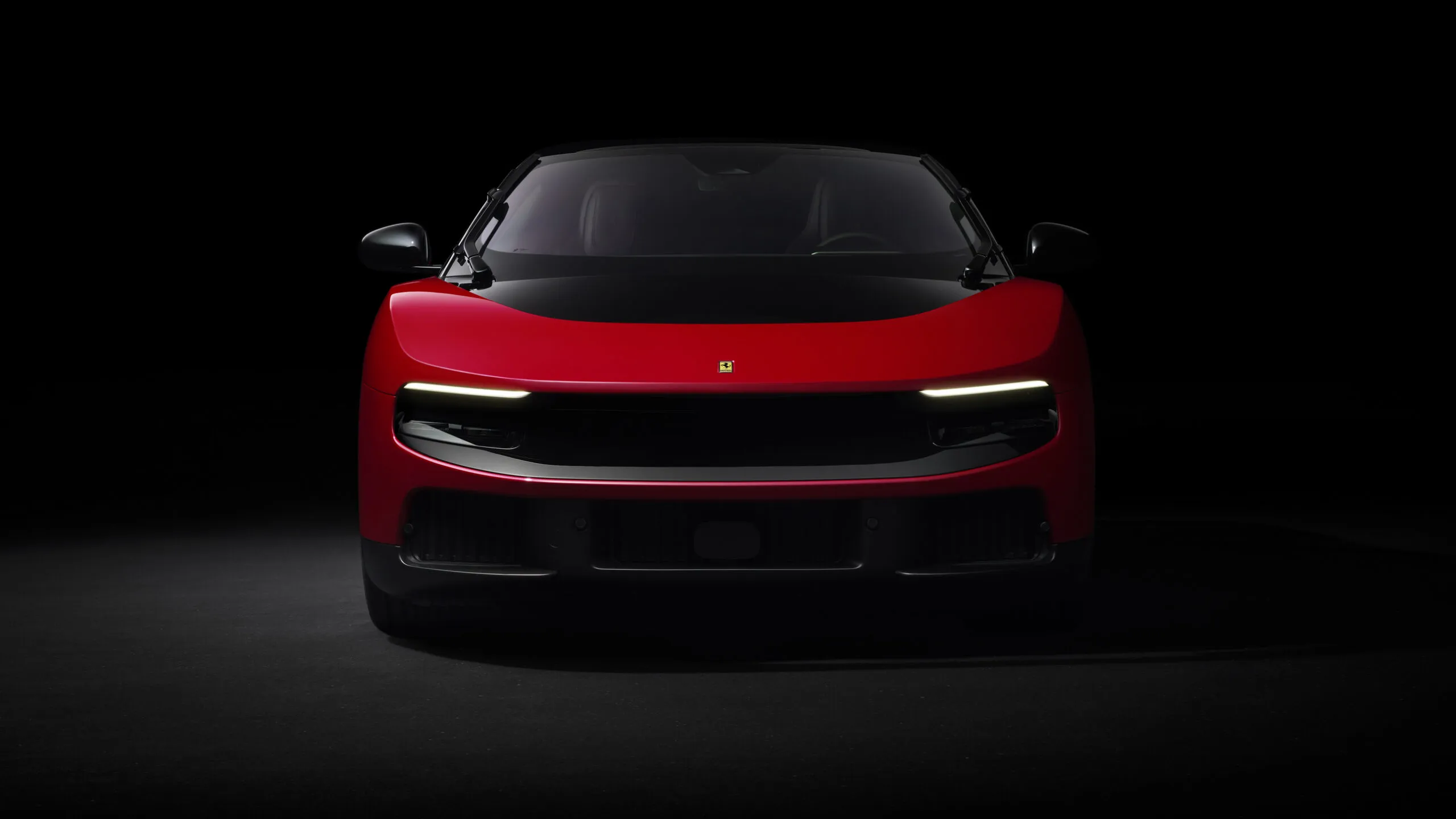
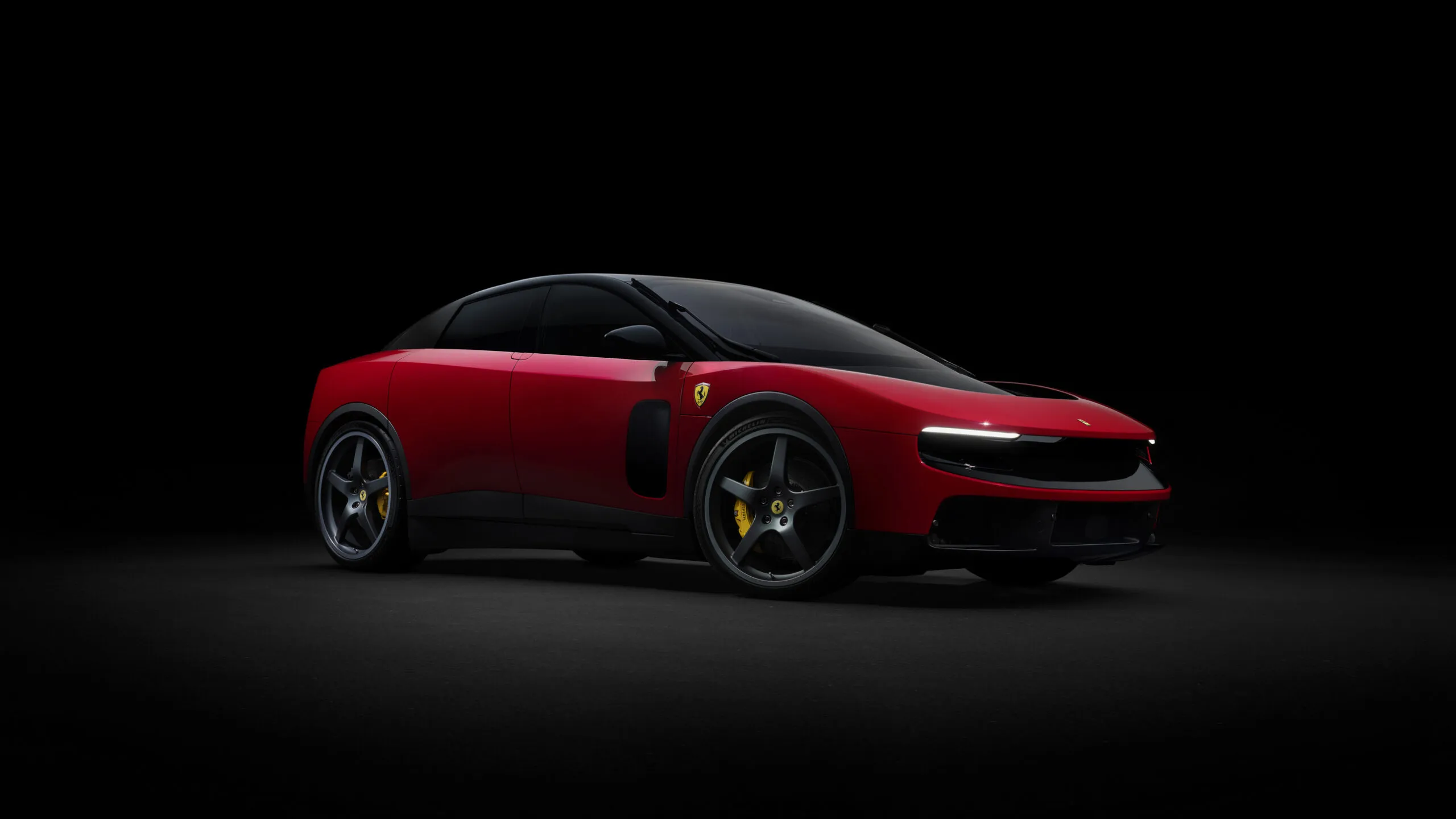
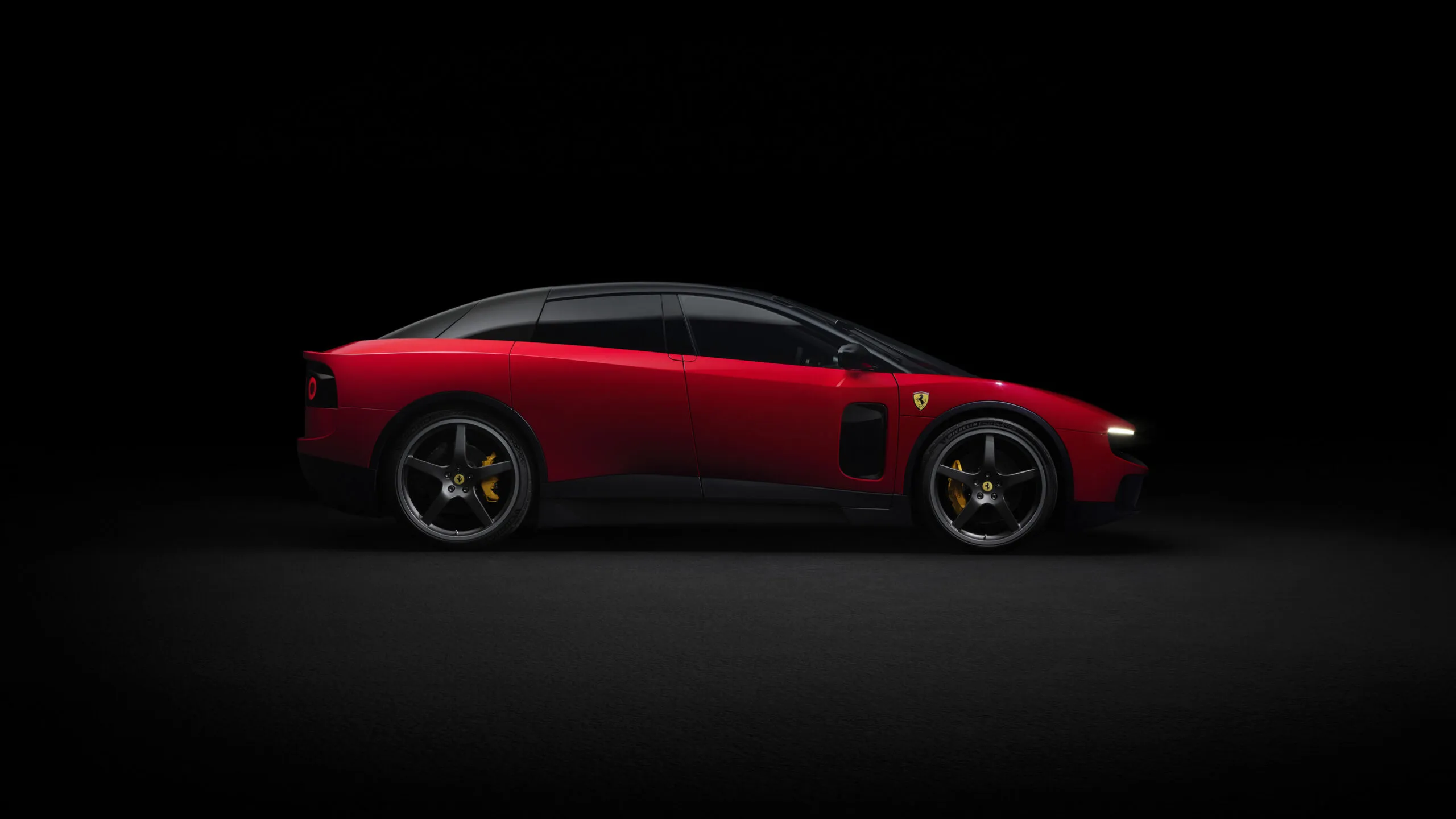
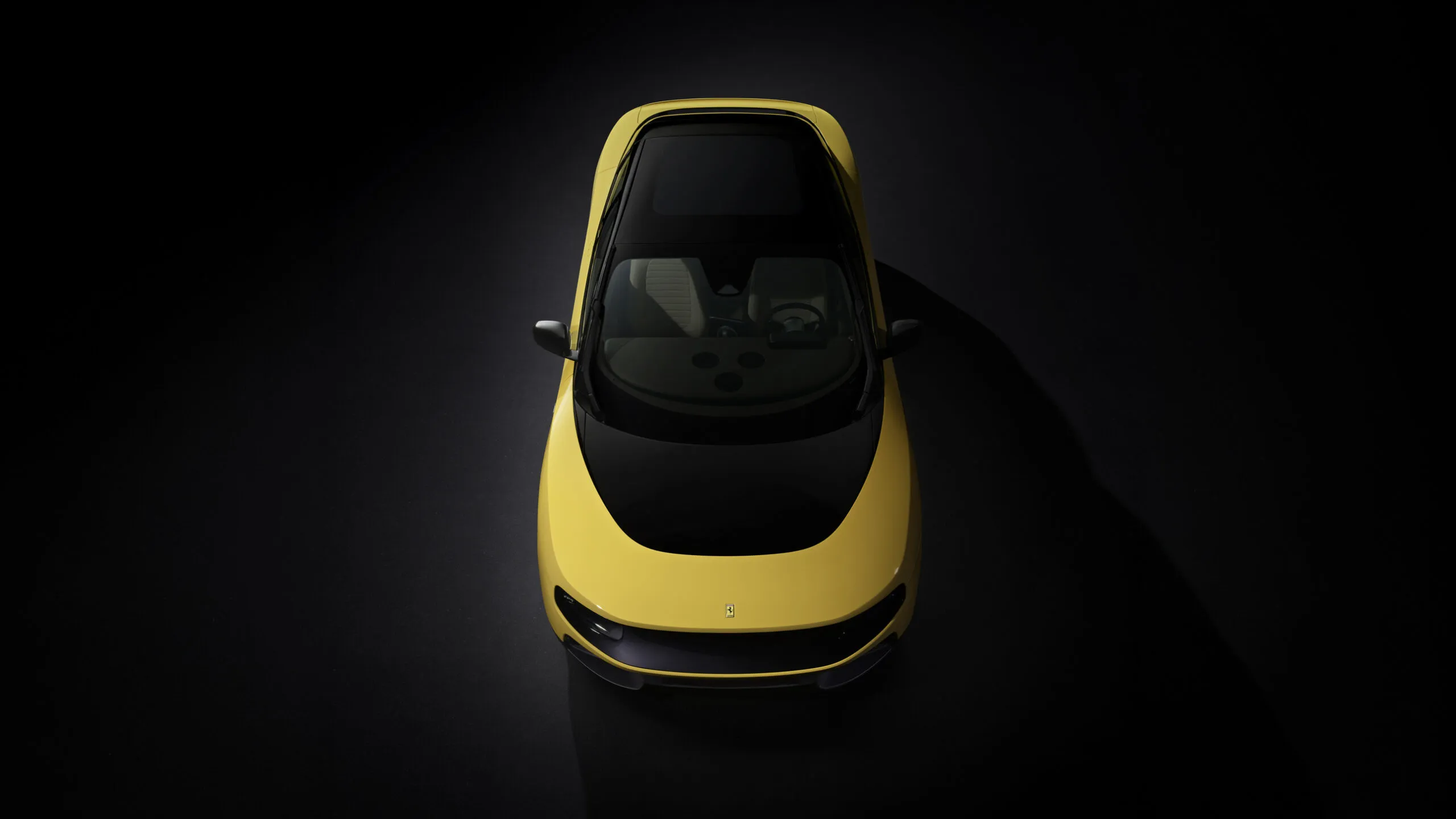
The shape backs that up. Ferrari says the car is centered around an ultra-clean “glass house” design with floating front and rear aerodynamic wings. In reality, without the Ferrari badging, it would probably be tough for most everyday folks to tie this car back to the Prancing Horse brand.
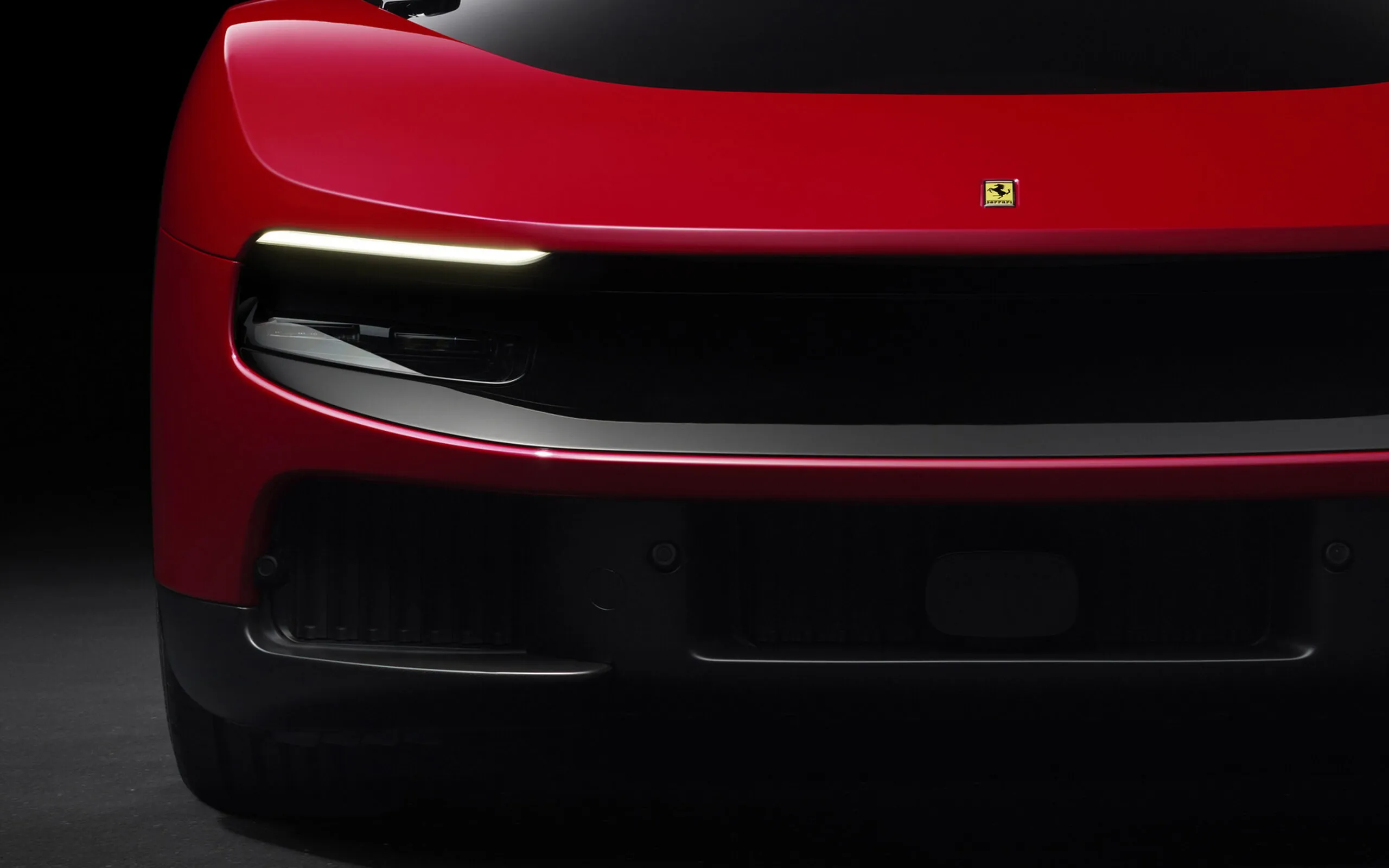
Let’s start up front and work our way around. The Luce’s face features a huge frontal wing that mimics the good ol’ boys at Dodge with the Charger Daytona. There’s a secondary hood area behind it in gloss black and the two tones do tie the car to other modern cars within the Ferrari family. That said, the lighting and front fascia don’t really shout Ferrari in any way.
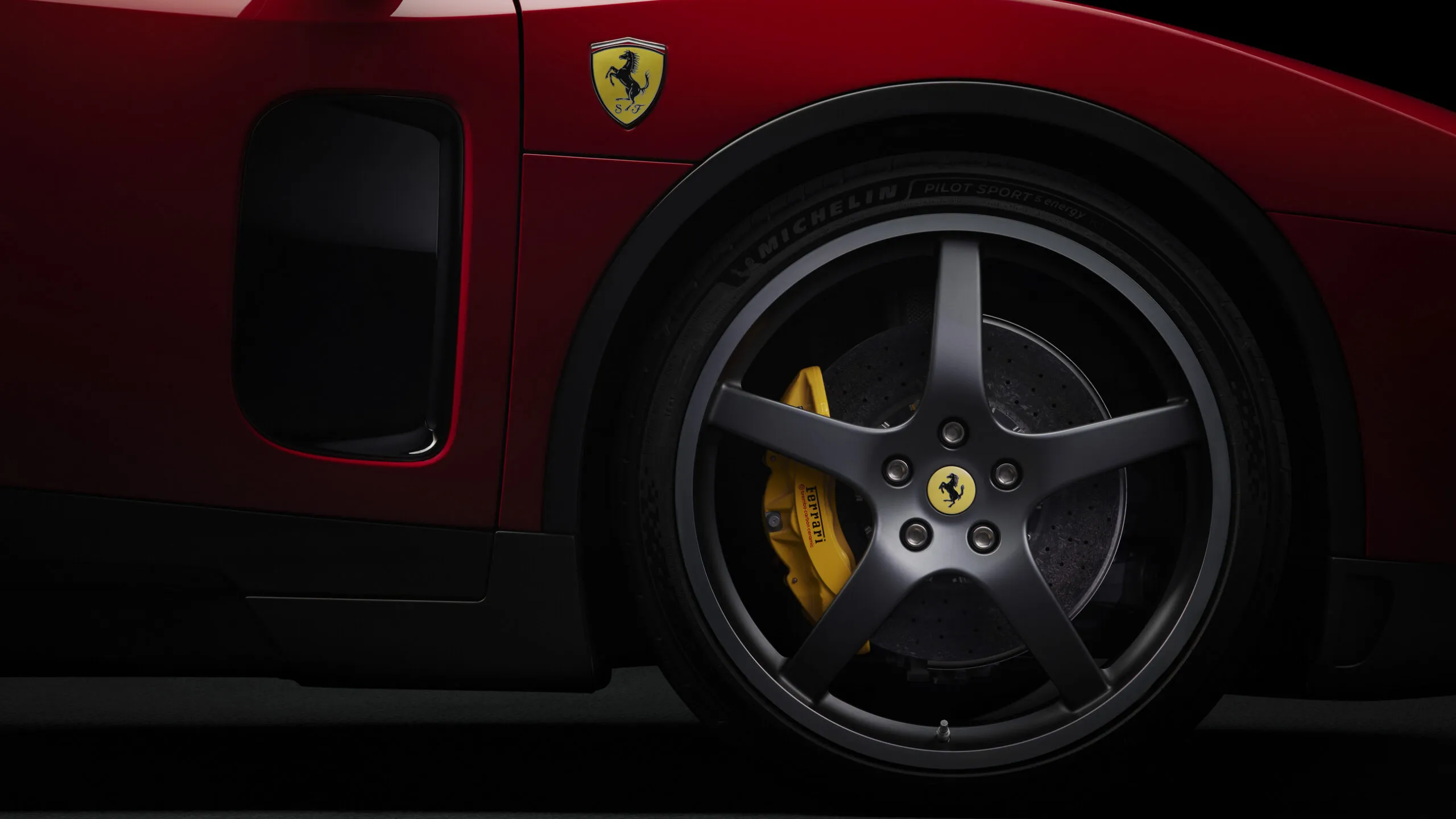
The Luce rides on gigantic 23-inch front and 24-inch rear wheels, the largest ever fitted to a production Ferrari road car. The overhangs are short, and behind the front wheels, you’ll find a large black panel that appears to be a vent for turbulent air in the wheel well. Beyond that, there’s not much to say of the side beyond the use of Tesla Cybertruck-style door poppers on the B-pillar and, as we suspected, suicide doors for the rear occupants.
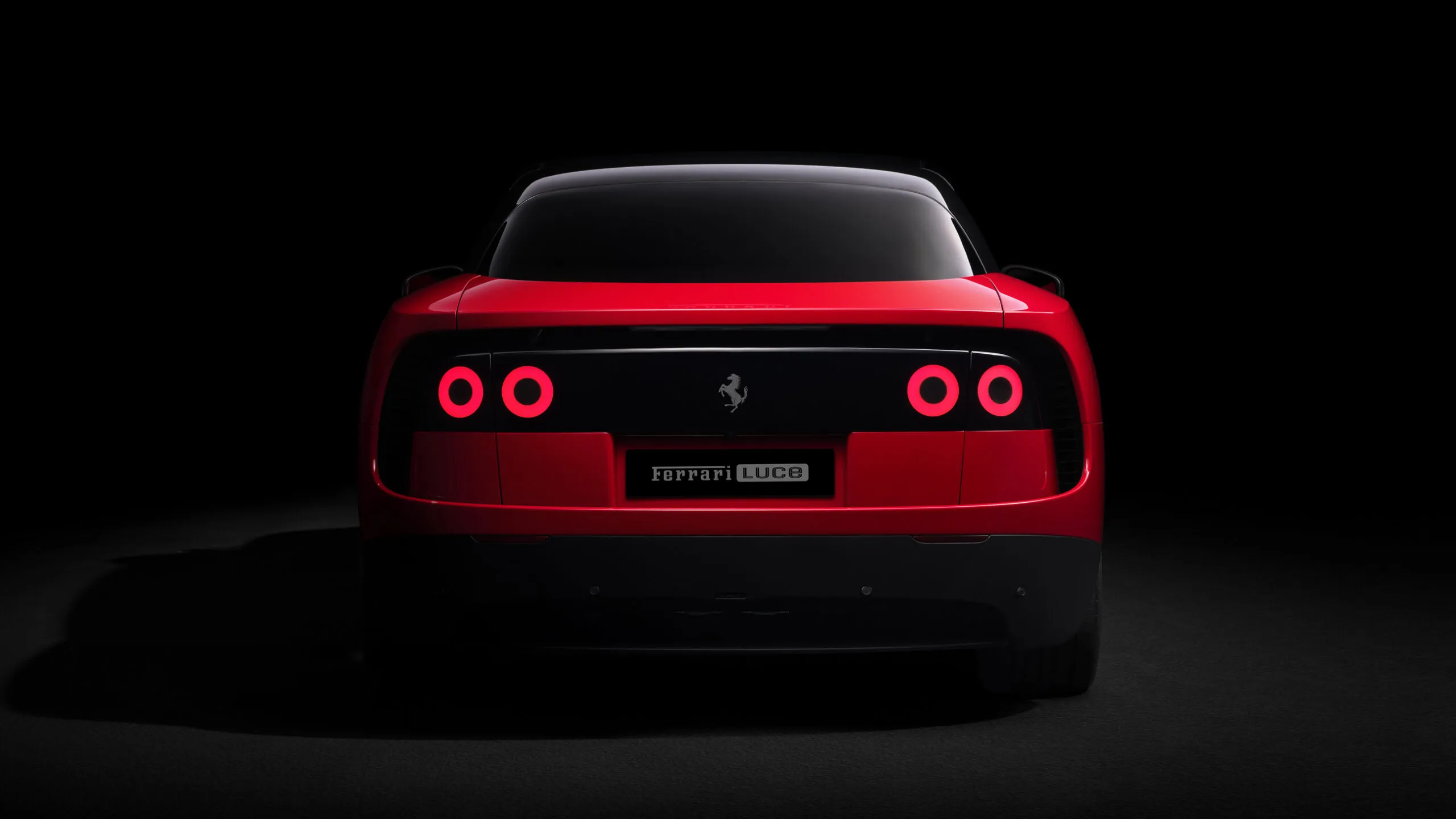
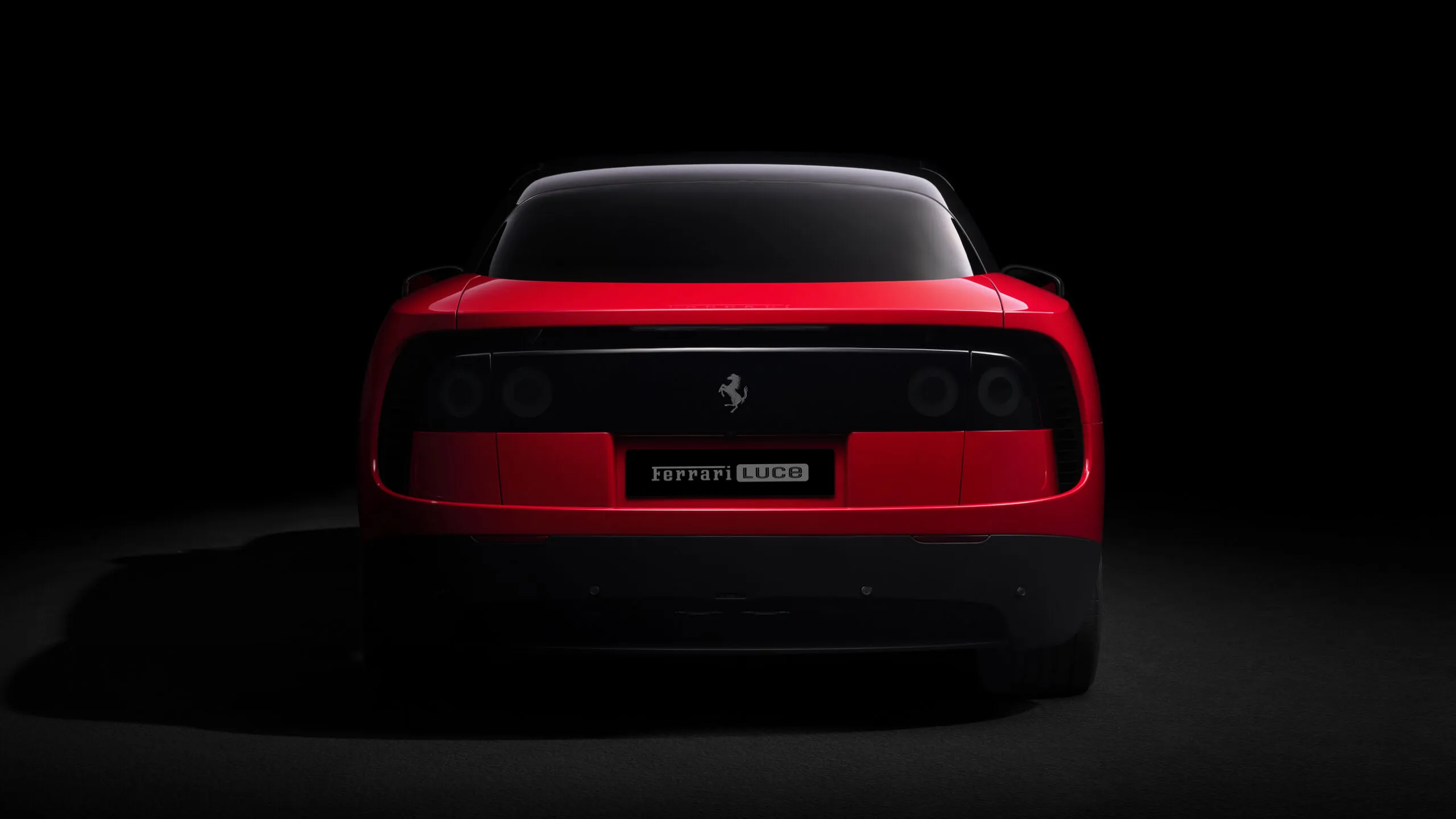
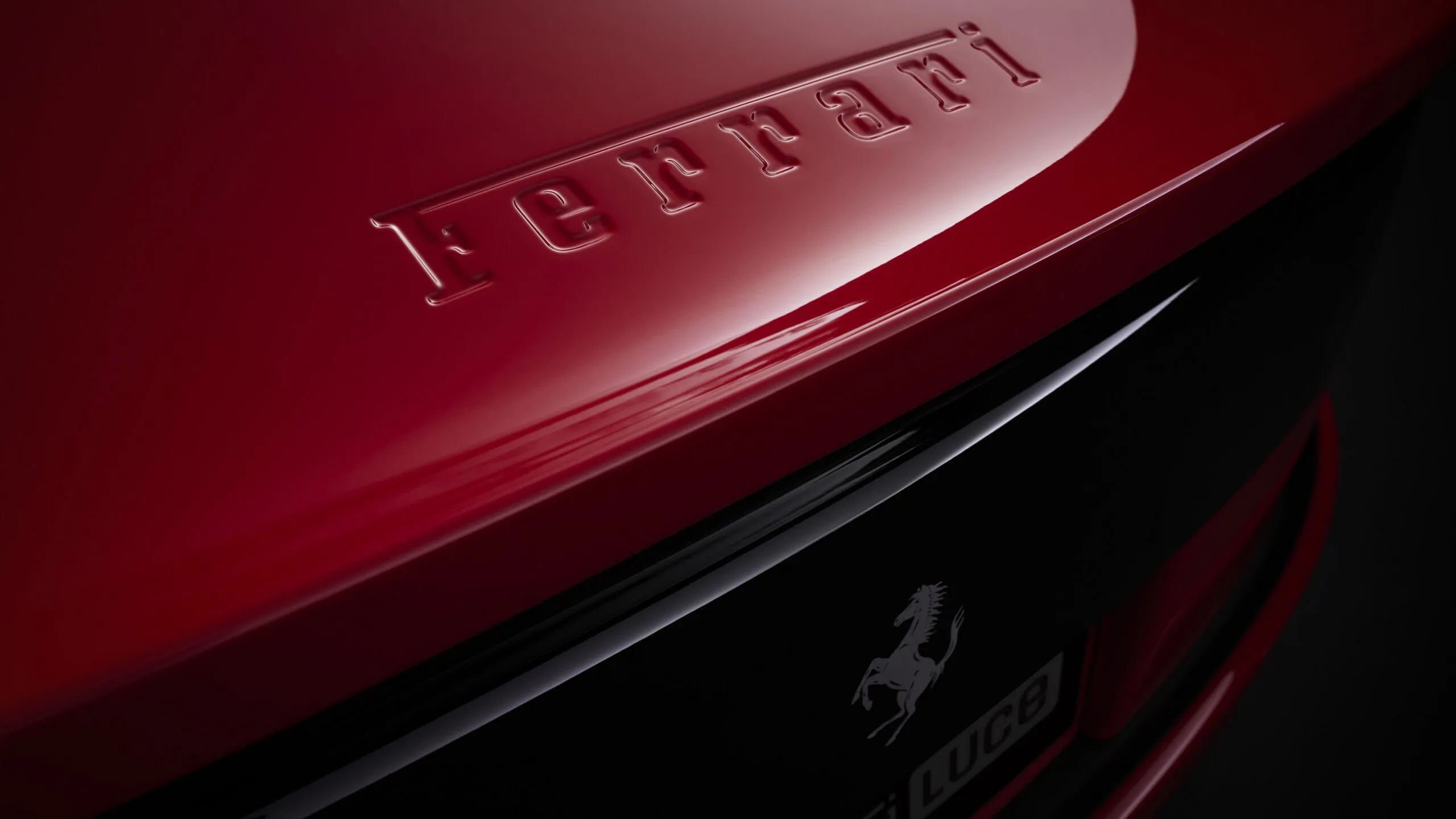
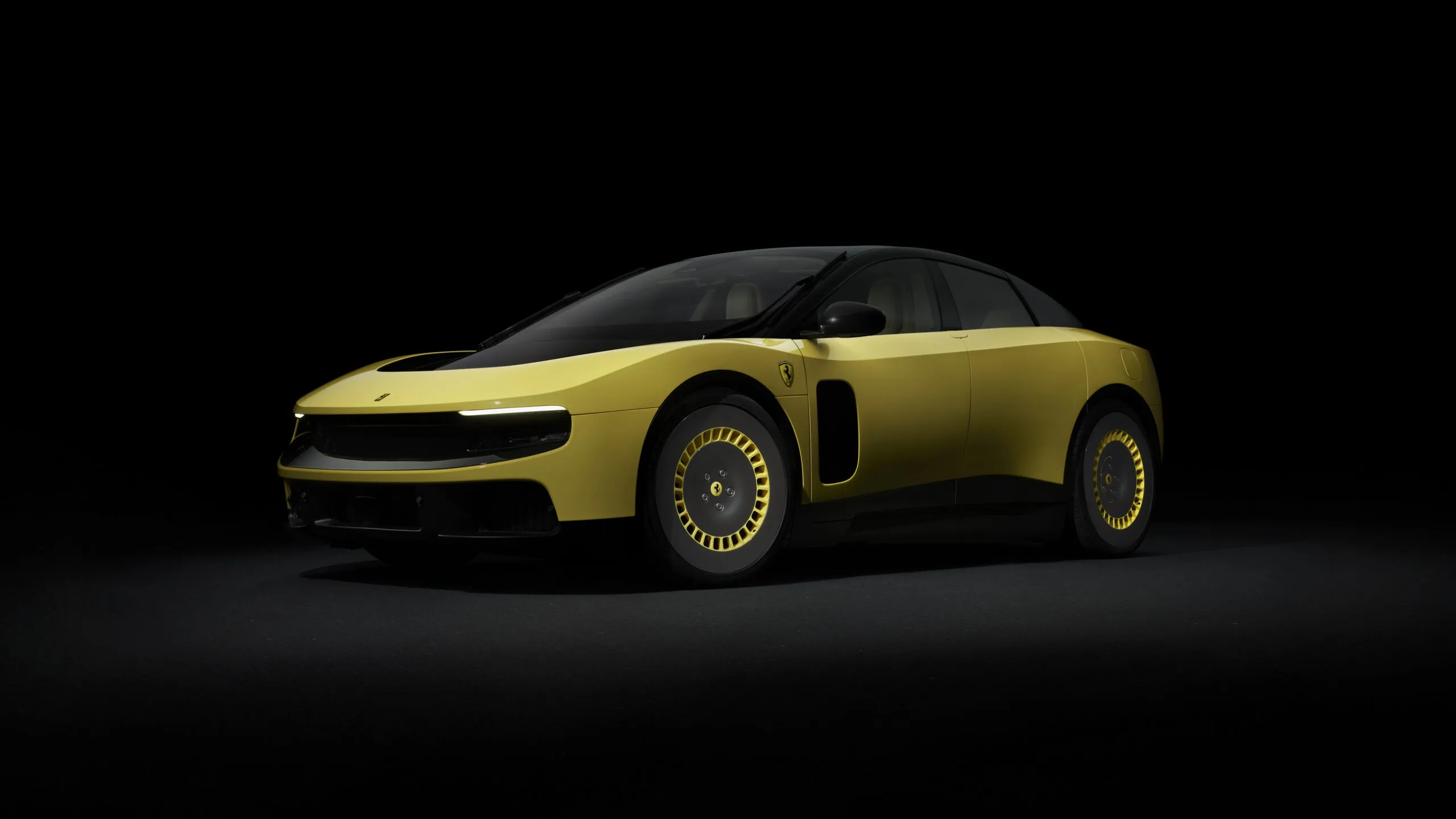
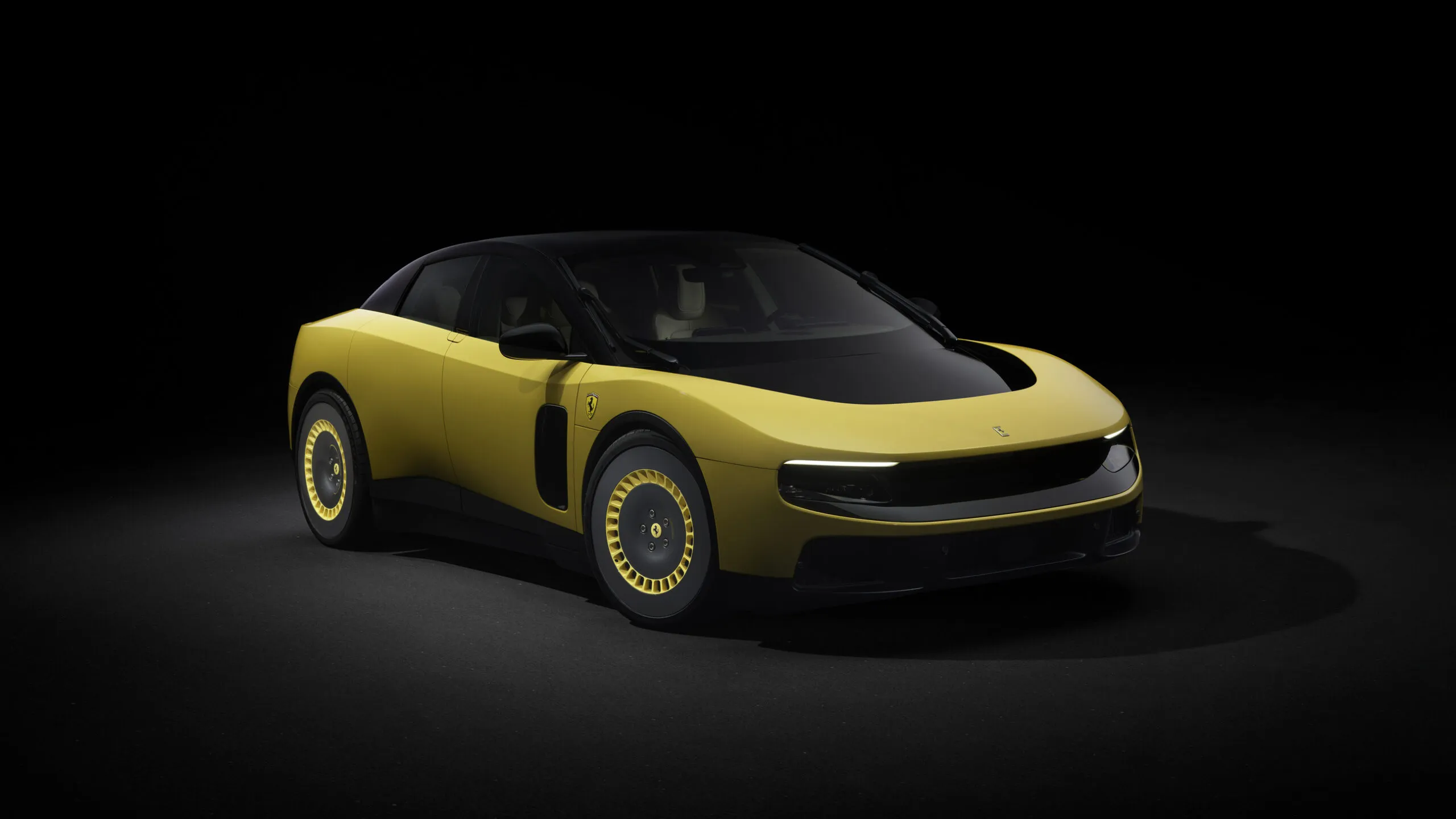
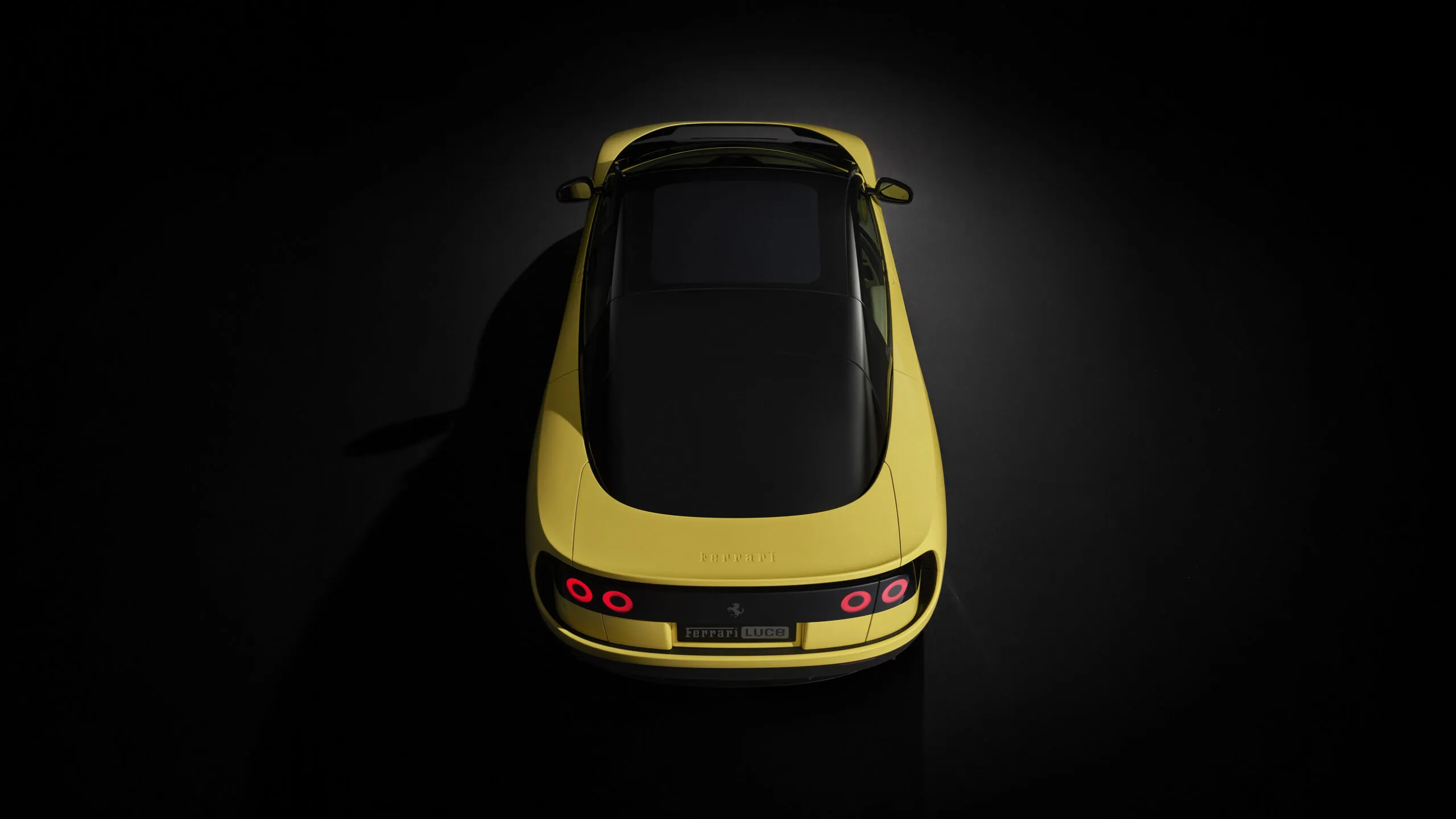
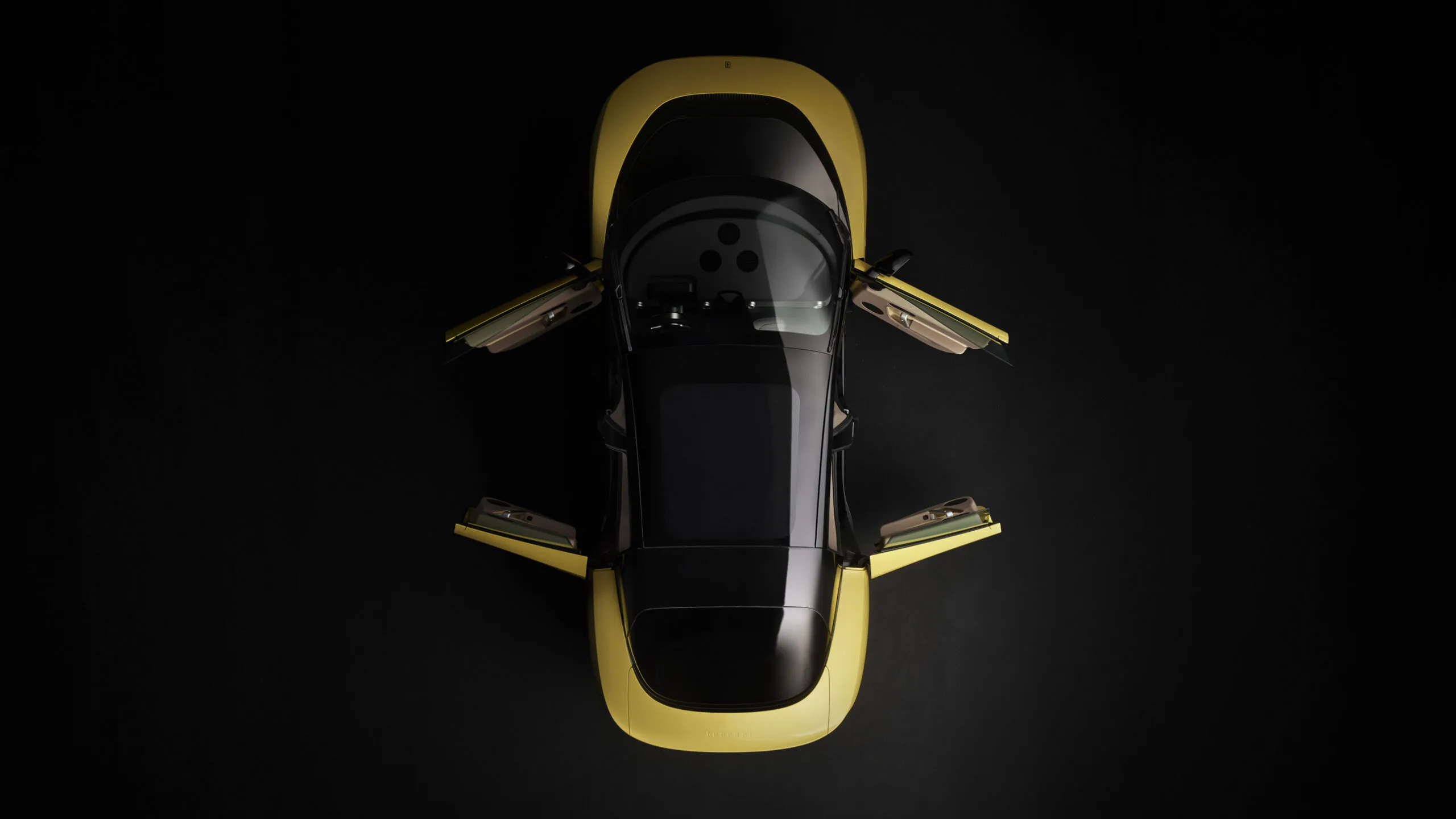
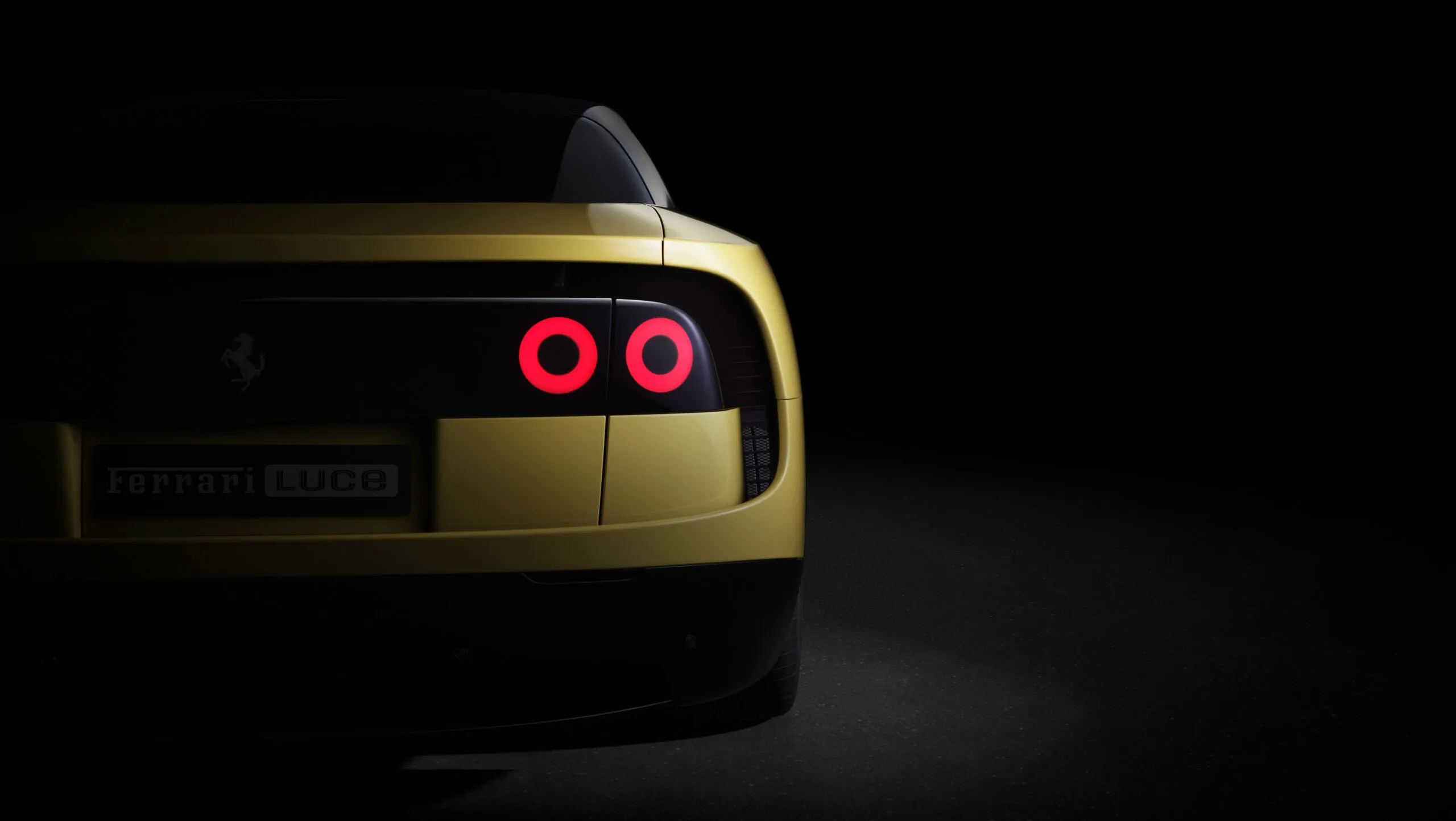
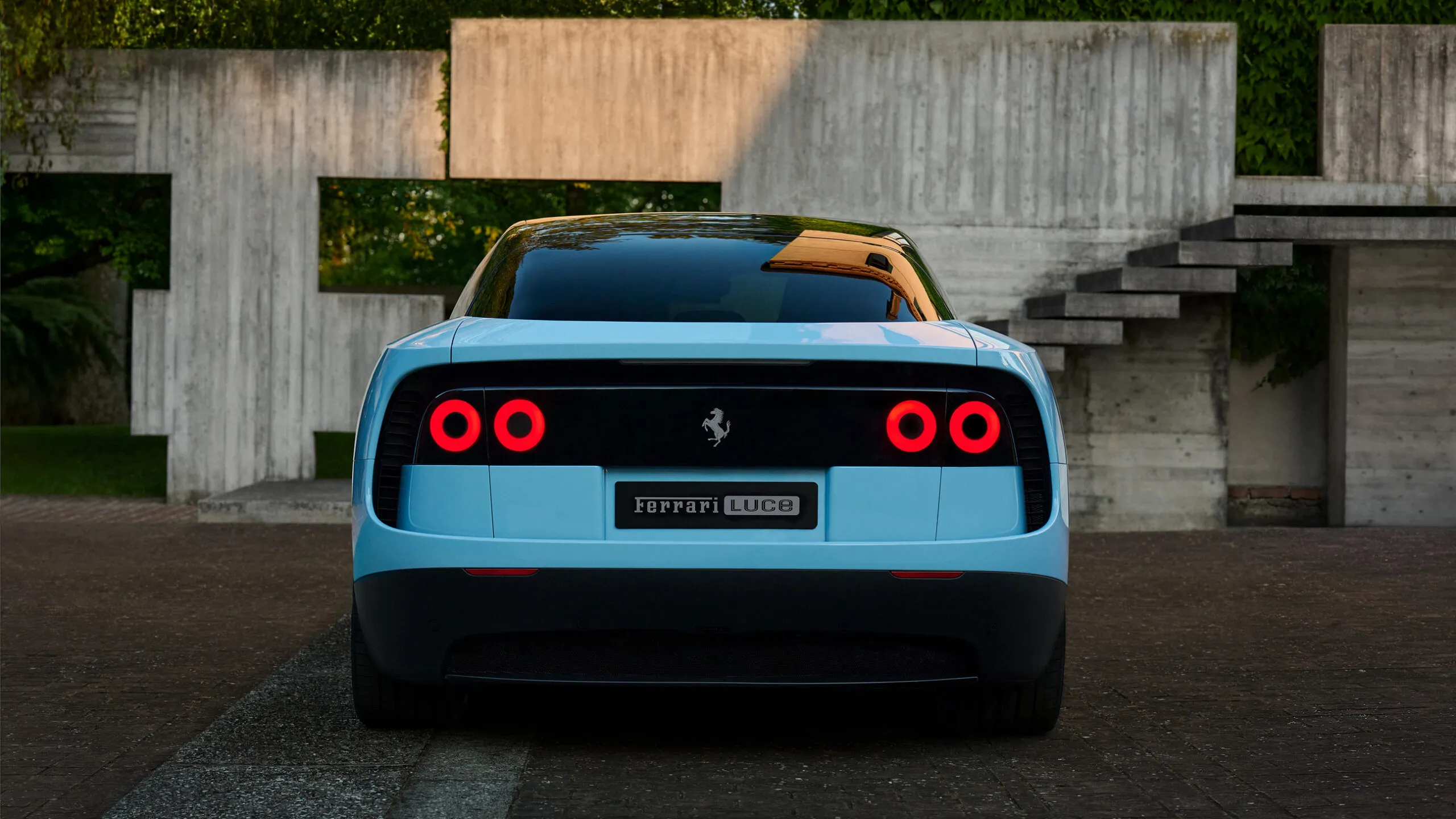
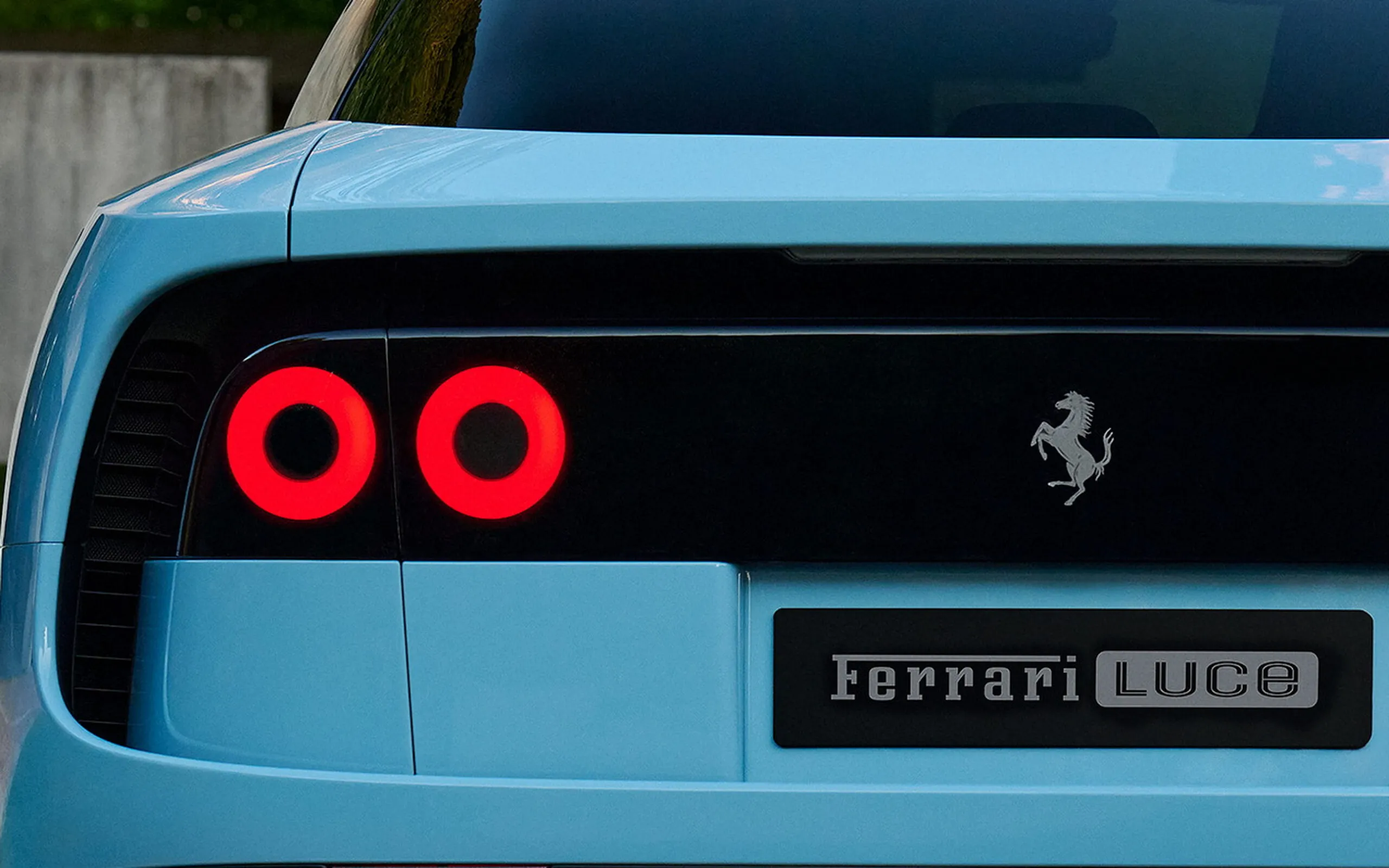
The rear is where things get more interesting. The silhouette reads sedan at a glance, but the entire back panel lifts as a hatch, with the rear glass hinged into the tailgate rather than fixed to the roofline.
Ferrari points to the 360 Modena and 458 Italia as the inspiration, and this might be where the strongest ties to brand DNA actually show up. The lighting structure, on the other hand, could just as easily have someone thinking of a Nissan Skyline or a Chevrolet Impala. That probably is not the flattery Maranello was after, but it is worth remembering who drew the thing.
Ive was central to the design of the original iPhone, and Newson worked on the Apple Watch and various special editions. Today, the original iPhone is a flagship moment in design. The Luce probably won’t go down in the history books with as much gravity, but perhaps over the years it’ll age like fine wine.
The Cabin
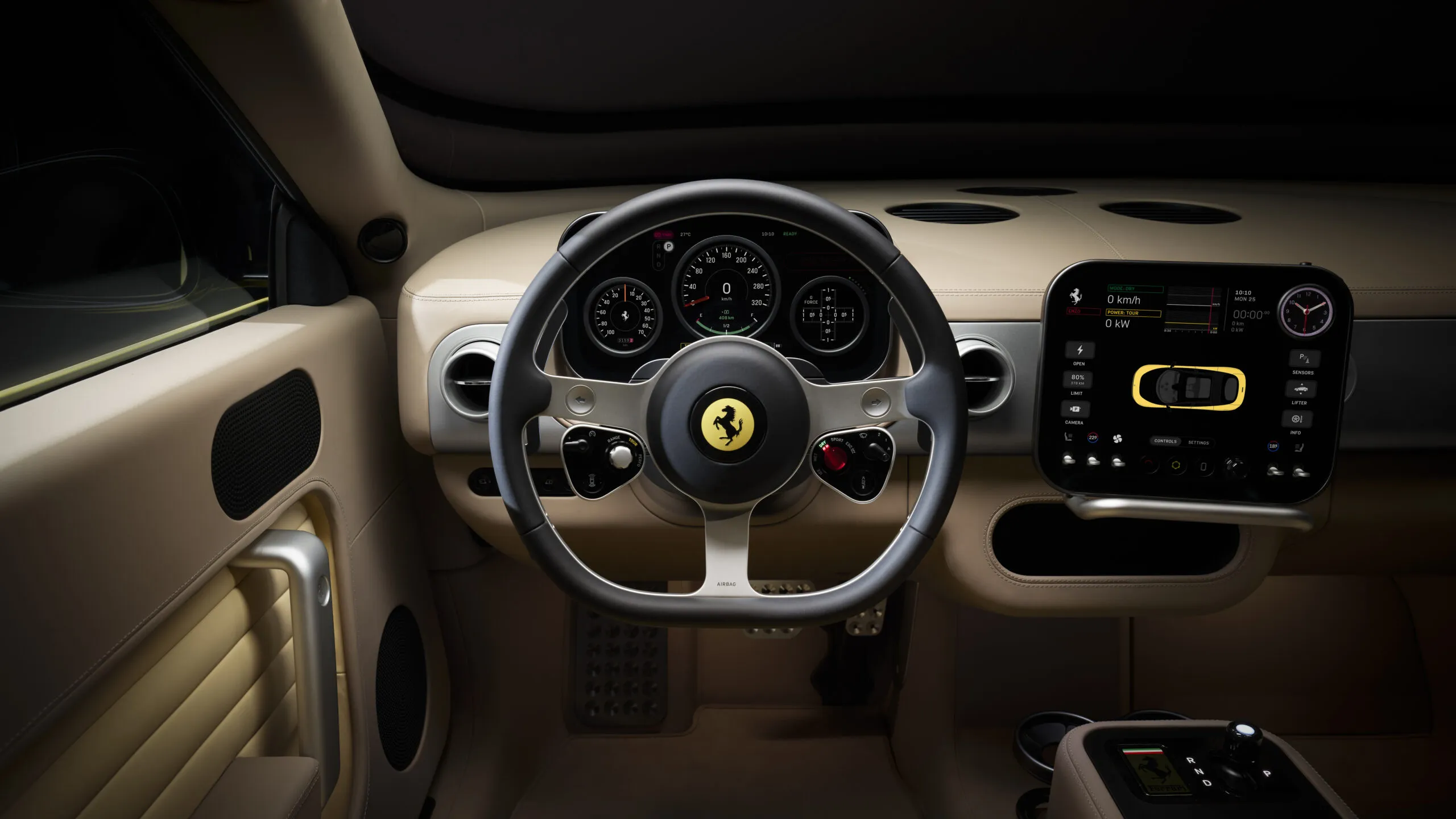
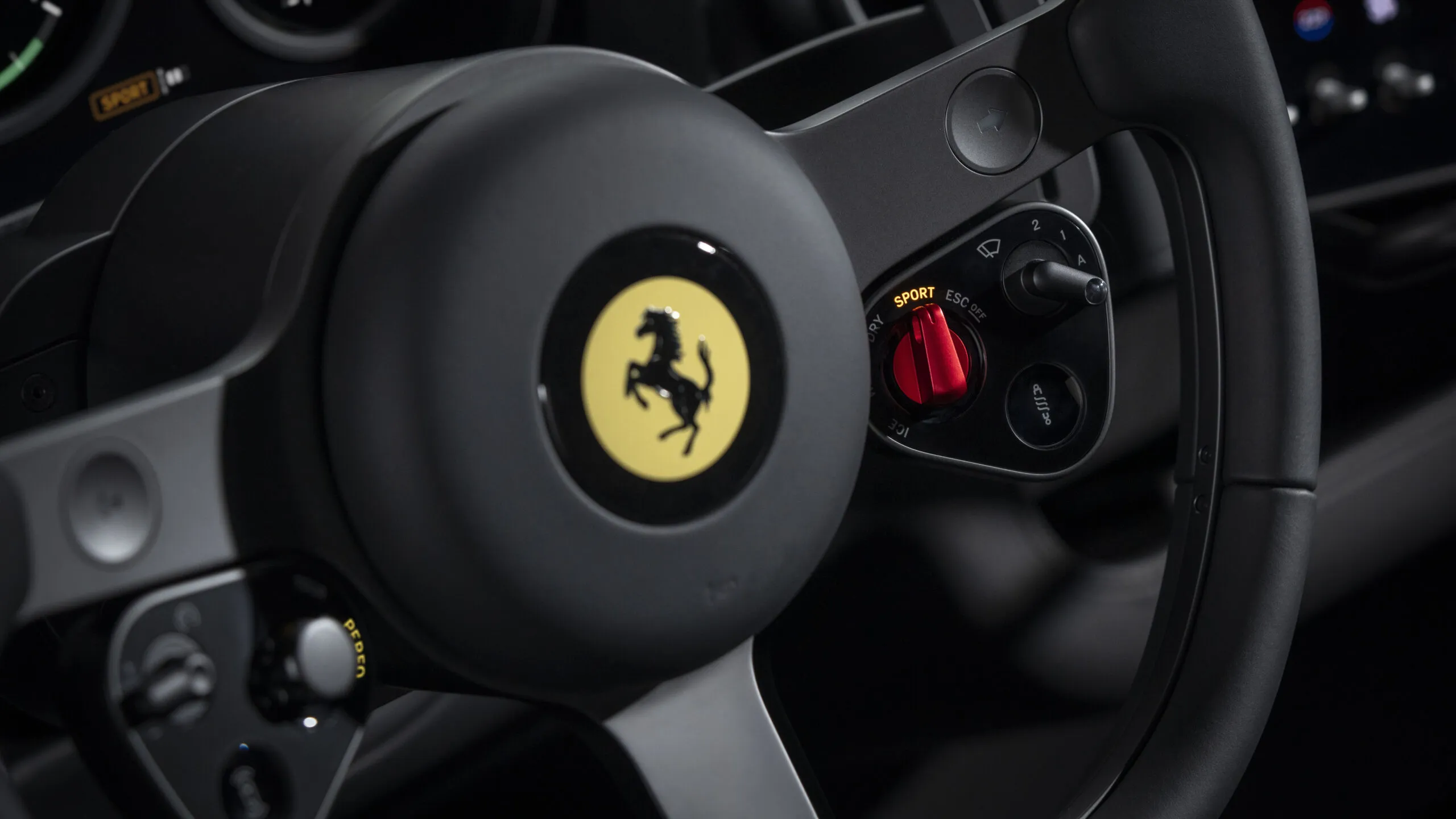
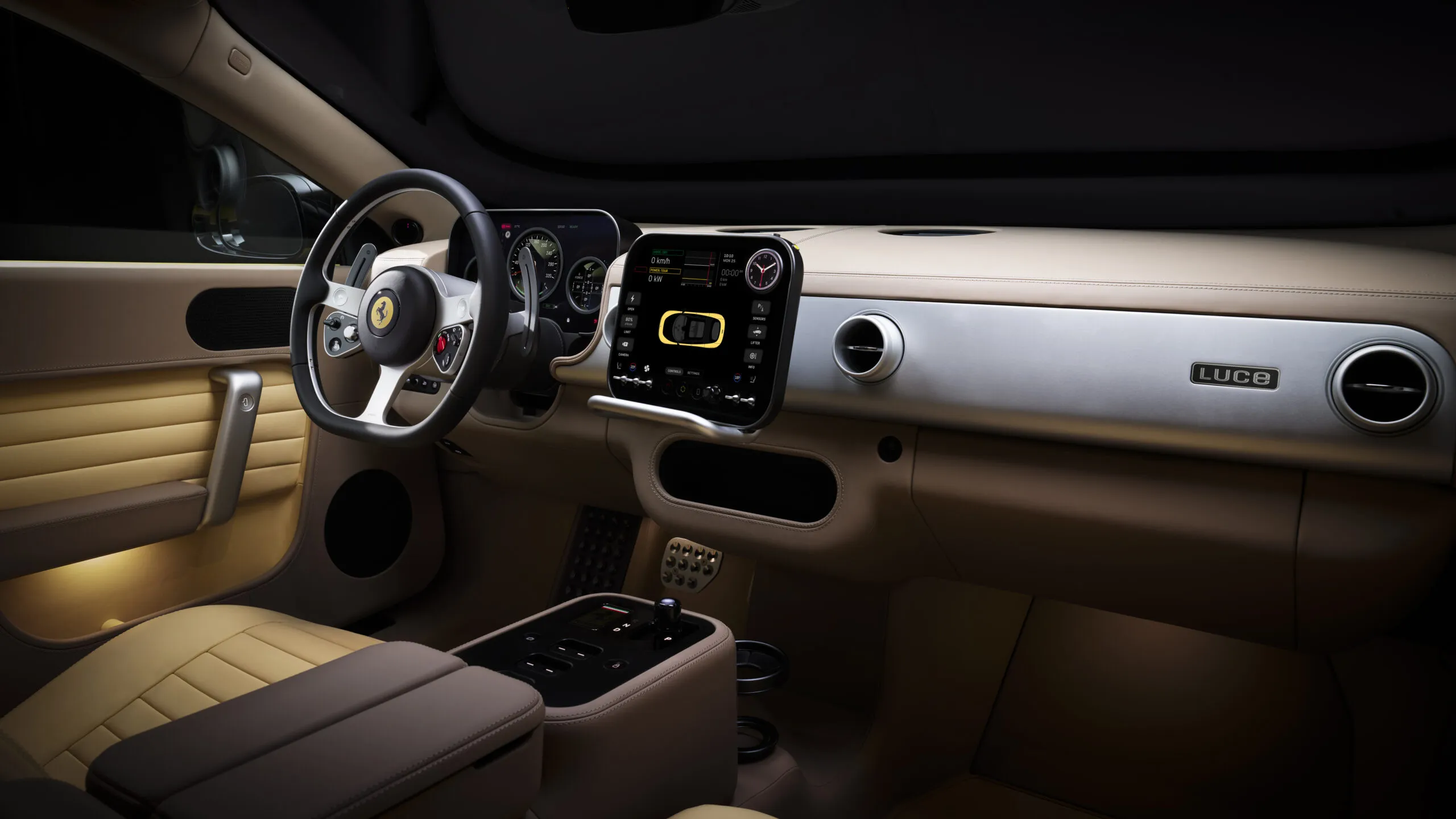
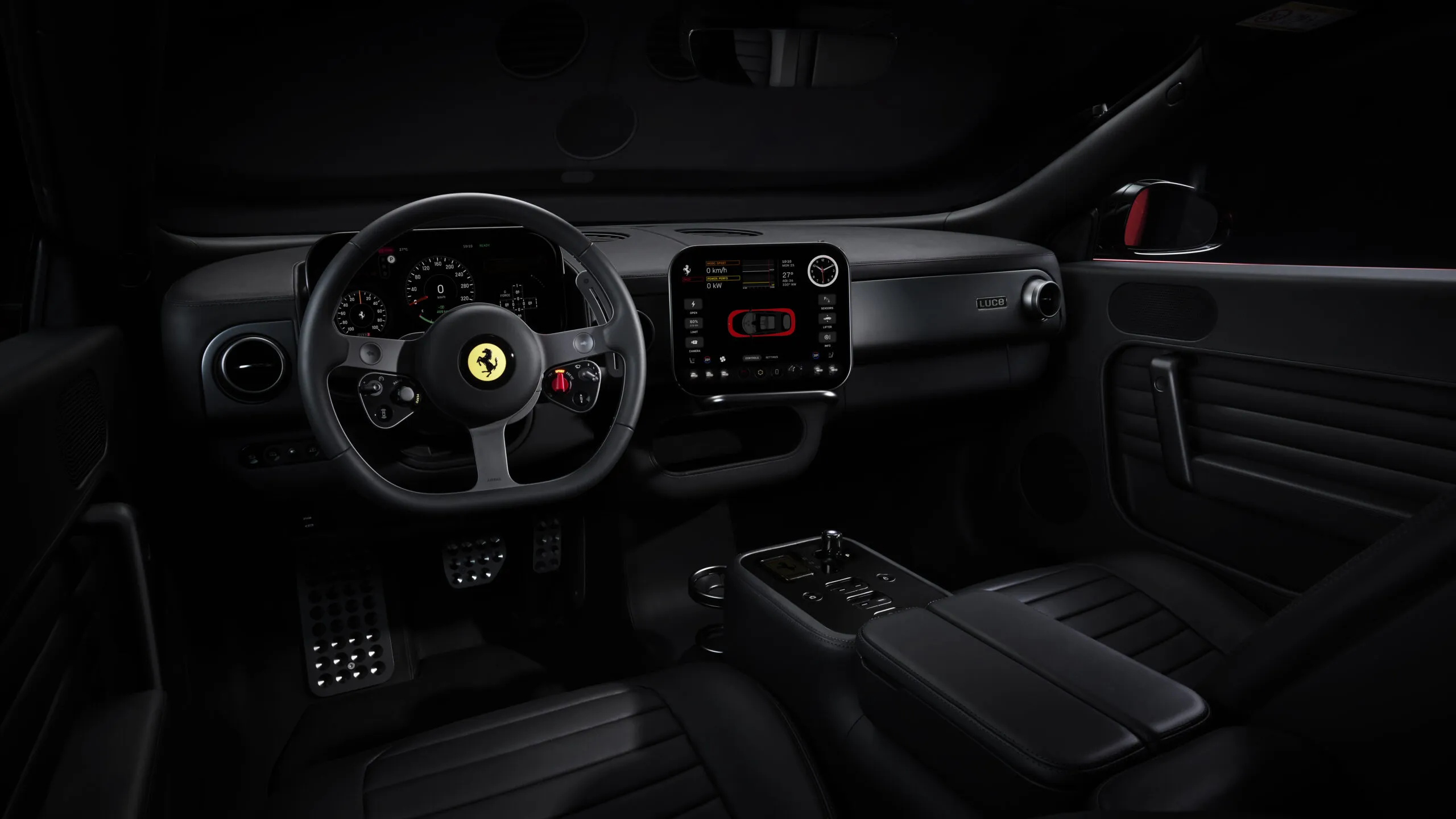
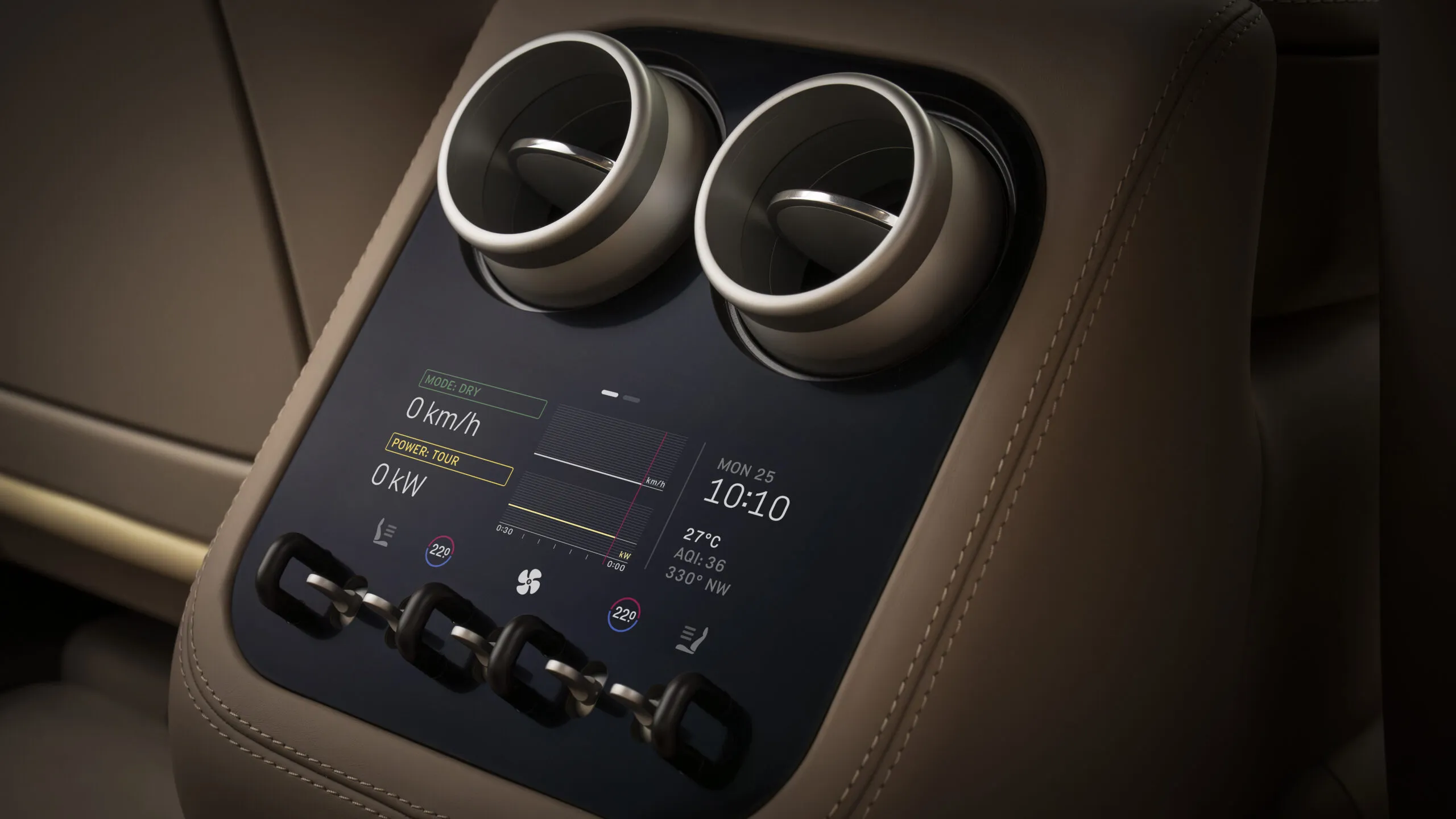
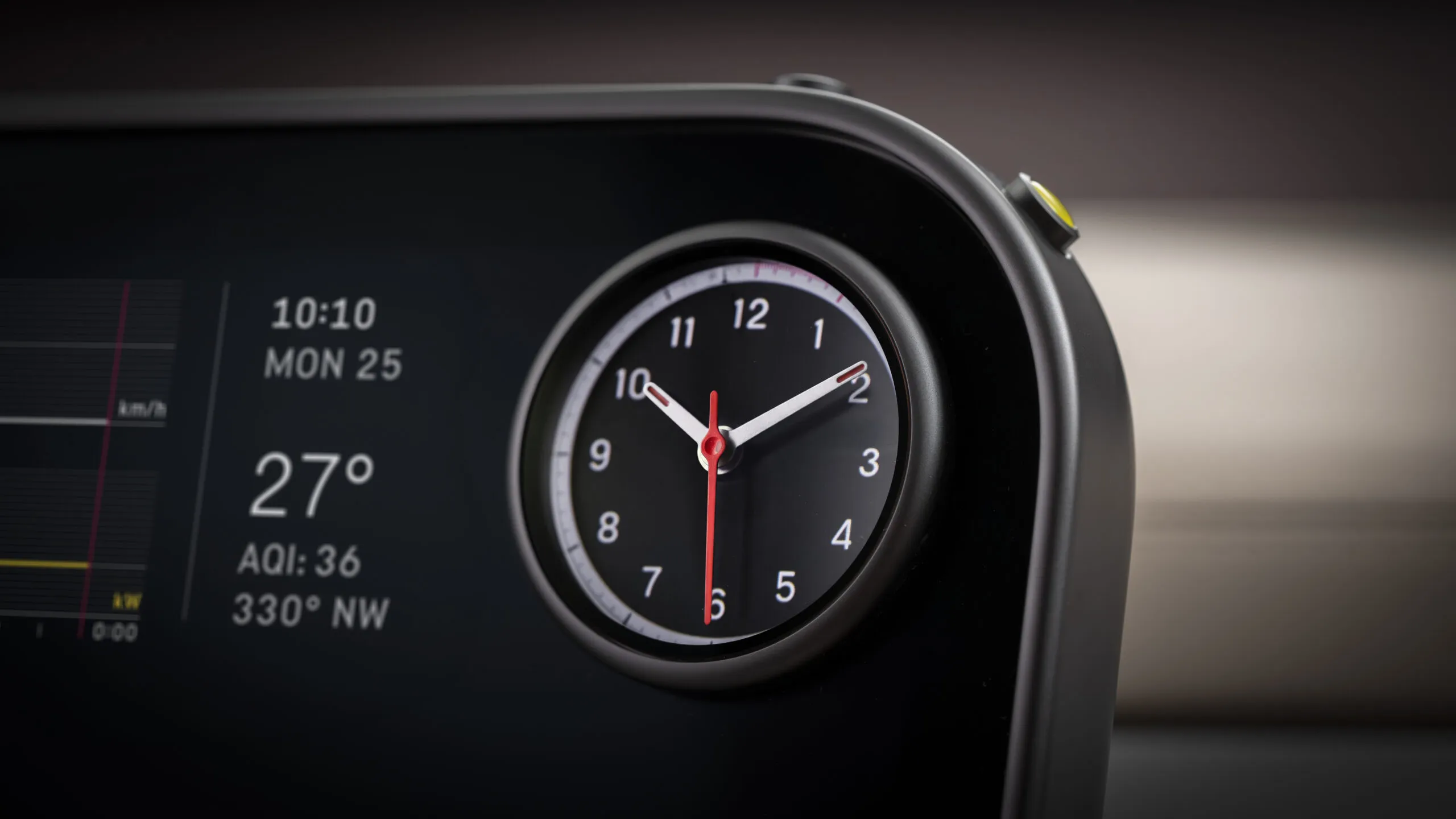
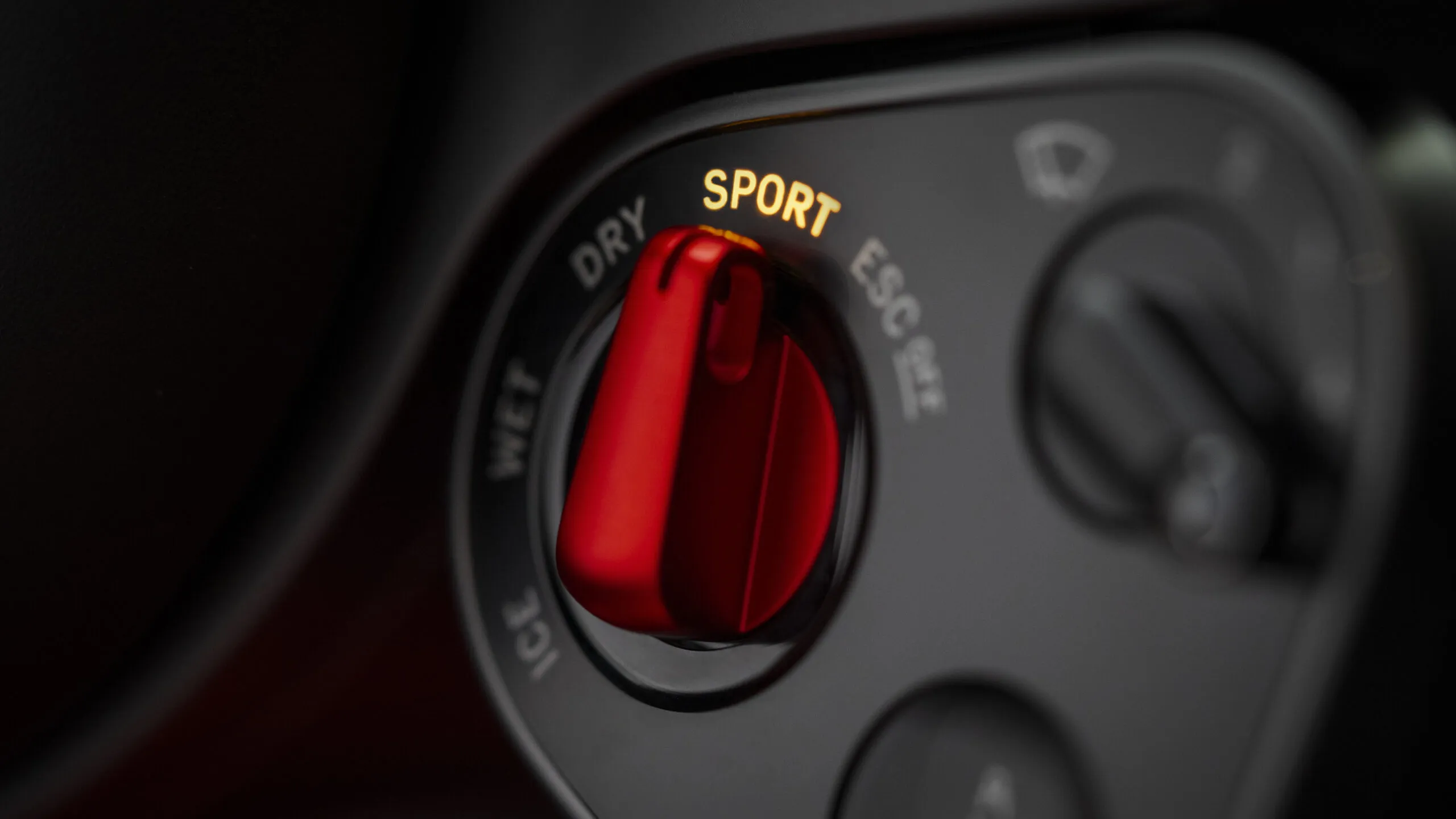
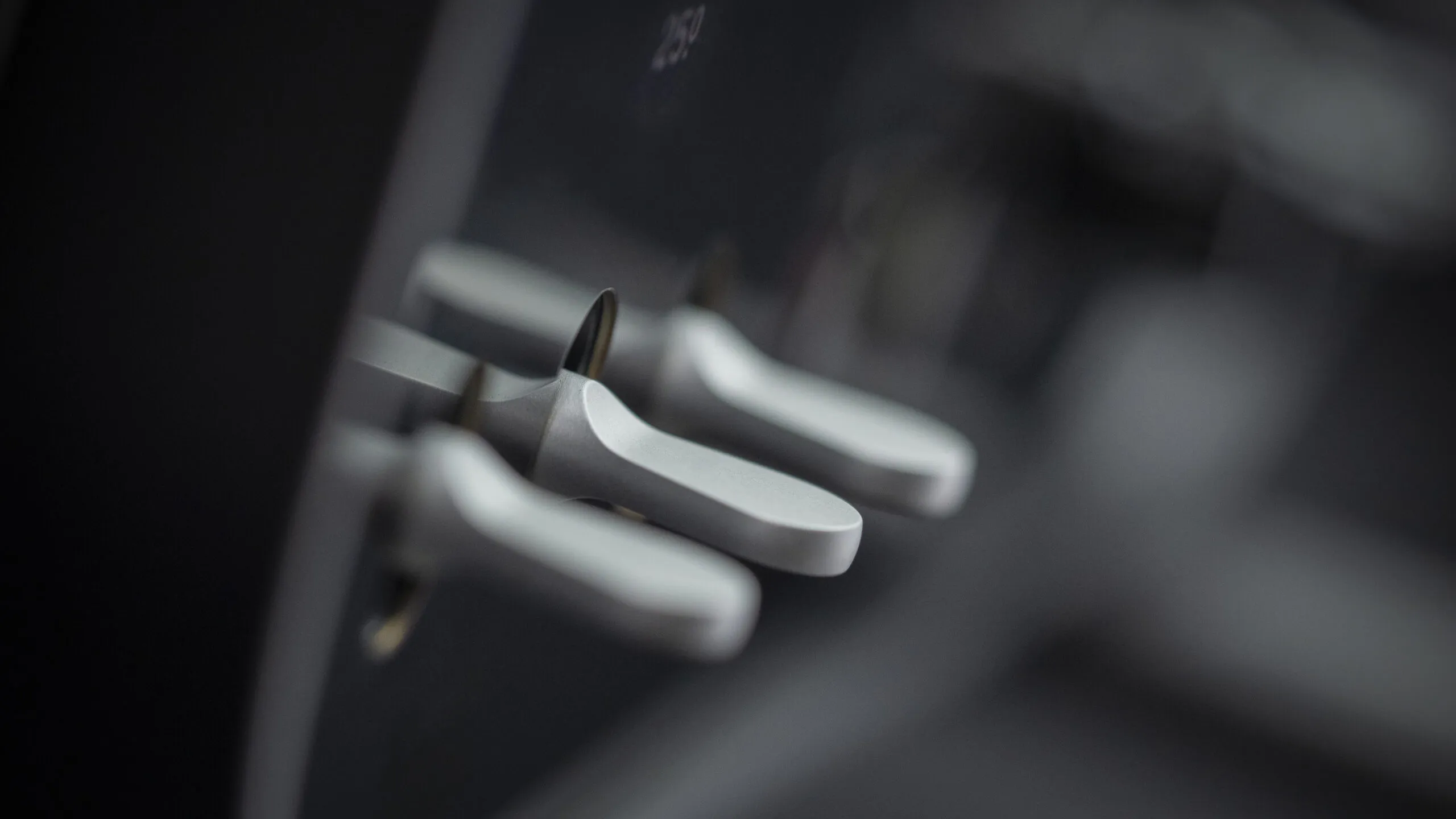
The details are where things start getting nerdy. The steering wheel itself is machined from recycled aluminum and works with a moving binnacle that travels with the wheel to keep key information directly in the driver’s line of sight. Ferrari also mixed physical controls with digital interfaces rather than going all-in on touchscreens. That means actual switches, dials, and toggles still exist alongside OLED displays developed specifically for the Luce.
Then there are the oddball touches that sound peak Ferrari. The key itself uses Corning Gorilla Glass and E Ink technology, and docking it triggers a startup sequence where Ferrari yellow reportedly spreads across the cabin interface.
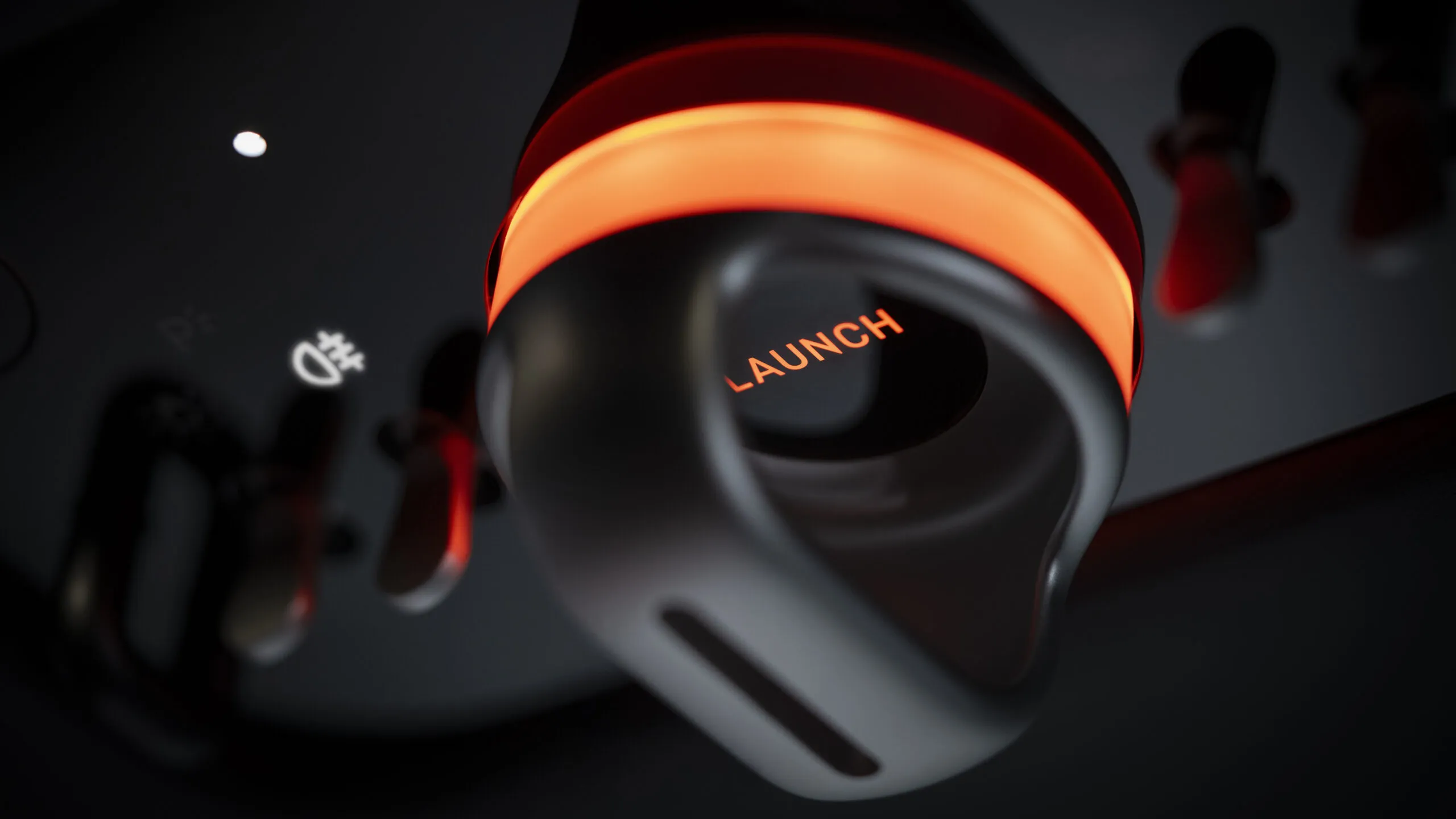
There’s also a physical overhead pull that activates Launch Mode because, apparently, pressing a button was considered too ordinary. Add in optional massage seats, rear passenger controls, and a 21-speaker, 3,000-watt audio system (more than you get in a seven-passenger Jeep Grand Wagoneer), and the Luce starts sounding less like a stripped-out supercar and more like Ferrari looked at luxury EV buyers and decided to build them something entirely new.
Performance And Power
Power is key, and clearly this thing has it, but let’s talk about weight for a moment first, as it defines how far performance can go in many aspects. The Luce tips the scales at 2,260 kg (4,982 lbs), which means Ferrari’s first EV arrives carrying nearly two-and-a-half tons of mass. That’s not exactly featherweight territory, even by modern EV standards.
Then again, Ferrari engineers seem acutely aware of that reality. The company says the low-mounted battery, four-motor setup, torque vectoring, and packaging give the car responses comparable to something roughly 400 kg lighter. That’s a bold claim, but at this point, Ferrari can’t really make small ones.
The Luce was never going to be judged like a normal EV. Nobody expects Ferrari to simply build a quicker alternative to a luxury electric sedan or crossover. The brand’s entire reputation rests on making machines that feel special, irrational, and emotional.
An Electric Guitar Approach to Ferrari Noise
Sound is one of the levers Ferrari pulls to get there, and crucially the Luce’s is not piped in or synthesized, which is the standard playbook for EVs trying to sound interesting. A precision accelerometer mounted in the rear axle housing captures the real vibrations of the rotating components, and a patented system then “filters, equalises and amplifies the signal in a similar way to an electric guitar, but only when functional to the driving experience.” Ferrari calls the result authentic and functional, and the driver can turn it up or down at will.
There’s also a unique torque shift engagement system designed to deliver a feeling of “engine braking worthy of a sports car.” Speaking of torque, the Luce leverages four electric motors that Ferrari derived from the F80 supercar. The vehicle uses an elastically-mounted subframe to dampen road harshness while the motors produce up to 1,035 hp (772 kW) together.
It has a 122 kWh battery pack, an 800V architecture, and can recover 70 kWh in 20 minutes when using a DC fast charger capable of delivering up to 350 kW. The entire battery pack does more than hold cells. It is a structural member, contributing a 25 percent gain in bending rigidity and 35 percent in torsional rigidity over previous four-door Ferrari applications. At this rate, given all the changes, I’m a little surprised it’s not carrying a Dino badge.
Europe First, U.S. Buyers Wait Until 2027
Ferrari opens European order books later this year with a price tag around €520,000, or over $600,000 at today’s rates. North America will have to wait longer. The Luce does not land at U.S. dealers until Q2 2027, and Maranello has not said what it will charge here.