- Texas’s share of new car sales in the US is rising, while California’s share is shrinking.
- Strong demand for pickup trucks in Texas contributes to higher average car prices.
- A large proportion of shoppers in Texas use cash or outside financing for new cars.
For decades, California has reigned as the undisputed heavyweight of American new-car sales. That era is nearly over. Texas is closing the gap fast, and the cars Texans are buying may be a preview of where the entire US market is headed in the years to come.
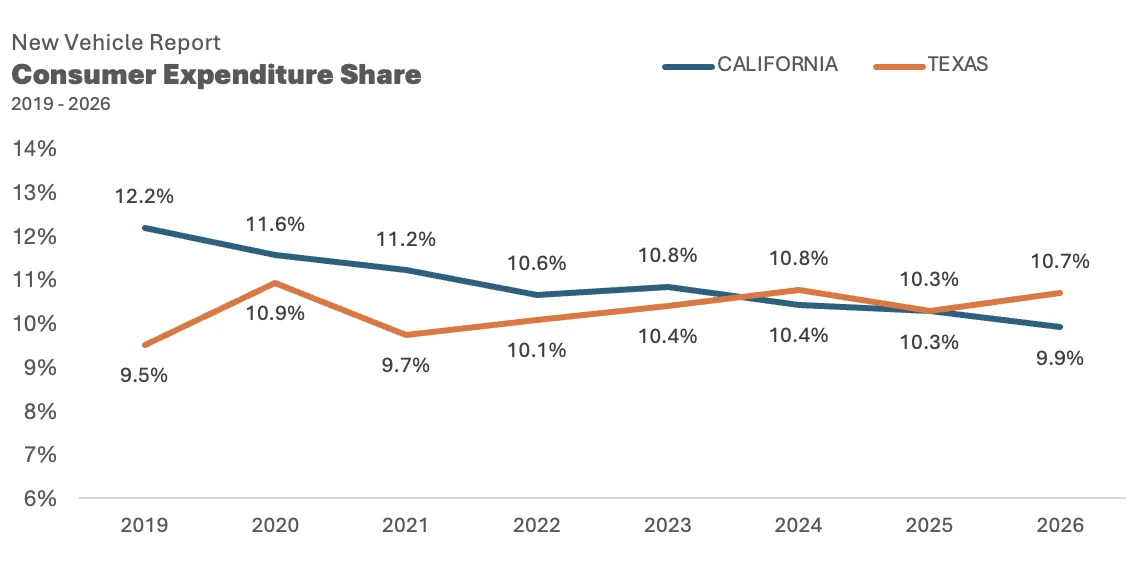
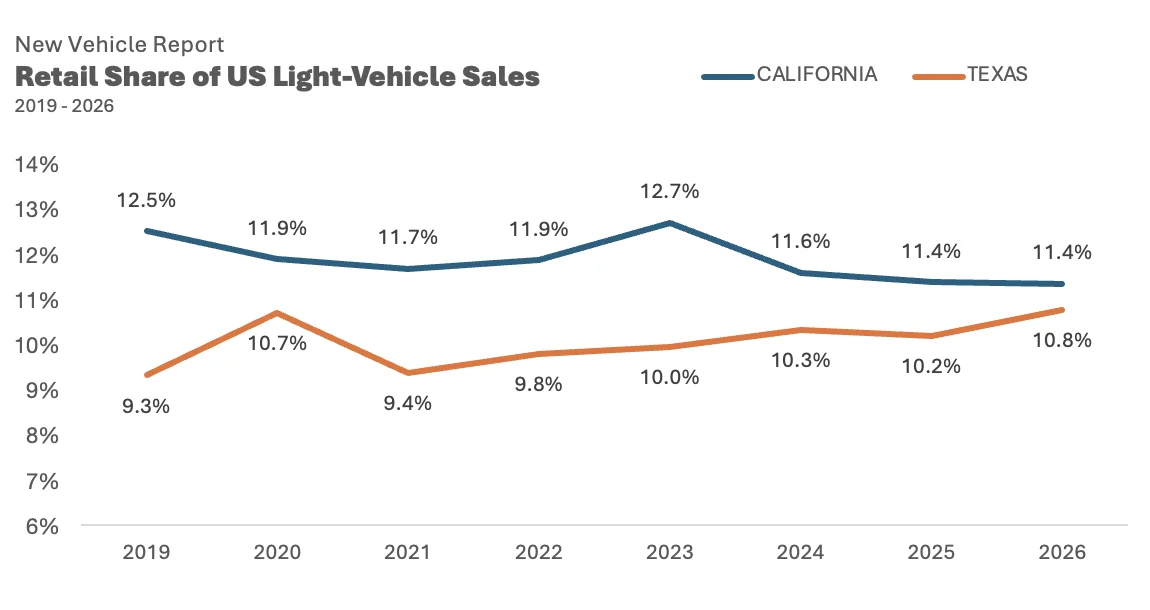
The shift has been building for a while. California’s share of US light-vehicle sales has slipped from a 12.7 percent peak in 2023 to just 11.4 percent this year. Texas, on the other hand, has climbed from a 9.3 percent low in 2019 to 10.8 percent, and the gap is narrowing by the month.
Read: A Million New-Car Buyers Just Vanished, And Automakers Don’t Want Them Back
Compared to 2019 averages, Texas is on track to add roughly 197,000 sales this year, while California is expected to lose about 158,000. The biggest force behind the surge is the state’s appetite for pickup trucks, which has also pushed up the average price Texans pay for a new vehicle.
According to JD Power, the Lone Star State has led the US in consumer spending on new vehicles, accounting for 10.7 percent of the country’s total, compared to California’s 9.9 percent. Currently, pickup trucks account for 27 percent of Texas sales, compared with 17 percent in California. As we know, pickups can be expensive.
By comparison, California has remained one of the last strongholds where sedans still sell, even as the body style fades across the rest of the country. But with fewer sedans coming to market every year, Californians will likely drift toward SUVs and trucks, following the trail Texas has already blazed.
Surprisingly, JD Power also notes that Texas is one of the few markets where EV share has held relatively steady, even as electric demand has softened in several other states.
More Texans Buying With Cash
The way buyers in the two states pay for their cars is just as different. In Texas, 69 percent of buyers either pay cash or arrange financing outside the dealership, a figure 23 percent higher than in California, where leasing is especially popular and accounts for 30 percent of new-vehicle transactions.
According to JD Power, Texas tax policies make leasing comparatively expensive, which helps explain part of the gap between the two states. Texan loan terms also run 1.5 months longer on average, and dealers there pull in roughly $2,200 in financing and insurance revenue per vehicle sold, about $400 more than their California counterparts.