Insuring an EV in the US runs far higher than a comparable gas car.
Massachusetts owners pay 54% more to cover an EV than a gas model.
A few states quietly flip it, making EVs the cheaper car to insure.
The price gap between combustion cars and their electric equivalents keeps shrinking, but an EV will still hit your wallet harder than an ICE model at the dealership. The cost doesn’t stop there. Insuring one runs much steeper too, according to a new study from Insurify.
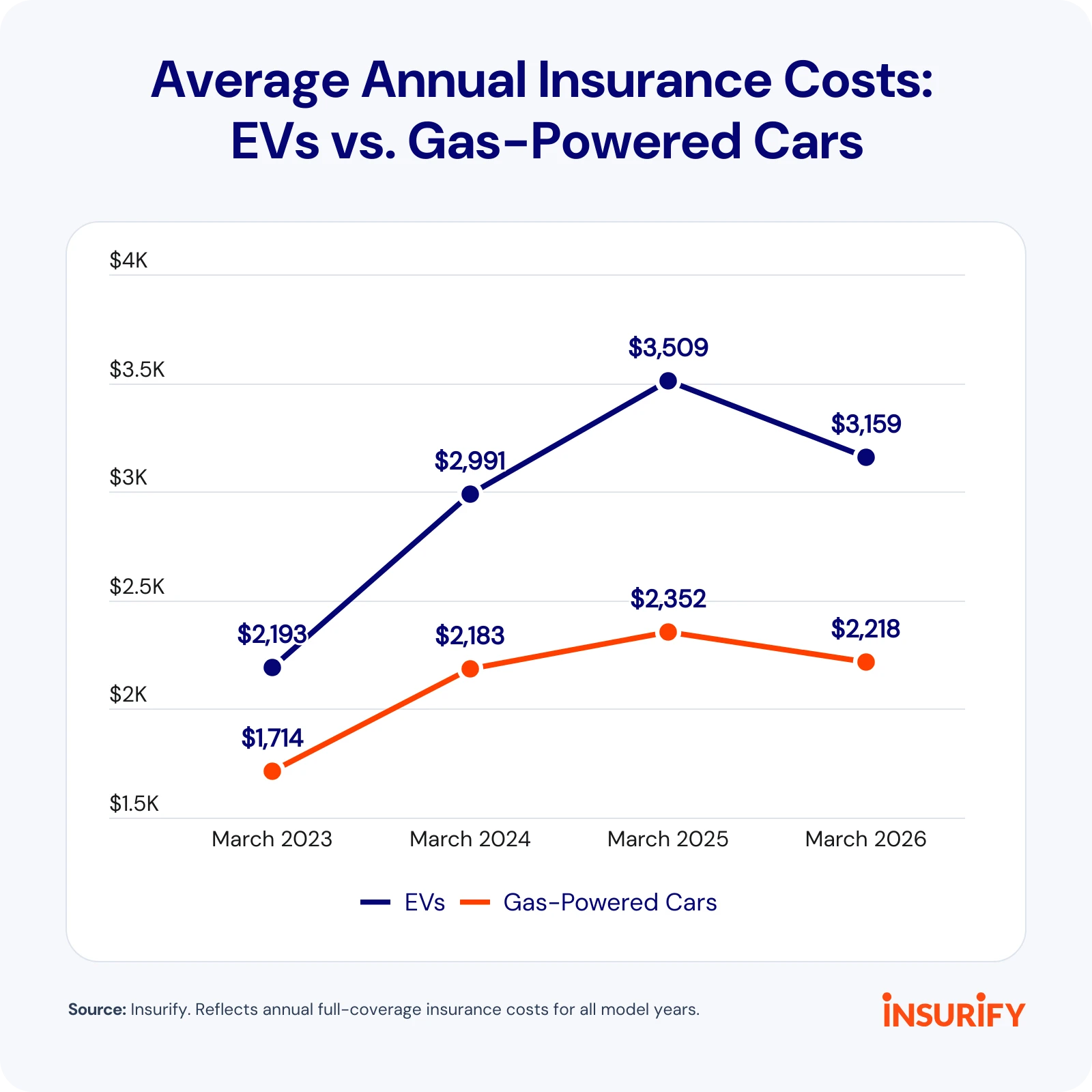
Currently, the average cost to insure an EV in the US is an eye-watering $3,159. While that’s down significantly from a peak of $3,509 in March of last year, it still far exceeds the average annual insurance cost for a gas-powered car, now $2,218, a 42 percent difference. The gap starts to close, though, when you dive a little deeper into the data.
The average EV on US roads is much newer than the average ICE vehicle, simply because electric cars haven’t been around as long. Insurify pegs the median age of vehicles in its database at 11.5 years, with older gas models dragging the overall figure down.
So it comes as no surprise that the typical EV costs more to insure than its gas counterpart. The gap narrows sharply to just 18 percent when comparing 2024 and newer vehicles across all powertrains. There, the average premium is $3,293 for an EV versus $2,792 for a gas-powered alternative.
Insurance premiums vary widely depending on where you live. Insurify’s analysis, which measures more than 235 million insurance rates across its database, shows that in some states the difference between insuring a 2024 or newer EV and a comparable ICE can run upwards of 50 percent.
Washington, D.C. is the costliest location in the data, averaging $6,102 for newer EVs and $4,821 for newer gas-powered cars.
EV owners in Massachusetts also feel the pinch. While the average annual premium for a newer EV is $3,560, it’s just $2,318 for a new ICE, making the gas car 54 percent cheaper. Insurify points to dense urban exposure, higher-value vehicles, and elevated EV repair labor costs as key factors in Massachusetts. In New York the difference is 45 percent, with EV premiums at $4,531 against $3,135 for a comparable gas model, higher than what Massachusetts drivers pay.
Premiums in Rhode Island are egregious in their own right. Annual averages for new EVs currently sit at $6,043 against $4,344 for newer ICE models, making the gas cars 39 percent cheaper to insure. The state has also seen auto insurance costs jump 41 percent since the start of 2024, according to Insurify.
The Most Expensive EVs to Insure
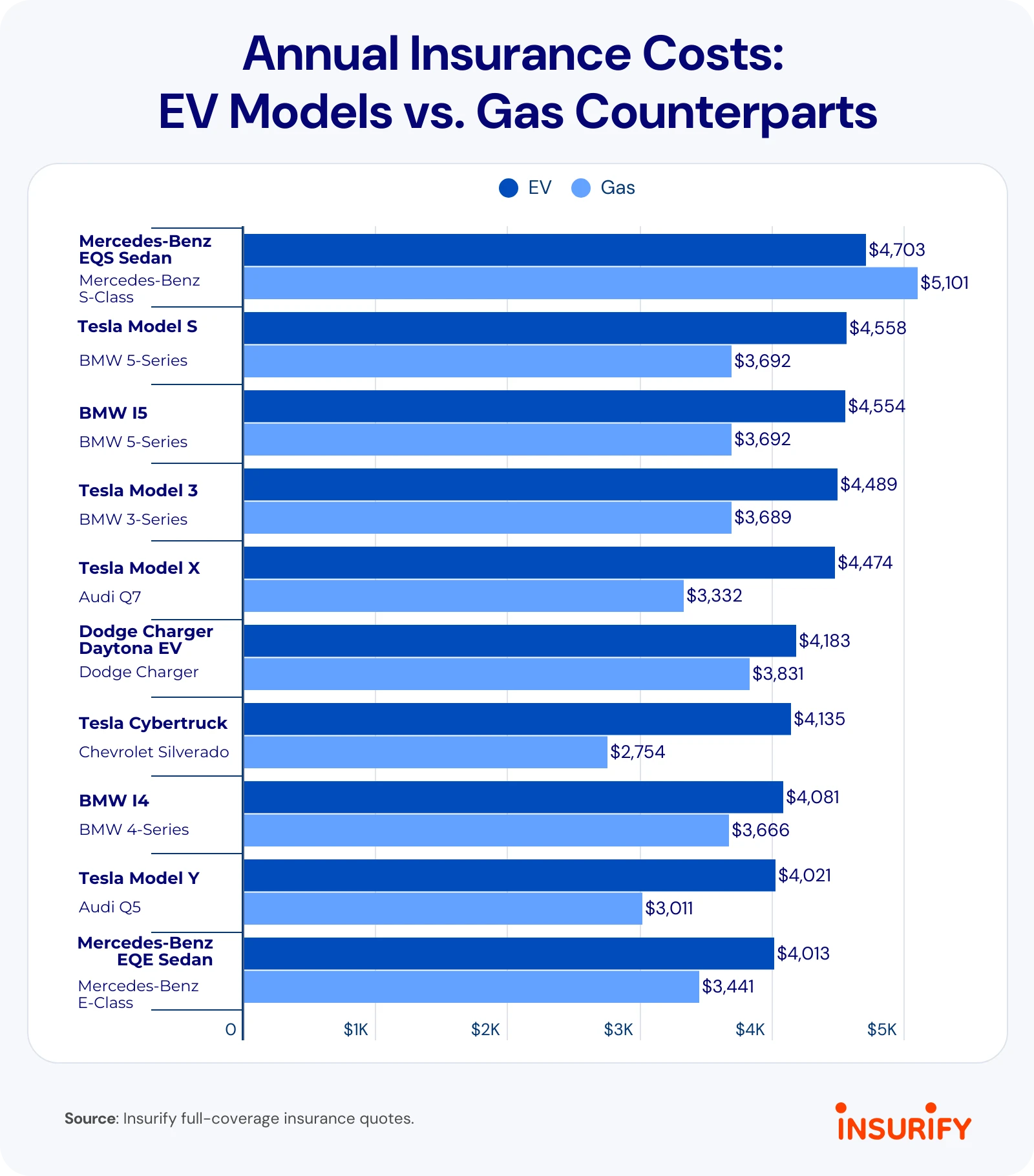
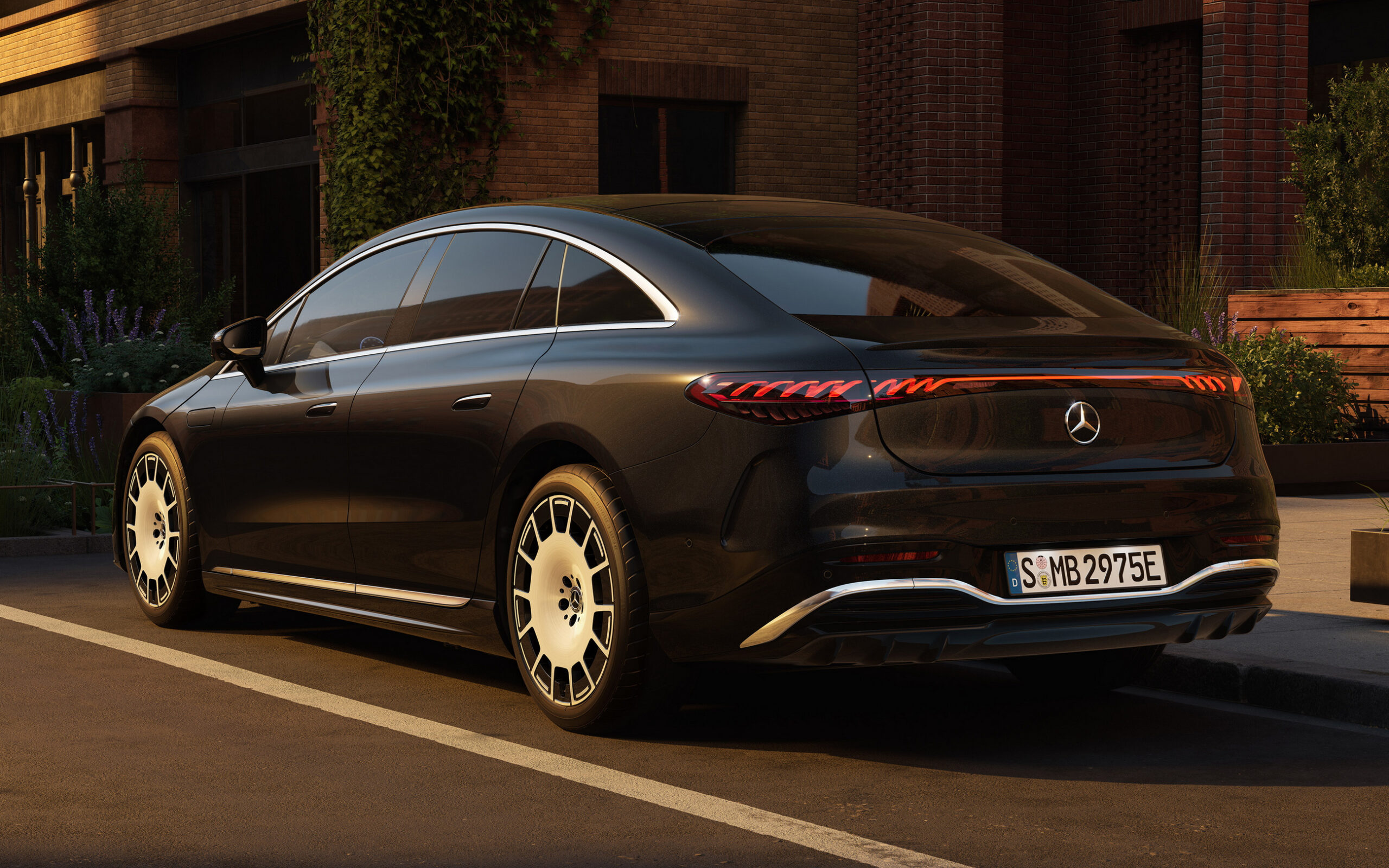
Luxury EVs dominate the list of the most expensive models to cover. The Mercedes-Benz EQS Sedan tops the rankings with an average annual full-coverage premium of $4,703, followed by the Tesla Model S at $4,558 and the BMW i5 at $4,554. According to Insurify, all five Tesla models rank among the 10 priciest EVs to insure.
The comparison with gas-powered vehicles isn’t always straightforward. While most EVs in the ranking cost more to insure than their gas counterparts, the Mercedes-Benz EQS Sedan is actually cheaper to cover than the Mercedes-Benz S-Class, which carries an average annual premium of $5,101.
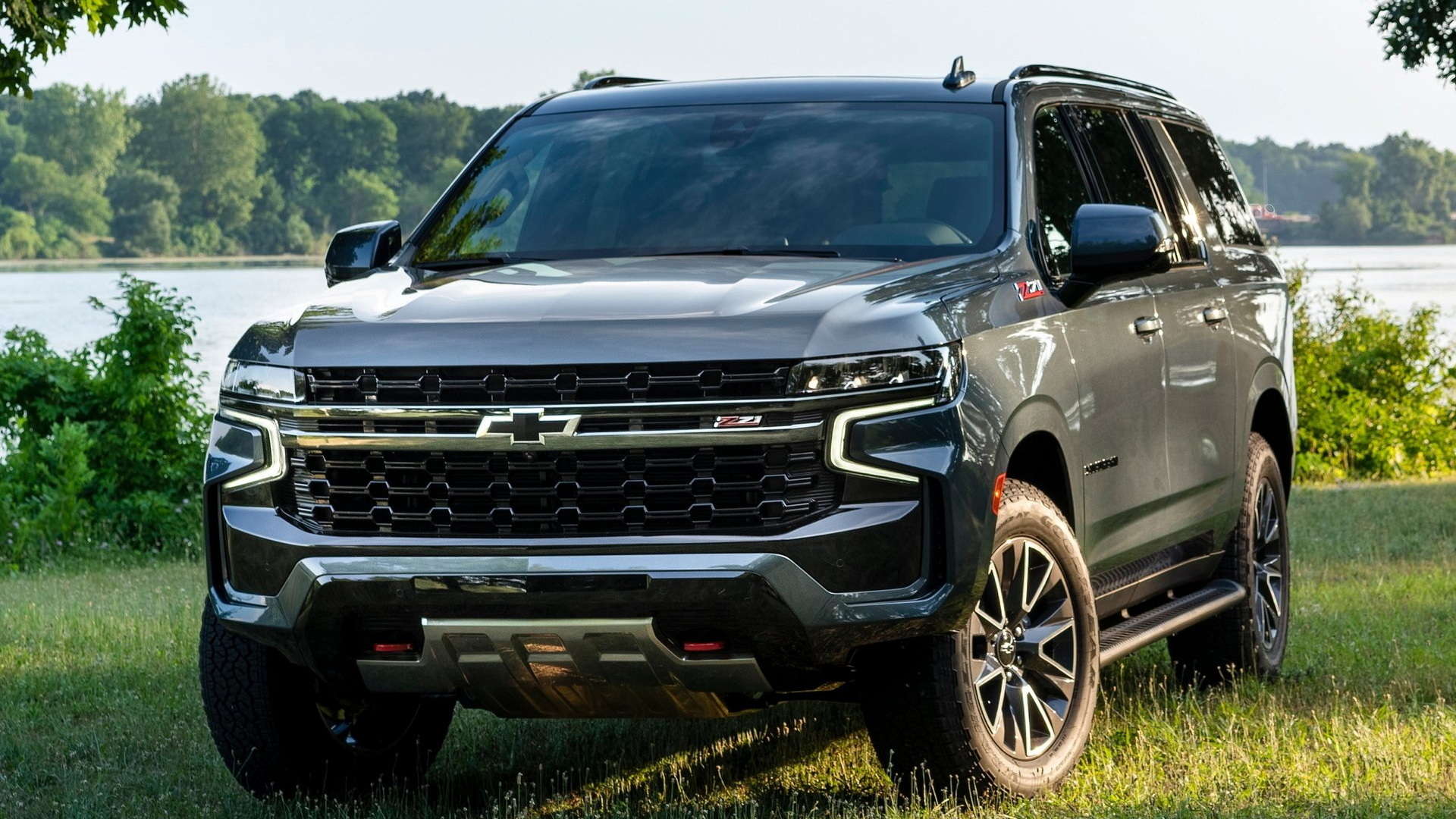
Elsewhere the EV penalty holds. The Tesla Model S averages $4,558 per year versus $3,692 for a BMW 5-Series, while the Cybertruck costs $4,135 to insure compared with $2,754 for a gas-powered Chevrolet Silverado. The Tesla Model Y also carries a much higher premium at $4,021, against $3,011 for an Audi Q5.
The States Where EVs Are Cheaper
Curiously, there are some states where it’s actually cheaper to run an EV. Montana leads the charge, where EVs come in 4 percent cheaper at $2,242 versus $2,339 for gas cars. The margin is also 4 percent in West Virginia, with premiums of $2,062 for EVs and $2,148 for ICE models. Nebraska slightly favors EVs too, with newer EV premiums of $2,055 against $2,086 for gas-powered cars.