- Lexus launches a new luxury flight service in Japan on August 24.
- The service uses a modified Leonardo AW169 twin-turbine chopper.
- The goal is to seamlessly connect mobility across land, sea, and air.
We’ve seen Lexus float some odd ideas lately, like a futuristic six-wheeled luxury minivan meant to jump from concept to production and replace the aging LS flagship sedan. This latest one leaves the road altogether. Lexus is now pushing its luxury remit into the sky with “Lexus Flight,” a dedicated helicopter charter service
The service is exclusive to Japan for now, run in partnership with Aero Toyota and starting on August 24. The helicopter links cities and resort destinations, and it can be paired with the LY680 luxury yacht, which means Lexus can string together a journey across land, sea, and air using its cars, its boat, and now its aircraft, without ever handing you off to another brand.
More: Toyota’s Getting Into The Aircraft Manufacturing Business
At the center of Lexus Flight sits a custom helicopter built on the Italian Leonardo AW169 platform. Twin Pratt & Whitney Canada PW210A1 turboshaft engines give it a maximum cruising speed of 267 km/h (166 mph) and a range of up to 785 km (488 miles), enough to cover most hops between Japanese cities.
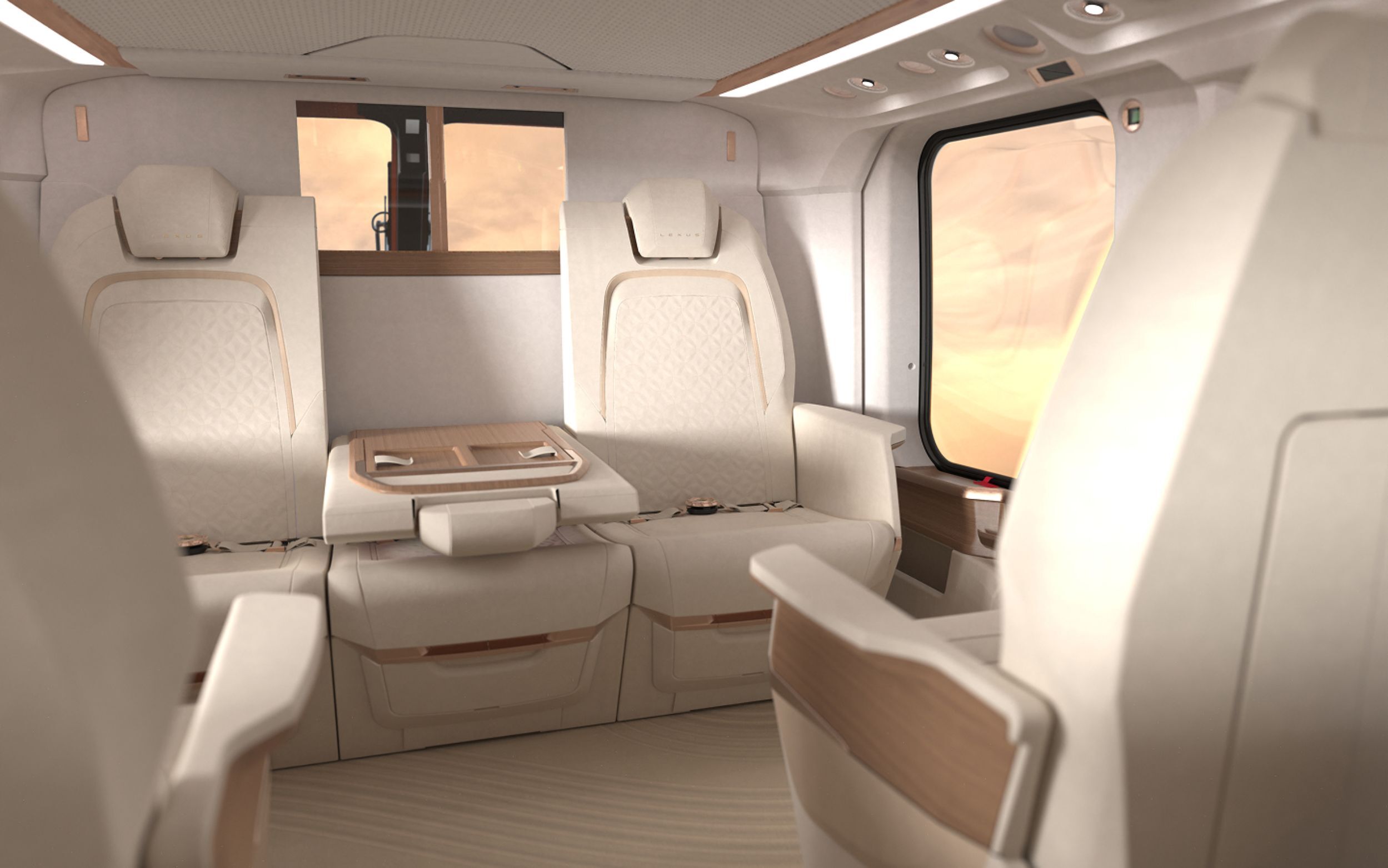
The helicopter stretches 14.65 m (48.1 ft) long, 3.21 m (10.5 ft) wide, and 4.56 m (15.0 ft) tall. Its light-toned cabin seats up to seven and takes clear cues from a premium Lexus SUV inside, though passengers get considerably more room to stretch out and a far better view through the windows than any road car could offer.
More: Pagani’s Latest Client Doesn’t Drive, It Flies
Amenities run to Wi-Fi, a live exterior camera feed, real-time flight tracking, and a dedicated tablet that controls cabin lighting, climate, and the entertainment system.
For now, Lexus Flight is built strictly for the domestic Japanese market, and the company has said nothing about taking it to North America, Europe, or anywhere else. Official charter pricing and the specific route tariffs have yet to be disclosed, which leaves the one question consumers actually care about, what this costs, hanging in the air.