









- Porsche unveils one-off Flachbau RS based on the 991.2 GT2 RS.
- The street-legal model features 935-inspired Slant Nose styling.
- Built by Sonderwunsch and Manthey, it sheds nearly 70 lbs (32 kg).
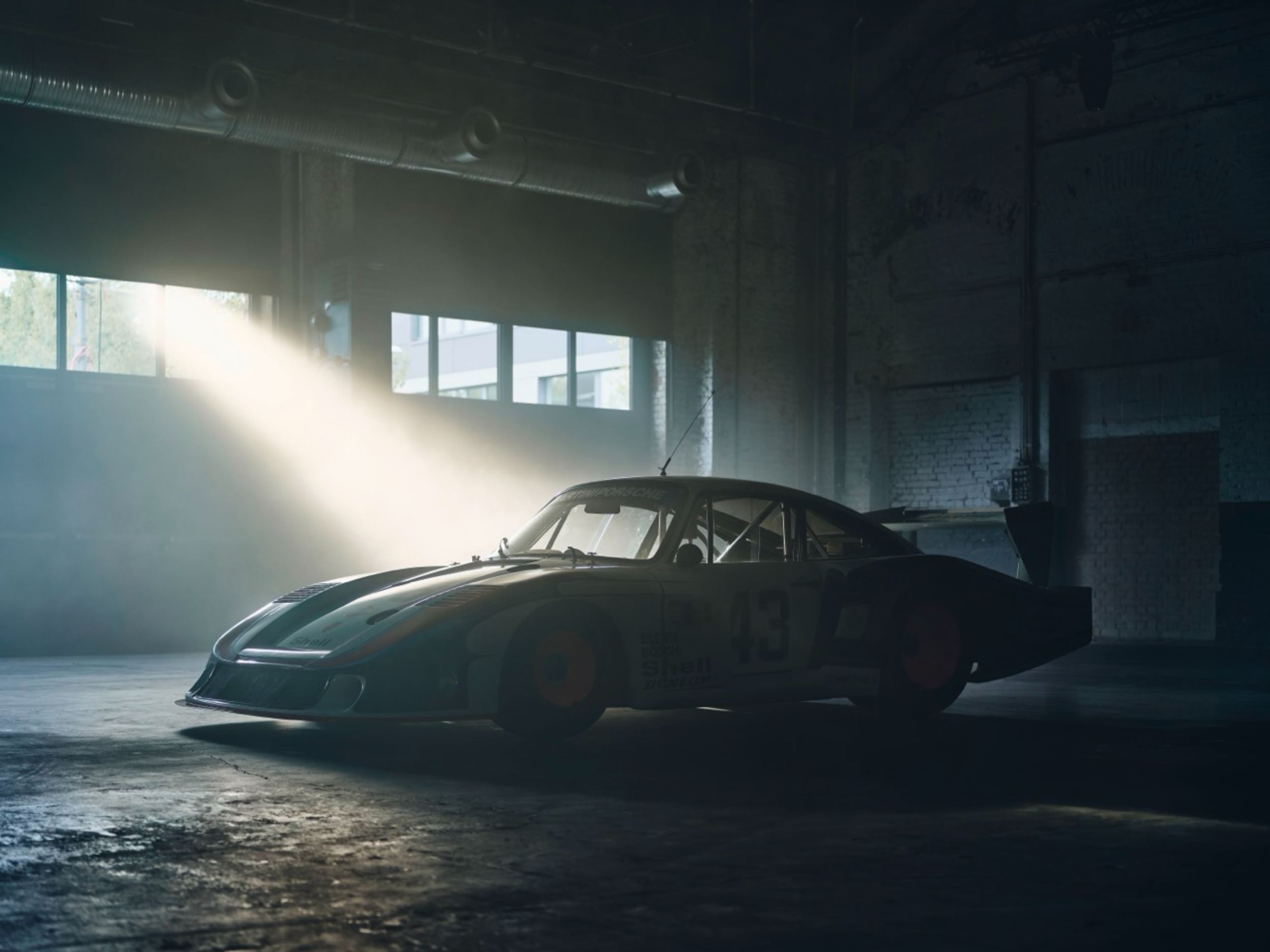
Back in 2018, Porsche dipped into its Slant Nose heritage with the modern-day 935 Clubsport, but like the original Moby Dick racer from 1978, the limited-production model never left the track. Eight years on, another 935-flavored machine has turned up wearing the same look, this one called the Flachbau RS. The difference is that Porsche built exactly one, and it has been homologated for street use on European roads.
More: Lanzante Has Turned The Porsche 935 Into A Street Legal Monster
Getting there took close to three years, with the Porsche Sonderwunsch division, Style Porsche, Porsche Motorsport, and Manthey all involved. The starting point was a 2018 911 GT2 RS with the Weissach Package, which puts the Flachbau RS on the discontinued 991.2 chassis rather than the current 992.2 generation.
The Man Who Drew The 935 Draws It Again



Porsche
The exterior of the Flachbau RS was penned by retired Porsche designer Grant Larson, who was also responsible for the track-only 935 from 2018. The nose has been rebuilt from scratch, ditching the round headlights of the GT2 RS for two sets of slim LEDs perched on the fenders, plus another set integrated into the enlarged bumper intakes.
Porsche says the lower fender contours forced a redesign of the fuel filler flap and the mechanism underneath it. There are also gills in the fenders, NACA ducts in the hood, Manthey canards, and a splitter. The paint is Grand Prix White, a shade first offered in 1974, set off with exposed carbon fiber and matte black graphics lifted from the Martini-liveried 935/78.


More: Porsche Brings The Manual Carrera S Back As A Junior GT3
The profile is largely GT2 RS, aside from Flachbau RS decals and body-colored carbon fiber aero discs on the rear wheels. At the rear, the centerpiece is the manually adjustable wing, which sits almost 2 inches (51 mm) higher than standard and is combined with a Manthey diffuser. The gigantic spoiler inspired by the 911 GT3 R Rennsport helps generate 1,221 lbs (554 kg) of downforce at the top speed of 211 mph (340 km/h), which is 2% higher than a GT2 RS fitted with the Manthey Kit.
Everything Unnecessary Is Gone


Porsche
Aero was only half the brief. Porsche also went hunting for mass, pulling almost 70 lbs (31.8 kg) out of the donor car. The rear of the cabin is now bare metal finished in Grand Prix White. Gone are the infotainment screen, the audio system, the sound insulation, and the floor coverings. Even the factory body mounting points for legally required items like the warning triangle and towing eye were deleted, so those now live in a lightweight, removable box that can be lifted out entirely on track days.
More: Porsche Hid A Cheeky Message Under This One-Off 911 Turbo S
Additionally, the carbon fiber buckets are trimmed in black leather and red Alcantara, and the dual-clutch automatic gets a wooden shifter. The center console has a leather-lined storage compartment, while the headrests carry the Flachbau RS logo and an embroidered Nordschleife track map. Finishing it off is a gold plaque on the passenger side of the dash reading “Sonderwunsch – Werksunikat 2026 – Flachbau RS.”
One Production Car, Three Prototypes


Porsche
Building a single car did not stop Porsche from testing it like a full production program. After digital validation, crash simulations, airbag deployment tests, and hydropulse vibration testing of the rear wing, the company put together three prototypes for wind tunnel work and high-speed airfield runs at Mendig, followed by endurance testing at Weissach and 50 laps of the Nürburgring with test driver Lars Kern at the wheel.
More: Chevy’s New Corvette ZR1 Set A Record At Road Atlanta. A 2019 Porsche Just Took It Back
The special model retains the stock twin-turbo 3.8-liter flat-six engine from the GT2 RS, which is good for 690 hp (515 kW / 700 PS) and 553 lb-ft (750 Nm) of torque. Power is transmitted to the rear wheels through a seven-speed PDK transmission.
Porsche is saying nothing about what the Flachbau RS cost to build, which is standard practice for one-off Sonderwunsch factory commissions. The company treats those numbers as a private matter between itself and the customer. Still, the current prices of GT2 RS models give away enough. Whatever the owner paid, we’re pretty sure it landed well into seven figures.