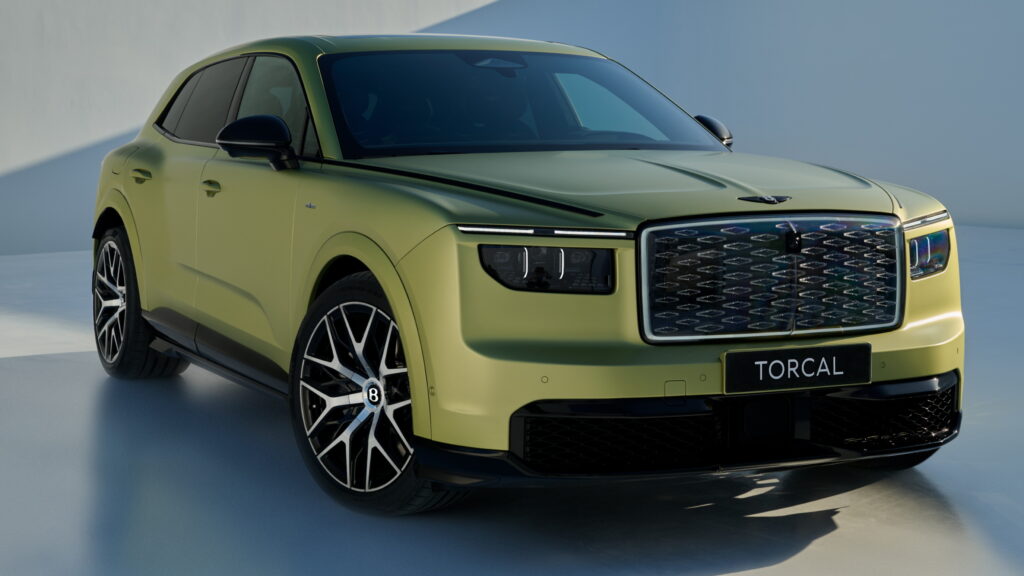










- After their electrification plans fizzled, Bentley is becoming more flexible.
- CEO said “predictable planning” is no longer possible and may never come back.
- Automaker is speeding development and wants new models created in three years.
Bentley once had grand plans for electrification, revealing at their Beyond 100 event in 2020 plans to become a “leader of sustainable luxury mobility.”
Under the initiative, the automaker was supposed to drop conventionally-powered vehicles by 2026, and only offer plug-in hybrids or EVs. The brand was then slated to go EV-only by 2030.
More: Bentley Torcal Arrives With 876 HP And 375 Miles Of Range
Needless to say, things didn’t work out, as Bentley just got around to introducing their first electric vehicle. The Bentley Torcal arrived nearly a year behind schedule and offers a range of up to 375 miles (604 km).
While reaction to the Torcal has been mixed, it will reportedly be Bentley’s only electric vehicle for years to come. According to Autocar, the firm’s next EV won’t arrive until sometime after 2030.



That stands in sharp contrast to Rolls-Royce, which introduced the Spectre in 2023 and is preparing to launch an electric crossover. The latter has been spied on multiple occasions and follows in the footsteps of the Cullinan.
However, Bentley CEO Frank-Steffan Walliser believes they were right to tap the brakes on electrification. As he told the publication, they’re simply becoming more flexible, as consumers aren’t ready to go fully electric and regulators have backed down from ambitious adoption timelines.
“In the past, you made a plan for 10 years and then you just went with it. We delivered the cars in a relatively stable environment. It’s not the case anymore.”


Walliser added the company is working on building plug-in hybrids and EVs on the same production line, so they can more easily adapt to changes in demand and requirements. He went on to say the automaker is shortening cycles and development times. Speaking of the latter, it now takes Bentley four years to create an all-new model, and the automaker eventually wants to lower that number to three years.
Getting back to the Torcal, Walliser ruled out the possibility of a plug-in hybrid variant. As he explained, the crossover rides on the EV-only PPE platform and adding an engine would only create “overlap” with the Bentayga.