


- The Powered by Electrify America program provides EV chargers tailored for businesses.
- Electrify America handles construction, technology, maintenance, and backend support.
- The white-label network now includes nearly 600 chargers at more than 100 stations.
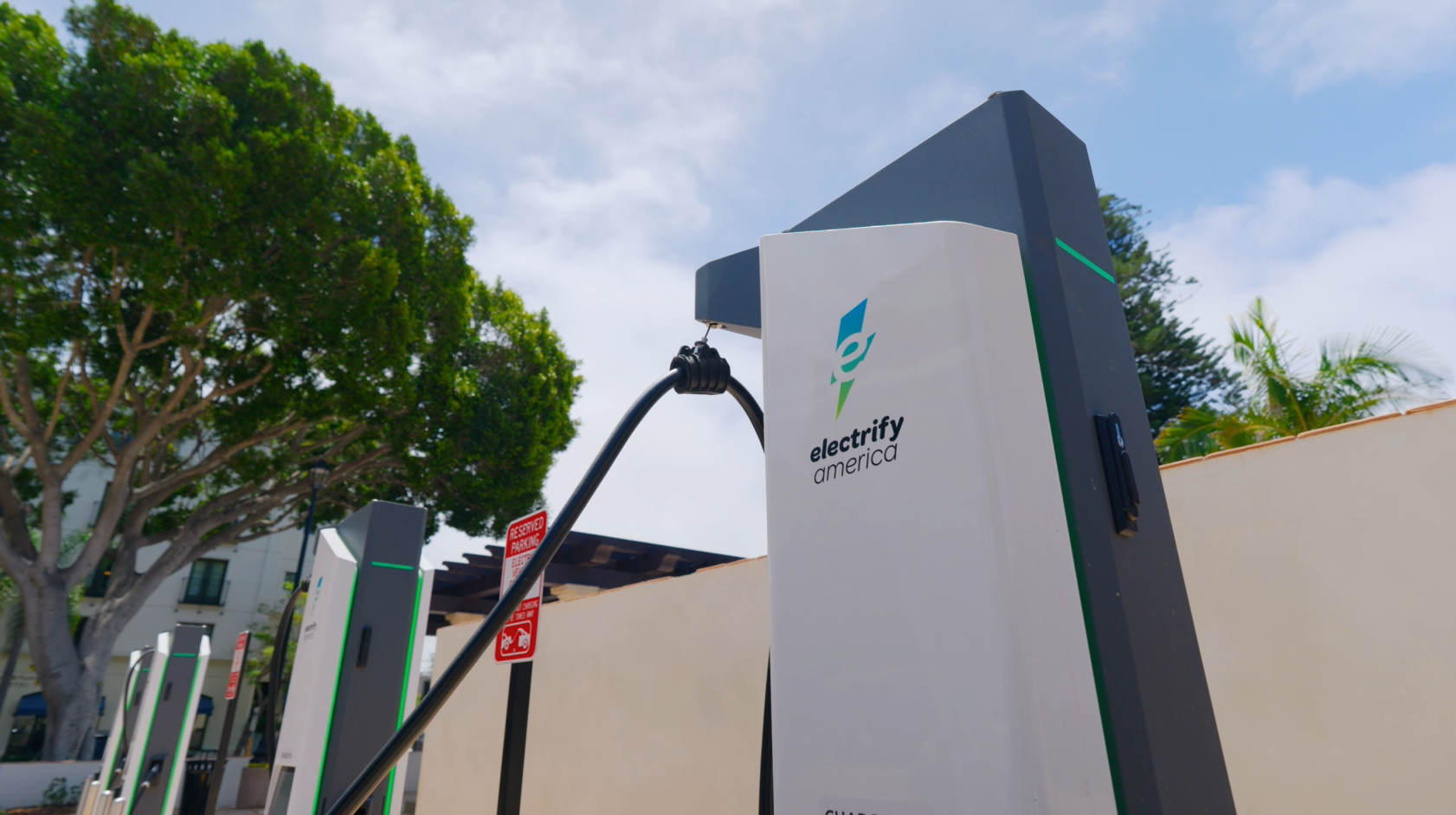
Electrify America is one of the biggest names in EV charging, but it increasingly seems less concerned if you know you’re using its technology. The company is pushing its white-label charging business, which lets retailers slap their own names on chargers while Electrify America does much of the difficult work behind the scenes. Costco and Wawa are already among the companies using it.
Called Powered by Electrify America, the program isn’t actually new. It launched in 2020 but has quietly grown to more than 100 stations with nearly 600 chargers. That’s still small compared with Electrify America’s own network of more than 5,600 chargers at over 1,080 stations, but it points toward an interesting future for public charging.
Read: Massachusetts Got $64M In EV Station Funding, But There’s Not A Charger In Sight
Instead of simply hosting an Electrify America station in its parking lot, a retailer can effectively create its own charging network. The business owns the equipment and gets control over the branding, pricing, and site design. It can also incorporate charging into its own loyalty programs and access data about station usage, charging sessions, and customer behavior.
Electrify America, meanwhile, can handle much of the ugly stuff customers never see. That includes site feasibility, permitting, construction, commissioning, and ongoing maintenance. Its current hardware supports charging rates of up to 350 kW, while the company says its infrastructure is being prepared to support the NACS/J3400 connector.
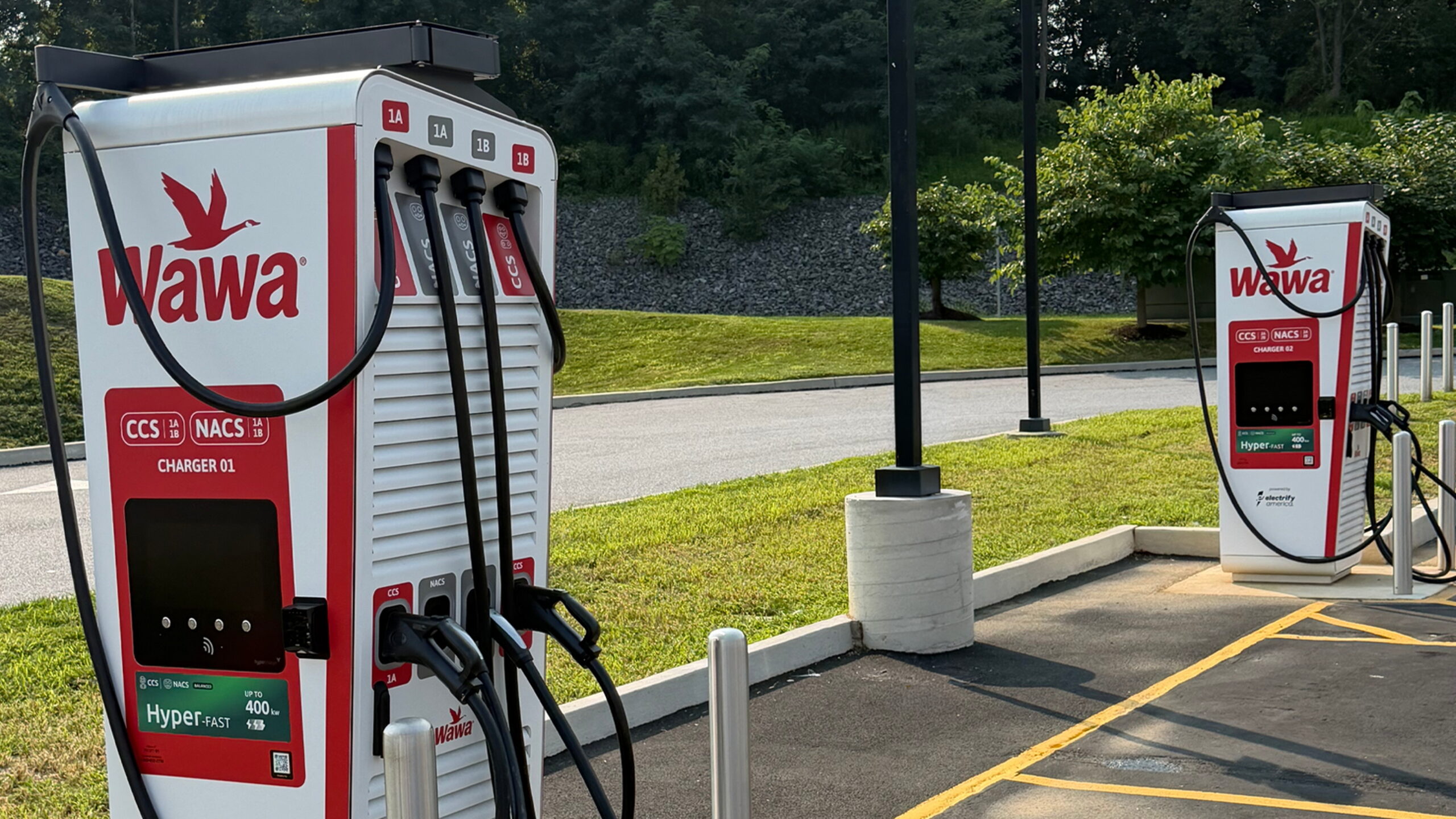
There are some obvious attractions for retailers. A gas station customer might spend five minutes filling a tank and leave. Electrify America says a typical charging session lasts 20 to 30 minutes. That’s a much longer period of time where a customer could be inclined to spend more at the retailer than they would otherwise be.
More importantly, retailers don’t necessarily have to hand that relationship over to a charging company. They can set their own prices, wrap the equipment in their own branding, and potentially use charging to strengthen existing membership or loyalty programs. That’s particularly interesting for a company such as Costco, where membership is already central to the business.
Electrify America gets to sell its infrastructure and expertise, retailers get their own charging networks, and drivers hopefully get a more uniform and consistent charging experience across more brands and stations. That’s something EV owners in America have been demanding for quite some time now.