








- Nissan reportedly offered delayed payments to suppliers in the UK and across Europe.
- Internal emails suggest Nissan aims to free up €150 million in short-term liquidity.
- The automaker wants to delay payments into next quarter to ease financial strain.
Even if you haven’t been keeping tabs on the auto industry, you’ve probably heard that Nissan has been fighting an uphill battle in recent years. A newly surfaced batch of internal emails is now offering a clearer look at just how tight things have become behind the scenes.
According to several emails and a company document reviewed by Reuters, the Japanese automaker has been asking some of its suppliers in Europe and the UK to agree to delayed payments as a way to temporarily ease its cash flow crunch.
More: Nissan’s Big Bet On The Murano Could Be Turning Into A Major Flop
This move is part of a broader strategy to steady the ship at Nissan, and follows the recent leadership change with new CEO Ivan Espinosa, who stepped into the role last April. According to sources familiar with the matter, suppliers have been given two options: stick to the original payment schedule, or agree to a slight delay in exchange for a bit of extra compensation.
In the first case, HSBC would step in to pay suppliers upfront, and Nissan would later reimburse the bank with interest.
Short-Term Maneuvers, Long-Term Questions
Reuters reviewed several internal emails and a company document outlining efforts to free up cash before the end of the April-to-June quarter. Nissan’s CFO, Jeremie Papin, had already warned that this quarter would be one of the company’s most difficult in recent memory.
As part of the effort, Nissan is hoping to shift some payments from June into mid-August, and in other cases, as far as September. According to insider sources, this isn’t the first time the company has leaned on deferred payments as a temporary fix. A similar approach was reportedly used near the end of the previous financial year in March, and separate allegations suggest Nissan may have underpaid suppliers in Japan, in violation of local laws.
Nissan Acknowledges Flexible Payment Terms
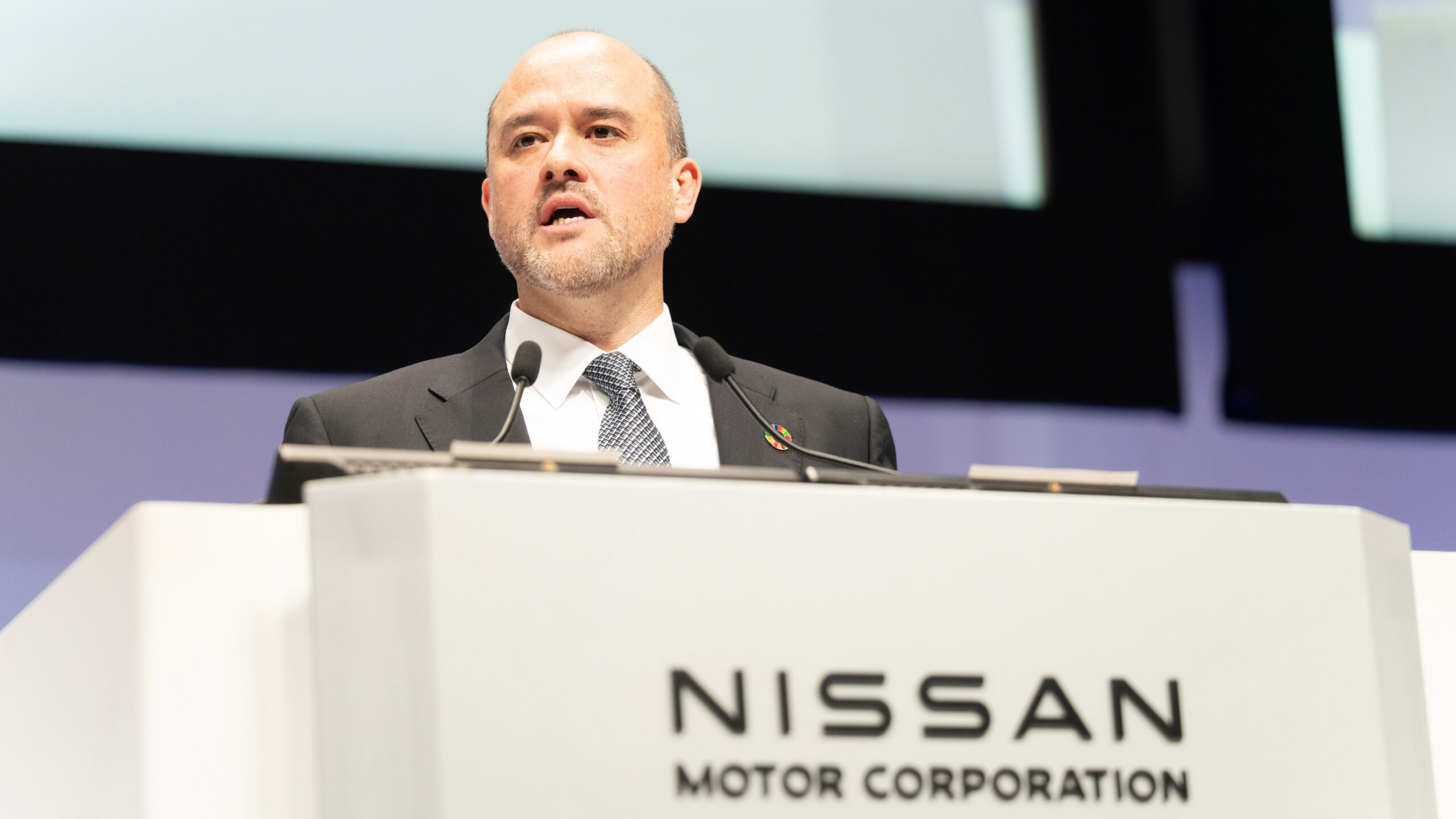
In a statement to Reuters, Nissan acknowledged that it had offered “more flexible payment terms” to its suppliers. The company explained that the decision is tied to maintaining enough liquidity to support ongoing turnaround efforts and to cover upcoming bond repayments.
More: New Nissan SUV Drives Like An EV But Runs On Gas
The internal emails, exchanged between staff in Nissan’s European and UK purchasing and treasury departments, indicate that the request for improved cash flow came from senior leadership. One message described the push as coming “from CEO top down.” However, Nissan later clarified that the CEO “didn’t mandate functional tasks in regions” and declined to comment on any internal goals or discussions.
A treasury department director referenced a “purchasing task” to free up €150 million ($175 million) by delaying payments past the end of the quarter. A separate internal document, dated October 2024, showed estimated savings of €59 million ($69 million) through flexible payment arrangements with more than a dozen suppliers in the region, including companies like ManpowerGroup and Mitsui O.S.K. Lines.
Serious Financial Hurdles
Nissan posted a net loss of $4.5 billion (¥700 billion) for the previous financial year, with $15.1 billion (¥2.2 trillion) in cash and equivalents. The company has yet to release a forecast for the current year, which insiders expect to be just as tough.
To reverse course, Nissan is aiming to slash $3.4 billion (¥500 billion) in costs over the next two years. The plan includes closing several plants and cutting around 15% of its global workforce. If everything goes to plan, the company hopes to achieve positive free cash flow by the 2026 fiscal year.
We’ll be watching to see whether this strategy delivers results. But with all three major credit rating agencies having already downgraded Nissan’s debt to junk status, raising new funds could become even more difficult going forward.