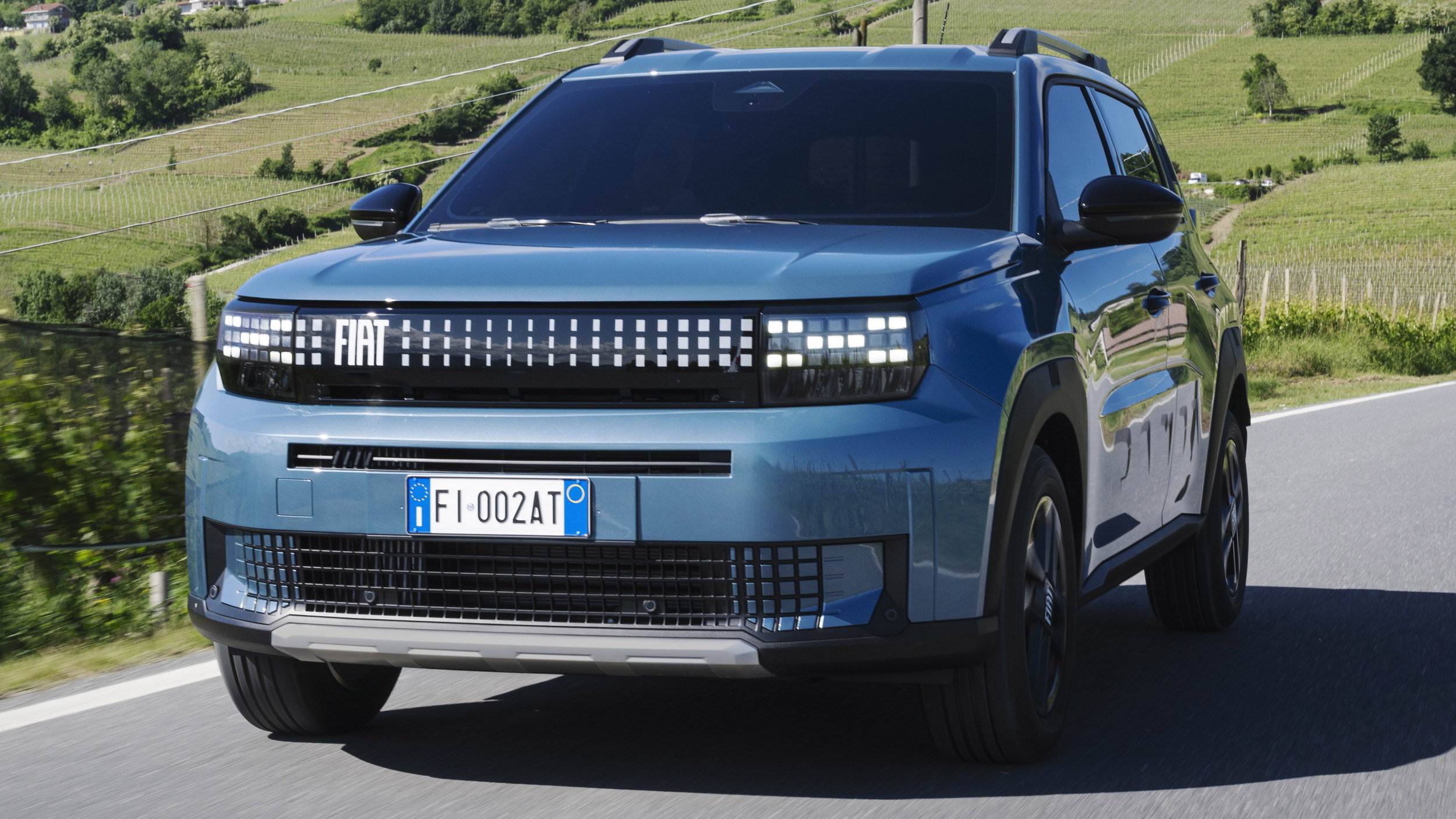
- Fiat CEO supports limiting city car top speeds to 73 mph.
- Speed limiters could replace costlier ADAS tech in small cars.
- Models like the 500 and Panda mostly stay in low-speed zones.
Some city cars just aren’t built for speed, and Fiat seems ready to lean into that idea even more. Its famously compact 500 and Panda models might soon become intentionally slower, not due to technical limitations, but as part of a wider strategy to comply with European safety regulations without driving up costs.
Fiat CEO Olivier Francois recently suggested that capping top speeds could be a practical alternative to loading small, affordable models with costly driver-assistance tech.
Review: New Fiat Grande Panda Hybrid Makes Budget Look Cool Again
“I would happily limit my city cars, my smaller cars, to what is today the maximum legal speed limit,” he told Autocar. “It’s already a limitation. There is something weird that I need to over-spec my cars to go above the legal speed limit.”
According to Francois, the average legal top speed across Europe is around 73 mph (118 km/h), adding that most of the safety equipment “has been developed for cars to go way above the speed limit.”
How Fast Should a City Car Go?
But Fiat’s best-sellers, including the 500, Panda, and the newly introduced Grande Panda, aren’t exactly Autobahn material. They spend most of their lives in slow-moving urban traffic, where speed is hardly the point.
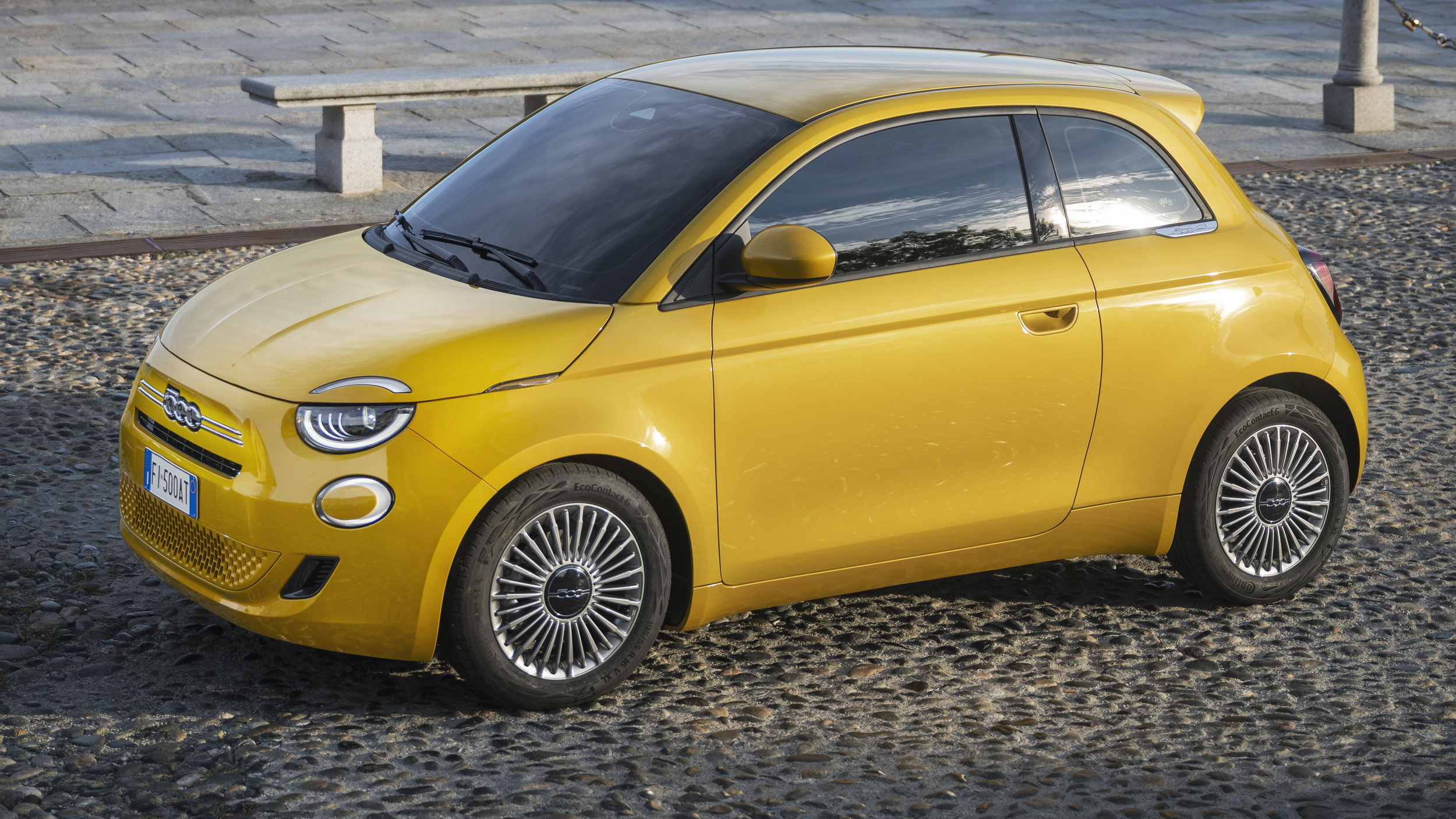
Francois doesn’t think limiting their top speed to 73 mph (118 km/h) would make much of a difference, since none of the city cars in question is especially fast to begin with.
More specifically, the electric Grande Panda is already limited to 82 mph (132 km/h), a cap intended to help preserve battery range. The internal combustion and hybrid versions of the subcompact hatchback are less restricted, capable of reaching up to 99 mph (160 km/h).
The Fiat 500e, meanwhile, comes with a limiter set at either 84 mph (135 km/h) or 93 mph (150 km/h), depending on battery size. As for the new 500 Hybrid, it can theoretically hit 93 mph (150 km/h) as well, though based on its acceleration figures, that top speed might be more of a long-term goal than a regular achievement.
Slower Means Safer
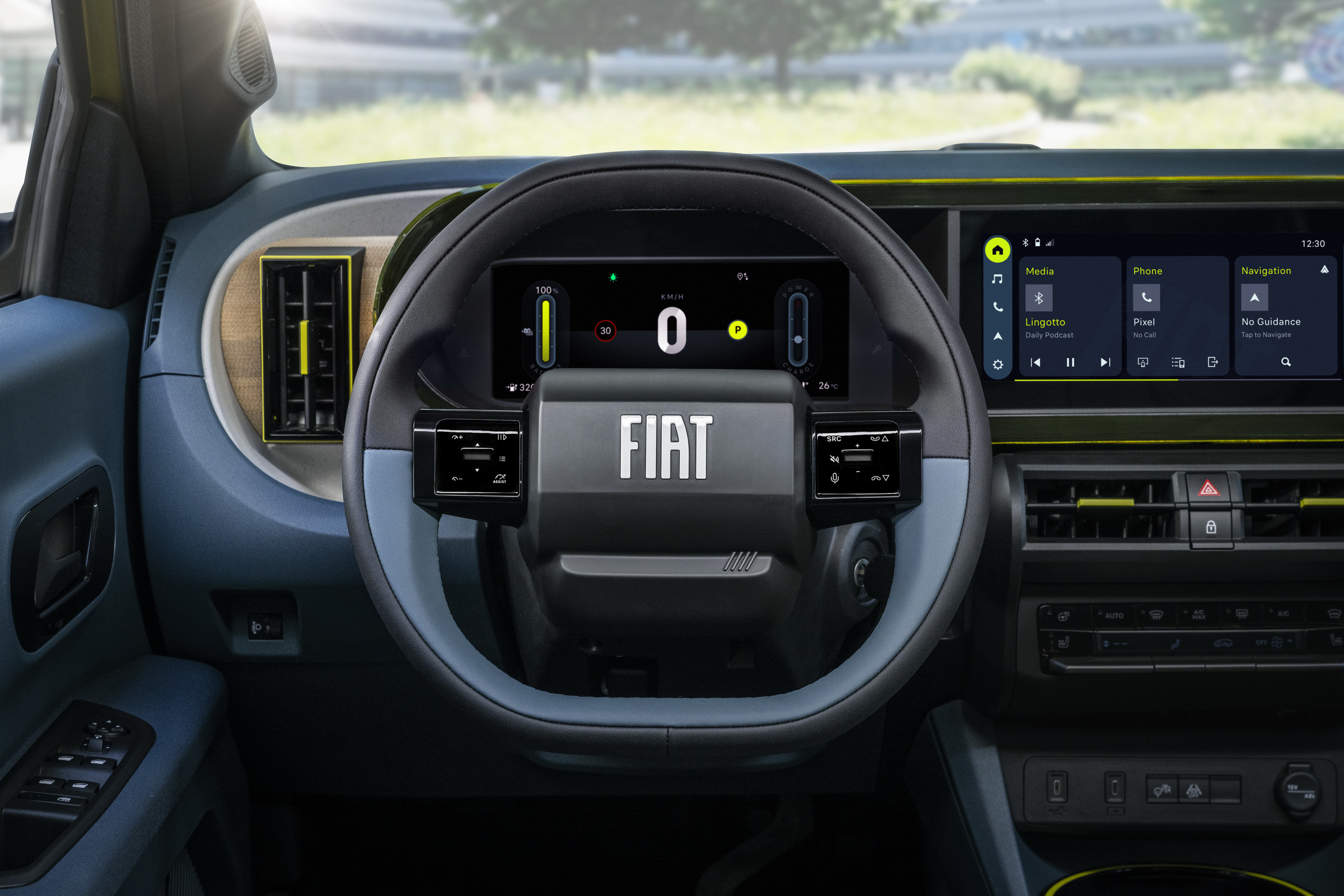
Francois thinks that a new speed limiter could serve as a cheaper alternative to more sophisticated ADAS that would inevitably increase the price of the models with little or no benefit to the customer. He also welcomed the proposal for a new small car category in Europe that could be free of the strict safety rules applicable in higher segments.
More: EU Quietly Plans New Car Class That Could See Prices Drop To €15,000
“I have a hard time understanding why we need to install all this super-expensive hardware,” he said. “Sensors, cameras, road sign recognition… All this is a little bit inadequate, a bit crazy, and has contributed to raising the average price of a city car by 60% over the last five or six years. I don’t think that city cars in 2018 or 2019 were extremely dangerous.”
Francois’s suggestion is to take a step back, reducing complexity rather than increasing it. “Our proposal was literally to say ‘let’s go a little bit backward from overloading cars with expensive hardware’.”

He argues that applying the same safety rules across all vehicle categories misses the point, especially when it comes to small cars built for dense city environments. “We fundamentally think that with all these rules, the most unsustainable portion lies in the city cars and urban driving,” Francois said.
These vehicles, he notes, are often inexpensive, bought by younger drivers, and used primarily for short-distance commutes. Their speeds, and the risks involved, are much lower.
If Fiat decides to introduce new speed restrictions across its lineup, it wouldn’t be the first to take that route. Volvo, Renault, and Dacia have already capped some of their vehicles at 112 mph (180 km/h), aiming to lower the risk of severe accidents.